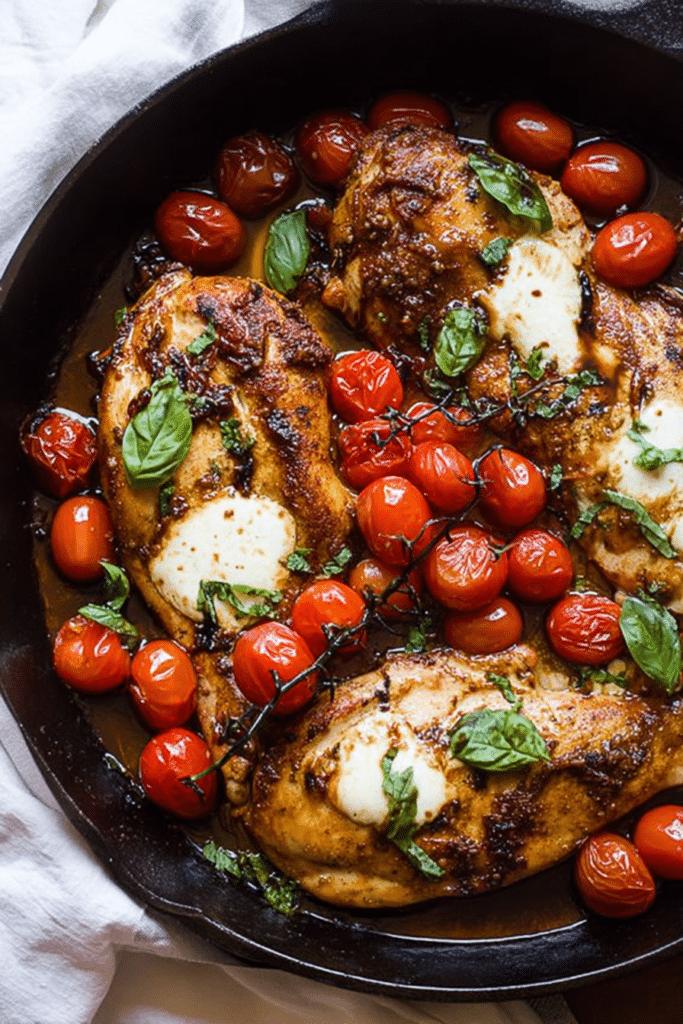
I make this balsamic glazed one pan chicken on busy weeknights and also when friends drop by unexpectedly. It’s the kind of dish that smells like dinner before you’re even done sautéing—the sweet, tangy balsamic sauce reduces and glosses the chicken with a dark, shiny glaze that makes me want to dig in the minute it rests. The tomatoes burst in the oven, releasing their juices into the pan, and the mozzarella softens into little creamy pockets. This is comfort food that still feels bright and fresh.
What you get with this balsamic glazed one pan chicken is convenience plus flavor: a fast pan-sear, a quick whisked glaze of balsamic and honey, an oven finish, and a one-skillet clean-up. It’s high-protein, relatively low-carb if you skip heavy sides, and the ingredients are pantry-friendly. Below I walk through exactly what I do in the kitchen, what I’ve learned from testing this recipe, and how to adapt it to your needs.
Ingredients Needed for the Recipe
- Balsamic vinegar – the backbone of the glaze; it brings sweetness and acidity that balance the chicken.
- Honey – adds rounded sweetness and helps caramelize the glaze as it hits heat.
- Olive or avocado oil – used for searing; choose a high-heat oil if you’ll be using higher stovetop temperatures.
- Garlic – minced to give an aromatic base; it mellows and sweetens when cooked briefly.
- Italian seasoning – a shortcut for herb flavor; oregano and basil notes marry nicely with balsamic.
- Dijon mustard – adds a subtle bite and helps emulsify the glaze so it coats the chicken.
- Grape tomatoes – they pop in the oven and add bursts of acidity and texture.
- Fresh mozzarella (ciliegine or pearls) – melts into creamy pockets without overpowering the dish.
- Fresh basil – brightens the finished dish and counteracts some of the glaze’s sweetness.
- Boneless skinless chicken breasts – pounded even for uniform cooking; thighs work, too (see substitutions).
- Kosher salt & black pepper – essential for seasoning; salt enhances flavor more than extra sugar ever will.
For those interested in incorporating other chicken recipes, try our baked garlic parmesan chicken for a delicious twist.
Full ingredient list (with measurements for accuracy)
- 1/3 cup balsamic vinegar
- 2 Tbsp honey
- 2 Tbsp oil such as avocado or olive oil (plus 2 Tbsp avocado or other high-heat oil for searing)
- 2 garlic cloves, minced
- 1 tsp Italian seasoning
- 1 Tbsp Dijon mustard
- 8 oz grape tomatoes, halved
- 8 oz fresh mozzarella balls (ciliegine or pearls)
- 2 Tbsp finely chopped fresh basil
- 2 lb boneless skinless chicken breasts, pounded to an even thickness
- Kosher salt and fresh black pepper
Step-by-Step Instructions
Below I outline the exact sequence I use in my kitchen, including temperatures and times I rely on. I’ve tested this method several times and this order of operations prevents soggy mozzarella and undercooked chicken.
- Make the glaze: In a bowl, whisk together the balsamic vinegar, honey, minced garlic, Italian seasoning, Dijon mustard, and 2 tablespoons of oil. Taste and season with a small pinch of salt and a grind of black pepper. The glaze should be noticeably tangy with a rounded sweetness; it will concentrate in the pan.
- Prep the tomato-mozzarella mix: In another bowl, gently toss the halved grape tomatoes, fresh mozzarella pearls, and chopped basil. Season lightly with salt and pepper. Keep this cool and ready to scatter onto the chicken just before baking.
- Preheat the oven to 400°F (200°C). While it warms, pat your chicken dry so it sears properly—moisture is the enemy of a good crust.
- Heat an oven-safe skillet over medium-high heat and add 2 tablespoons of high-heat oil. When the oil shimmers, season the chicken with salt and pepper and add to the pan in a single layer. Sear for 1–2 minutes per side until lightly golden; you’re not trying to finish cooking, just building flavor.
- Pour the balsamic glaze into the hot pan. It should sizzle and smell bright—use a wooden spoon to scrape up browned bits from the bottom; those are flavor gold. The glaze will thin as it hits the pan, then start to reduce within a minute.
- Remove the pan from the heat and distribute the tomato-mozzarella mixture over the chicken. Transfer to the oven and bake uncovered for 18–23 minutes, or until the chicken reaches an internal temperature of 165°F (74°C). If your breasts are thinner or thicker, factor that into the baking window: thicker = closer to 23 minutes, thinner = nearer 18.
- Let the chicken rest for 5 minutes after removing from the oven; the glaze will thicken slightly as it cools and the juices will redistribute, keeping the chicken moist.
If you enjoy one-pan meals, you might also like our one pan garlic herb chicken recipe for more easy cooking inspiration!
Why each step matters (expert tips)
- Seating vs finishing: Searing first creates caramelized flavor; if you skip it the glaze tastes one-dimensional.
- Dry chicken surface: Always pat dry. Too much surface moisture prevents browning and ends up steaming the meat.
- Glaze behavior: Balsamic thins when heated and reduces quickly; watch it so it doesn’t burn. If it thickens too fast, a tablespoon of water loosens it without diluting flavor too much.
- Oven timing: Use an instant-read thermometer. Visual cues vary by oven and chicken thickness—temperature is reliable.
Nutritional Information
Per the original recipe calculations, one serving is approximately 380 calories. Macros per serving are roughly: 40 g protein, 17 g fat, and 12 g carbohydrates. The dish provides a good dose of protein from the chicken, some calcium from the mozzarella, and antioxidants from tomatoes and basil.
Health benefits of key ingredients:
- Balsamic vinegar – contains polyphenols that can have antioxidant effects and may support digestion by stimulating digestive enzymes.
- Tomatoes – provide vitamin C and lycopene, a beneficial antioxidant.
- Chicken breast – lean protein that supports muscle repair and satiety.
Compared to a similar creamy chicken dish, this balsamic version is lighter because it relies on vinegar and a small amount of honey for sauce body instead of heavy cream, making it a reasonable weeknight option if you’re watching calories but still want bold flavor.
Serving Suggestions and Pairings
This glazed chicken is versatile. I like to serve it over a bed of warm quinoa or with simple roasted vegetables to catch every bit of the glaze. The burst tomatoes and melted mozzarella make it feel slightly indulgent without being heavy.
For an even more indulgent meal, pair your balsamic glazed chicken with creamy garlic parmesan chicken as a delightful contrast.
For a lighter option, consider serving your chicken with honey glazed salmon rice bowls that complement the balsamic flavors perfectly.
- Simple roasted broccoli or asparagus – toss with olive oil, salt, and pepper; roast at 425°F until the tips brown.
- Garlic butter rice or plain couscous – both soak up the glaze beautifully.
- Arugula salad with lemon vinaigrette – the peppery greens cut the glaze’s sweetness.
Wine pairings: A medium-bodied red like Chianti or a dry rosé balances the vinegar’s acidity. If you prefer white, an unoaked Chardonnay or a Sauvignon Blanc will work.
Meal Prep and Leftover Storage Tips
I often double the recipe and use leftovers for lunches. After cooling, place chicken and any remaining tomatoes in an airtight container. Leftovers keep well in the refrigerator for 3–4 days. For longer storage, freeze portions for up to 2 months; thaw overnight in the fridge before reheating.
Reheating tips: I prefer reheating in a 325°F oven covered with foil until warmed through to preserve texture and prevent the mozzarella from turning rubbery. In a pinch, the microwave works—heat in 30-second bursts and check so it doesn’t dry out.
Make-ahead notes: You can prepare the glaze and marinate the chicken up to 24 hours ahead (store separately from tomatoes and cheese). If marinating longer, reduce or omit honey to avoid too much sugar breakdown; the vinegar will continue to tenderize the meat over time.
Ingredient Substitutions for Dietary Restrictions
- Gluten-free – This recipe is naturally gluten-free. Just confirm your Italian seasoning and Dijon mustard are certified gluten-free if you have celiac concerns.
- Dairy-free – Omit the mozzarella; substitute with dollops of a dairy-free cheese or finish with a scattering of toasted pine nuts for creaminess and texture.
- Low-carb – Serve over cauliflower rice or a large salad to keep carbs low; the glaze here is modest in sugar but you can swap honey for a very small amount of low-carb sweetener, though texture will vary.
- Vegetarian – See the vegetarian section below for plant-based swaps that hold up well to a balsamic glaze.
Exploring Alternative Proteins
Not in the mood for chicken? Several proteins take well to this treatment because balsamic glaze is forgiving and concentrates nicely.
- Tofu – Use extra-firm tofu, press it well to remove as much water as possible, and pan-fry until golden. Reduce oven time since tofu just needs to warm and absorb glaze—about 8–10 minutes at 400°F.
- Tempeh – Slice thin, steam for 5 minutes to take off bitterness, then sear and bake for 12–15 minutes so it soaks up the glaze.
- Chickpeas – Roast canned chickpeas until crispy, then toss with the warm glaze at the end. They won’t need oven time with the chicken; add after baking.
- Chicken thighs – Thighs are juicier and more forgiving. If using bone-in thighs, brown longer and bake for 25–30 minutes until the internal temperature reaches 165°F.
FAQ
- Can I use chicken thighs instead of chicken breasts?
Absolutely! Chicken thighs are a great alternative and will add extra flavor and juiciness to the dish. Just ensure they are cooked to a safe internal temperature. - Is there a vegetarian option for this recipe?
Yes! You can substitute the chicken with tofu or tempeh, which will soak up the balsamic glaze nicely. Adjust cooking times accordingly, as tofu will require less time to cook. - How should I store leftovers?
Store any leftovers in an airtight container in the refrigerator for up to 3-4 days. You can reheat it in the oven or microwave until warmed through. - What sides pair well with balsamic glazed chicken?
This dish pairs well with roasted vegetables, a fresh salad, or even rice. You can also serve it with a light pasta for a more filling meal! - Can I make this dish ahead of time?
Yes! You can marinate the chicken and prepare the sauce in advance. Just store them separately in the refrigerator and cook them together when you’re ready to eat.
Common Problems & Troubleshooting
- Glaze is too thin: Simmer it a bit longer on the stovetop before adding to the chicken, or pop the skillet back on the stove for 1–2 minutes after baking to reduce further. Don’t over-reduce or it will burn and become bitter.
- Glaze burned: If you see black bits or smell a burnt sugar note, remove the chicken, wipe the pan, and start the glaze again with fresh vinegar and honey—lower the heat next time.
- Chicken dry: Most often from overcooking. Use an instant-read thermometer and remove at 165°F. Let it rest under foil 5 minutes to retain juices.
- Mozzarella turned rubbery: Add mozzarella toward the end of the bake time or scatter it on just after removing from the oven—the residual heat will soften it without turning it chewy.
Closing Thoughts and Tips
I’ve made variations of this balsamic glazed one pan chicken for years. My favorite quick version skips marinating and relies on a fast sear plus oven finishing; it’s the balance of hot pan-browned flavor and an oven-melted topping that makes it feel special. A few habits that save me time and keep results consistent:
- Always preheat the oven and pan—cold metal kills a good sear.
- Use an instant-read thermometer to avoid guesswork.
- If you’re serving guests, do the searing and sauce prep ahead; scatter the tomato and mozzarella and finish in the oven just before they arrive so it’s glossy and fresh.
Try it once as written, then experiment with a few swaps above. I’d love to hear how you adapt it—leave a note about what you paired it with, if you used thighs or tofu, or whether you swapped honey for another sweetener. Cooking is best when shared, and this one-pan dish is an easy, forgiving canvas.
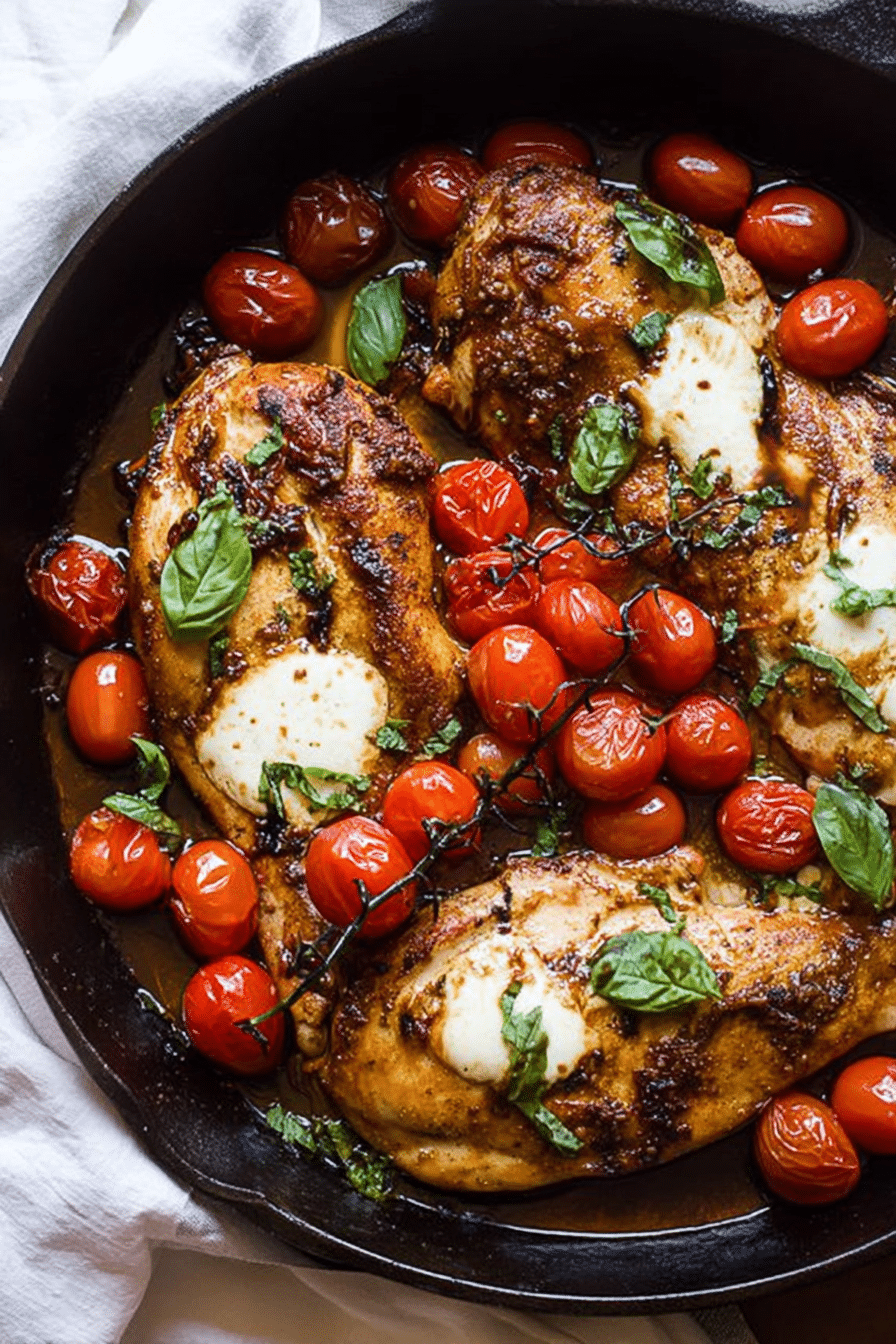
Balsamic Glazed One Pan Chicken
Ingredients
Method
- In a bowl, whisk together the sauce ingredients. Season with salt and pepper to taste. Set aside.
- In another bowl, toss the tomatoes, mozzarella, and basil together. Season with salt and pepper to taste. Set aside.
- Preheat the oven to 400 degrees F.
- In a large oven-safe skillet, heat oil over medium-high. Season the chicken all over with salt and pepper to taste. When the pan is hot and the oil shimmers, add the chicken in a single layer. Cook for 1-2 minutes on each side until lightly golden brown. Add the balsamic sauce mixture. It should start to simmer quickly. Use a wooden spoon to scrape up any browned bits from the bottom of the pan.
- Remove the pan from the heat and distribute the tomato mozzarella mixture over the chicken.
- Bake uncovered for 18-23 minutes until the chicken is fully cooked. The internal temperature should register at 165F. Remove from the oven and let rest for 5 minutes before serving.