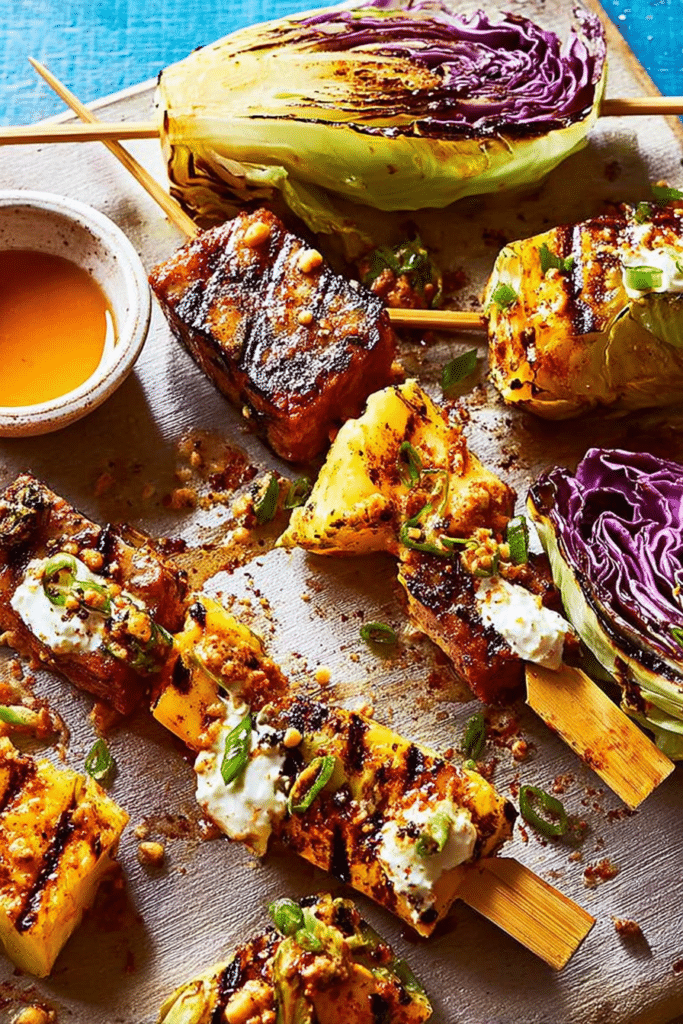
I remember the first time I tried charred cabbage at a barbecue: the edges were spotty, some wedges were limp, and the harissa I smeared on burned in places. After a few summers of trial and error in my kitchen and over the coals, I learned how to coax that glossy, spicy butter into the leaves without turning them to mush. I now reach for pointed spring cabbage for its slender wedges and sweet core — it chars beautifully and keeps a satisfying bite.
In my kitchen this recipe became the one I take to gatherings when friends expect a showpiece vegetable. The contrast of deep-char black edges against pale-green inner leaves, the warm aroma of toasted butter and chili, and the cool scatter of creamy yogurt and crispy onions makes it a crowd-pleaser. I’ll tell you what went wrong the first few times and the small fixes that made the skewers reliable every time.
Beyond the theatrics, cabbage is a smart ingredient: it’s inexpensive, stores well through summer, and provides vitamin C, fibre and a pleasant vegetal sweetness that stands up to spicy fat. The harissa butter adds heat and a roasted pepper complexity that’s surprisingly balanced by the yogurt on the plate. Serve alongside grilled meats or heartier vegetarian mains for a complete summer spread — I often pair these with something richer so the cabbage can cut through.
These skewers belong on any summer menu because they travel well from grill to table and bring bold flavour without fuss. They’re also flexible: you can make a vegan version, swap the heat level, or change herbs to suit the season. Read on and I’ll walk you through the technique and the small details that get a perfect char and tender interior every time.
Why these charred cabbage skewers with harissa butter belong on your summer menu
Cabbage is an unlikely star for summer grilling, but that’s exactly what makes it special. It’s inexpensive, hearty enough to handle high heat and versatile in pairing. These skewers fit neatly alongside other barbecue staples and offer a bright, spicy foil to richer mains.
- Cabbage is high in fibre and vitamin C, and it caramelises at the edges to reveal a sweet, nutty note when charred properly.
- Skewers make the cabbage portable and social — they sit well next to grilled proteins or a platter of salads.
- Plant-based grilling is trending because bold condiments like harissa allow vegetables to carry forward strong, layered flavours that usually belong to meat dishes.
The visual contrast is striking: glossy, orange-tinted butter pooled in the folds, blackened edges, and a pale core. For a festive spread I often serve them with other shareable items; these cheesy garlic chicken wraps complement the skewers perfectly for people who want meat on the side.
Everything You Need for Charred Cabbage Skewers with Harissa Butter
Below I describe each key ingredient conversationally, with substitutions so the recipe adapts to diets and pantry limitations. I won’t list measurements here — those belong in the recipe card — but I’ll explain the purpose of each element and ways to swap them.
- Salted butter – Provides the silky, toasty base for the harissa; swap for a plant-based spread to make the dish vegan.
- Harissa – The main flavour driver: smoky, spicy and aromatic. If unavailable, use a chili paste with smoked paprika and cumin for similar depth, or tone down for milder heat.
- Lemon (zest and juice) – Brightens the butter and cuts through the fat; you can replace with a splash of white wine vinegar if needed.
- Garlic – Adds pungent warmth to the butter; use roasted garlic for a sweeter, mellower profile.
- Fresh parsley – A final herbaceous lift; cilantro or mint can be interesting alternatives depending on the flavour direction.
- Pointed spring cabbage – My preferred choice for tender wedges and quick cooking; regular green or savoy both work if handled slightly longer on the grill.
- Neutral oil – For brushing the grill or cabbage so it chars instead of sticking; use avocado oil or sunflower if you want a higher smoke point.
- Thick Greek yogurt – A cooling, tangy bed for the skewers that balances the harissa butter; use a full-fat non-dairy yogurt for a vegan plate.
- Crispy onions – Provide crunch and caramelised onion notes; substitute toasted breadcrumbs or fried shallots if you have allergies.
Source your cabbage when it’s firm and heavy for its size; avoid loose leaves or brown edges. Freshness here makes a real difference to texture and sweetness.
The Secret to the Perfect Charred Edge
Getting a deep char on cabbage without collapsing the wedge requires a balance of high heat, short contact time and gentle basting. Here are the practical steps I follow at the grill to guarantee a dark, flavorful edge while retaining a tender core.
- Preheat the grill to high so the bars are hot; you want immediate searing contact rather than slow, steaming heat.
- Brush the cabbage wedges lightly with oil first to promote even colour, then baste with harissa butter right before they hit the bars.
- Place skewered wedges perpendicular to the bars so more surface touches the heat; leave them undisturbed for 3–5 minutes to form a char, then rotate to another face.
- Turn carefully and baste sparingly each time; too much butter early on will pool and cause flare-ups that blacken unevenly.
- Use an instant-read thermometer if you like numbers — aim for a tender core around 70–75°C if you want reassurance — but the real test is a knife sliding into the core with slight resistance.
Listen for a steady sizzle and watch for the leaves to darken at the edges while the inner layers stay pale. That contrast is what makes the texture interesting; the char gives a crunchy note while the interior stays succulent.
How Harissa Butter Builds Deep, Layered Flavor
Harissa is more than heat — it brings roasted pepper, cumin and sometimes coriander and caraway into play. When melted into butter, those spices bloom in the fat and cling to the cabbage leaves, creating a lacquered finish that tastes richer than oil alone.
Temperature matters: warm the butter enough to melt and coax the aromatics out of the harissa, but don’t let it smoke. I melt gently, mix in lemon and garlic, and reduce for a couple of minutes so the garlic softens and the mixture sings rather than bites. The finished butter should be glossy and pourable.
If you like to experiment, try different harissa styles — Tunisian versions are punchier, Moroccan pastes are sweeter and can add an unexpected floral lift. The depth of the butter pairs beautifully with other bold bites; for example, it complements the heat and texture of spicy cajun shrimp stuffed jalapenos when you put together a varied barbecue platter.
Grill Temperature and Timing for Tender, Not Soggy, Cabbage
The goal is a high initial sear followed by moderate heat to finish without steaming the wedges flat. Follow these timing guidelines and adjust for your grill’s personality.
- Preheat grill bars until they’re visibly hot and you can feel heat when holding your hand above them at a short distance.
- Sear each face for about 3–5 minutes; if the wedge is thick, allow a couple more minutes, but keep turning to avoid one-sided burning.
- Reduce the heat slightly or move wedges to an indirect zone for a final few minutes if the outer char is done before the core is tender.
- Acharred exterior with a still-firm, knife-penetrable center indicates success; avoid long, slow cooking which yields limp leaves.
On a very hot grill, watch for flare-ups when basting butter; have tongs ready to move skewers briefly away from direct flame until the sizzle calms.
Pro Tip for charred cabbage skewers with harissa butter: substitutions, nutrition and crisping tricks
- Nutrition note: Cabbage provides fibre and vitamin C while the yogurt adds protein and calcium; using a plant butter and non-dairy yogurt makes the dish entirely vegan without sacrificing texture.
- Harissa substitutes: If you don’t have harissa, mix smoked paprika, a pinch of cayenne, cumin and a little tomato paste with oil to mimic the profile.
- Gluten- and nut-free sides: Crispy onions can be replaced with toasted seeds or fried shallots for crunch; ensure packaged crisps are gluten-free if needed.
- Crisping trick: Pat the cabbage dry before oiling to prevent steaming; finish under a very hot grill or broiler for 1–2 minutes to sharpen the edges just before serving.
- Shelf-stable swap: Use bottled chili oil blended with lemon and garlic if fresh harissa is unavailable — it yields a reliable, punchy glaze.
Troubleshooting (bulleted for clarity):
- If the wedges are soggy: I found that too much butter early in cooking causes steaming — reduce initial basting and sear first, baste later.
- If the edges are burning black and bitter: move the skewers to an indirect zone and finish with lower heat; trim any charred tips before serving if needed.
- If the center stays hard: either cut thinner wedges or allow a few extra minutes over medium heat so the core softens without over-charring the exterior.
How to Make Charred Cabbage Skewers with Harissa Butter (Step-by-Step)
- Make the harissa butter: gently melt the butter in a small pan, stir in harissa, lemon zest and juice, and crushed garlic; simmer briefly so the garlic softens and the mixture becomes fragrant. Season and stir in most of the parsley, reserving some to garnish.
- Prepare the cabbage: remove any damaged outer leaves, halve the head keeping the root intact, then quarter each half so every wedge holds together on the skewer.
- Thread and oil: carefully thread wedges onto metal skewers so the root end stays anchored; brush the exposed faces with neutral oil and then with the harissa butter to build an initial glaze.
- Grill: lay skewers across hot grill bars and let each face sear undisturbed for a few minutes before turning; baste sparingly between turns until the wedges are soft and blackened at the edges. Alternatively, use a hot oven grill if you don’t have an outdoor barbecue.
- Assemble: spread thick yogurt on a serving platter, arrange the skewers on top, drizzle any remaining harissa butter over them, and scatter with crispy onions and the reserved parsley.
- Finish and serve: I like to serve immediately while the wedges still have a warm, glossy finish and the yogurt contrasts with coolness; provide extra lemon wedges for people who want more brightness.
How to Store, Reheat and Variations for These Skewers
Store leftovers in an airtight container in the fridge for up to three days. Reheat briefly in a hot skillet or under a broiler for a few minutes to re-crisp the edges — avoid microwaving if you want to preserve texture.
- Best storage practice: Keep the yogurt separate from the cabbage if you plan to refrigerate, and add crispy toppings just before serving to retain crunch.
- Reheating: Bring the skewers back to a high-heat pan for 1–3 minutes per side or place under a hot broiler to restore char and warmth.
- Variations (bulleted):
- Vegan version: use a plant-based butter and coconut or soy yogurt to keep the creamy contrast.
- Smokier route: add a touch of smoked paprika to the harissa butter or briefly smoke the cabbage on cedar planks for an aromatic finish.
- Herbed lift: swap parsley for mint and finish with a drizzle of preserved lemon oil for a brighter edge.
- Make it a platter: serve with grilled proteins and sides — for example, try garlic-parmesan roasted brussels sprouts as a complementary option for a fuller summer table: garlic parmesan roasted brussels sprouts.
Frequently Asked Questions
Can I use other types of cabbage for this recipe?
Absolutely! While pointed spring cabbage gives a nice texture and flavor, you can also use regular green cabbage or even savoy cabbage if that’s what you have on hand.
What if I don’t have harissa?
If you don’t have harissa, you can substitute it with sriracha or another chili paste, but keep in mind the flavor will be slightly different. You can also make a homemade version using chili powder mixed with olive oil and some spices!
How should I store leftovers?
Store any leftovers in an airtight container in the refrigerator for up to 3 days. Reheat them in a hot skillet or under the broiler for a few minutes to revive their crunch.
Can I make this dish vegan?
Yes! You can substitute the butter with a plant-based alternative and use non-dairy yogurt to create a delicious vegan version.
What can I serve with these cabbage skewers?
These skewers pair wonderfully with grilled meats, or you can serve them alongside a refreshing salad or some quinoa for a hearty vegetarian meal.
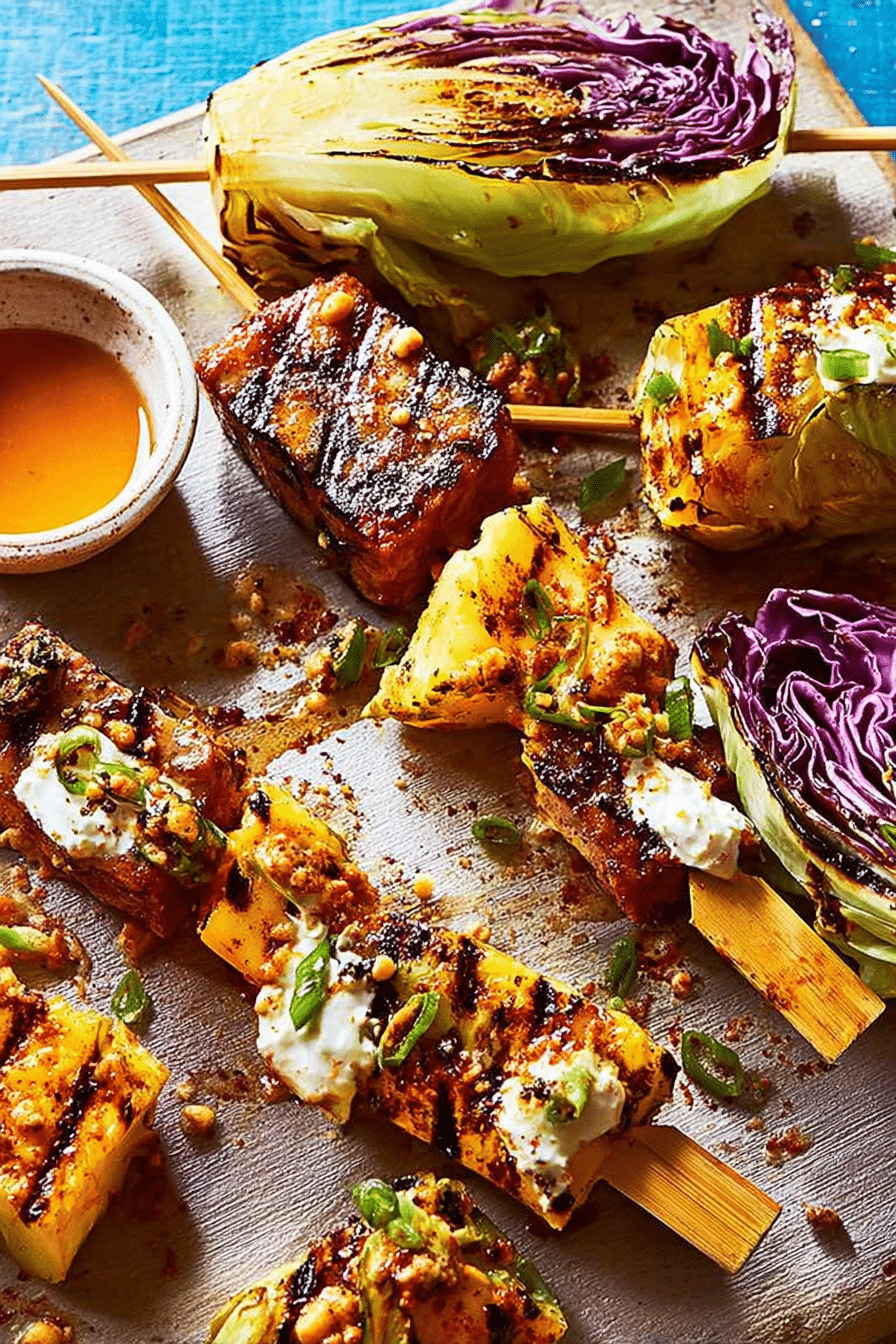
Charred cabbage skewers with harissa butter
Ingredients
Method
- Melt the butter in a saucepan, then add the harissa, lemon zest, lemon juice and garlic, and cook for 2-3 mins, until sizzling. Season with pepper and stir in most of the parsley, reserving a little to garnish.
- Wash and discard any damaged or blemished outer leaves of the cabbage. Cut in half, keeping the root intact, then cut each half into 2 wedges, keeping the root attached to each end. Carefully thread onto metal skewers, brush each wedge with the harissa butter, then set aside on a baking tray.
- Brush the neutral oil over the bars of the barbecue and grill the cabbage, brushing with the butter occasionally, turning carefully every 3-5 mins, until soft and charred all over. Alternatively, you can cook these under a hot grill.
- Spread the yogurt out on a serving platter and top with the skewers, drizzling over any remaining butter, then scatter with the crispy onions and reserved parsley.