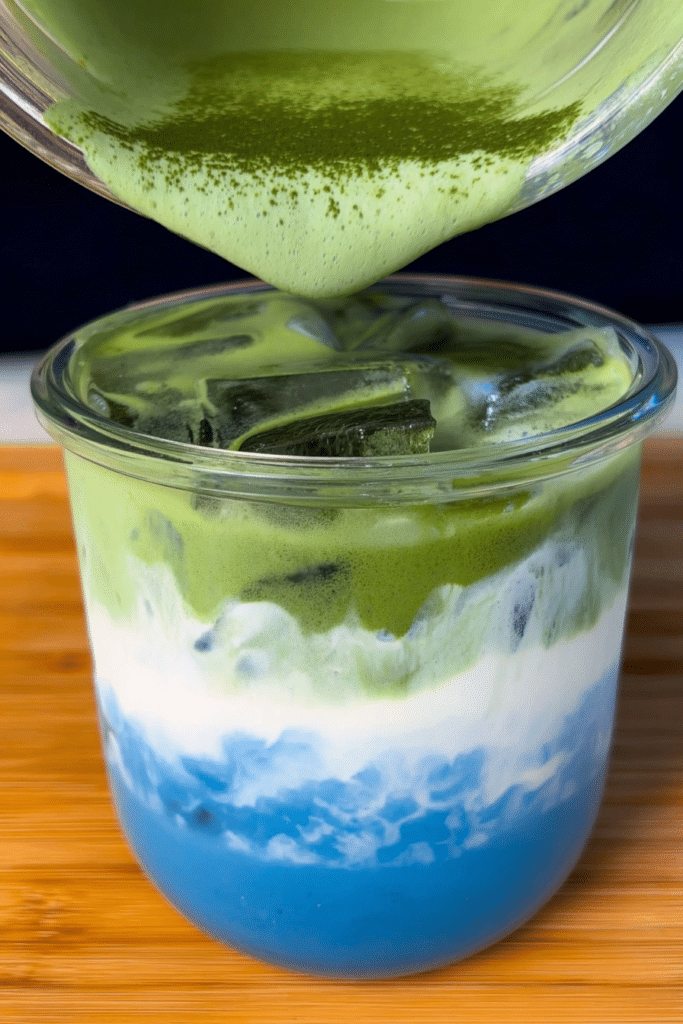
I remember the first time I tried to layer a matcha drink at home — it turned into a green swirl before I even set the cup down. After a few messy tries and a lot of tinkering in my kitchen, I landed on a simple technique that reliably gives me a crisp, two-tone iced latte: chilled, subtly sweetened blue milk on the bottom and a smooth, whisked matcha on top. I made this version to celebrate Earth Day, with colors that nod to sky and sea and ingredients chosen to keep the footprint small.
I like to think of this drink as a tiny ceremony for the planet: a glass that looks like a spring sky and tastes like a gentle pick-me-up. The blue comes from spirulina — a single pinch paints the milk a soft aqua — and the matcha sits like a green horizon. I tested different plant milks, sweeteners, and whisking methods until the layers stayed put and the flavors sang together rather than fighting.
If you care about where your food comes from, this recipe is forgiving and flexible: use local, organic milk and honey (or a plant-based syrup) and you’ll keep the environmental impact low while keeping the drink bright. I’ll walk you through what I use in my kitchen, the small tweaks that make the layers hold, and a few serving ideas to make this Earth Day-friendly drink feel special.
Everything I share here comes from actually making the drink — the spills, the successful pours, and the times the matcha sank — so you can skip the mistakes and get right to the pretty glass.
Everything You Need for Earth Day Matcha
This is a short, visual-forward recipe: bright blue milk, a soft white “cloud,” and glossy green matcha. Below I talk through each ingredient’s role and easy swaps that keep the recipe planet-friendly.
- Milk – Your canvas. Oat and almond milks create different textures: oat gives extra creaminess and helps the blue layer feel velvety; almond is lighter and can make the layers sit more distinctly. Use local, organic options when possible.
- Blue spirulina powder – The natural color agent. A tiny amount goes a long way; stir it into the milk until totally smooth so you get an even sky-blue tone.
- Honey or sweetener – Balances matcha’s bitterness and slightly increases the density of the milk layer so it stays put. Swap for maple or agave for a vegan option.
- Matcha powder – The showstopper. Sift for a lump-free whisk and choose culinary-grade matcha for lattes or ceremonial-grade if you prefer a grassier, more nuanced flavor.
- Warm water – Helps dissolve the matcha cleanly before it meets the cold. Use water that’s warm to the touch, not boiling.
- Yogurt or marshmallow fluff (optional) – For cloud decorations on the glass rim. Skip for a vegan version or use dairy-free yogurt.
- Ice – Keeps the drink cold and visually separates the layers; use clear, fresh ice if presentation matters.
- Equipment – A fine mesh sieve for matcha, a small whisk (or bamboo chasen), and a tall glass for the layered effect.
Mastering the Two-Tone Layering Technique
Layering is about control: you want two liquids that contrast in color and density so one will rest above the other instead of mixing immediately. I found these practical, repeatable steps make the difference between a sloshy drink and a café-caliber pour.
- Make the bottom layer slightly denser: sweeten the milk and chill it thoroughly so it sits heavier in the glass.
- Make the top layer thinner and lighter: whisk matcha with just enough warm water to make a silky, low-viscosity concentrate that’s still flavorful.
- Pour with a slow, steady hand: fill the glass with ice first, then pour the chilled blue milk. To add the matcha, pour over the back of a spoon or gently down the side of the glass so it doesn’t break the surface tension.
- Test your pour: if the matcha sinks, it means the top layer is denser — thin it with a touch more water or reduce the matcha amount. If it floats but looks cloudy, >pour even more slowly.
If you want a savory pairing while you practice your pours, try a quick shrimp scampi — it’s light, bright, and pairs nicely with the fresh notes of matcha: quick shrimp scampi.
Why Temperature and Density Matter for Layering
Think of each layer as a tiny ocean with its own temperature and weight. When the bottom is cold and slightly heavier, and the top is thinner and slightly warmer, they want to stay separated. Below are clear, practical rules I use in my kitchen.
- Matcha mixing temperature: use warm water — roughly warm to the touch (about 55–60°C / 130–140°F). Hotter water can scald the matcha and make it bitter; cooler water won’t dissolve it as cleanly.
- Milk temperature: keep the milk well chilled (fridge temperature). Cold milk increases density and helps the blue layer stay anchored.
- Density adjustments: sweeteners and creamy milks (like oat) make the milk denser. If your matcha keeps sinking, thin the matcha with a splash more warm water or reduce matcha concentration.
- Ingredient choices matter: thicker plant milks (oat, full-fat soy) will favor a stable bottom layer; light almond or cashew milks can give a more dramatic separation if you want a clear line.
Choose Local, Organic, and Plant-Based Ingredients
Choosing locally sourced and organic ingredients reduces transportation and supports farmers in your community — small choices that add up. I aim for plant-based milk from local producers when I can, and I look for honey or syrups at neighborhood markets. Sourcing locally can dramatically cut delivery distances (often by tens to hundreds of miles), which lowers the transportation footprint associated with your drink.
Local ingredients often taste brighter and fresher: the oat milk I buy from a town vendor smells faintly of toasted oats, and a local honey brings floral notes that change with the season. Supporting nearby growers keeps money in the community and reduces packaging waste when you buy direct.
Pair it with seasonal, sustainable dishes to keep the celebration going — for a wholesome meal, pair your Earth Day Matcha with a delicious pumpkin lentil soup with chili crisp that features local produce.
How to Make Earth Day Matcha (Step-by-Step)
Follow these steps slowly and mindfully; the technique matters more than speed. I include troubleshooting tips right after so you can skip the mistakes I made.
- Stir the milk, blue spirulina, and sweetener together in a cup until the color is uniform and the sweetener dissolves; chill until cold.
- Decorate the inside of your serving glass with small “clouds” of yogurt or marshmallow fluff by dotting and gently dragging them to create a soft pattern; set aside.
- Sift the matcha into a small bowl to remove clumps. Whisk in warm water in a zigzag motion until the powder is fully suspended and the liquid is silky; adjust for strength by adding more matcha or more water.
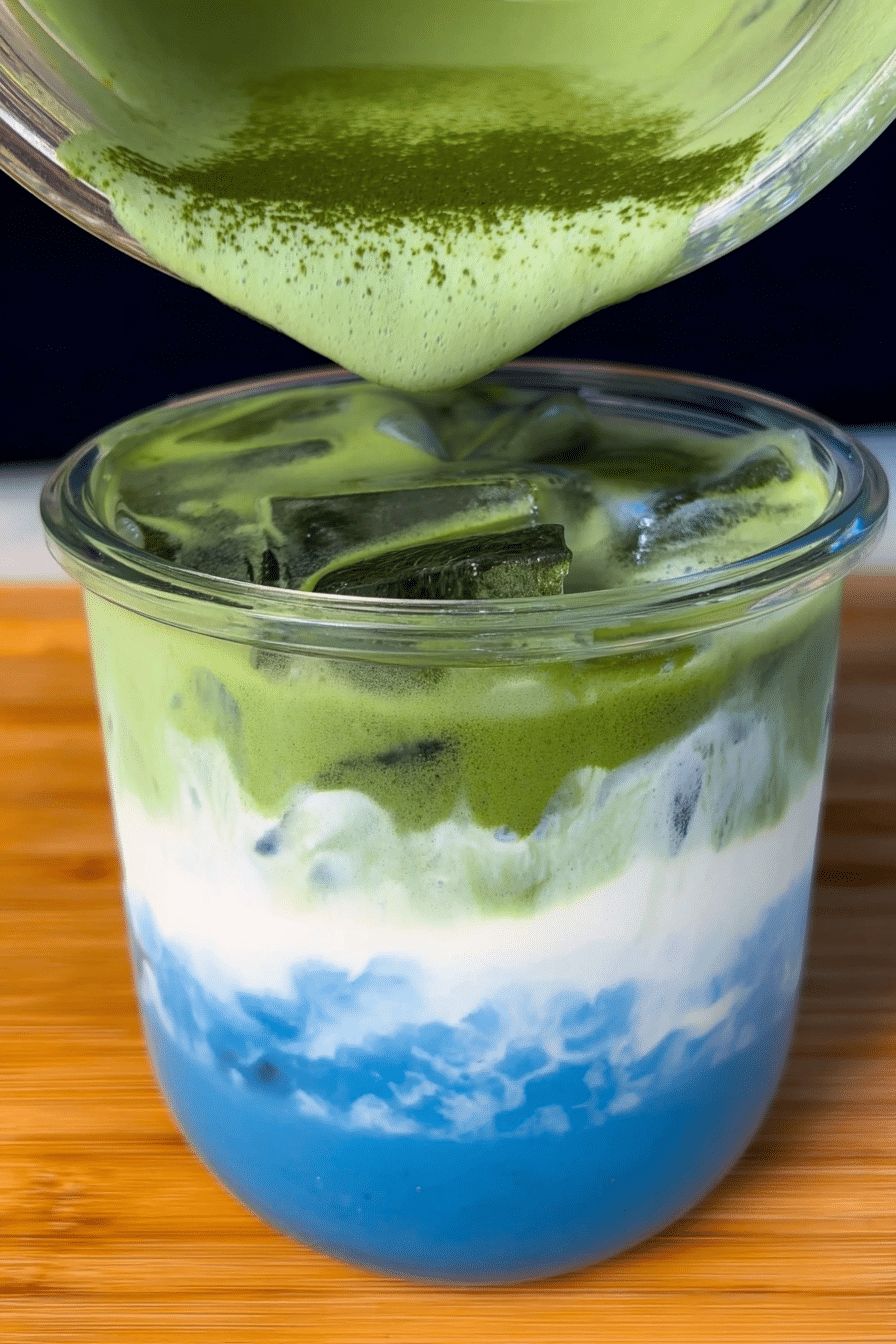
- Fill the cloud-decorated glass with ice, then pour in the chilled blue milk so it sits roughly three-quarters full.
- Pour the whisked matcha slowly over the back of a spoon or down the glass edge so it layers on top. Serve layered or stir before drinking as you prefer.
Enjoy it alongside a light meal to keep the sustainable vibe going — I like this easy pasta al pesto for a spring pairing: easy pasta al pesto.
Note: Pro-Tips, Troubleshooting, and Variations below are presented as bulleted lists for scannability.
- Pro-Tips (bulleted for clarity):
- I always sift matcha — even a small clump will sink and ruin the top layer. Using a fine mesh makes the matcha ribbon smooth and glossy.
- Chill the blue milk well in advance; a cold base does half the work for you when layering.
- If you want a cleaner line, pour the matcha over the back of a spoon held just above the ice — it slows the flow and reduces mixing.
- Use seasonal honey or syrup for subtle flavor changes; I swap to spring blossom honey in April for floral notes.
- Troubleshooting (bulleted):
- If the matcha sinks: thin it with a little more warm water or reduce the matcha amount; the top layer must be less dense than the milk.
- If the layers mix and look cloudy: pour more slowly or add more ice to maintain a barrier between layers.
- If the matcha tastes bitter: your water was too hot or you used too much matcha; try cooler water or slightly less powder next time.
- I noticed early on that overly frothy matcha collapses into the milk — aim for a smooth, low-viscosity whisk rather than lots of foam.
Pro Tip for earth day matcha: Use local, organic ingredients to reduce your footprint
Small sourcing choices make this drink more Earth Day–worthy. I keep a short checklist in my head when I shop and that’s helped me reduce waste and support local growers.
- Buy plant-based milk from local producers when available to minimize packaging and transport.
- Choose organic matcha and spirulina to support sustainable farming practices that protect soil and water.
- Use seasonal sweeteners and avoid single-use plastic by bringing reusable jars or using bulk bins.
- Share your eco-friendly swaps on social media or with friends to spread low-impact practices.
Storage, Variations, and Serving Ideas for Earth Day Matcha
Keep things flexible — this drink is best fresh, but small changes expand its reach. Below I list storage tips, flavor variations, and serving ideas so you can make it your own.
- Storage – Best enjoyed immediately; if you must store, keep the blue milk and whisked matcha separate in airtight containers in the fridge for up to a day and combine just before serving.
- Variations (bulleted):
- Make it vegan by swapping honey for maple or agave and using dairy-free yogurt for the clouds.
- Swap blue spirulina for butterfly pea powder for a different blue hue and a slightly earthier flavor.
- Try a coconut-milk base for a tropical twist, or add a citrus zest to the milk for a bright aromatic lift.
- For a creamier top layer, blend matcha with a splash of oat milk before whisking with water.
- Serving ideas – Present with light, seasonal bites; complement your Earth Day Matcha with some garlic parmesan roasted Brussels sprouts for a delightful sustainable feast.
Frequently Asked Questions
Can I use any type of milk for this Earth Day Matcha recipe?
Absolutely! You can use oat milk, almond milk, or regular milk. Choose your favorite or what you have on hand!
What if I can’t find blue spirulina powder?
No worries! You can skip the blue spirulina for a classic matcha look, or consider using a different natural coloring if you’d like to keep it colorful.
How can I make the matcha layer stronger?
You can sift in an extra ½ teaspoon of matcha powder when whisking for a bolder flavor! Just adjust the warm water to reach your desired consistency.
Is this drink suitable for vegans?
Yes, definitely! Use plant-based milk and skip the yogurt or marshmallow fluff clouds for a completely vegan treat.
How should I store any leftover Earth Day Matcha?
It’s best enjoyed fresh, but if you have leftovers, store it in the fridge in an airtight container for up to a day. Just give it a good stir before enjoying!
Earth Day Matcha
Ingredients
Method
- Stir together the milk, blue spirulina, and honey in a cup until smooth and fully combined. Set aside.
- Decorate the inside of a separate glass with yogurt or marshmallow fluff as clouds. Set aside.
- Sift matcha powder into another glass and whisk 2–3 tablespoons warm water in a zigzag formation until smooth.
- Fill the cloud-decorated glass with ice and pour in the blue milk mixture.
- Slowly layer the matcha mixture on top for a two-toned effect. Serve layered or stir before drinking.
- Enjoy!