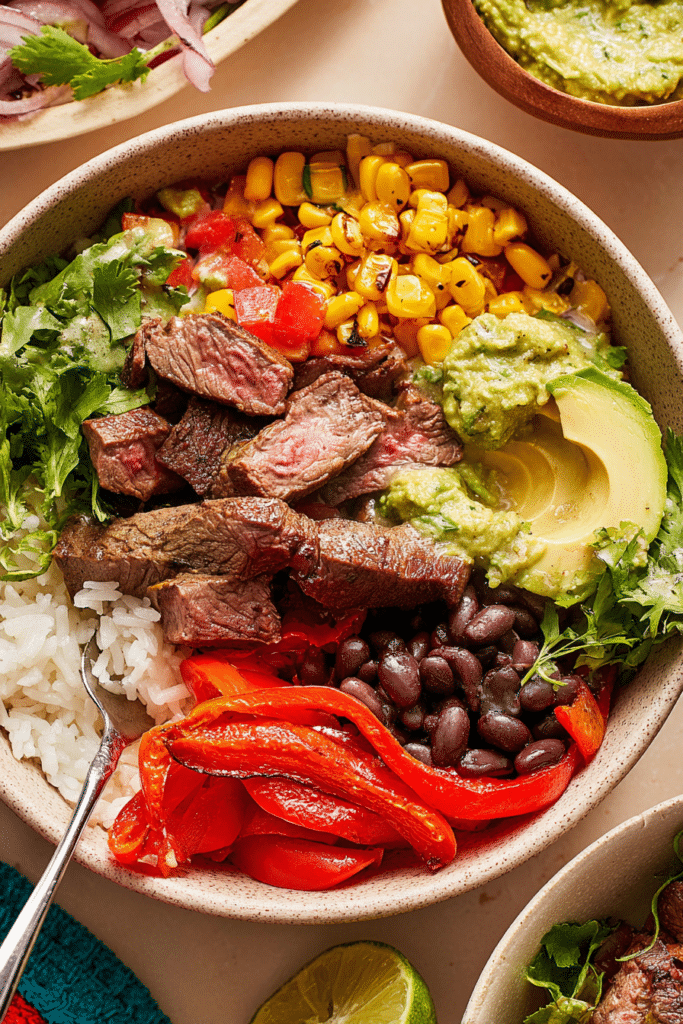
I’ve made these chipotle steak fajita bowls over and over in my kitchen when weeknights get busy and the family wants something satisfying without a long list of steps. What I love is how little hands-on time you need for maximum payoff: a quick marinade, a hot pan, and colorful veggies that keep the bowls bright and fresh.
One thing I never skip is the guacamole—my household treats it like a required topping. A scoop of creamy avocado balances the smoky, spicy steak and cools the bowl without masking any of the other flavors. If you’re short on time, store-bought guac works fine, but homemade takes just a few minutes and makes the whole meal feel fresher.
I also rely on simple multitasking: start the rice, toss the steak in its marinade, and prep the peppers while the steak rests after a scorching sear. That rhythm saves time and keeps everything hot when you assemble the bowls. These are practical, family-friendly dinners that still taste like something special.
Below I’ll walk through what to buy, the small techniques that make big flavor, fast steak-cooking guidelines so the meat stays juicy, and helpful tips for storage and customization so you can make these bowls your own.
Why These Chipotle Steak Fajita Bowls Are Weeknight Game-Changers
These bowls work on weeknights because they balance speed, flexibility, and real flavor. You’ll get a protein-forward main, crisp veggies, bright fresh elements, and a creamy finish without complicated steps or exotic pantry shopping.
- Quick prep and cook time lets you get dinner on the table on busy evenings.
- Ingredients are flexible so you can swap what’s in your fridge or tailor for dietary needs.
- They deliver a satisfying, takeout-level flavor that’s healthier and easier to control.
Everything You Need for Chipotle Steak Fajita Bowls
Below I explain the role of each ingredient and offer simple swaps so you can shop fast and cook with confidence. Remember: measurements are handled in the recipe card elsewhere—this is about purpose and substitution.
- Sirloin or flank steak – The main protein; choose flank for lean, sirloin for a slightly richer bite. Swap with chicken, shrimp, or a plant-based steak alternative if you prefer.
- Olive oil or avocado oil – Provides fat for the marinade and helps achieve a good sear; use a high-heat oil if you’re pan-searing.
- Lime juice – Adds brightness and helps tenderize the meat slightly in the marinade.
- Chipotle peppers in adobo – The source of smoky heat; adjust quantity for spice tolerance or use smoked paprika plus a splash of hot sauce as a milder substitute.
- Garlic, cumin, oregano, black pepper – The aromatic backbone that turns simple steak into fajita-ready steak.
- Bell peppers and red onion – Provide crunch, color, and sweetness; swap in seasonal peppers or other quick-sauté veggies.
- Cooked rice – The base that soaks up juices; use jasmine, brown rice, or cauliflower rice for lower carbs.
- Romaine lettuce – Adds fresh crunch and contrast to warm components; substitute mixed greens if you like.
- Black beans and corn – Add fiber and heartiness; canned versions are convenient—rinse before using.
- Baby tomatoes – Bright acidity to cut richness; cherry or grape tomatoes work well.
- Guacamole – Creamy cooling topping; store-bought is fine, but homemade adds freshness.
The Secret to Big Smoky Flavor with Minimal Effort
- Marinate long enough for flavor to penetrate—if you can only spare 30 minutes it still adds noticeable depth.
- High heat creates the Maillard reaction: that browned, smoky crust on the steak is where much of the flavor comes from. A very hot pan is worth the small extra effort.
- Use the chipotle-adobo in two ways: part in the marinade, and a little reserved (and boiled) to finish the fajita veggies for a cohesive smoky thread.
- Don’t overcrowd the pan when searing—crowding lowers surface temperature and prevents proper browning.
How to Cook Steak Fast Without Losing Juiciness
- Preheat a cast iron or heavy-bottomed skillet over medium-high until very hot so the steak sizzles on contact.
- Pat the steak dry before placing it in the pan to maximize browning; wet surfaces steam instead of sear.
- Sear undisturbed for a few minutes per side depending on thickness—use timing guidelines but rely on internal temperature for accuracy (medium-rare ~130–135°F, medium ~140–145°F, medium-well ~150–155°F).
- After searing, remove the steak and tent it loosely with foil; rest for about 8–10 minutes so juices redistribute and slicing doesn’t squeeze them out.
- Slice against the grain to shorten muscle fibers and make the steak feel more tender on the plate.
How to Make Chipotle Steak Fajita Bowls (Step-by-Step)
- Marinate the steak with oil, lime juice, chipotle-adobo, garlic, and dried spices; refrigerate briefly if time allows.
- While the meat marinates, wash and slice peppers, onions, and halve tomatoes; start your rice so it’s ready when you assemble.
- Heat a skillet until very hot, add oil, and sear the steak until the outside is deeply browned; flip and finish to your preferred doneness.
- Remove the steak to a cutting board and rest; tent with foil.
- Add the reserved marinade to the pan, bring to a boil to kill any raw-meat bacteria, then add peppers and onions and sauté until softened and slightly charred on the edges.
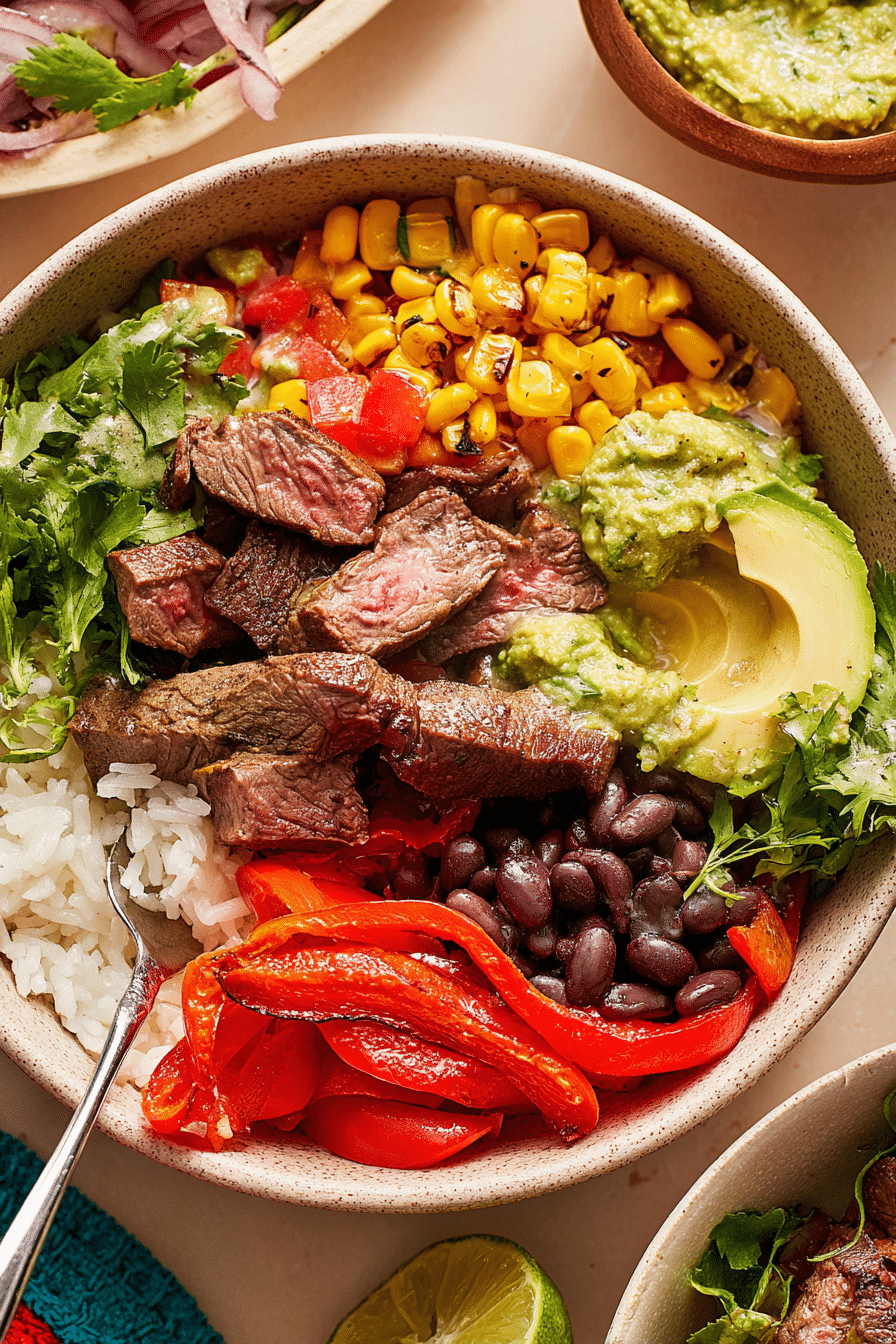
- Assemble bowls: lay a base of rice, add chopped romaine, beans, corn, tomatoes, sautéed fajita vegetables, sliced steak, and a generous scoop of guacamole.
- Serve immediately while the steak is warm and the veggies still have a touch of char.
Note: Pro-Tips, Troubleshooting, and Variations are presented as bulleted lists below for quick scanning.
Pro Tip for Chipotle Steak Fajita Bowls: Quick Marinate, High Heat Sear
- In my kitchen I often use a quick 30-minute marinade—longer is fine, but that short window still delivers a pronounced chipotle tang.
- I always pat the steak dry before searing; it’s a tiny step that makes a big difference in color and flavor.
- If you want an extra smoky note without a grill, add a pinch of smoked paprika to the marinade.
- To speed up dinner, cook the rice and slice the veggies the night before so assembly is immediate when you get home.
Troubleshooting
- If the steak sticks or turns gray, the pan wasn’t hot enough—let it heat longer and try again; I preheat until a drop of water dances across the surface.
- If the steak is undercooked, finish it in a 400°F oven for a few minutes after searing to gently bring the center up without burning the outside.
- If the marinade tastes flat, add a splash more acid (lime) and a pinch of salt to brighten it.
- If vegetables are limp or soggy, cook them just until softened and keep some raw for crunch—half sautéed, half raw gives texture contrast.
How to Store, Reheat, and Customize Your Bowls
- Storage: Pack components separately when possible—steak and vegetables in airtight containers, guacamole and lettuce separately—to keep textures optimal. Refrigerate for up to 3 days.
- Reheat: Warm the steak and veggies in a skillet over medium heat or short bursts in the microwave; add a splash of water or stock to prevent drying. Assemble with fresh lettuce and tomatoes after reheating.
- Meal prep: Cook rice, beans, steak, and sautéed peppers in advance and portion into containers. Keep guac and lettuce aside until serving to avoid browning and sogginess.
- Customization: Swap rice for cauliflower rice to cut carbs; switch steak for tofu or jackfruit for a vegetarian version; add pickled onions or fresh cilantro for extra brightness.
Nutritional Breakdown
Below are approximate per-serving values for the main components so you can compare to takeout or plan portions. These are estimates and will vary with exact portion sizes and ingredient brands.
- Sirloin/flank steak (per serving) – ~250–300 kcal; protein ~30–35 g; fat ~15–20 g; carbs ~0 g.
- Cooked jasmine rice (per serving) – ~200 kcal; carbs ~45 g; protein ~4 g; fat ~0.5 g.
- Black beans (per serving) – ~100 kcal; protein ~6–8 g; carbs ~18–20 g; fiber ~6–8 g.
- Corn (per serving) – ~60–70 kcal; carbs ~14–16 g; protein ~2 g; fat ~1 g.
- Guacamole (per serving) – ~120–150 kcal; fat ~10–14 g (mostly healthy fats); carbs ~6–8 g; protein ~1–2 g.
- Bell peppers & red onion (combined per serving) – ~30–40 kcal; carbs ~7–9 g; vitamin C-rich and low in fat.
- Romaine & tomatoes (per serving) – ~10–20 kcal; minimal carbs and fat; provide freshness and micronutrients.
- Olive/avocado oil and chipotle-adobo used in marinade – contribute additional calories and fat depending on amount used; the smoky chipotle provides negligible calories but lots of flavor.
Together these components typically land near the recipe’s estimated total of ~680–700 kcal per serving depending on portion sizes and exact ingredient choices, while offering a strong protein profile and fiber from beans and veggies—an easy, satisfying alternative to many takeout bowls.
Variations and Seasonal Swaps
- Spring/Summer: Grill zucchini, summer squash, or corn for extra charred sweetness.
- Fall/Winter: Swap peppers for roasted sweet potatoes or caramelized onions for a heartier bowl.
- Vegetarian/Vegan: Use firm tofu marinated the same way and seared until crisp, or shredded jackfruit tossed in the cooked marinade for a meaty texture.
- Lower-carb: Replace rice with cauliflower rice or leafy greens for a lighter bowl.
- Heat level: Use fewer chipotle peppers for milder heat or add fresh sliced jalapeños for a brighter kick.
These bowls are built to be flexible—mix and match components based on what’s in season or what your family prefers, and you’ll still end up with a quick, flavorful dinner.
Frequently Asked Questions
Can I use a different type of meat for these fajita bowls?
Absolutely! You can substitute the sirloin or flank steak with chicken, shrimp, or even a plant-based protein like tofu for a delicious twist.
How can I store leftovers of the Chipotle Steak Fajita Bowls?
To store leftovers, place them in an airtight container and refrigerate for up to 3 days. Reheat in the microwave or on the stovetop until warmed through.
Is this recipe suitable for meal prep?
Yes! These fajita bowls are perfect for meal prep. You can cook all the ingredients ahead of time and assemble the bowls as needed throughout the week.
Can I make the guacamole from scratch?
Absolutely! Making guacamole from scratch is easy. Just mash ripe avocados and mix in lime juice, diced onions, tomatoes, and seasonings to taste.
What are some good toppings I can add?
Some great toppings include sour cream, jalapeños, fresh cilantro, or a squeeze of lime for extra zest!
Chipotle Steak Fajita Bowls
Ingredients
Method
- To make these bowls, start by preparing the steak. Add the sirloin steak (or flank steak, if using) to a bowl or tray. Drizzle the olive oil and lime juice on top, then add in the chipotle peppers, mashed garlic, cumin, oregano, and ground black pepper.
- Rub both sides of the steak well in the marinade mixture. Then, cover the bowl or tray and transfer the steak to the fridge. Allow it to marinate for a minimum of 30 minutes (or up to overnight).
- While the steak is marinating, prepare the fajitas. Wash and slice the bell peppers, onions, and tomatoes, and set them aside.
- Cook the rice according to your preferred method and set it aside.
- Next, heat a cast iron skillet, on the stove, over medium-high heat, and add in the avocado oil.
- Once the pan is hot, add in the steak -- be sure to wait until the pan is hot, otherwise the steak will turn grey and stick to the pan.
- Allow the steak to cook for 4-5 minutes, undisturbed.
- Then, flip the steak and allow it to cook for another 4-5 minutes, undisturbed. This is for a medium rare steak -- if you prefer a different cook on your steak (ex. medium well), you can leave it in the pan longer, until it reaches your desired doneness.
- While the steak is cooking, prepare the guacamole (if making from scratch).
- Once the steak is done, remove it from the pan and transfer it to a cutting board. Allow it to rest for 10 minutes before slicing.
- While the steak is resting, cook the fajitas. Add the leftover marinade to the pan and toss in the chopped peppers and onions.
- Sauté them for 3-5 minutes, until they've softened and cooked through.
- Once the fajitas are done, remove them from the heat and assemble the bowls.
- Add the rice to the bottom of the bowls, followed by the romaine lettuce, corn, black beans, baby tomatoes, and fajita vegetables.
- Add the steak to the bowl, then add a generous scoop of guacamole on top.
- Once the bowls are done, serve them immediately and enjoy!