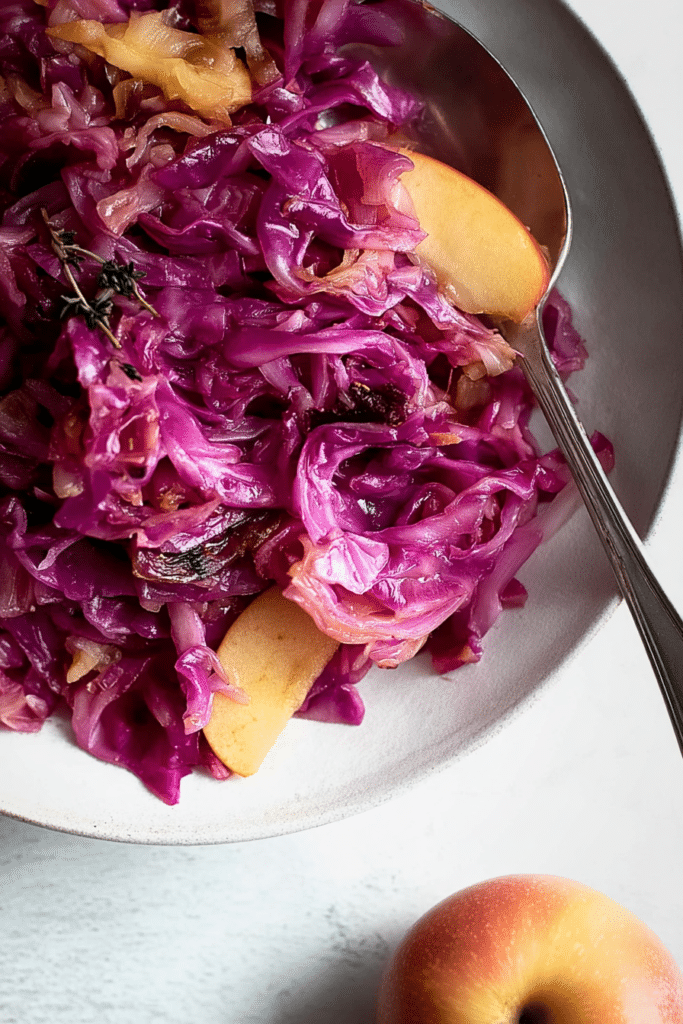
I love this cider-braised cabbage because it turns humble pantry vegetables into something warm, bright, and quietly nourishing. In my kitchen, it’s the side I reach for on cool evenings when I want comfort without heaviness. The mix of cabbage, apples, and onion softens into a tender, slightly sweet bed of vegetables that still keeps a pleasant bite when cooked correctly.
I first started making this when apples were too good to pass up at the farmers’ market. The aroma of simmering cider and onions fills the house and signals that simple ingredients can taste surprising and refined. Over the years I’ve learned small tricks—how to coax sweetness from onions, how to keep apple pieces intact, and when to add vinegar to lift the whole dish—that make a reliably delicious side.
As someone focused on wholesome food, I appreciate how little fuss this requires and how nutrient-dense the result is. It’s an easy way to add vitamin-rich vegetables and fiber to a meal without a lot of added fat or salt. If you’re looking for a seasonal, healthful side that still feels special, this is one I return to every fall.
Below I’ll walk you through why this dish is so good for you, what to have on hand, and practical ways to adapt it for different diets and appliances.
Why Cider-Braised Cabbage Is the Healthy Side You Need This Fall
Cabbage and apples are in their stride in autumn, and together they offer a concentrated dose of nutrients and fiber. Cabbage is a great source of vitamin K and vitamin C, which support blood health and immune function. Apples contribute soluble fiber and polyphenols that support heart health and steady digestion. Choosing seasonal produce also means peak flavor with fewer inputs.
Beyond the nutrition, there’s a comforting sensory aspect: the bright purple or green of the cabbage, the soft translucence of well-sautéed onions, and the apple pieces that release sweetness as they warm. When the cider reduces it leaves a glossy, slightly syrupy coating on the vegetables and a gentle, apple-forward aroma that invites you to sit down and eat.
Everything You Need for Cider-Braised Cabbage
Think of this as a one-pot, mostly hands-off side. Use the freshest produce you can find—the difference between a crisp, tart apple and a mealy one is obvious after cooking. If you prioritize organic apples and cabbage, you’ll often notice cleaner flavor and higher satisfaction in each bite. For equipment, a wide-bottomed Dutch oven or heavy braising pan gives the best surface for browning onions and accommodating the cabbage as it softens.
- * Ghee or clarified butter – Adds a nutty richness and helps onions brown; swap with olive oil or coconut oil for a vegan version.
- * Yellow onions – Bring savory sweetness when sautéed low and slow; they form the flavor base.
- * Apples – Offer natural sweetness and body; sweeter-tart varieties give the best balance.
- * Fine sea salt – Enhances the natural flavors; adjust to taste.
- * Apple cider – The braising liquid that carries apple flavor throughout the dish.
- * Apple cider vinegar – Adds bright acidity to balance the sweetness.
- * Red cabbage – Holds color and texture well under heat; slice uniformly for even cooking.
If you’re thinking about other cabbage dishes, you might also enjoy a tangier chilled slaw as a contrast — for one take on that idea, check out this best coleslaw recipe.
Why Apple Cider Boosts Flavor and Nutrients
Apple cider does more than add apple flavor; its sugars and acids interact with the vegetables during cooking. As the cider reduces, the natural sugars gently caramelize and cling to the cabbage and apples, creating depth without added refined sugar. The acidity of the cider and a finishing splash of cider vinegar brighten the palate and cut through richness.
From a nutritional angle, whole-apple-based liquids can carry some polyphenols from the fruit, and using an unfiltered cider can add a rustic character and aroma that bottled juice sometimes lacks. When the pot comes to a simmer you’ll see gentle bubbling and smell a warm, slightly tart fragrance—these are signs the flavors are concentrating and melding.
The Secret to the Perfect Texture
Texture is what separates a good batch from a great one. You want tender cabbage that still has body and apple pieces that soften but don’t fall apart entirely. The key is gentle heat, proper slicing, and timing.
- Slice the cabbage thin and even so pieces cook at the same rate; thicker pieces stay firmer, thinner ones melt away.
- Sauté onions over medium-high only until they become deeply fragrant and start to soften; then reduce heat so they sweeten without burning.
- Add the apples and cabbage to the pan in a way that allows you to fold them through the softened onions rather than crowding the pot.
- Braise gently with the cider covered until the apples are tender and the cabbage has wilted but still has some texture; uncover briefly at the end to let the liquid concentrate and coat the vegetables.
- Finish with a splash of vinegar to lift the overall mouthfeel, then let the dish rest briefly so flavors settle together.
Vegan, Slow-Cooker & Instant Pot Variations
Different kitchens call for different approaches. I often make this stovetop, but when time is limited or when I want hands-off cooking, alternate appliances work beautifully. For a vegan version simply use a plant oil instead of animal fats—olive oil keeps a Mediterranean profile while coconut oil can bring a rounder sweetness.
- Vegan swap – Use olive oil, avocado oil, or coconut oil in place of ghee; adjust seasoning to taste.
- Slow cooker – Brown the onions briefly, then transfer all ingredients to the slow cooker and cook on low until tender; slow heat deepens the flavor and makes the apples very soft.
- Instant Pot / pressure cooker – Use the sauté function to soften onions, then add the rest and cook under pressure for a short time; quick release and then simmer uncovered to reduce excess liquid.
For those preserving seasonal fruits, you may find it helpful to learn how to freeze summer harvests so you can use apples later in the season: how to freeze peaches.
How to Make Cider-Braised Cabbage (Step-by-Step)
Follow this approach to layer flavor and get consistent results. Taste as you go and adjust at the end for salt and acidity.
- Warm your fat in a wide pan over medium-high heat until shimmering; add sliced onions and sauté until they become deeply fragrant and begin to soften.
- Stir in a pinch of salt, then add the sliced apples and cabbage, folding them into the onions so everything mixes evenly.
- Reduce the heat to medium, pour in enough apple cider to barely cover the bottom of the pan, then cover and let the mixture braise until the apples are tender and the cabbage has wilted.
- Uncover and stir in apple cider vinegar to taste; simmer briefly to concentrate the cooking liquid and meld flavors.
- Let the pan rest a few minutes off the heat before serving so the liquid thickens slightly and flavors settle.
If you like another simple cooked cabbage approach, try this easy fried cabbage for a quicker, pan-fried option.
Pro Tip for Cider-Braised Cabbage: Balance Sweetness and Tang
Here are my go-to, easy-to-scan tips for getting the sweet-tart balance right. I use these every time I cook this dish.
- I start conservative with cider and vinegar—it’s easier to add than to correct.
- Taste toward the end and add a little more vinegar if the dish feels too sweet; a little acid brightens the whole pan.
- Choose apple varieties with a sweet-tart profile; very sweet apples can make the dish cloying unless balanced with more vinegar.
- If you prefer extra sweetness, finish with a small pat of butter or a drizzle of aged balsamic to add complexity rather than just more sugar.
Troubleshooting
When something goes off script, I rely on a few quick fixes that usually save the batch.
- If the cabbage is limp and mushy, it was likely overcooked; next time, slice thicker and shorten the braising time.
- If the onions are bitter from over-browning, add a splash more cider and a pinch of salt to mellow the edge, then simmer briefly.
- If the dish is too sweet, stir in more apple cider vinegar a little at a time until it brightens.
- If it’s too tart, a tiny amount of natural sweetener or a knob of butter will round it out.
How to Store, Reheat, and Make-Ahead Cider-Braised Cabbage
This cooks well ahead and keeps cleanly in the fridge. Store in an airtight container and use within a few days for best color and texture. Reheat gently on the stove so the cabbage warms through without drying out; a short splash of water or cider helps if it’s tight in the container.
- Refrigeration: Cool to room temperature before sealing and refrigerate for up to a few days.
- Reheating: Warm over low heat in a skillet with a splash of water or cider to loosen any thickened juices.
- Freezing: The texture softens after freezing; freeze only if you plan to reheat into a stew or casserole rather than serving as a crisp side.
- Make-ahead prep: Slice the cabbage and apples a day ahead and store them separately to keep textures fresher on cooking day.
For readers who enjoy prepping cabbage-based meals in different formats, you might also like a hearty baked casserole: delicious cabbage roll casserole.
Frequently Asked Questions
Can I make cider-braised cabbage vegan?
Absolutely! You can substitute ghee with a plant-based oil, such as olive oil or coconut oil, to make this dish entirely vegan.
What type of apples work best in this recipe?
For the best flavor, use sweet-tart apples like Fuji or Honeycrisp, which complement the cabbage and cider beautifully.
How can I store leftover cider-braised cabbage?
Store leftovers in an airtight container in the refrigerator for up to 3 days. To reheat, simply warm it in a skillet or microwave.
Can I use a slow cooker or Instant Pot for this recipe?
Yes! You can easily adapt the recipe for a slow cooker or Instant Pot. Just adjust the cooking times accordingly for each method.
What other dishes can I serve cider-braised cabbage with?
Cider-braised cabbage pairs nicely with roasted meats, grains like rice or quinoa, or even as a filling for tacos!
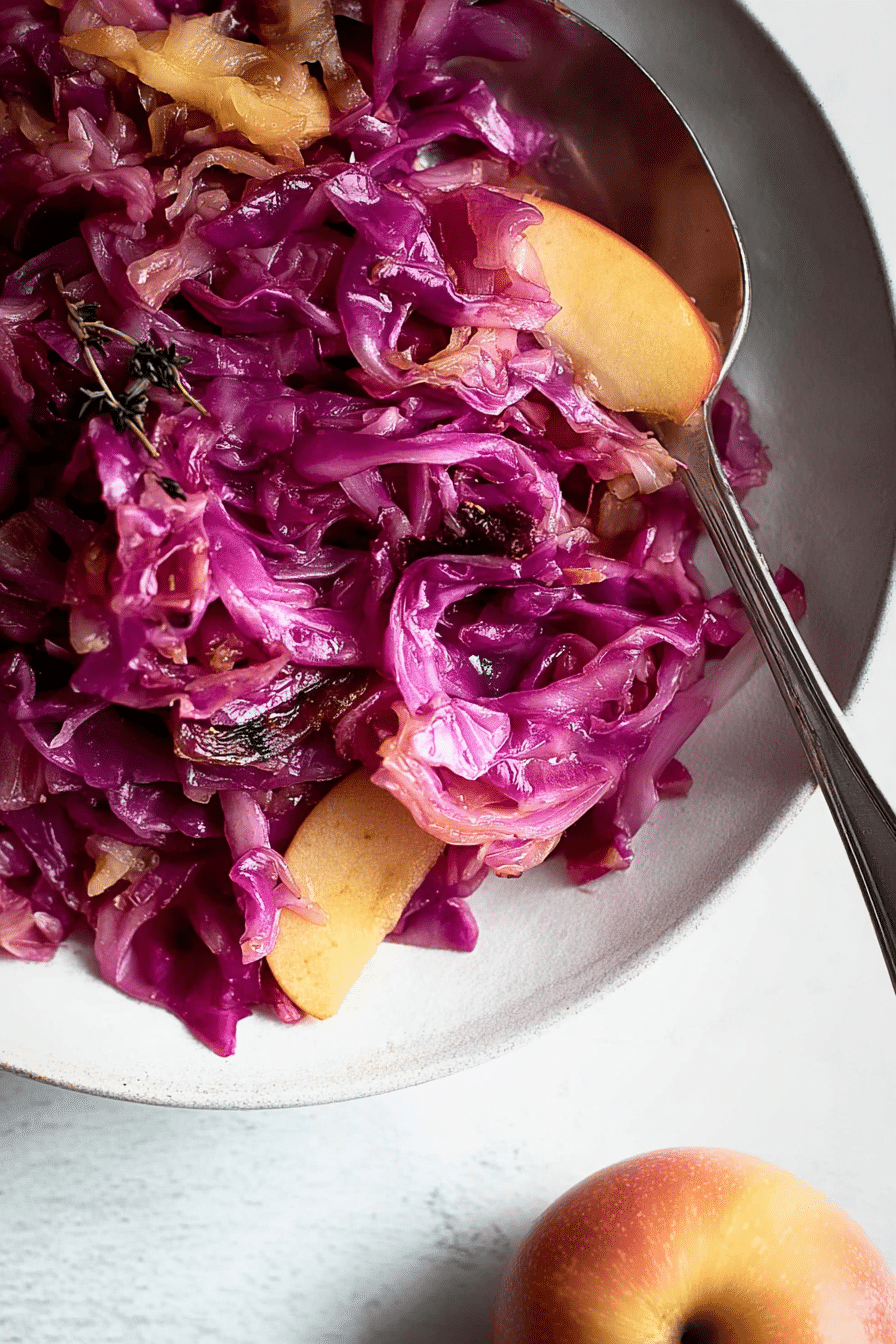
Cider-Braised Cabbage
Ingredients
Method
- Warm the ghee in a Dutch oven or braising dish over medium-high heat. When it melts, dump in the yellow onions. Sauté for about 6 minutes until deeply fragrant, then stir in the salt, apples, and cabbage.
- Turn the heat down to medium, and then pour in the apple cider. Cover the pot and cook until the apples are tender and the cabbage wilts, about 10 minutes. Uncover the pot and stir in the apple cider vinegar. Cook for another 2 to 3 minutes, and then serve hot.
- Store leftovers in a container with a tight-fitting lid in the refrigerator for up to 3 days.