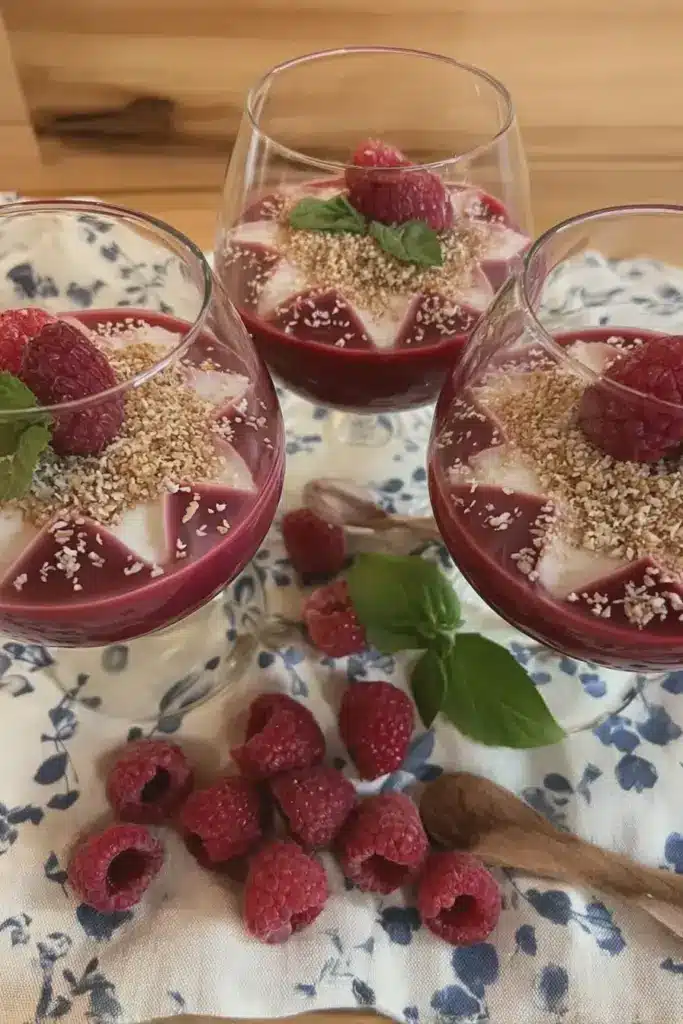
I make this dairy free vegan coconut raspberry pudding when I want something bright, creamy, and quick. In my kitchen it started as a way to use ripe raspberries and a can of full-fat coconut milk; over time I learned the small tweaks that keep the texture silky while keeping the recipe minimal. The color always catches guests’ eyes — a vivid raspberry pink against the soft white cream — and that makes it feel special even when I have little time.
I appreciate recipes that respect dietary needs without adding fuss. This dairy free vegan coconut raspberry pudding is exactly that: fast to prep, pantry-friendly, and naturally free of dairy and soy. I like serving it in thick wine glasses so the layers show through, and I always toast a little shredded coconut and sesame for contrast — the crunch and warm aroma make a simple dish feel thoughtful.
I tested both agar and cornstarch versions in my kitchen. I want readers to have a reliable dessert they can make any night of the week, so I focused on technique as much as ingredients. The result is a pudding that sets well, holds its color, and still feels tender on the tongue.
Everything You Need for Dairy Free Vegan Coconut Raspberry Pudding
Below is a conversational rundown of the ingredients and why each one matters, plus a quick note on the nutrition you get from the main players.
- Full-fat coconut milk – Provides the creamy base and healthy saturated fats that give the pudding its richness; choose canned for body and consistency.
- Fresh or frozen raspberries – Adds bright acidity, natural sweetness, color, and antioxidants; frozen works fine if fresh are out of season.
- Agar agar – A plant-based gelling agent that produces a firm, sliceable set and keeps the pudding stable at room temperature; use if you want a firmer texture.
- Cornstarch – Thickens the pudding into a spoonable, pudding-like texture; it yields a silkier, softer mouthfeel than agar.
- Agave nectar (or sweetener choice) – Balances the tartness of raspberries; milder than other sweeteners and dissolves easily in the warm mixture.
- Raspberry mash or jam – Used as a topping layer to boost fruit intensity and add a fresh burst with each spoonful.
- Coconut sugar – A finishing touch for jam and toasts; it adds a deeper caramel note than plain cane sugar.
- Toasted sesame seeds & shredded coconut – Provide toasted crunch and visual contrast; very small additions change the texture dramatically.
Nutrition notes: coconut milk supplies energy from fat and contributes to satiety; raspberries are high in fiber and vitamin C and add minimal sugars compared to many fruit options; sesame seeds and shredded coconut contribute small amounts of minerals, healthy fats, and texture. Overall this dessert is higher in healthy fats and fiber-forward from the fruit, making it a satisfying, nutrient-forward treat when eaten in moderation.
The secret to a silky, stable texture (Agar vs. Cornstarch)
Understanding the difference between agar and cornstarch will help you choose the exact texture you want.
- Agar agar sets more firmly and gives a clean, slightly springy gel. It’s best when you want a pudding that holds a shape and stays stable if left at room temperature for a short period.
- Cornstarch creates a softer, creamier, spoonable pudding. It needs to be cooked until the mixture thickens and loses that starchy flavor; the result is smooth and tender.
- Cooking matters: with agar you must dissolve it fully in the liquid and simmer to activate gelling; with cornstarch you mix it into a cold liquid first or slurry it, then bring to a simmer so it thickens evenly. Skipping thorough mixing leads to lumps or weak set.
- Troubleshooting texture: if the pudding is too firm, add a splash more coconut milk while reheating; if it’s too thin, gently simmer a bit longer (cornstarch) or remelt and add a touch more agar dissolved in a little warm liquid (agar).
Sweetener swaps: Agave, maple, date paste and their health notes
Choose a sweetener that suits your flavor preference and dietary priorities. Below are practical comparisons and how they affect final taste and texture.
- Agave nectar – Neutral, mild sweetness that blends into the pudding without overpowering the raspberries.
- Maple syrup – Adds a warm, caramel-like depth that pairs nicely with toasted coconut and sesame; slightly stronger flavor than agave.
- Date paste – A whole-food option with fiber and minerals; it thickens the mixture slightly and brings a richer, molasses-like sweetness.
- Adjustment tip: taste before you set the pudding—if you prefer less sweetness, cut back by eye; if you want more complexity, a small amount of maple or date paste adds character without extra processed sugar.
Add crunch and contrast: toasted toppings, parfait layers, and mix-ins
Texture makes this pudding memorable. I always add a toasted element for contrast—here are ways to approach it and how to integrate additional components cleanly.
- Toasted sesame seeds and shredded coconut give a warm crunch and a nutty aroma; toast in a dry skillet until fragrant and lightly browned, watching closely so they don’t burn.
- Parfait layering: alternate spoonfuls of pudding and mashed raspberries or jam to add bright acidity and visual appeal; use clear glasses to show the layers.
- Mix-ins to try: chopped toasted nuts, granola, or a thin cookie crumble for firmer texture contrasts; fold them in just before serving to keep crunch.
- Integrating textures: add crunchy components right before serving or on top so they stay crisp; if you layer them between pudding layers, choose sturdier crisps to avoid sogginess.
For an enticing combination, pair your pudding with a slice of delicious raspberry cake for a delightful dessert experience.
Try adding some mini cannoli cups as a layer for a delightful texture and flavor contrast to your pudding.
How to Make Dairy Free Vegan Coconut Raspberry Pudding (Step-by-Step)
Follow these clear steps so your pudding sets correctly and tastes bright. Use a blender for the fruit and a gentle hand when simmering.
- Add fresh or frozen raspberries and coconut milk to a blender along with your chosen thickener and sweetener; blend until smooth.
- Transfer the blended mixture to a saucepan and heat on medium, stirring frequently to prevent scorching; cook until it thickens and coats the back of a spoon.
- If using cornstarch, ensure it’s fully dissolved in cold coconut milk before heating to avoid lumps; if using agar, bring the mixture to a gentle simmer long enough to dissolve the agar completely.
- When the mixture has thickened, pour into heat-safe glasses or dessert dishes. Use thick glass to avoid cracking from the heat.
- Chill in the refrigerator until set. Top with mashed raspberry jam and the toasted sesame/coconut mixture just before serving.
If you enjoy this pudding, you might also love making a chocolate raspberry cake delight—a perfect complement to your dessert collection.
Pro Tip for dairy free vegan coconut raspberry pudding: nutrition, seasonal swaps, and boosters
Note: The ‘Pro Tip’, ‘Troubleshooting’, and ‘Variations’ sections are formatted as bulleted lists for quick scanning.
- I recommend using full-fat coconut milk for the creamiest mouthfeel; if you want lighter results, mix canned coconut milk with a lighter plant milk but expect a less rich texture.
- Add chia seeds or ground flax just before chilling to boost omega-3s and fiber; these also add body if you prefer a thicker texture.
- Seasonal swaps: swap raspberries for pureed strawberries, blackberries, or a mix of summer berries for variety and seasonal freshness.
- For extra protein, stir a neutral-flavored plant protein powder into the warm pudding before chilling; blend well to avoid grit.
- Pairing idea: Enhance your dessert game by serving it with homemade strawberry truffles for a richer flavor combination.
Troubleshooting
- If your pudding is grainy, I usually reheat gently and whisk vigorously or reblend; for cornstarch-based versions, ensure the mixture reached simmer to fully gelatinize the starch.
- If it won’t set (agar): I check that the agar was fully dissolved and that I simmered long enough; sometimes a small additional pinch of agar dissolved in warm liquid fixes a weak set.
- If it’s too thick, I thin it with a bit of warm coconut milk and whisk until smooth; if it’s too thin, simmer a little longer (cornstarch) or add a small amount of dissolved agar (agar).
- If the raspberry flavor is muted, fold in a spoonful of fresh mashed raspberries or a berry jam layer after the pudding has set to brighten the taste.
How to store, make-ahead, and easy variations to try next time
- Storage: keep the pudding covered in the refrigerator for up to 3 days; add toasted toppings just before serving to keep them crisp.
- Make-ahead: you can make the pudding a day ahead and assemble layers the morning of serving for events — the flavor deepens overnight.
- Variations (bulleted for quick scanning):
- Berry swap: use strawberries or mixed berries in place of raspberries for a different profile.
- Tropical twist: fold in a little mango purée and top with macadamia or toasted coconut for island notes.
- Chocolate ripple: swirl in a small amount of melted dark chocolate or cacao nibs for contrast.
- Nutty crunch: replace sesame with crushed pistachios or almonds for color and texture variation.
Frequently Asked Questions
Can I use frozen raspberries instead of fresh ones?
Absolutely! Frozen organic raspberries work perfectly in this recipe, just make sure to blend them without thawing for optimal results.
What can I substitute for agave nectar?
You can swap agave nectar with maple syrup or date paste. Each sweetener has its own flavor profile, so choose one that suits your taste!
How do I prevent my pudding from being too thick?
If your pudding is too thick, you can add a little more coconut milk while cooking to reach your desired consistency.
Can I make this pudding ahead of time?
Yes, you can make the pudding a day in advance! Just store it in the refrigerator until you’re ready to serve.
What are some good toppings for this pudding?
You can add toasted sesame seeds, shredded coconut, fresh fruit, or even a drizzle of your favorite sweetener for extra flavor and crunch!
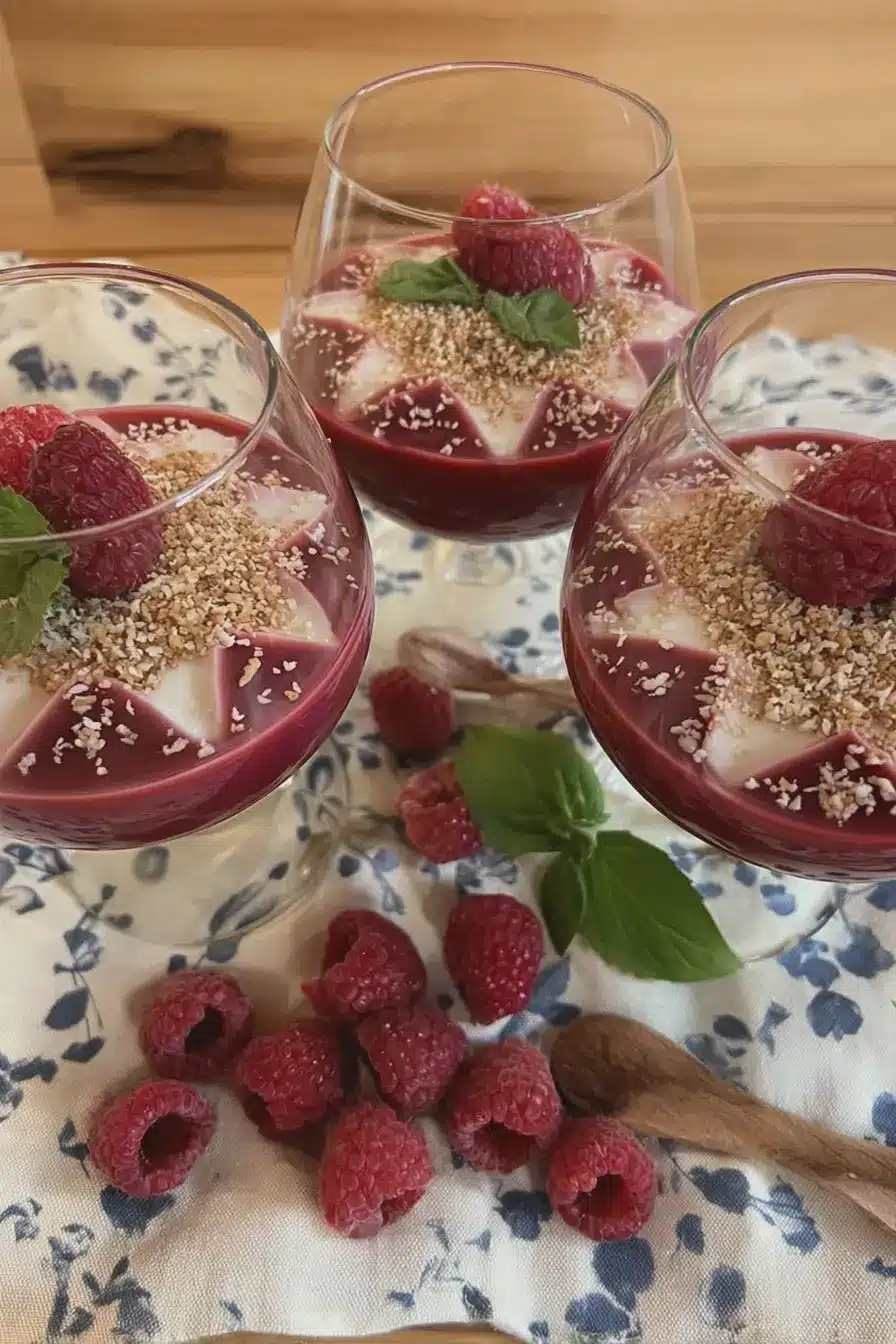
Dairy Free Vegan Coconut Raspberry Pudding
Ingredients
Method
- Blend raspberries, coconut milk, agar agar (or corn starch), and agave nectar. Cook in a saucepan over medium heat until thickened.1 can Full Fat Organic Coconut Milk, 1 1/4 cups Organic Fresh OR Organic Frozen Raspberries, 1 Tbsp Agar Agar OR Corn Starch, 1 Tbsp Agave Nectar (Optional)
- Pour the mixture into wine glasses or dessert dishes and refrigerate to set.
- Mash fresh raspberries, mix with coconut sugar, and set aside.
- Toast sesame seeds and shredded coconut in a skillet without oil until browned. Set aside.
- Once set, top pudding with mashed raspberry jam, toasted sesame seeds, and coconut. Garnish if desired.
- Serve and enjoy!