- Prep
- 10 min
- Cook
- 10 min
- Total
- 25 min
- Serves
- 8
- Calories
- 274 kcal
- Carbs
- 47.00 g
Introduction
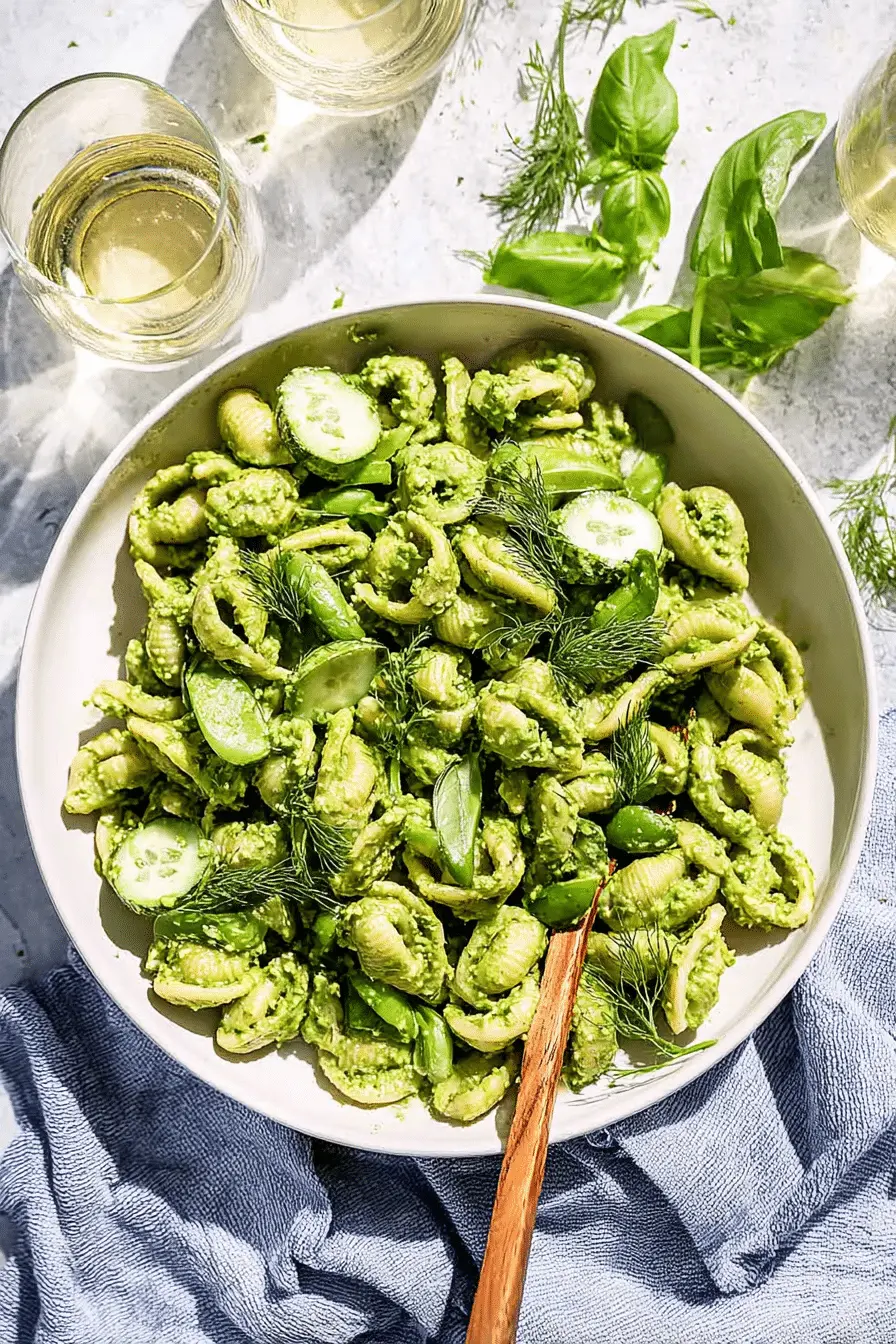
I first made this Green Goddess Pasta Salad on a late spring afternoon when the market was overflowing with herbs and a bunch of asparagus practically begged to be eaten. The bright, herby dressing — a riff on the classic Green Goddess — smelled like a garden in the blender: sharp garlic, lemony brightness, and that green, verdant aroma that hits the nose and makes you want to eat it by the spoonful. This version is built for ease: orecchiette carries the dressing in its little cups, peas pop with sweetness, and the asparagus adds a clean snap. It serves about eight as a side and is the kind of dish I bring to backyard potlucks because it travels well and feels fresh even after a few hours on the table. This pasta salad is versatile — great warm or chilled — and it’s deceptively simple. The dressing is creamy without heavy mayonnaise (I use full-fat Greek yogurt as the base), and fresh herbs make all the difference. Over the years I’ve learned a few small tricks that keep the salad lively instead of flabby: rinse only if needed, toss while slightly warm so flavors meld, and add crunchy or toasted elements if you want contrast. Below I’ll walk you through ingredients, step-by-step instructions, and the little adjustments that made this a repeat recipe in my kitchen.Ingredients You’ll Need for Green Goddess Pasta Salad
- Greek yogurt – provides creaminess and tang for the Green Goddess dressing without weighing the salad down; swap for plant-based yogurt for a vegan version.
- Garlic – gives a fragrant, savory backbone to the dressing; roast it for a milder, sweeter flavor.
- Extra virgin olive oil – adds silkiness and carries the dressing; a drizzle helps loosen the sauce if it’s too thick.
- Fresh herbs – the soul of Green Goddess: a mix of parsley, chives, tarragon, or basil work beautifully to create that herbaceous, slightly anise-y lift.
- Lemon juice and zest – brightens the dressing and keeps the whole salad from tasting flat.
- Salt & pepper – essential seasonings; salt amplifies the herbs and yogurt, while black pepper adds a gentle bite.
- Orecchiette (or rotini/fusilli/penne) – the pasta acts as a flavor holder; orecchiette cups the dressing nicely, but any short shape is fine.
- Asparagus – trimmed and cut into bite-sized pieces for a crisp, green pop; blanch briefly so it stays bright and snappy.
- Frozen peas – sweet little bursts of flavor and color; they defrost quickly in the hot pasta water.
- Red pepper flakes (optional) – for a faint heat if you like contrast against the creamy, herby dressing.
- Optional proteins or add-ins – think grilled chicken, chickpeas, or shrimp to make it a main; add kale, baby spinach, or a scoop of cooked quinoa for extra nutrients.
Step-by-Step Instructions
- Bring a large pot of water to a rolling boil. Generously salt the water — it should taste like the sea — because pasta needs a well-seasoned bath to develop flavor. Use enough water so the pasta can move freely; crowded pasta sticks and cooks unevenly.
- With an immersion blender or in a countertop blender, combine the Greek yogurt, garlic, olive oil, fresh herbs, lemon juice, lemon zest, kosher salt, and black pepper. Blend until smooth and bright green. I always stop and taste at this point: if the dressing tastes flat, it usually needs salt or a touch more lemon — not sugar. If it’s too thick, a teaspoon of cold water or an extra drizzle of olive oil loosens it without diluting the flavor.
- Add the pasta to the boiling water and cook according to package directions. The recipe uses orecchiette, but if you’re using another shape follow its package times. Important timing tip: when there are 2 minutes left on the pasta’s cooking time, add the asparagus and frozen peas straight into the pot. This way the vegetables cook in the pasta’s hot water and come out bright and tender-crisp instead of mushy. Watch closely — asparagus cooks quickly, and overcooking will make it limp and dull the color.
- Drain the pasta, asparagus, and peas into a colander and let them sit for about 5 minutes to release some steam. Transfer everything into a large bowl while still a little warm — this helps the pasta absorb and marry with the dressing. Add the Green Goddess sauce, then season with additional salt, black pepper, and red pepper flakes if using. Toss gently but thoroughly so every piece of pasta gets a glossy coating. If the dressing seems to cling too heavily, a splash of the reserved pasta water (just a tablespoon or two) thins and helps the sauce coat evenly; I rarely rinse the pasta because the starch helps the dressing adhere.
- You can serve this immediately while it’s still warm, which makes the herbs smell louder and the peas juicy, or cover and refrigerate to serve chilled. Chilled pasta will firm up as the dressing sets, and flavors mellow in the fridge — both versions are lovely. If making ahead, taste again before serving and correct seasoning with lemon or salt; chilled salads often need a last-minute brightening touch.
Nutritional Benefits
This salad delivers a pleasing nutritional profile: full-fat Greek yogurt supplies protein and a touch of healthy fat, while olive oil contributes monounsaturated fats that are heart-friendly. The abundance of fresh herbs brings phytochemicals and antioxidants, and the vegetables (asparagus and peas) add fiber, vitamins A and C, and folate. Pasta gives you sustained energy from complex carbohydrates — if you want more protein, add grilled chicken or a can of rinsed chickpeas. It’s also easy to make it more nutrient-dense by stirring in baby spinach or a cup of cooked quinoa for extra fiber and minerals. One practical note: because the dressing is yogurt-based rather than mayonnaise-heavy, it feels lighter on the palate and less greasy on the plate. However, yogurt-based dressings will firm up when chilled, so account for that in texture expectations: the salad will be creamier warm and more set when cold.Variations for Dietary Restrictions
I often adapt this salad depending on who I’m feeding. Here are tested swaps that preserve flavor while accommodating dietary needs:- Vegan – use a thick plant-based yogurt or a blend of blended silken tofu and a touch of olive oil to recreate the creamy body. Add a little miso or caper brine for umami if you miss dairy tang.
- Gluten-free – choose a good-quality gluten-free short pasta; rice or corn-based pastas work best here because they hold texture when chilled.
- Low-carb – swap the pasta for zucchini noodles (zoodles) or a mixture of shredded cabbage and chickpea pasta for fewer carbs while keeping the salad substantial.
- Additional seasonal takes – in late summer I swap peas for blanched green beans and toss in halved cherry tomatoes; in fall, roast a little butternut squash and fold it in for sweet contrast.
Creative Serving Ideas
This salad is playful in presentation — you can serve it a dozen ways depending on the occasion:- Individual jars – layer salad in Mason jars for picnics. Dress the bottom lightly and add a final sprinkle of herbs on top so it looks fresh when you open it.
- Platter style – spread the pasta on a large shallow platter and garnish with extra herbs, lemon slices, and toasted pine nuts for crunch.
- Lettuce cups – scoop a spoonful into crisp butter lettuce leaves for a low-carb handheld appetizer.
- Seasonal garnish – in spring add pea shoots and edible flowers; in autumn toss in roasted seeds for texture.
Meal Prep Tips and Storage
I treat this salad like a meal-prep champion when I can: the dressing keeps well for a few days, and you can cook the pasta and vegetables ahead. Here’s how I make sure it stays good for leftovers:- Assemble just before serving – for the crispiest texture, store the dressing in a jar and toss with the pasta about 30 minutes to an hour before you plan to eat. If you need it ready earlier, toss briefly and give the salad a quick toss again before serving.
- Prevent soggy pasta – don’t overdress the pasta if you’re storing it. Keep extra dressing on the side and add a splash before serving. If the pasta absorbs too much dressing overnight, loosen it with a splash of water or a little extra lemon and olive oil.
- Storage life – cover and refrigerate in an airtight container. This salad stays fresh for up to 3 days; the flavors actually become more integrated after a night in the fridge, but the texture of tender vegetables may soften slightly.
- Freezing – not recommended. The yogurt-based dressing will separate and become grainy when thawed.
Pairing Suggestions for a Balanced Meal
This pasta salad pairs beautifully with proteins and sides that match its bright, herb-forward profile. Try adding grilled shrimp or chicken for a satisfying main, or a bowl of roasted vegetables for more heft. For a contrast in texture, something crispy or caramelized works nicely — think a charred skewer or a toasty side. Pair the Green Goddess Pasta Salad with creamy garlic butter shrimp for a delightful meal combination. Complete your meal with some garlic parmesan roasted Brussels sprouts for added flavor and nutrition.FAQ
Can I make this recipe vegan?
Absolutely! You can substitute the Greek yogurt with a plant-based yogurt or use a vegan dressing for the Green Goddess flavor.What type of pasta can I use?
You can use orecchiette as suggested, but feel free to swap in rotini, fusilli, or penne based on your preference. For a gluten-free option, choose a gluten-free pasta.How long does this pasta salad stay fresh in the fridge?
The Green Goddess Pasta Salad can be stored in the refrigerator for up to 3 days. Just make sure to keep it in an airtight container to maintain freshness!Can I add protein to this salad?
Yes, adding grilled chicken, shrimp, or even chickpeas can enhance the protein content of the salad and make it more filling!What other vegetables can I include?
You can get creative! Consider adding cherry tomatoes, bell peppers, or even some leafy greens like spinach or kale for added nutrients.Conclusion and Final Thoughts
I keep coming back to this Green Goddess Pasta Salad because it’s flexible, bright, and forgiving. Small technique choices — like adding the vegetables in the last two minutes of cooking and tossing while warm — make the difference between dull leftovers and a lively, herbaceous bowl that still tastes fresh the next day. It’s a recipe you can riff on endlessly: swap herbs, toss in different vegetables, or add a protein to suit your week. Make it for a picnic, bring it to a potluck, or tuck it into your weekday lunches. If you try this at home, take a moment to notice the aroma when you blend the herbs — it’s a good indicator of whether you’ve got the balance right. And if you tweak the recipe (I often do), write down what you changed so you can recreate the version you loved next time. Enjoy — and pass it along; this one always starts conversations at the table.Recipe Card
The Ultimate Green Goddess Pasta Salad: A Refreshing and Colorful Side Dish
- Prep
- 10 min
- Cook
- 10 min
- Total
- 25 min
- Serves
- 8
- Calories
- 274 kcal
- Carbs
- 47.00 g
Ingredients
- 5 ouncesfull-fat Greek yogurt ((about 2/3 cup))
- 2garlic cloves
- 2 tablespoonsextra virgin olive oil
- 1.5 cupsfresh herbs
- 2 tablespoonsfreshly squeezed lemon juice
- 0.5 teaspoonkosher salt
- 0.25 teaspoonfreshly ground black pepper
- 16 ouncesorecchiette pasta ((sub rotini, fusilli, or penne))
- 1 bunchasparagus ((wooden end removed and cut into 1-inch pieces))
- 1 cupfrozen peas
- 1 teaspoonkosher salt
- 0.5 teaspoonfreshly ground black pepper
- 1 teaspoonred pepper flakes ((optional))
Instructions
- 1
Bring a large pot of water to boil.
- 2
With an immersion blender or in a blender, combine the Green Goddess ingredients. Blend until smooth. Set aside.
- 3
Add your pasta to the boiling water and cook according to package directions. When there is 2 minutes left on the pasta, add the asparagus and peas.
- 4
Drain off the pasta and veggies and place in a large bowl. Let cool for 5 minutes then add the sauce, additional salt and pepper, plus red pepper flakes (if using). Toss to combine.
- 5
You can serve now while still warm or place into fridge until ready to serve!
You might also like
Reviews
Be the first to review this.