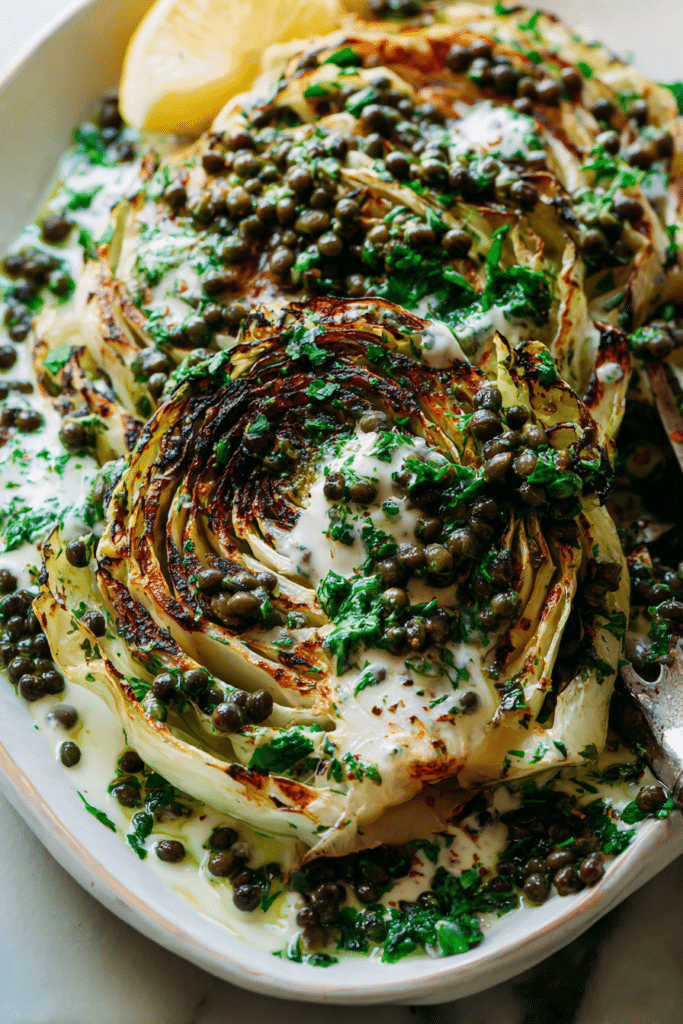
I first started grilling cabbage because I was tired of the usual vegetable sides. In my kitchen I learned that a thick cabbage steak takes on a smoky, almost-meaty quality when treated to high heat and a patient sear. The first time the edges caramelized and the core softened just so, I knew I had something special — not a burger replacement, but a thoughtful, hearty centerpiece.
Over a few seasons of testing I refined what matters: the cut of the cabbage, a peppery chimichurri married to warm lentils, and a tahini-based sauce that softens the heat while adding a plush mouthfeel. Those small adjustments — the way I pat the cabbage dry, the moment I salt, the temperature I keep the lentils at before mixing — changed the result from merely good to reliably impressive.
I want to give you the exact instincts I trust when I cook this dish: how to coax char without collapsing texture, how to fold warm lentils into herbaceous chimichurri so they carry flavour, and how tahini acts as the adhesive that pulls it all into a single, balanced bite. Read on for step-by-step technique, ingredient notes, storage strategies and pairing ideas that will let you recreate this on your own grill.
Why Grill Cabbage? A Gourmet Twist for Plant-Based Grilling
Grilling concentrates the natural sugars in cabbage, creating caramelized edges that taste sweeter and deeper than raw leaves. The direct heat introduces a smoky note that plays beautifully against the bright, acidic chimichurri and the toasted-nut character of tahini. As a cruciferous vegetable, cabbage brings fiber and vitamin C to the plate, and its dense leaves stand up to heat in a way softer greens do not.
Choose cabbages with tight, firm heads for steaks — the outer leaves char and blister while the core holds each round together on the grill. Visually, you’ll notice a contrast: golden-brown sear lines and slightly charred rims framing a pale, tender interior. That scent of smoke and browned sugars is part of the appeal; it cues you that texture and flavor are both being developed.
Everything You Need for Grilled Cabbage Steaks with Jalapeño Chimichurri Lentils & Maple Mustard Tahini
- Brown lentils – Provide body and protein; they hold their shape when cooked and pair well with hot herbs. If you prefer, you can use other firm legumes.
- Flat-leaf parsley – The backbone of the chimichurri; use fresh for brightness. Cilantro can be a partial substitute for a different herb note.
- Jalapeño – Adds heat and vegetal brightness; seed or keep the seeds depending on your tolerance.
- Garlic – Sharp aromatic anchor in the chimichurri; roast it first for a milder, sweeter result.
- Capers – Bring acid and brine; replaceable with chopped green olives if needed.
- Extra virgin olive oil & lemon – Provide fat and acidity to balance the lentils and herbs; good-quality oil makes a measurable difference.
- Red pepper flakes – Small amount for background warmth; omit for a milder dish.
- Tahini – Gives creamy structure to the maple mustard sauce. Use a smooth, runny tahini for easiest emulsification; older or oil-separated tahini will still work if you stir it well.
- Maple syrup & grainy mustard – Combine to create sweetness and tang in the tahini sauce; substitute a touch of agave if you need a vegan-friendly alternative that’s less assertive.
- Green cabbage – The classic choice for steaks; Savoy or Napa are acceptable alternatives but will vary in texture and leaf tightness.
- Neutral oil and grill seasoning – Use a high-smoke-point oil to prevent sticking; if you have spice allergies, opt for a simple salt-and-pepper approach or a single herb rub.
How to Make Grilled Cabbage Steaks with Jalapeño Chimichurri Lentils & Maple Mustard Tahini (Step-by-Step)
- Cook the lentils gently until just tender; drain and let them rest while you prepare the chimichurri so they retain texture and absorb dressing rather than become mushy.
- Finely chop the herbs and aromatics for the chimichurri so each mouthful has an even distribution of parsley, jalapeño, garlic and capers; then stir in oil and lemon to make a loose dressing.
- Fold the warm lentils into the chimichurri — the residual heat helps the flavors meld without breaking the legumes.
- Whisk the tahini with lemon, maple and mustard, then thin with cold water a little at a time until the sauce is pourable and glossy; chill briefly if you want a firmer pour.
- Trim the cabbage to produce even steaks with a small section of core to hold the layers together; aim for uniform thickness so they cook at the same rate.
- Lightly oil and season both sides of the steaks, then grill on a preheated medium-high surface until charred and tender, flipping once for even color and doneness.
- Remove and plate the cabbage steaks, spooning chimichurri lentils over the top and finishing with the maple mustard tahini and extra chopped herbs.
The Secret to Charred Yet Tender Cabbage
- Understand the Maillard reaction: higher surface heat produces complex browned flavors. Give the cabbage direct heat long enough to sear the exterior without prolonged exposure that collapses the leaves.
- Keep moisture in check by patting the steaks dry before oiling; too much surface water steams rather than sears.
- Preserve a bit of the core on each steak — that structural piece prevents layers from separating while allowing the center to soften.
- Use a two-stage approach: sear on direct heat, then move to a slightly cooler zone or close the lid briefly to allow heat to penetrate the center without burning the edges.
- Resist pressing the steaks with a spatula; the audible sizzle should be your guide that the surface is doing its work.
Why Temperature Matters for Lentils and Chimichurri
- Cook lentils at a gentle simmer so they soften evenly; an aggressive boil will break them apart and make the texture mushy.
- Let the lentils cool slightly before mixing with the chimichurri. Warm lentils absorb dressing better than piping-hot ones, preserving texture while carrying flavor.
- Serve the chimichurri at room temperature; cold herbs mute aromatics, while too-warm oil can make the mixture feel greasy.
- Lentils are rich in plant protein and fiber and have a low glycemic index, making them a sustaining base for the chimichurri. They pair particularly well with warming spices and bright acids.
One Ingredient That Pulls It Together: Tahini’s Role
Tahini provides a silky, nutty backbone that binds the components without dairy. Its natural oils create a smooth emulsion when thinned, giving the maple mustard sauce body and mouth-coating richness. Nutritionally, tahini contributes heart-healthy unsaturated fats, calcium and some plant protein; its flavor pairs especially well with lemon and mustard, softening the heat of jalapeño and balancing the acid of chimichurri.
For best results, choose tahini that smells mildly toasted and stir well if the oil has separated; store it in a cool spot and use within a few months of opening for freshest flavor.
Pro Tip for Grilled Cabbage Steaks with Jalapeño Chimichurri Lentils & Maple Mustard Tahini: Grill Timing
For scannability, generate the “Pro-Tips,” “Troubleshooting,” and “Variations” sections as bulleted lists.
- Preheat your grill to medium-high so you get quick, even searing; the grate should be hot enough to make the cabbage sizzle on contact.
- Flip once: five minutes per side is a good starting point on a hot grill for 1–1.5 inch steaks; adjust time based on thickness and your grill’s heat.
- Look for visual cues: deep caramelization and a tender center when pierced with a skewer are signs of doneness.
- Avoid overcrowding the grill; giving each steak breathing room maintains a steady sear and prevents steaming.
- If flare-ups occur, move the steaks to a cooler area and close the lid briefly to finish cooking without charring too aggressively.
Troubleshooting
- If the cabbage is burning on the outside but still firm inside, lower the heat and finish with the lid closed to allow internal steam to soften the center—I’ve done this many times in my kitchen when the grate ran too hot.
- If lentils are mushy, you likely overcooked them; next time, shorten simmer time and test earlier for a slight bite.
- If the tahini sauce is too thick, whisk in cold water gradually until it loosens; if it splits, add a small spoonful of lemon and briskly whisk to recombine.
- If the chimichurri tastes flat, add a pinch more salt and a splash more lemon to brighten the herbs.
Quick Nutrition Notes & Pairings
Per-serving numbers will vary with your portions, but expect a plate built on lentils and cabbage to be generous in fiber, plant protein and micronutrients like vitamin C and iron. Tahini contributes healthy fats and a modest amount of calcium. This makes the dish satisfying as a main or a hearty side for those following plant-based or balanced omnivorous patterns.
Consider pairing with crisp, acidic sides or beverages that cut through the richness: a citrusy salad, quick pickles, or a bright white wine or sparkling water with lemon. For a hearty alternative pairing, you might serve alongside rich proteins for contrast.
For a hearty yet nutritious pairing, consider serving this dish with one pot lentil soup.
If you’re looking for a heartier option, serve alongside garlic butter steak bites for a delicious contrast to the flavors.
How to Store, Reheat and Make-Ahead Grilled Cabbage Steaks
- Store components separately: keep the cabbage steaks, chimichurri lentils and tahini sauce in separate airtight containers in the refrigerator to preserve texture and flavour for up to three days.
- To reheat without sogginess, return steaks to a hot grill or a preheated oven on a wire rack so air circulates; avoid microwaving if you want to retain char and firmness.
- Make the chimichurri a day ahead—the flavors meld and often deepen overnight. Prepare the tahini sauce the same day you plan to serve for peak brightness.
- Freezing is possible for the lentils (not ideal for the tahini or grilled cabbage): freeze cooled lentils in a sealed container and thaw in the refrigerator before warming gently.
Easy Variations and Serving Suggestions (Drinks & Sides)
- Smoky-sweet variation: add a pinch of smoked paprika to the steak seasoning and finish with a drizzle of aged balsamic.
- Nut-free swap: replace tahini with a sunflower seed butter thinned with lemon and water if you need a seed-free option.
- Grain alternatives: serve the chimichurri lentils over roasted barley, farro, or a warm grain salad for a heartier bowl.
- Veg-forward pairings: a crisp green salad with citrus vinaigrette or roasted root vegetables provide contrasting textures and acidity.
- A delightful complement to your grilled cabbage steaks would be maple glazed roasted beet skewers.
- For a tasty side, try these cheesy garlic zucchini boats that pair wonderfully with the grilled cabbage dish.
- Drink pairings: bright, unoaked white wines, dry rosé, or a citrusy non-alcoholic spritz balance the richness; for a richer contrast, a lightly hopped beer works as well.
Frequently Asked Questions
Can I use a different type of cabbage for this recipe?
Yes, you can use other types of cabbage like Savoy or Napa cabbage. Keep in mind that the texture and flavor might vary slightly.
How do I store leftovers?
Store leftovers in an airtight container in the fridge for up to 3 days. You can reheat them in the oven or on the grill for the best texture.
What can I serve with grilled cabbage steaks?
These cabbage steaks pair well with a light salad, roasted vegetables, or even a refreshing drink like lemonade for a complete meal.
Can I make the chimichurri in advance?
Absolutely! The chimichurri can be made a day ahead. Just store it in the fridge in an airtight container, and it will taste even better the next day.
Is this recipe suitable for meal prep?
Yes! You can grill the cabbage and prepare the chimichurri and tahini sauce ahead of time for easy meal prep. Just assemble them when you’re ready to eat.
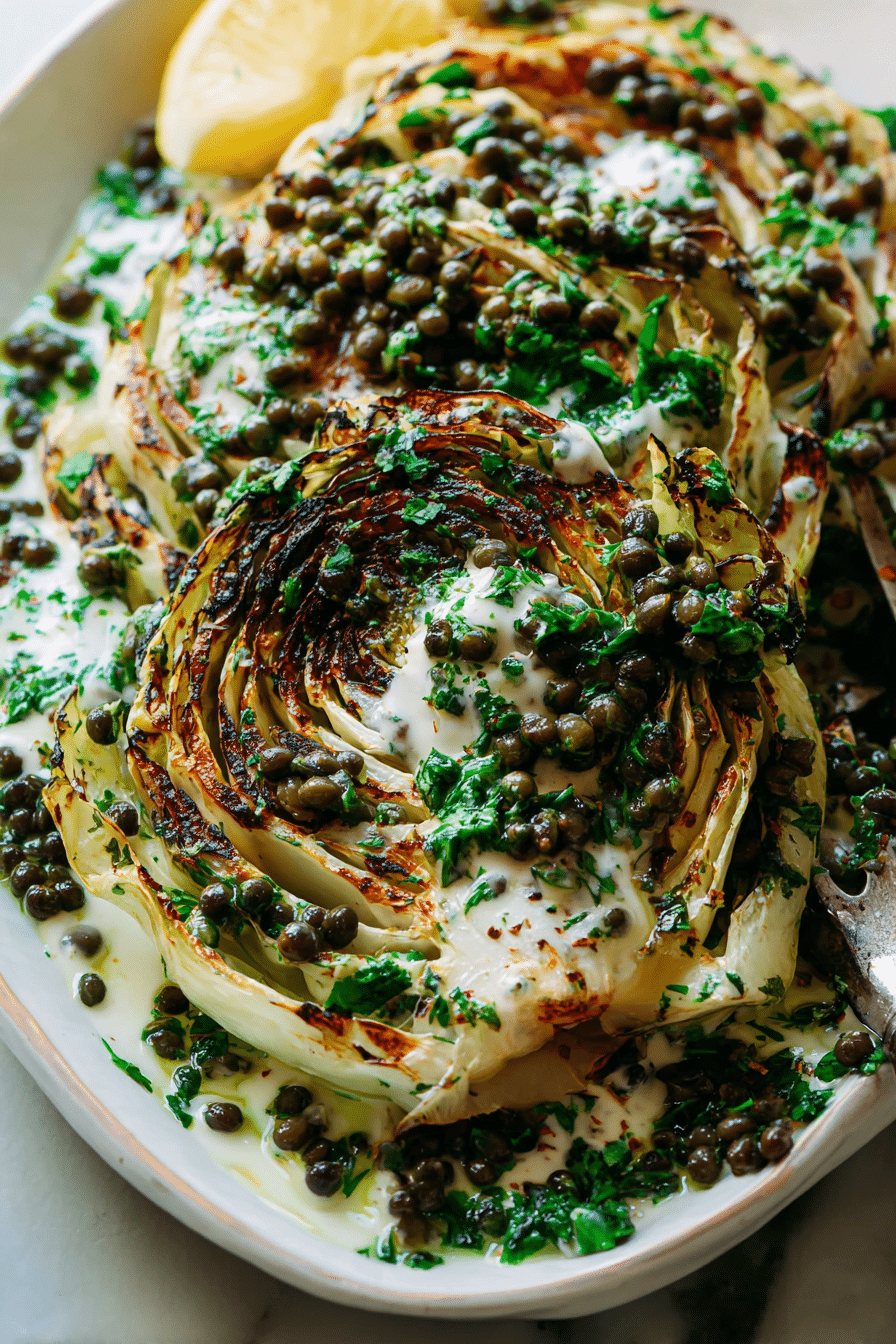
Grilled Cabbage Steaks with Jalapeño Chimichurri Lentils & Maple Mustard Tahini
Ingredients
Method
- Place the lentils in a medium saucepan and cover them with water by about 2 inches. Put the saucepan on the stove over medium-high heat. Bring lentils to a boil and then lower them to a simmer. Cook until lentils are just-tender, about 25 minutes. Drain.
- While lentils are cooking, make the jalapeño chimichurri. Finely chop the parsley and transfer to a medium bowl. To the parsley, add the jalapeño, garlic, capers, olive oil, lemon juice, salt, and red pepper flakes. Stir to combine and check for seasoning. Adjust if necessary.
- Stir the warm lentils into the jalapeño chimichurri. Once thoroughly mixed, just set the lentils aside at room temperature.
- In a medium bowl, whisk together the tahini, lemon juice, maple syrup, mustard, and salt until combined. Then, vigorously whisk in the cold water. The sauce should thin out a bit and become more pale and creamy in colour. Set aside.
- Preheat your grill to medium high heat. Cut the cabbage into 1 ½ inch-thick steaks. Set the cabbage on the cutting board so that the core is facing up. Then cut 4 round steaks through the middle section so that each piece has a bit of the core intact (this is what will hold it together on the grill). Save the rest of the cabbage for another use.
- Place cabbage steaks on a baking sheet. Spray one side with avocado oil spray and season with half of the steak spice, salt, and pepper. Repeat with the other side and remaining steak spice.
- Place the cabbage steaks on the grill and close the lid. Cook for 5 whole minutes, or until charred on one side. Using both tongs and a flipper, carefully flip the steaks over. Close the lid and cook cabbage steaks for another 5 minutes, or until charred on the other side and soft in the center.
- Remove the cabbage steaks from the grill and serve with the jalapeño chimichurri lentils, maple mustard tahini sauce, extra chopped parsley, and chili flakes (if desired).