- Prep
- 10 min
- Cook
- 10 min
- Total
- 20 min
- Serves
- 3
- Calories
- 197 kcal
- Carbs
- 13.90 g
Introduction
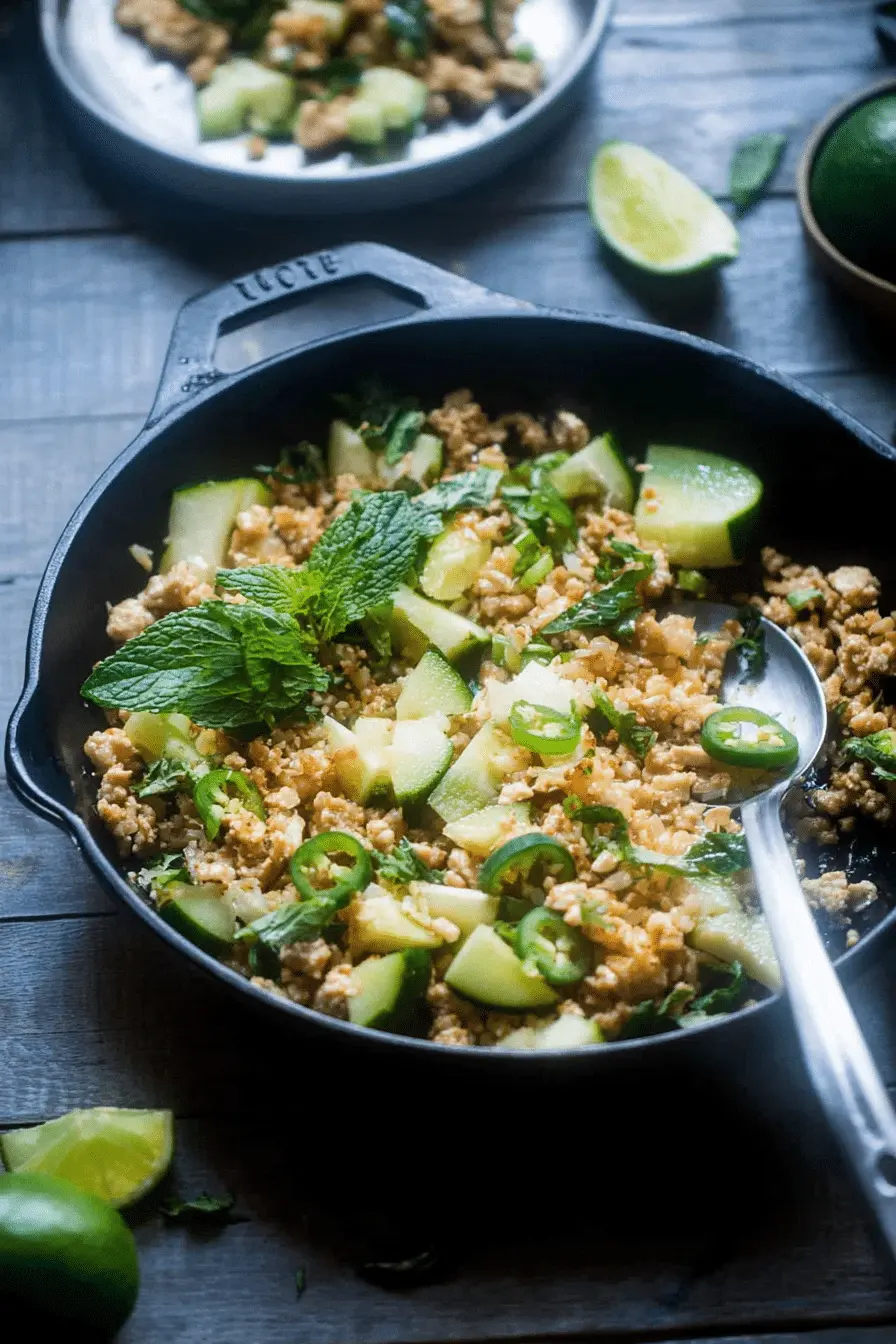
I first learned about larb gai while digging through the tiny alleyway markets of northern Thailand — it’s the kind of food that grabs you with its aroma before you even see it. Traditionally from Laos and northeastern Thailand (Isan), larb is a minced-meat salad: bright with lime, punchy with fish sauce, and cooling with mint. It’s a contrast dish — sharp, herbaceous, a little spicy and deeply savory. When I adapted it into a one-skillet version, I wanted all of those contrasts but with the speed of a weeknight pan dinner. What you get in the skillet is that same clatter of flavors: fresh mint, citrusy lime, the umami depth of fish sauce, and the gentle heat from chili. The texture is also important — little bits of tender chicken, soft cabbage, and the faint bite of cucumber make it feel lively in the mouth. When you cook this, the first thing I notice is the smell — lime and fish sauce hit the air and my kitchen feels like a hawker stall for a minute. The quick high-heat cooking keeps the chicken tender, and when you finish with fresh herbs off the heat, they smell like a garden tossed into the pan. I often make this when I want something bright but not fussy: it comes together in about 20 minutes and cleans up even faster.Ingredients You Will Need
- Cauliflower – blitzed into rice to keep the dish low-carb and to give a soft, rice-like texture without heaviness.
- Coconut oil – used to brown the chicken and add a slight tropical aroma that pairs well with lime.
- Ground chicken – the main protein; lean chicken keeps the skillet light and absorbs the seasonings well.
- Green onion – adds oniony brightness without overpowering the herbs.
- Napa cabbage – provides moisture and a tender crunch that softens as it cooks.
- Pineapple juice – a touch of sweetness and acidity to balance the fish sauce and lime.
- Fish sauce – the backbone of savory umami; use a good-quality Thai fish sauce for depth.
- Fresh lime juice – brightens and lifts the whole dish; key to the larb flavor profile.
- Sriracha – for heat and a bit of tang; adjust to taste or substitute with fresh chilies.
- Cucumber – cool and crisp, stirred in at the end for texture contrast.
- Cilantro – fresh herbiness that pairs with lime and fish sauce; stems are fine if you chop them small.
- Fresh mint – the floral, cooling counterpoint to the spicy and savory elements.
- Sea salt – optional; use sparingly because fish sauce is already salty.
Step-by-Step Cooking Instructions for Larb Gai Thai Chicken Skillet
Yield: serves 2–3. Total time: about 20 minutes (10 minutes prep, 10 minutes cook). These instructions follow the tested one-pan method I use at home. Read each step through once before you start so everything moves quickly at the stove.- Make the cauliflower rice. Place about 3 cups of cauliflower florets in a food processor and pulse until they resemble rice. Don’t over-process into mush — you want small, grain-like pieces. I usually pulse in 8–10 short bursts and check texture by rubbing a bit between my fingers; it should be tender but still separate.
- Heat the pan. Warm a tablespoon of coconut oil in a large, high-sided frying pan over medium-high heat. The oil should shimmer but not smoke. If it starts to brown quickly, lower the heat — coconut oil can burn and give a flat flavor.
- Brown the chicken and aromatics. Add 1/2 pound of lean ground chicken and about 1/4 cup sliced green onion to the hot oil. Break the chicken up with a spatula and let it sit without stirring for 20–30 seconds to get a little color. You want small browned bits because they add savory depth. Cook and break up the chicken for about 2 minutes until it’s mostly opaque.
- Add the cauliflower rice. Stir in the cauliflower rice and continue cooking until the chicken is lightly browned and the cauliflower softens, roughly 2–3 minutes. The cauliflower will steam and shrink — that’s normal. If it looks dry, add a splash of water (a tablespoon) so it doesn’t stick to the pan.
- Fold in the cabbage and steam. Mix in about 4 cups of chopped Napa cabbage, then cover the pan and reduce to medium heat. Steam for about 3 minutes, stirring once or twice. The cabbage should wilt but still retain some body; overcooking will make the dish watery.
- Season and reduce. Remove the lid and stir in 3 tablespoons pineapple juice, 2 tablespoons fish sauce, 2 tablespoons fresh lime juice, and 1/2 tablespoon sriracha (or to taste). Turn the heat up to high and bring to a brisk simmer. Cook for about 3 minutes, stirring frequently, until most of the liquid evaporates. The visual cue: the pan should look glossy and not soupy. If it’s still watery after 3 minutes, keep cooking a minute longer while stirring to avoid burning.
- Finish off heat with fresh elements. Take the pan off the heat and immediately fold in about 1/3 of a chopped cucumber, 1/4 cup roughly chopped cilantro, and 3 tablespoons minced fresh mint. This is crucial — adding the herbs off the heat preserves their aroma and keeps them bright. Taste and adjust seasoning with a sprinkle of sea salt only if it needs it; often the fish sauce provides enough salt.
- Serve. Spoon onto plates, serve with jasmine rice or sticky rice if you want, or pile into lettuce cups for a lighter bite. I like a wedge of extra lime on the side so people can add brightness to taste.
Nutritional Benefits of Each Ingredient
One reason I enjoy this skillet is that it’s balanced and nutrient-dense. The recipe as written comes in at roughly 197 calories per serving with about 21.5 g protein, 7.1 g fat, and 13.9 g carbohydrates — a light, protein-forward meal that’s friendly for low-carb plans.- Ground chicken – a lean source of protein that helps with satiety and muscle repair. Protein also carries flavor well; it soaks up fish sauce and lime without becoming heavy.
- Cauliflower – low in calories and carbohydrates, high in fiber and vitamin C. It stands in for rice to keep the dish lower-carb while still providing volume and texture.
- Mint and cilantro – both herbs add negligible calories but contribute antioxidants and phytonutrients. Mint can soothe digestion, and cilantro adds vitamin K and a bright, citrusy aroma.
- Lime juice – vitamin C and acidity to balance fat and umami, which helps your palate perceive the other flavors more clearly.
- Fish sauce – a fermented condiment that adds umami and sodium; use sparingly if you’re watching salt intake, but it’s central to authentic flavor.
Variations: Vegetarian and Other Proteins
I test adjustments frequently. The method is forgiving — it’s about texture, heat, and finishing herbs — so you can swap proteins without changing the technique.- Tofu – use firm or extra-firm tofu crumbled with your fingers or pulsed briefly in a food processor. Press it first to remove excess water so it browns and absorbs the dressing.
- Tempeh – crumble and pan-fry for a nuttier flavor and firmer bite; it stands up well to the bold dressing.
- Ground turkey – a direct swap for chicken; it behaves similarly on the heat but can dry more quickly, so shorten the time on high.
Serving Suggestions and Side Dishes
This skillet is flexible. I often serve it with a small bowl of jasmine rice on the side for friends who want carbs, and sticky rice for a more traditional accompaniment. For plating, mound the larb in the center, sprinkle an extra handful of mint and cilantro, and place cucumber slices around the edge — it looks fresh and colorful. For a delightful meal, pair your Larb Gai with cilantro lime chicken. Complement your Larb Gai with a fresh Thai spring roll pasta salad. Classic Thai sides I reach for:- Green papaya salad (som tam) for crunchy, spicy contrast.
- Fresh vegetable sticks — carrot, cucumber, and raw cabbage to scoop the larb.
- Thai iced tea or a cold lager to cut through the heat and saltiness.
Tips for Storing Leftovers
I always plan for leftovers and here are the rules I follow so the dish survives storage well.- Refrigeration: Store in an airtight container for up to 3 days. The proteins and vegetables hold up well, but the herbs will wilt over time.
- Freezing: You can freeze the cooked base (chicken + cauliflower + cabbage) for up to a month. Don’t freeze the fresh herbs or cucumber — they’ll turn to mush.
- Reheating: Gently reheat on the stove over medium-low, adding a splash of water or a squeeze of lime if it seems dry. Once warmed through, add fresh cilantro and mint to revive the flavors.
- Best practice: If you plan to keep leftovers more than a day, store the cooked mixture separately from the fresh herbs and cucumber and add them only when serving.
Frequently Asked Questions about Larb Gai
- What is Larb Gai?Larb Gai is a traditional Thai dish made from minced chicken, flavored with fresh herbs, lime juice, and fish sauce. It's known for its fresh, aromatic taste and is often served with vegetables or rice.
- Can I make Larb Gai vegetarian?Absolutely! You can substitute the chicken with tofu or tempeh for a delicious vegetarian option. Just be sure to use a plant-based sauce in place of fish sauce, if desired.
- How do I store leftovers?To store leftovers, place them in an airtight container in the refrigerator for up to 3 days. You can also freeze it for up to a month, but add fresh herbs after reheating for the best flavor.
- What side dishes pair well with Larb Gai?Larb Gai pairs wonderfully with jasmine rice, sticky rice, or fresh veggies. You can also add traditional Thai sides like papaya salad or spring rolls for a complete meal.
- How spicy is Larb Gai?The spiciness of Larb Gai can be adjusted to your taste by altering the amount of sriracha. Start with a little and add more if you like it spicier!
Conclusion and Final Thoughts
Larb Gai in a skillet is one of those recipes I come back to because it’s fast, bright, and satisfying without being heavy. The trick is quick, high heat to keep the chicken tender, and finishing with fresh herbs off the heat so their aroma remains lively. Expect a lively interplay of salty, sour, and herbal notes, a tender but not mushy texture, and a finished dish that’s ready in about 20 minutes. Try it as written the first time, then make it yours: more lime, no pineapple, extra mint — whatever you love. If you make it, I’d love to hear how you adjusted the heat or what sides you served with it. Cooking is about small experiments; this skillet welcomes them. Happy cooking, and enjoy the bright, comforting flavors of larb gai!Recipe Card
Delicious Larb Gai Thai Chicken Skillet: Quick & Healthy Dinner Idea
- Prep
- 10 min
- Cook
- 10 min
- Total
- 20 min
- Serves
- 3
- Calories
- 197 kcal
- Carbs
- 13.90 g
Ingredients
- 3 cupscauliflower, cut into bite-sized florets
- 1 tablespooncoconut oil
- 1/2 poundlean ground chicken
- 1/4 cupgreen onion, sliced
- 4 cupsNapa cabbage, chopped
- 3 tablespoons100% pineapple juice
- 2 tablespoonsfish sauce
- 2 tablespoonsfresh lime juice
- 1/2 tablespoonsriracha, or to taste
- 1/3 largecucumber, chopped
- 1/4 cupcilantro, roughly chopped
- 3 tablespoonsfresh mint, minced
- —Sea salt, to taste (optional)
Instructions
- 1
Place the cauliflower into a food processor and process until it is broken down and resembles rice. Set aside.
- 2
Heat the coconut oil in a large frying pan with high sides over medium-high heat. Add the chicken and green onion, cooking and breaking up the chicken for 2 minutes.
- 3
Incorporate the cauliflower rice and cook until the chicken is lightly browned, approximately 2-3 minutes.
- 4
Stir in the Napa cabbage and cover the pot. Turn to medium heat and cook, stirring occasionally, for 3 minutes.
- 5
Remove the lid and mix in the pineapple juice, fish sauce, lime juice, and sriracha. Stir to combine, turn the heat to high, and bring to a boil. Once boiling, cook for 3 minutes or until most of the liquid evaporates, stirring frequently to prevent burning.
- 6
Take the pan off the heat and mix in the cucumber, cilantro, and mint. Adjust seasoning with salt if necessary.
You might also like
Reviews
Be the first to review this.