- Prep
- 20 min
- Cook
- 30 min
- Total
- 50 min
- Serves
- 16
- Calories
- 272 kcal
- Carbs
- 30.00 g
Introduction
I made this lemon pistachio cake on a rainy Saturday when I wanted something bright and unfussy to cut through the gray. The first thing that hit me was the smell — lemon zest released the moment I shredded the peel, filling the kitchen with a sharp, sunlit scent that felt like instant spring. As the cake baked, the nutty, warm aroma of roasted pistachios joined the citrus, and the house suddenly smelled like a bakery I wish I had around the corner. This cake is a simple concept — tender, buttery cake studded with ground pistachios and a lively lemon presence, finished with a creamy mascarpone frosting. I’ve baked and tweaked versions of this since I first tested it, and I’ll be honest: the balance of lemon and pistachio takes a couple of tries to get right in your kitchen, depending on how fragrant your lemons are and how finely the pistachios are processed. But once you hit the rhythm — zesting just before mixing, pulsing the pistachios to a sandy texture, and not overbeating the frosting — it’s a cake I reach for whenever I need a crowd-pleaser that’s not over-sweet.Ingredients You'll Need
Below I break the ingredient discussion into friendly, descriptive bullets so you know what each item does and how you can swap things if needed. After those notes I list the exact measurements I used in testing (so you can follow precisely).- Shelled roasted pistachios – add nutty flavor and a slight texture; pulse finely so they melt into the crumb rather than make it sandy.
- Lemon zest – the bright aromatic heart of the cake; freshly grated zest is far superior to bottled.
- Cake flour – gives a softer, tender crumb than all-purpose; you can substitute with AP in a pinch.
- Baking powder & baking soda – lift agents: powder for structure, a touch of soda for extra lift when acid is present.
- Unsalted butter – for richness and mouthfeel; room temperature butter creams with sugar to trap air for a lighter crumb.
- Sugar – sweetness and structure; you can experiment with less if you prefer a more citrus-forward slice.
- Kosher salt – vital to balance and enhance flavors; never skip it.
- Eggs – provide structure and moisture; room temperature eggs incorporate more smoothly.
- Full-fat sour cream – adds moisture and a subtle tang that complements the lemon.
- Vanilla extract – rounds flavors and mellows acidity.
- Whole milk – thins the batter slightly; can be replaced with buttermilk for extra tang.
- Mascarpone – makes the frosting silky and less sweet than cream cheese; bring it to room temperature so it whips smoothly.
- Powdered sugar – for smooth frosting texture; sift if lumpy.
- Heavy whipping cream – helps reach a pipeable frosting consistency.
- Extra lemon juice and zest – brighten the frosting and keep the lemon motif across the cake.
- 3/4 cup shelled roasted pistachios, plus more for topping
- Zest of 2 lemons
- 1 1/2 cup cake flour
- 1 tsp baking powder
- 1/4 tsp baking soda
- 1 stick unsalted butter, room temperature
- 1 cup sugar
- 3/4 tsp kosher salt
- 3 eggs
- 1/4 cup full fat sour cream
- 1 tsp vanilla extract
- 1/3 cup whole milk
- 6 oz (3/4 cup) mascarpone, room temperature
- 3/4 cup powdered sugar
- 1 tbsp heavy whipping cream
- 1 tsp finely grated lemon zest
- 1 tsp fresh lemon juice
- 1/8 tsp kosher salt (for frosting)
Step-by-Step Instructions
I’ll walk you through the recipe the way I make it: one stage at a time, with the little checks that save time and keep the cake moist.- Preheat and prep. Preheat the oven to 350°F. Butter an 8x8-inch baking pan, line the bottom with parchment, and butter the paper. This double-butter method helps the cake release cleanly. I nearly forgot the parchment the first time and had to pry out chunks — don’t do that.
- Grind pistachios with lemon zest. Place the pistachios and the zest of both lemons in a food processor and pulse until very finely ground — like coarse sand but not oily. If you over-process, you’ll start to get pistachio paste; stop early. Transfer this to a bowl with the flour, baking powder and baking soda, whisk to combine, and set aside.
- Mix the wet little bowl. Whisk sour cream, vanilla, and milk together and set aside. Warming the sour cream slightly (not hot) helps it blend; cold sour cream can cause small lumps if added too quickly.
- Cream butter and sugar. In a stand mixer with a paddle attachment, cream the butter, sugar, and 3/4 teaspoon kosher salt on medium speed until light and fluffy — about 3 minutes. You'll see the butter pale and the mixture loosen; that's the trapped air that gives the cake lift.
- Add the eggs. Add eggs one at a time, beating until fully incorporated. Scrape down the bowl as needed. If your batter looks curdled after eggs, it usually means ingredients were too cold — a quick scrape and a minute of gentle mixing fixes it.
- Alternate dry and wet additions. With the mixer on low, add the dry mixture in three additions and the sour cream mixture in two additions, starting and ending with dry. This prevents the batter from getting overworked and keeps the crumb tender.
- Bake. Pour the batter into the prepared pan, smooth the top, and bake for 35–40 minutes, or until a toothpick inserted in the center comes out clean. Oven hotspots vary — mine takes exactly 37 minutes. If the top browns too quickly, tent with foil for the last 10 minutes.
- Cool. Cool in the pan for about 10 minutes, then carefully turn the cake out onto a work surface, peel off the parchment, and invert onto a wire rack to cool completely. Don’t frost while it's warm; the mascarpone frosting will slide right off.
- Make the mascarpone frosting. Combine mascarpone, powdered sugar, heavy cream, lemon zest, lemon juice, and 1/8 tsp salt in a bowl. Use a hand mixer with beaters on low and mix until smooth — stop as soon as it’s smooth. Overworked mascarpone can separate and become curdled; if that happens, chill for 15–20 minutes and gently re-whip.
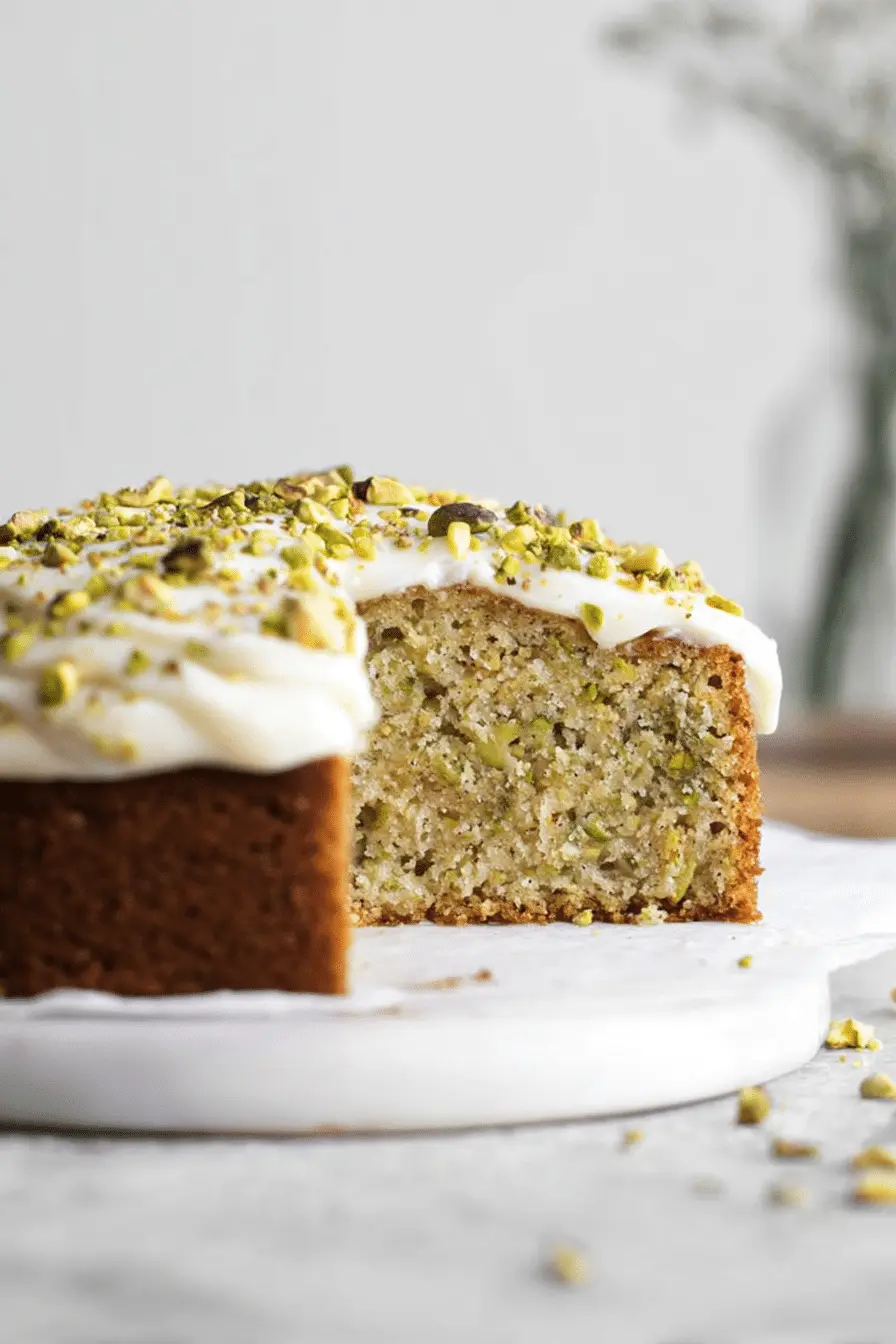
- Finish and serve. Spread the frosting on the cooled cake, sprinkle with chopped pistachios, and bring to room temperature before slicing. The frosting firms a bit in the fridge, so if you refrigerate, take it out 30 minutes before serving for that soft, creamy mouthfeel.
Cooking Tips for Perfect Texture and Flavor
Here are the tricks I learned the hard way and now always follow.- Room temperature ingredients matter. Butter and eggs at room temp incorporate more evenly. If the batter looks lumpy after adding eggs, it’s usually because things were cold.
- Don’t over-process the pistachios. You want a sandy texture. Too coarse and you get crunch; too fine and you risk the oil releasing, which can make the crumb dense.
- Avoid overmixing after adding flour. Mix until combined. Overworking develops gluten and leads to a tougher cake.
- Watch baking time, not the clock. Use the toothpick test and note how the cake looks: edges should pull slightly from the pan and the top should spring back when touched.
- If the cake tastes flat, salt first. A tiny bit more kosher salt often brightens flavors more than more sugar.
- Frosting consistency. If mascarpone frosting is too loose, chill it briefly. If too thick, add a teaspoon of cream at a time until you reach spreadable texture.
Serving Suggestions and Pairings
This cake is versatile: light enough for brunch, elegant enough for a shower, and homey enough for a weeknight dessert. For a delightful dessert trio, serve your lemon pistachio cake alongside mini lemon meringue tarts. Pair your cake with a light dish like baked lemon garlic butter salmon for a refreshing meal. My favorite pairings: a pot of Earl Grey or jasmine tea, a bright Americano, or a lightly sparkling lemon soda for a nonalcoholic contrast. For an adult pairing, a lemony Prosecco cocktail or a dry Riesling complements the nutty flavors beautifully.Variations for Dietary Preferences
The base is forgiving — here are tested swaps that keep the spirit of the cake intact.- Vegan option – use dairy-free butter, a plant-based yogurt or vegan sour cream substitute, and a flax or chia egg replacer (1 tbsp ground flax + 3 tbsp water per egg). For frosting, use whipped coconut cream with a touch of dairy-free cream cheese for tang.
- Gluten-free – replace the cake flour with a 1:1 gluten-free baking blend that contains xanthan gum; the texture will be slightly different but still tender.
- Lower sugar – reduce sugar by up to 1/4 cup in the cake; the lemon and salt will still carry the flavor. For the frosting, cut powdered sugar or use a stevia blend suited for baking, though texture will vary.
- Flavor twists – a teaspoon of finely grated lemon zest in the batter and a tablespoon of finely chopped fresh herbs (like thyme) can be lovely for a savory-scented lift.
Presentation Ideas for Your Cake
Simple decorations often look the best with this cake. A thin ribbon of frosting down the center and a scatter of chopped pistachios make it feel rustic and intentional. For a cleaner look, smooth the frosting and pipe a tiny border. For an elegant finish, consider serving a slice with pistachio tiramisu for a complementary flavor experience. Other ideas: candied lemon slices, a dusting of extra lemon zest, or a few edible flowers for a springy presentation. If you’re serving a crowd, slice into 16 even pieces so it looks generous but not overly sweet.Nutritional Information
The cake yields 16 servings. Per serving, the cake (with frosting) is approximately:- Calories – 272 calories
- Fat – 15 g
- Carbohydrates – 30 g
- Protein – 4.3 g
Conclusion and Final Thoughts
This lemon pistachio cake is one of those recipes that rewards attention. The key moments — zesting the lemons last minute, pulsing the pistachios until sandy, and not overworking either the batter or the frosting — make a real difference in texture and clarity of flavor. I’ve baked this for weekday desserts, for a bridal shower, and for a casual Sunday afternoon with friends. Each time it lands on the table there’s always a little applause when someone takes the first bite. Try it as written the first time, then feel free to tweak: more lemon if you love citrus, a sprinkle of flaky sea salt on top for contrast, or a swirl of lemon curd through the frosting for an extra layer. Most of all, enjoy the process — the aromas and small wins as the cake turns golden are part of why we bake.FAQ
Do pistachios and lemon go together? Absolutely! The combination of bright, citrusy lemon and earthy, nutty pistachios creates a delightful flavor that enhances the cake's overall taste. Can I make this cake gluten-free? Yes! You can substitute the cake flour with a gluten-free flour blend to make a delicious gluten-free version of the lemon pistachio cake. How can I store the lemon pistachio cake? You can store the cake in an airtight container at room temperature for up to 3 days or in the refrigerator for about a week. Just be sure to let it come to room temperature before serving. What can I use instead of mascarpone for the frosting? If you don't have mascarpone, you can use cream cheese or a whipped coconut cream for a dairy-free option, but the flavor will be slightly different. How can I personalize this cake? Feel free to experiment with flavor additions like lavender or matcha, or try different toppings such as candied lemon slices or edible flowers to make the cake uniquely yours!Recipe Card
Delicious Lemon Pistachio Cake: A Zesty Treat for Every Celebration
- Prep
- 20 min
- Cook
- 30 min
- Total
- 50 min
- Serves
- 16
- Calories
- 272 kcal
- Carbs
- 30.00 g
Ingredients
- 3/4 cupshelled roasted pistachios, plus more for topping
- 2lemons, zest
- 1 1/2 cupcake flour
- 1 tspbaking powder
- 1/4 tspbaking soda
- 1 stickunsalted butter, room temperature
- 1 cupsugar
- 3/4 tspkosher salt
- 3eggs
- 1/4 cupfull fat sour cream
- 1 tspvanilla extract
- 1/3 cupwhole milk
- 6 ozmascarpone, room temperature
- 3/4 cuppowdered sugar
- 1 tbspheavy whipping cream
- 1 tspfinely grated lemon zest
- 1 tspfresh lemon juice
- 1/8 tspkosher salt
Instructions
- 1
Preheat the oven to 350°F. Butter an 8x8-inch baking pan. Line the bottom with parchment paper and butter the paper.
- 2
Place the pistachios and lemon zest in the bowl of a food processor and pulse until finely ground (but not to pistachio butter). Pour mixture into a bowl along with flour, baking powder and baking soda. Whisk to combine, then set aside.
- 3
In a small bowl, whisk to combine sour cream, vanilla and milk and set aside.
- 4
In the bowl of a stand mixer fitted with a paddle attachment, cream butter, sugar and salt on medium speed until light and fluffy, about 3 minutes.
- 5
Add eggs, one at a time, until fully incorporated. Scrape down sides and bottom of bowl as needed.
- 6
With the mixer on low, alternate adding the dry ingredients (in three additions) and wet ingredients (in two additions), starting and ending with the dry.
- 7
Pour batter into prepared pan and smooth the top. Bake for 35-40 minutes, or until a toothpick inserted in the center comes out clean. Cool in the pan for about 10 minutes. Carefully turn cake out onto a work surface, peel off parchment paper, then invert onto a wire rack to cool completely.
- 8
Spread with frosting, sprinkle with chopped pistachios and serve at room temperature.
- 9
Combine all frosting ingredients in a medium bowl. Use a hand mixer fitted with beater attachments to mix until smooth. Be very careful not to over mix, the frosting can curdle.
You might also like
Reviews
Be the first to review this.