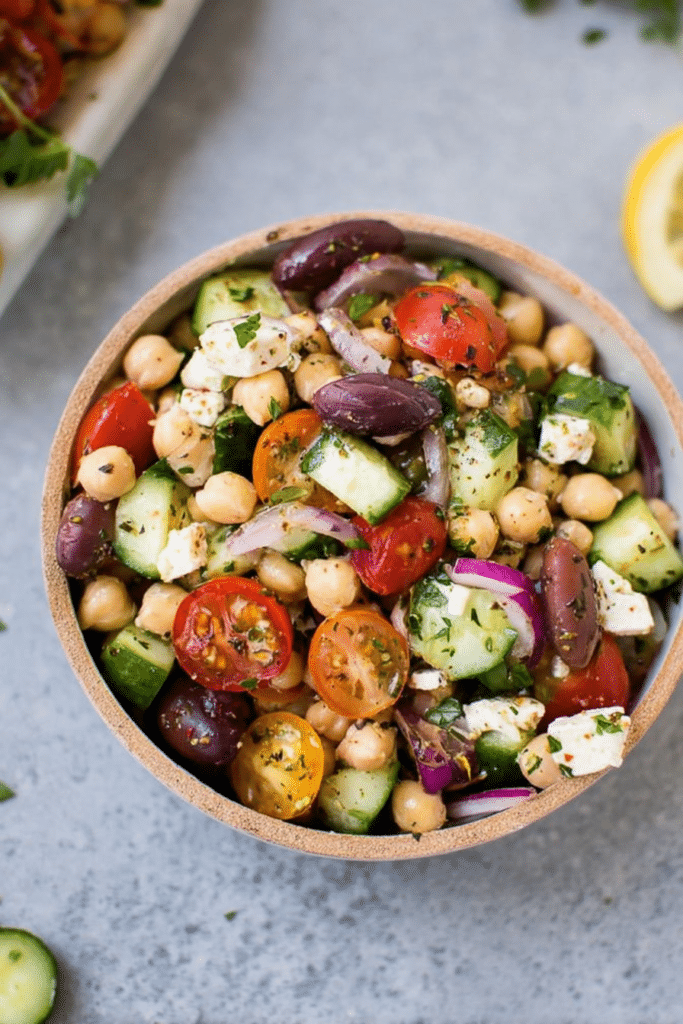
When the weather warms up and I want something bright, simple, and reliably fresh, this Mediterranean chickpea salad is what I reach for. It’s one of those recipes I’ve come back to again and again — from weeknight dinners when I’m short on time to lazy weekend lunches where I want something colorful and light. The first time I made it for friends, everyone asked for the recipe, and I keep tweaking tiny details each summer (more lemon one week, extra herbs another) until it feels just right.
The Mediterranean diet is rightly celebrated for its balance — lots of vegetables, legumes, olive oil, herbs, and moderate dairy or fish. This salad hits those notes: hearty chickpeas for protein and fiber, bright lemon and olive oil for dressing, salty feta and olives for savoriness, and fresh herbs to make the whole bowl sing. It’s nutrition-forward without feeling like dieting food; it’s plainly delicious.
Benefits of Chickpeas in Your Diet
Chickpeas are a foundational ingredient in many Mediterranean dishes for good reason: they’re sturdy, nutritious, and versatile. I use a can of chickpeas in this salad because they hold up well and soak up flavors without turning mushy.
Adding crispy roasted chickpeas to your dishes can enhance the texture and provide additional nutrients.
Here’s why I recommend working chickpeas into your regular meals:
- Protein & satiety – Chickpeas are a great plant protein that helps you feel full. When I eat a bowl for lunch, I rarely need a snack for hours.
- Fiber & digestion – The fiber helps keep things regular. If you’re switching from low-fiber to more beans, increase water gradually to help your system adapt.
- Micronutrients – They provide iron, magnesium, folate, and B vitamins. Paired with vitamin C-rich lemon or tomatoes, iron absorption improves.
- Heart health – Chickpeas have been associated with improved cholesterol profiles in population studies; they’re a heart-friendly way to add protein without saturated fat.
How to Prepare a Mediterranean Chickpea Salad
I keep the assembly straightforward so the fresh ingredients can shine. Below I give practical, tested steps — including where things can go wrong and how to fix them.
- Chickpeas – the star and base of the salad. Rinsed and drained chickpeas give you creamy texture and protein.
- Mini cucumbers – add crunch and a cool finish; English or Persian cukes work too.
- Red onion – provides a bright bite; soak in cold water for a few minutes if you want a milder onion flavor.
- Fresh oregano – aromatic and slightly peppery; dried works in a pinch but use less.
- Fresh parsley – gives a green freshness that lifts the whole salad.
- Red bell pepper – sweet counterpoint and color contrast.
- Little tomatoes – juicy bursts of acidity; cherry or grape tomatoes halved are perfect.
- Kalamata olives – introduce briny depth; pit them first if you prefer.
- Feta – salty, creamy, and optional if you want to keep it vegan.
- Olive oil – the dressing backbone; a good quality extra-virgin olive oil adds fruitiness.
- Lemon juice – brings acidity; always taste and add a bit more if the salad feels flat.
- Garlic – gives a savory lift; mince finely or press so it disperses evenly.
- Salt & pepper – essential seasonings; salt amplifies flavors so add cautiously and taste.
Exact (tested) recipe I use in the kitchen:
- Drain and rinse one 15-ounce can of chickpeas. I pat them lightly with paper towel — they don’t need to be bone dry, but excess water dilutes the dressing.
- Chop vegetables: two mini cucumbers (or one large Persian), half a red bell pepper, and about a cup of small tomatoes halved. Thinly slice one tablespoon of red onion (or about 2 tablespoons if you like more bite). Chop a tablespoon each of fresh oregano and parsley.
- In a large bowl combine the chickpeas and veggies. Add a half cup of Kalamata olives (halved if large) and about 3.5 ounces of feta — I use packed feta in oil when I have it, but crumbly works fine too.
- Make the simple dressing directly in the bowl: two tablespoons olive oil, a half tablespoon lemon juice, one clove garlic minced, and a good pinch of salt and several grinds of black pepper. Toss gently so the feta doesn’t break up too much.
- Taste and adjust: if it tastes flat, add a little more salt or lemon — salt is usually the missing piece, not sugar. If it’s too sharp, a tiny drizzle more olive oil rounds it out.
Tips I learned by doing this in a real kitchen:
- Use room temperature chickpeas if possible — cold beans straight from the fridge can tighten flavors and mask olive oil’s aroma.
- Don’t overmix right away. Toss gently once to combine, then let it sit 10–15 minutes if you can. The flavors meld and the dressing softens the chickpeas.
- If your parsley or oregano seems limp, shave off the thicker stems and only use the leafy parts. Over-chopping herbs turns them bitter.
Meal Prep Tips for Busy Days
I meal-prep this salad a lot because it fits into busy weeks: quick assembly, holds up well, and it’s flexible.
- Batch-cook chickpeas: cook a big pot (or multiple cans) at once and store in the fridge for 3–4 days. When I make a double batch, I use a sheet pan to spread the cooked chickpeas so they cool quickly and don’t clump.
- Chop vegetables ahead: cucumbers, peppers, and tomatoes can be prepped and stored in airtight containers for 2–3 days. I keep onions in a separate small jar so they don’t taint everything else.
- Make the dressing in a mason jar: two tablespoons olive oil, a half tablespoon lemon juice, minced garlic, salt and pepper. Shake and store in the fridge for up to 5 days. Shake again before using.
- Layered jar salads: for grab-and-go, build jars with dressing on the bottom, then sturdier vegetables (peppers, onions), chickpeas, tomatoes, herbs, and feta on top — shake when ready to eat so the feta doesn’t get smooshed.
- Quick assembly: if you’re in a rush, toss chickpeas with a little olive oil and lemon in a bowl, then stir in pre-chopped veggies and crumble feta on top. It’s done in under five minutes.
Storage Solutions and Freshness Tips
Leftovers are part of why I love this salad — but there are a few kitchen realities to respect so it stays great.
- Containers – Use airtight containers. Glass is best because it doesn’t absorb odors and you can see what’s inside.
- Keep components separate – If you plan to store longer than a day, keep dressing separate and add it just before serving. Tomatoes and cucumbers can release water and make the salad soggy over time.
- Timing – Prepared salad lasts about 3–5 days in the fridge. In my experience, day 1–2 are best for texture; by day 4 the cucumbers soften and the feta starts to mellow into the dressing.
- Reviving leftovers – If the salad seems dry, add a splash more olive oil and lemon, and fresh herbs. To perk up slightly tired greens or herbs, a quick chop and a little fresh lemon brings them back.
- Freezing? – Not recommended. Chickpeas freeze okay but the fresh vegetables and feta lose their texture.
Customizing Your Salad for Dietary Needs
One of the joys of this salad is its adaptability. I often change small elements to suit who I’m cooking for.
- Vegan – Skip the feta or swap in a vegan crumble. The salad is still bright and filling thanks to the chickpeas and olives.
- Gluten-free – Naturally gluten-free as written. If you add grains, choose certified gluten-free quinoa or rice.
- Higher protein – Toss in grilled chicken or canned tuna, or add a scoop of cooked quinoa or farro. For a vegan protein boost, add pan-seared tofu cubes.
- Lower-carb – Reduce tomatoes and bell pepper and increase leafy greens like spinach or arugula.
For a protein boost, consider adding Middle Eastern tofu kebabs to make your salad more filling while keeping it vegan.
Nutritional Breakdown of the Salad
Here’s the rough nutrition profile for a single serving (based on the original recipe yield of 4):
- Calories – ~347 kcal per serving
- Fat – ~18 g (mostly from olive oil and feta; healthy monounsaturated fats)
- Carbohydrates – ~36 g (includes fiber from chickpeas and veggies)
- Protein – ~14 g (mainly from chickpeas and feta)
- Fiber – substantial; chickpeas are a top contributor
- Vitamins & minerals – good source of iron, folate, magnesium, vitamin C (from lemon and tomatoes), and calcium (from feta)
How this adds up in practical terms: the chickpeas give sustained energy and fiber to keep you full, olive oil provides healthy fats that help absorb fat-soluble vitamins, and the vegetables add volume and micronutrients with very few extra calories. If you need a detailed breakdown for strict tracking, use a trusted nutrition database and enter the exact brands and amounts you use.
Conclusion and Serving Suggestions
This Mediterranean chickpea salad is an every-week kind of recipe for me — easy to scale, flexible, and reliably tasty. It’s bright straight away but also mellows and deepens if you make it ahead. Expect it to be hearty but not heavy; it’s meant to be a light meal or a flavorful side.
Pair your Mediterranean chickpea salad with Mediterranean chicken meatballs for a complete and hearty meal.
Some serving ideas I use depending on mood:
- As a main: serve over baby spinach or mixed greens and add a warm grain (quinoa or farro) for a complete bowl.
- As a side: bring it to barbecues or potlucks alongside grilled fish or roasted vegetables — it’s a refreshing foil to richer mains.
- In wraps: spoon into pita or flatbread with extra herbs and a drizzle of tahini for a quick lunch.
This salad can be perfectly complemented by a warm bowl of Greek lemon chicken soup with orzo.
FAQ
What can I substitute for chickpeas in this salad?
If you’re looking for a substitute, you can try using canned white beans, black beans, or even roasted cauliflower for a different texture.
Can I make this Mediterranean chickpea salad vegan?
Absolutely! The salad is naturally vegan, just be sure to skip the feta cheese or use a vegan alternative.
How long does the Mediterranean chickpea salad last in the fridge?
The salad can last up to 3-5 days in the fridge if stored properly in an airtight container. Just be sure to keep the dressing separate until you’re ready to serve it.
Can I add other vegetables or ingredients to the salad?
Yes, feel free to customize the salad! Great additions include bell peppers, avocado, or even grains like quinoa or farro for extra texture.
Is this salad gluten-free?
Yes, the Mediterranean chickpea salad is gluten-free, making it a great option for those with gluten sensitivities.
If you make this, tell me what you swapped or doubled down on — I love hearing how readers tweak it for their week. I often add an extra hit of lemon and a handful of chopped mint the day after; it brightens the whole bowl and is my go-to tweak when I serve it with grilled fish.
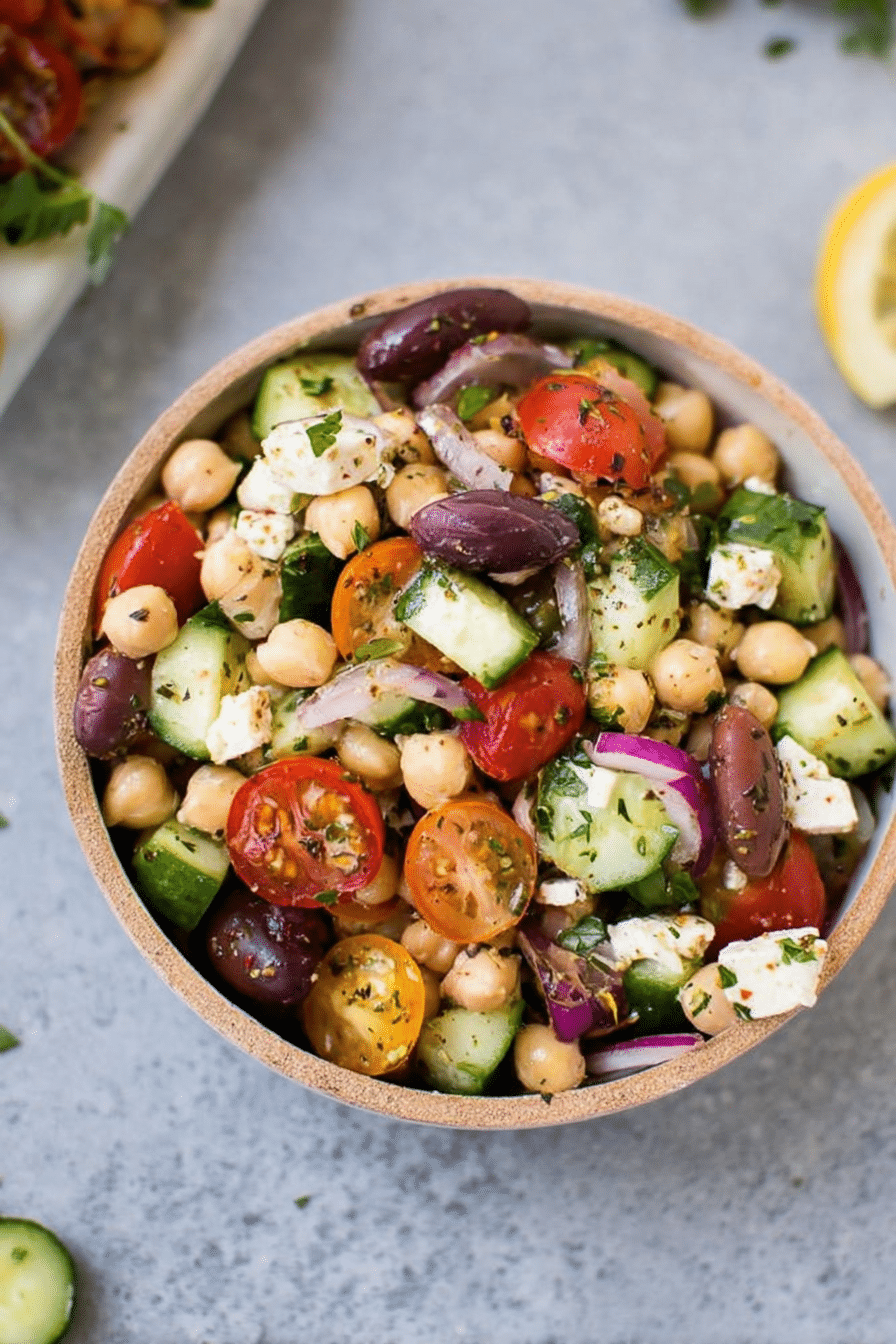
Mediterranean Chickpea Salad
Ingredients
Method
- Drain and rinse your chickpeas, then add them to a salad bowl.
- Prepare your veggies and herbs, and incorporate them into the salad bowl as you progress.
- Add the dressing ingredients (olive oil, lemon juice, garlic) directly into the salad bowl and toss gently. Taste and adjust as necessary (e.g., add more olive oil), and season with salt and pepper.