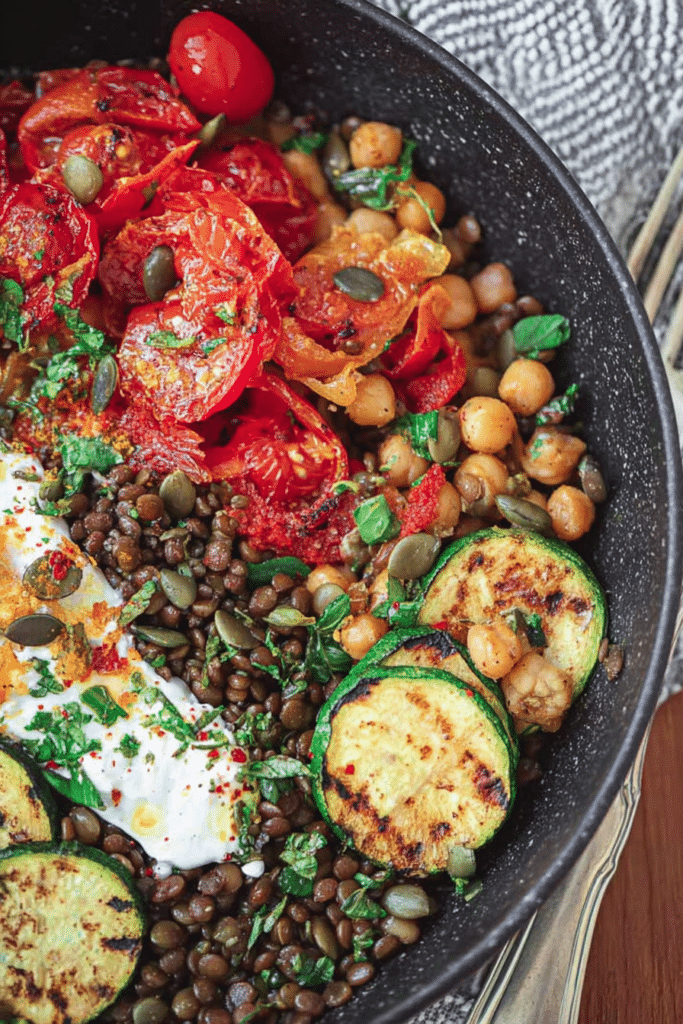
I started making these grain bowls on nights when I wanted something that felt thoughtful but didn’t take over my evening. I keep a jar of cooked lentils and a can of chickpeas in my fridge almost constantly now; they’re the backbone of a bowl you can assemble in minutes. The dressing is the one thing I never skip — it brings brightness and ties the textures together.
In my kitchen this is what I reach for when time is short: a chewy grain, a pulse for protein, quick vegetables that roast or sauté in one pan, and creamy avocado or crumbled feta for richness. The colors are what sell it to me first — deep green parsley, red cherry tomatoes, dark kalamatas — and the aroma of lemon and garlic makes the bowl feel finished before I even sit down.
I’ve learned the tricks that keep these bowls from going soggy in the fridge, how to get lentils to hold their shape, and how much dressing each bowl actually needs to taste balanced. If you want fast weeknight dinners that are both nutritious and genuinely satisfying, this is the template I come back to again and again.
Why These Mediterranean Style Grain Bowls Are Perfect for Busy Weeknights
These bowls work for busy nights because each component can be prepped ahead and combined quickly. The grains and pulses provide a sustained, filling energy that’s especially useful after a long day. You’re getting plant-based protein and fiber without a laundry list of steps.
Think about the sensory picture: a warm bed of chewy grain, the soft, earthy lentils, the pop of halved cherry tomatoes, and the cooling, creamy avocado. The texture variety—chewy, creamy, crunchy—keeps each bite interesting, so you won’t feel like you’re eating the same thing every night.
Everything You Need for Mediterranean Style Grain Bowls
Below I walk through the main players and what they bring to the bowl — flavor, texture, and nutrition — plus a few optional add-ins to keep things interesting. For added crunch and protein, consider tossing in some crispy roasted chickpeas as a topping.
- * Farro – A chewy, nutty grain that creates a satisfying base; swaps easily for other grains if you need a quicker option.
- * Lentils – Dense with protein and fiber; they hold shape well and add a soft, hearty bite.
- * Chickpeas – Creamy when warmed, slightly firm when chilled; a great texture contrast and protein source.
- * Zucchini – Quick to sauté; it takes on olive oil and spices and adds a tender, slightly sweet element.
- * Cherry tomatoes – Bright acidity and juiciness to cut through the starches and legumes.
- * Shallots – Milder than onion, they add a gentle pungency when raw or lightly cooked.
- * Avocado – Provides richness and a creamy mouthfeel that balances the grains and pulses.
- * Parsley – Fresh, slightly bitter herb that lifts the whole bowl.
- * Kalamata olives – Salt-forward, briny bites that punctuate each mouthful.
- * Feta (optional) – Salty and tangy; omit for a vegan bowl or swap for a dairy-free crumble.
- * Extra virgin olive oil, lemon, garlic, Dijon, za’atar, sumac – The dressing components that bring acidity, fat, and aromatic spice.
How to Cook Lentils and Chickpeas Fast (Times & Shortcuts)
- Brown/green lentils (stovetop): simmer gently for about 20–25 minutes until tender but not mushy. Salt toward the end so the skins don’t toughen.
- Puy/french lentils: cook 20–25 minutes; they hold their shape and have a peppery note that’s great for salads.
- Red/split lentils: these break down faster and are done in 10–15 minutes; use them if you want a softer, more porridge-like texture.
- Dried chickpeas (stovetop): if soaked overnight, simmer 45–60 minutes until tender. If you don’t soak, expect longer—up to 1.5–2 hours—or use a pressure cooker.
- Pressure cooker/Instant Pot chickpeas: soaked chickpeas need roughly 10–12 minutes at high pressure plus natural release; unsoaked will be around 35–40 minutes with natural release. This is the fastest reliable route to tender chickpeas.
- Canned lentils/chickpeas: drain, rinse, and heat briefly or use straight from the can for instant bowls—rinse well to remove excess sodium and any canning liquid flavor.
- Batch-cooking tip: cook a large pot of lentils or a batch of chickpeas once a week and refrigerate or freeze in portioned containers so assembly takes minutes on weeknights.
The Secret to Grain Texture: Farro vs. Quick Alternatives
Farro gives the bowl a nutty flavor and a satisfying chew that resists quick softening under dressing. It’s especially good when you want a toothsome contrast with soft lentils and creamy avocado. Regular farro takes longer than fast grains, but an overnight-soaked or quick-cooking farro cuts that time down considerably.
- Farro: chewy and nutty; best if you like texture. Regular farro simmers 20–30 minutes; quick-cooking varieties can be done in about 10–12 minutes.
- Quinoa: cooks in about 15 minutes, cooks fluffy and light—great when you need a gluten-free swap.
- Brown rice: heartier and chewier than white rice, but takes longer (about 40–45 minutes); good for big-batch cooking.
- Bulgur or quick barley: middle ground—more texture than quinoa but faster than whole-grain farro or brown rice.
- When to swap: use quinoa or bulgur for gluten-free or faster bowls; keep farro when you want that chew and nutty flavor.
Why the Dressing Is Non-Negotiable (And How to Make It in a Jar)
The dressing brings acidity to cut the starchy grains, fat to carry flavor, and seasonings that wake up each ingredient. Emulsifying oil and lemon (or vinegar) with mustard and garlic clings to lentils and farro so every bite tastes deliberate rather than dry.
- Jar method: add oil, lemon juice, minced garlic, Dijon, salt, pepper, and a pinch of za’atar and sumac to a jar. Close and shake vigorously until opaque and slightly thickened. Shake again before using.
- Emulsification tip: mustard helps bind oil and acid; if your dressing separates, shake or whisk just before tossing.
- Variations: add chopped fresh herbs, swap lemon for red wine vinegar, or stir in a spoonful of tahini for creaminess.
- Serving idea: if you want an extra dip or something for guests to spoon on top, try a spicy roasted red pepper feta dip on the side for an extra layer of flavor (link to dip).
How to Make Mediterranean Style Grain Bowls (Step-by-Step)
- Heat a skillet and sauté zucchini in a splash of olive oil until it’s tender with golden edges; season lightly with salt and remove to drain briefly so it doesn’t add excess oil to the bowl.
- Combine pre-cooked farro, lentils, and chickpeas in each bowl as the base.
- Add the cooked zucchini, halved cherry tomatoes, thinly sliced shallots, avocado slices, chopped parsley, and a handful of kalamata olives.
- Season lightly with salt, pepper, and an extra pinch of za’atar or sumac to taste.
- Drizzle the jarred dressing over the bowls (see the Pro Tip below for quantities); finish with crumbled feta if using.
- Toss gently in the bowl so the dressing coats everything and allow the flavors to settle for a few minutes before serving.
Pro Tip for mediterranean style grain bowls recipe with lentils and chickpeas: dressing-to-bowl ratio for maximum flavor
- I use about 2 tablespoons of dressing per individual bowl as a starting point; it’s enough to coat the grains and pulses without making the bowl soggy.
- If the grains were cooked and are still warm, start with slightly less and add more after tasting; warmth opens flavors and you’ll need a touch less acid.
- Taste one component alone (grain + dressing) to dial in salt and acid before combining everything.
Troubleshooting
- If your lentils are mushy: you likely overcooked them; choose Puy lentils or reduce simmer time by a few minutes next time.
- If the bowl tastes flat: add a pinch more salt and a squeeze of fresh lemon; acid brightens the whole dish instantly.
- If components get soggy in the fridge: store wet ingredients (dressing, sliced avocado) separately; keep grains and pulses chilled in airtight containers.
- If the dressing separates: shake the jar or whisk quickly; add a small spoonful of mustard or a drop of warm water to help re-emulsify.
Easy Variations — Gluten-Free, Vegan, and Seasonal Swaps
- Gluten-free: swap farro for quinoa, buckwheat, or brown rice for the same bowl structure without gluten.
- Vegan: omit feta and add toasted seeds, sliced almonds, or extra avocado for richness.
- Extra protein: top with crispy roasted chickpeas or a scoop of hummus for creaminess.
- Seasonal vegetables: in winter use roasted sweet potatoes or beets; in summer load up on cucumbers and grilled peppers.
- Pairing idea: for a refreshing side that complements these bowls, try a Mediterranean chickpea salad alongside the grain bowls (see recipe).
How to Store, Meal-Prep, and Reheat These Grain Bowls
- Store components separately: grains and pulses together, vegetables and avocado separately, and dressing in its own jar to avoid sogginess.
- Use airtight containers: shallow containers cool food faster and keep textures better for up to 4 days in the fridge.
- Reheating: warm grains and pulses gently in a microwave or skillet, then add fresh veggies and dressing just before eating to preserve texture.
- Meal-prep layout: portion bases into containers and keep toppings in small containers so assembly at mealtime takes less than five minutes.
- Make-ahead pairing: build a tray of roasted veggies or a roasted sweet potato burrata platter to rotate through lunches and dinners with these bowls (pairing idea).
Frequently Asked Questions
Can I make these grain bowls ahead of time?
Absolutely! You can prepare the ingredients in advance and assemble the bowls when you’re ready to eat. Just store the components separately to keep them fresh.
What if I don’t have farro? Can I use a different grain?
Yes, you can substitute farro with other grains like quinoa, bulgur, or barley. Each will add a different texture, so choose what you prefer!
Is this recipe vegan-friendly?
Yes, this recipe can easily be made vegan by omitting the feta cheese. You can also add additional veggies or avocado for creaminess!
How can I adjust the dressing to suit my taste?
Feel free to tweak the dressing ingredients! You can add more lemon juice for tang, extra garlic for flavor, or even herbs for a fresh twist.
What are some good toppings for these grain bowls?
You can top your grain bowls with roasted vegetables, nuts, seeds, or fresh herbs to add even more flavor and nutrition!
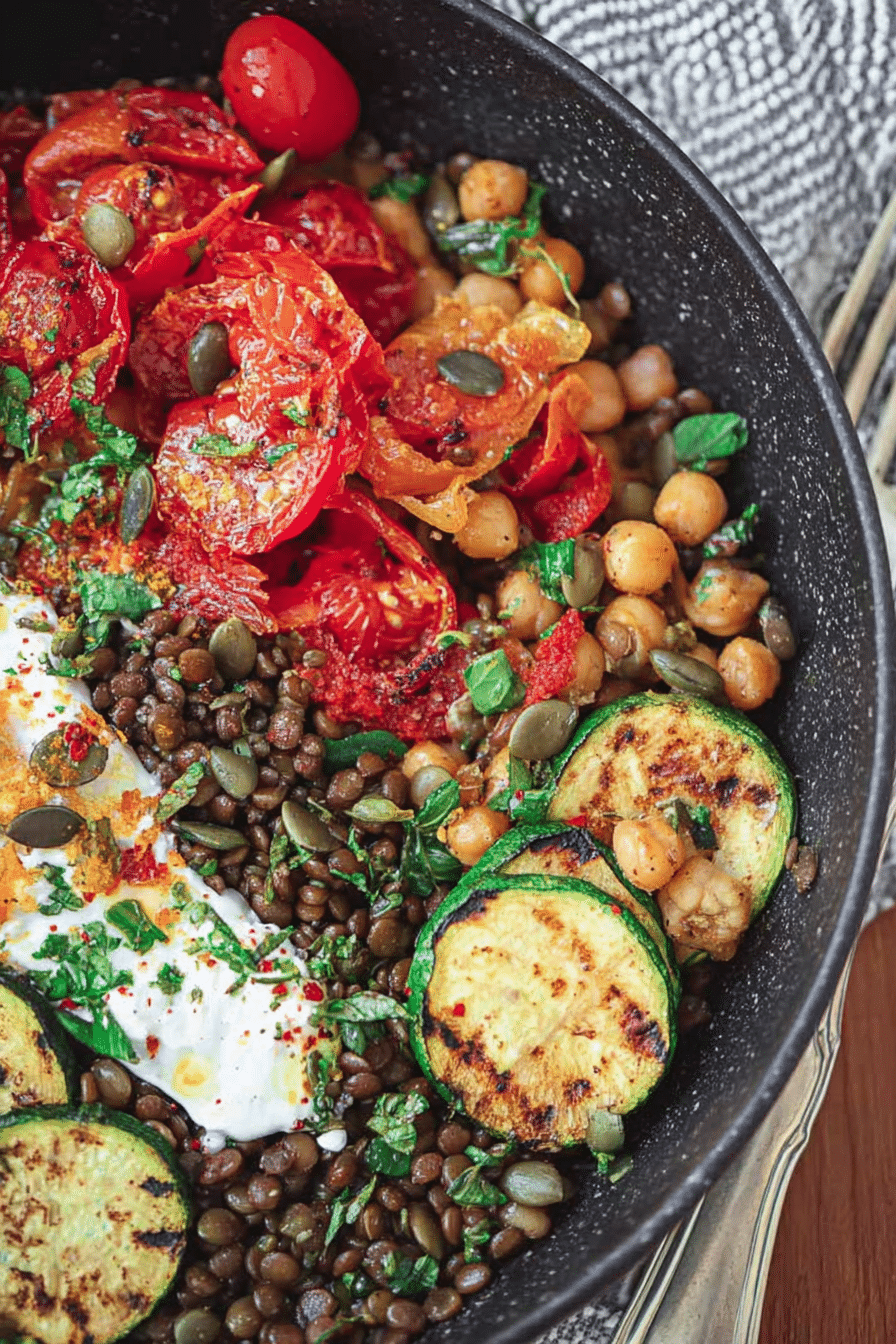
Mediterranean Style Grain Bowls Recipe with lentils and chickpeas
Ingredients
Method
- In a non-stick pan or skillet, heat 2 tbsp of olive oil over medium-high heat until shimmering but not smoking. Add the sliced zucchini and sauté on both sides until tender. Remove zucchini with a slotted spoon and place on a paper towel to drain any excess oil. Season lightly with salt.
- Add the dressing ingredients to a mason jar. Close the lid tightly, and give it a good shake. Set aside for now (but shake again before using).
- Divide the cooked farro, lentils, and chickpeas equally among four dinner bowls. Add cooked zucchini, tomatoes, shallots, avocado slices, parsley, and kalamata olives. Season lightly with salt, pepper, and more za'atar, if you like. Drizzle a bit of the dressing on top (about 2 tbsp per bowl). Finish with crumbled feta, if you like.
- Serve at room temperature or warm if farro and pulses were just cooked. It's best to mix the ingredients in each bowl to allow the dressing flavors to infuse. If you have a bit of dressing left, serve it alongside.