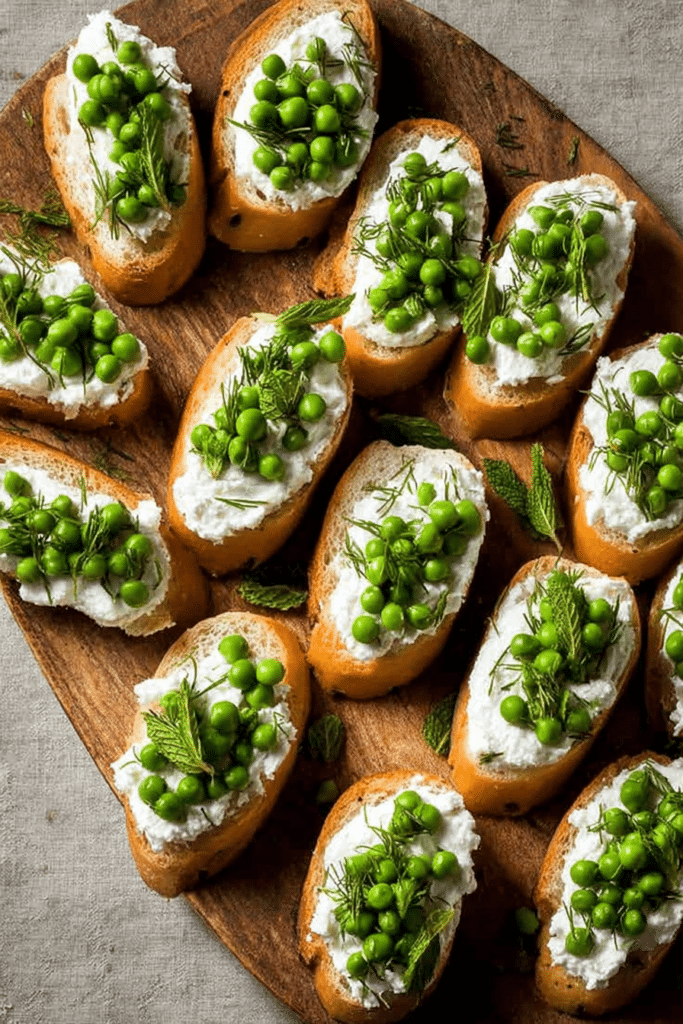
Introduction to Ricotta Crostini
There’s something joyful about a simple crostini that tastes like sunshine—soft, milky ricotta spread over a crisp slice of bread, topped with little pops of sweet peas and a whisper of mint. I make this ricotta crostini with peas and mint whenever I want an appetizer that feels elegant but doesn’t demand a full day in the kitchen. It’s one of those recipes that gets me out to the farmers’ market in spring and into the kitchen with the windows open; the smell alone—warm bread, lightly sautéed garlic, the fresh, green aroma of mint—can shift your whole afternoon.
I’m writing this after the third time I made them this month—two for friends who came by on a rainy afternoon and one for a Saturday picnic. Each time I noticed small differences: the first batch used frozen peas I’d quickly blanched; the second used fresh market peas that still had a faint sweetness from the pod; the last batch got a flourish of lemon zest because my mint was a touch stronger than usual. These little choices matter, and I’ll walk you through them.
Why This Dish is Perfect for Spring
Spring is a season about renewal on the plate. The combination of peas and mint reads like green lightness: peas bring a clean sweetness and tender pop, while mint cuts through with a bright cooling finish. I associate this crostini with neighborhood potlucks and breezy brunches—it’s light enough for a lunch spread, and pretty enough to sit on a holiday table.
Chefs and home cooks often talk about cooking with the season—there’s wisdom in that. Peas and mint are classic spring pairings because they share the same harvest window and complement each other: peas give texture and sweetness, mint adds aromatic lift. When both are at their best, a simple crostini like this feels elevated without fuss.
Ingredients Needed
- French baguette – the backbone of the crostini; dense enough to toast until crisp but thinly sliced so each bite is crisp and not chewy.
- Olive oil – used to toast the bread and sauté the peas; choose a fruity extra-virgin for finishing if you like a green, grassy note.
- Ricotta cheese – the creamy spread; fresh ricotta is pillowy and milky and serves as a cool counterpoint to the warm crostini.
- English peas – sweet and slightly grassy; fresh peas are ideal, but good-quality frozen peas thawed and drained also work fine.
- Garlic – smashed and briefly cooked with the peas for a gentle savory background; don’t overcook or it becomes bitter.
- Fresh mint – provides aroma and lift; smaller young leaves are best for delicate flavor, larger leaves can be torn so they nestle on top without overpowering.
- Sea salt – a finishing sprinkle that brightens flavors; kosher or flaky sea salt is nice for texture.
- Ground black pepper – adds a warm, subtle heat to balance the ricotta’s creaminess.
- Lemon (optional) – a little zest or a squeeze can brighten the whole thing if your peas are very sweet or the ricotta tastes flat.
Step-by-Step Instructions
- Prepare the crostini: Preheat your oven to a moderate temperature so the bread crisps without excessive browning — I use around a mid- to upper-350s Fahrenheit setting. Slice the baguette into thin pieces, lay them out on a rimmed baking sheet, drizzle lightly with olive oil, and sprinkle with a pinch of salt. Roast until the edges begin to firm and the centers are dry to the touch — usually about 7–9 minutes depending on your oven. You want crunch, not deep color; watch the first tray closely because oven temps vary.
- Cook the peas: Bring a pot of water to a rolling boil, salt it well (it should taste like the sea), and blanch the peas for about three minutes. If they’re frozen, the timing is similar—blanch until they’re just tender. Shock them in an ice bath to stop cooking and preserve that bright green color. I always taste one here: if they taste flat, a little finishing salt or a squeeze of lemon will lift them.
- Sauté for texture: Heat a pan with a couple of tablespoons of olive oil, add smashed garlic and the drained peas, and sauté briefly for three to four minutes. You’re not trying to purée everything—leave peas with a bit of bite so they pop in your mouth. Overcooking makes them mealy; if that happens, briefly mash a portion with the back of a spoon to create a contrast of textures instead of a single mush.
- Make the ricotta base: In a bowl, stir the ricotta until it’s smooth and slightly loose—if your ricotta is very thick, loosen it with a teaspoon or two of olive oil or a splash of milk. Taste: ricotta can be bland on its own, so season with a pinch of salt and a grind of black pepper. If you like a brighter edge, add a touch of lemon zest; this is especially helpful if your ricotta is very mild.
- Assemble: Spread a spoonful of ricotta on each cooled crostini, top with a few peas (or a small mound of the sautéed peas) and a torn mint leaf. Finish with a tiny sprinkle of flaky sea salt and a quick grind of black pepper. Serve at room temperature—this brings out the ricotta’s creaminess and the mint’s fragrance.
Estimated times: about 10 minutes active prep, 14 minutes of cooking/toasting, total roughly 24 minutes from start to finish. Yield: about 10–12 crostini depending on the baguette slice thickness.
Tips for Making Crostini from Scratch
Getting crisp, uniformly toasted crostini is more technique than luck. Here are a few things I’ve learned after burning a tray or two early on:
- Even slicing matters – use a serrated knife and a gentle sawing motion to keep slices uniform so they toast at the same rate.
- Oil sparingly – too much oil makes the crostini greasy; a light brush or a quick drizzle across the tray is enough.
- Watch the oven’s hot spots – rotate the tray halfway through if your oven has uneven heating. One minute can be the difference between golden and charred.
- Make-ahead strategy – crostini can be toasted up to a day ahead and stored in an airtight container; they’ll keep their crunch if completely cooled first. Don’t assemble until just before serving to avoid sogginess.
- Gluten-free option – thick slices of gluten-free baguette or sturdy gluten-free sourdough crisp up well; toast a bit longer at a slightly lower temp to avoid over-browning.
Serving Suggestions and Pairings
This crostini loves light, bright accompaniments. The creamy ricotta and sweet peas pair beautifully with chilled whites and spritzy drinks.
For an exquisite appetizer experience, pair your ricotta crostini with savory garlic mushrooms.
Consider serving garlic parmesan roasted brussels sprouts alongside your crostini to add a delightful crunch.
Pair your appetizers with honey garlic shrimp for a mouthwatering seafood twist.
A light spring orzo salad would complement your ricotta crostini beautifully.
Drink pairings I reach for: a zesty Sauvignon Blanc, a dry Prosecco, or a gin and tonic with a sprig of mint to echo the herb notes. For a non-alcoholic option, iced elderflower or sparkling water with a lemon slice works beautifully.
Presentation Ideas for Impressing Guests
These crostini are small but pretty plates. A few presentation tricks I use when hosting:
- Rustic platter – arrange crostini in overlapping rows on a large wooden board; tuck small bunches of mint or pea shoots in between for color.
- Single-bite styling – garnish each piece with a tiny mint leaf or a sliver of lemon zest so guests get the scent on the first bite; aroma is half the experience.
- Themed party ideas – for a garden party, scatter edible flowers lightly over the platter; for a minimalist dinner, present crostini on a white platter with one lemon wedge for squeezing.
- Serving utensils – provide a small spoon for anyone who wants more ricotta and a tweezer for delicate garnishes if you’re being finicky about plating.
Variations for Dietary Restrictions
This crostini is easy to adapt so nobody misses out:
- Vegan ricotta – use a store-bought plant-based ricotta or make a quick version blending firm tofu or cashews with a splash of lemon, nutritional yeast, and a little olive oil until creamy. Season well; plant ricotta often needs more salt and acid to mimic the tang.
- Gluten-free bread – choose a sturdy gluten-free baguette or thick slices of gluten-free rustic loaf; toast at a lower temp and for a little longer to dry them evenly.
- Nut-free – keep the toppings simple: peas, mint, and ricotta are naturally nut-free. If making a vegan ricotta, skip nut-based recipes and opt for tofu-based versions.
- Lower-calorie option – use a light ricotta or reduce the amount of spread and top with a higher ratio of peas and herbs to keep each bite satisfying but lighter.
Troubleshooting — what can go wrong and how to fix it
If the crostini are soggy: they were likely assembled too early or the bread wasn’t dry enough. Toast another tray, cool completely, and reassemble just before serving. If ricotta tastes flat: add a pinch of salt and a little lemon zest—acid brightens dairy quickly. If peas are mealy: you’ve overcooked them; chop half and mash a bit to create a textured spread rather than trying to rescue whole peas.
Storage and Leftover Notes
Leftover assembled crostini won’t keep their crunch well; instead, store components separately. Keep toasted crostini in an airtight container at room temperature for up to 24 hours. Store ricotta (covered) in the fridge and use within five to seven days. Cooked peas keep for 2–3 days refrigerated in an airtight container. When you’re ready to serve again, re-toast the bread for a minute or two to refresh the crunch and assemble right before guests arrive.
Conclusion and Call to Action
This ricotta crostini with peas and mint is the kind of recipe that feels like it came together effortlessly, but benefits from a few mindful choices: fresh peas if you can get them, a bright finishing salt, and toasted bread that’s crisp without being browned. I come back to it every spring because it’s fast, flexible, and reliably pretty. Try it as written, then tweak—add lemon, swap herbs, or go vegan and tell me how it turned out.
If you make these, leave a note below with your favorite tweak or photo—I love hearing what readers change and why. Subscribe if you want more seasonal recipes that are tested in a real kitchen and written from the messy, smell-filled middle of cooking.
Frequently Asked Questions
How do you make pea ricotta crostini? In a small bowl, stir together ricotta cheese, cooked peas, mint, salt, and pepper. Spread this mixture over toasted baguette slices and drizzle with olive oil before serving.
Does mint go with peas? Absolutely! Fresh mint complements the sweet flavor of peas beautifully. A little mint can bring out their freshness in delicious ways.
How long will fresh ricotta last in the fridge? Fresh ricotta typically lasts about five to seven days in the fridge if stored properly in an airtight container. Always check the package for specific recommendations.
Can I use frozen peas for this recipe? Yes, you can use frozen peas! Just make sure to thaw and drain them before cooking to achieve the best texture.
What type of bread should I use for crostini? A French baguette works wonderfully, but you can also use ciabatta or sourdough. Choose a bread that crisps up nicely when toasted.
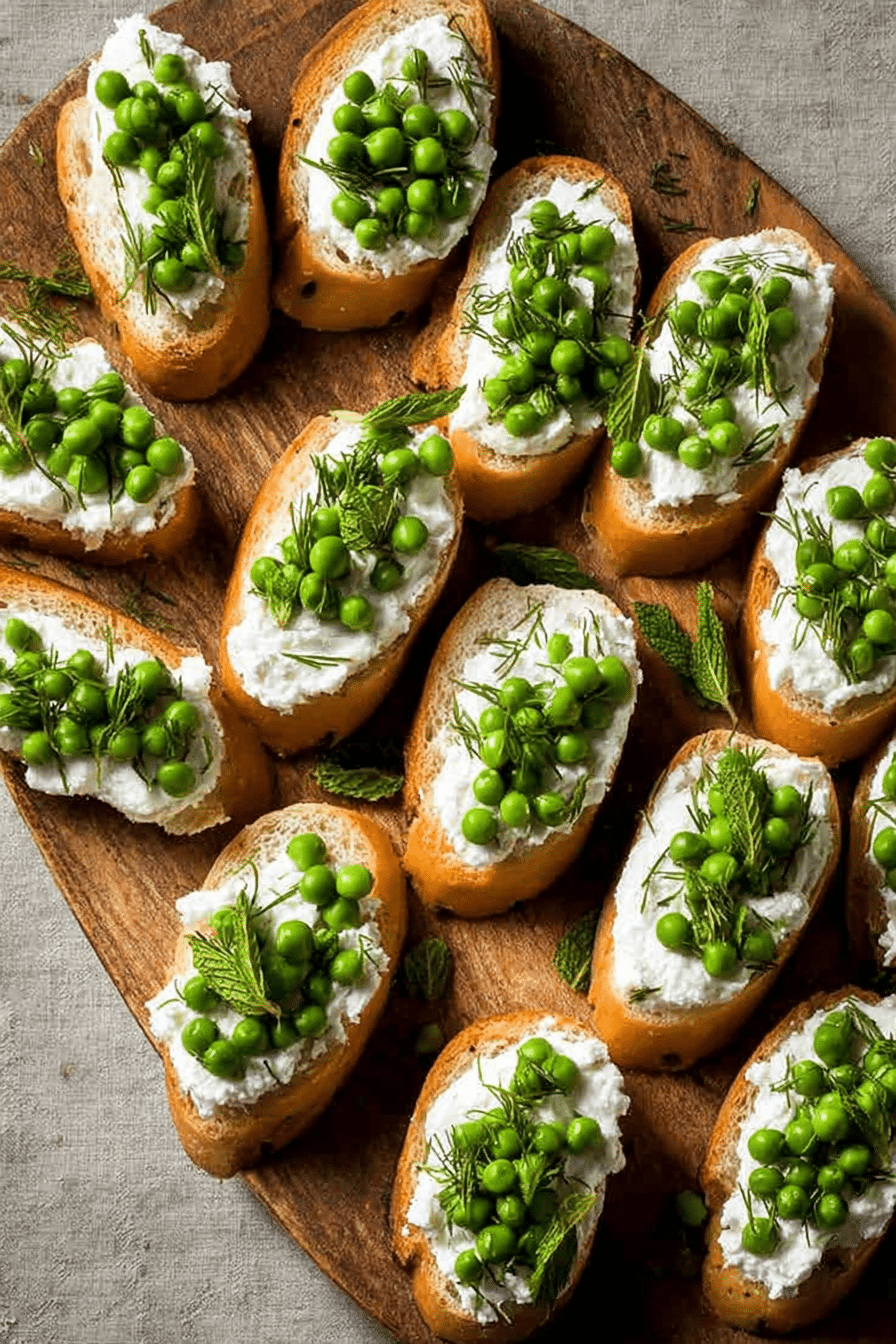
Ricotta Crostini with Peas and Mint
Ingredients
Method
- Preheat oven to 375 F. Place sliced baguette on a large rimmed baking sheet. Drizzle with 2 tablespoons olive oil, then sprinkle with 1 teaspoon salt. Cook until crispy, but not browned, about 7 minutes. Remove and set aside.
- Bring a medium pot of water to a boil, then add 1 tablespoon salt. Add peas and cook for 3 minutes. Drain and place into an ice bath. Cool for a few minutes and drain.
- In a medium skillet, heat 2 tablespoons olive oil over medium-high heat. Sauté drained peas with garlic until cooked through, about 3-4 minutes. The peas should still have a little firmness to them — you don’t want them mushy.
- On a large platter, layer crostini with ricotta, peas, and a few small leaves of mint (if they’re too large, you can tear or slice them). Season each crostini with sea salt and freshly ground black pepper. Serve at room temperature.