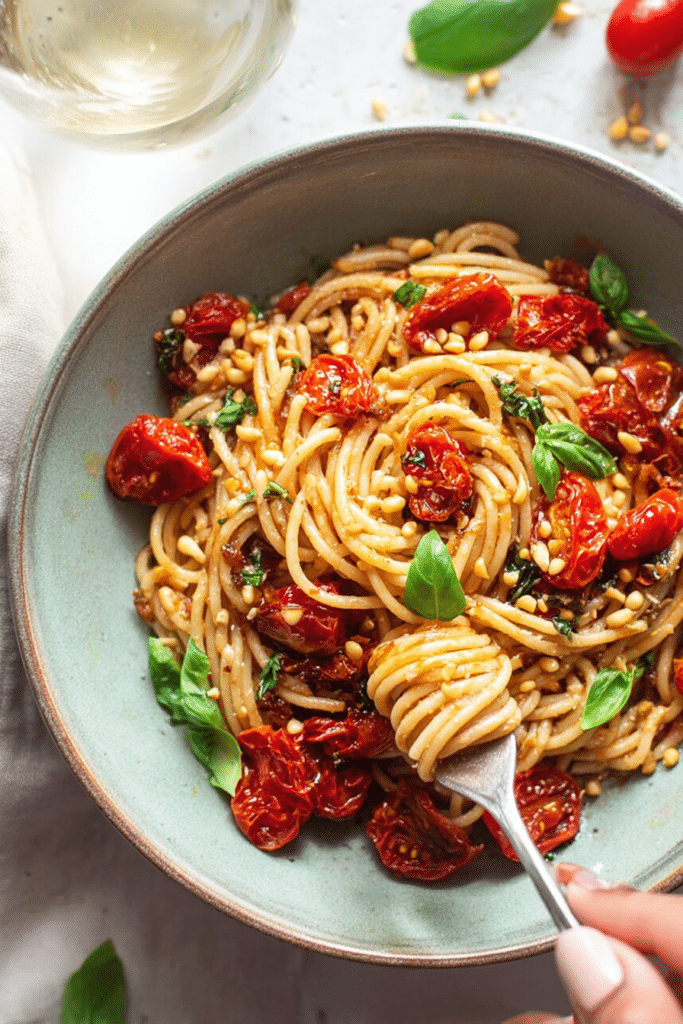
I make this roasted tomato and basil pasta when I need something fast, comforting and unfussy. In my kitchen it’s one of those go-to dinners: the oven does most of the work while you boil the pasta and toast the pine nuts. The whole meal comes together in about thirty minutes, and it smells irresistible — warm, caramelized tomato and bright basil drifting through the house.
Over the years I’ve learned a few practical shortcuts that keep the dish fresh and vibrant without adding time: roast tomatoes cut-side up for even caramelization, keep the garlic on very low heat so it perfumes the oil without turning bitter, and always save a little pasta water to coax the sauce into a silky coating. These small steps make a big difference.
I also like that the recipe is forgiving. Use whatever small tomatoes you have, swap in gluten-free spaghetti when needed, and add a can of chickpeas for a protein boost. The result is simple, wholesome, and reliably tasty on busy weeknights.
Below I break down what I do and why it works, plus easy make-ahead ideas and variations so you can tailor the dish to your pantry and schedule.
Why This Roasted Tomato and Basil Pasta Works for Busy Weeknights
This recipe is built around time-saving choices that still give you serious flavor. Roasting concentrates tomato sweetness without long simmering; a short pan sauce with diced fresh tomatoes and capers adds brightness without heavy hands-on time. Most of the work happens while the pasta cooks, so you can multitask — toast the pine nuts, finish the sauce and toss everything together right as the pasta reaches al dente.
Key time-savers I rely on: use small tomatoes that roast quickly, keep the pan sauce gentle so it doesn’t need constant stirring, and prep the few fresh herbs and garlic while the oven is doing its job. The aroma of roasted tomato and basil is an instant sign that dinner is almost ready — warm, slightly sweet tomato notes with the clean lift of fresh basil.
Everything You Need for Roasted Tomato and Basil Pasta
- Small tomatoes (grape, plum, or cherry) – They roast quickly and concentrate sweetness; choose ripe ones for best flavor.
- Olive oil – Used for roasting and finishing; it helps with even browning and mouthfeel.
- Dried basil – A little on the roasting tomatoes gives a consistent herb note even if you don’t have fresh.
- Spaghetti or your preferred pasta – Use gluten-free pasta if you need to; different shapes will change the bite slightly.
- Pine nuts – Toasted for crunch and a buttery note; can be swapped for chopped almonds or walnuts.
- Garlic – Adds aroma; keep it low and slow so it doesn’t go bitter.
- Fresh tomatoes (or canned) – For the quick pan sauce; they add body and fresh acidity.
- Fresh basil sprigs – Added while simmering and shredded at the end for brightness.
- Capers – Give salty, briny pops that balance the sweetness of roasted tomatoes.
- White wine (optional) – Adds acidity and depth; water or pasta water works fine instead.
- Chilli flakes (optional) – For a gentle heat if you like it warm.
The Secret to Bright, Roasted Tomato Flavor
Roasting amplifies tomato flavor through gentle browning and moisture loss. The Maillard-like reactions on the tomato surface intensify sweetness and add savory depth — that caramelized edge is what lifts this simple sauce above raw-tomato brightness. Use enough olive oil to coat the cut surfaces so they brown evenly without drying out, and roast at a high enough temperature so the skins blister and the flesh gets jammy.
Salt is important here: it helps draw out juices that then caramelize, but be cautious because capers bring saltiness too. Add salt gradually and adjust at the end. Visual cues matter — aim for richly colored, slightly collapsed tomato halves with glossy, caramelized pockets of flesh.
For a delicious, complementary dish, try our roasted tomato basil soup that enhances the rich flavors of the roasted tomatoes.
- Roast tomatoes cut-side up so they concentrate sugars and caramelize.
- Brush exposed flesh with oil to promote even browning and prevent drying.
- Season lightly before roasting and finish tasting after adding the sauce and pasta.
Pasta Texture Tips for Al Dente Perfection
Pasta doneness impacts the whole plate — you want a slight chew that holds up to the roasted tomatoes and sauce. Different pasta shapes and brands cook differently, so rely on testing rather than only the package time. Always reserve some pasta cooking water: its starch helps the sauce cling to the noodles and gives a silky finish.
If you love pasta, you might also enjoy our garlic butter spaghetti for mastering the perfect al dente texture.
- Start timing when the water returns to a boil after adding pasta.
- Check doneness a minute or two before the package time; pasta should be tender with a firm center when you bite it.
- Reserve a cup of cooking water before draining to loosen and finish the sauce.
- Toss the hot pasta directly into the pan with sauce and roasted tomatoes; finish cooking together for 30–60 seconds so the flavors marry.
- Troubleshooting (from my experience) – If the sauce feels dry I add a splash of pasta water; if the pasta is too soft I reduce the final tossing time next time. I’ve burned garlic by cooking it too hot — keep it low and watch for color change rather than relying on smell alone.
How to Make Roasted Tomato and Basil Pasta (Step-by-Step)
- Preheat the oven to a high temperature so tomatoes roast quickly and evenly.
- Halve the small tomatoes and arrange them cut-side up on a baking tray; brush with a little olive oil, sprinkle dried basil, salt and pepper, and roast until the flesh is soft and edges are caramelized (about the time it takes to boil pasta).
- While tomatoes roast, bring a large pot of salted water to a boil and cook the pasta until just shy of package al dente.
- Toast pine nuts in a small pan over medium heat, stirring constantly until golden; remove immediately to avoid burning.
- Heat olive oil over low heat in a large skillet, add finely diced garlic and cook gently until fragrant but not browned.
- Add diced fresh tomatoes (or canned), basil sprigs, chopped capers and white wine or water; simmer gently so the tomatoes soften and the sauce reduces slightly — about 10–15 minutes. Remove the wilted basil sprigs at the end.
- Drain the pasta, reserving some cooking water, then add the pasta and roasted tomatoes to the skillet. Toss thoroughly, adding a splash of reserved water to loosen the sauce if needed. Taste and adjust salt and pepper.
- Serve topped with toasted pine nuts and shredded basil leaves.
For another pasta variation, check out our creamy tomato pasta recipe that can also help you refine your cooking techniques.
Pro Tip for Roasted Tomato and Basil Pasta: Make-Ahead & Meal Prep
- I often roast a big tray of small tomatoes ahead of time and keep them refrigerated for up to 3 days; they reheat quickly and maintain great flavor.
- Cook pasta in quantity and store portions separately from the sauce to avoid sogginess; reheat pasta briefly in a skillet with a splash of water and add warmed roasted tomatoes at the end.
- Store toasted pine nuts in a small airtight container and add them just before serving to keep the crunch.
- Batch the pan sauce and freeze in meal-sized portions for an easy weeknight dinner — thaw in the fridge overnight then warm gently on the stove.
Easy Variations: Gluten-Free, Extra Veggies and Protein Options
- Gluten-free pasta – Use your preferred gluten-free spaghetti or a short shape if you like more sauce clinging surface.
- Extra vegetables – Stir in roasted courgette, charred bell pepper, or wilted spinach for extra color and nutrients.
- Plant protein – Add cooked chickpeas or lentils to the pan sauce for a heartier vegan meal.
- Animal protein – If you aren’t strictly vegan, grilled chicken or prawns work well tossed through at the end.
- Nuts and seeds – Swap pine nuts with toasted almonds or sunflower seeds if preferred.
For a fresh twist, consider making a pesto pasta salad as a delightful variation of traditional pasta.
How to Store, Reheat and Freeze Leftovers
- Refrigerate leftovers in an airtight container for up to 3 days; keep sauce and pasta together or separate depending on how you plan to reheat.
- To reheat, warm gently on the stove with a splash of water or reserved pasta water to restore silkiness; avoid high heat which can dry the pasta.
- Freeze portions of the sauce (without pasta) for up to 3 months; thaw overnight in the fridge and toss with freshly cooked pasta.
- Portion sizes: store single servings in smaller containers for quick grab-and-go reheats and to minimize waste.
I hope these tips help you get reliably bright, quick weeknight dinners on the table. It’s one of those recipes I return to again and again when I want something fast, fresh and plant-based.
Frequently Asked Questions
Can I make this pasta gluten-free? Absolutely! Just use gluten-free spaghetti or your favorite gluten-free pasta alternative.
What kind of tomatoes should I use? You can use grape, plum, or cherry tomatoes for roasting. Choose whichever you prefer or have on hand!
How can I add more protein to this dish? You can add cooked chickpeas, lentils, or even grilled chicken or shrimp to boost the protein content.
Can I prepare this pasta in advance? Yes! You can roast the tomatoes and cook the pasta ahead of time. Combine everything just before serving.
How do I store leftovers? Store leftovers in an airtight container in the fridge for up to 3 days. Reheat on the stove with a splash of water to maintain moisture.
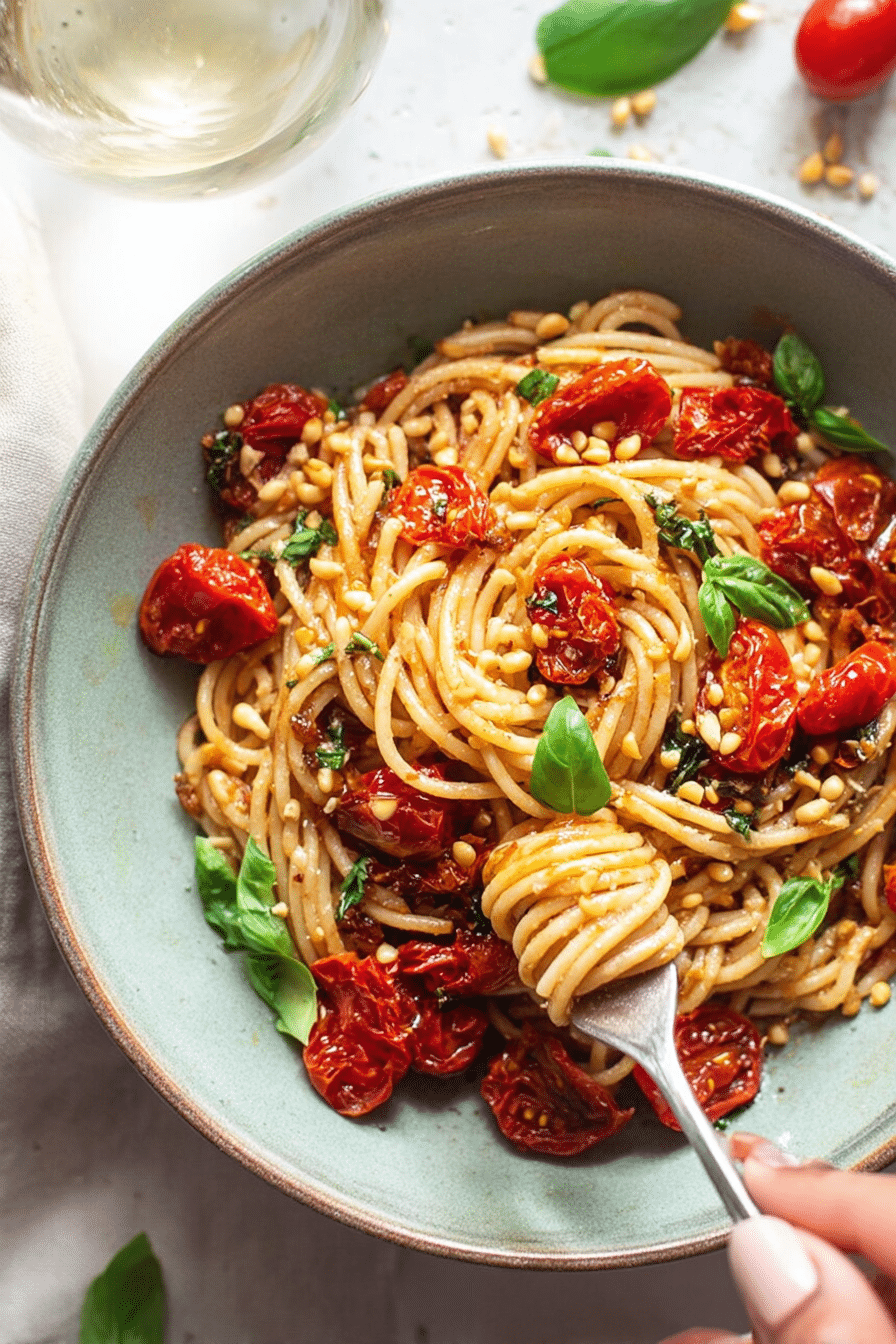
Roasted Tomato and Basil Pasta
Ingredients
Method
- Preheat the oven to 200° C / 390° F and get a medium size baking tray ready.
- Halve the tomatoes and arrange them on the prepared baking tray, cut side up. Brush the exposed flesh with a little olive oil, sprinkle with dried basil, salt and pepper. Bake for about 20 minutes, until soft and juicy.
- Cook the pasta al dente following the packet instructions.
- Heat up a small frying pan on low-medium heat. Once hot, add the pine nuts and dry-roast them until golden, stirring them regularly as they tend to burn easily. Remove them from the pan and set aside.
- While the pine nuts are toasting, heat up 2 tbsp of olive oil in a large pan on a very low heat. Throw in the diced garlic and fry it on a very low heat, stirring frequently, until the garlic releases its aroma, but do not allow it to brown as it will taste bitter.
- Add the diced tomatoes, a couple of sprigs of basil, capers and white wine (or water if not using wine). Simmer gently for about 15 minutes.
- Once the sauce is ready, add the cooked pasta and oven roasted tomatoes to the pan. Toss the pasta in the sauce. Serve topped with toasted pine nuts and shredded basil leaves.