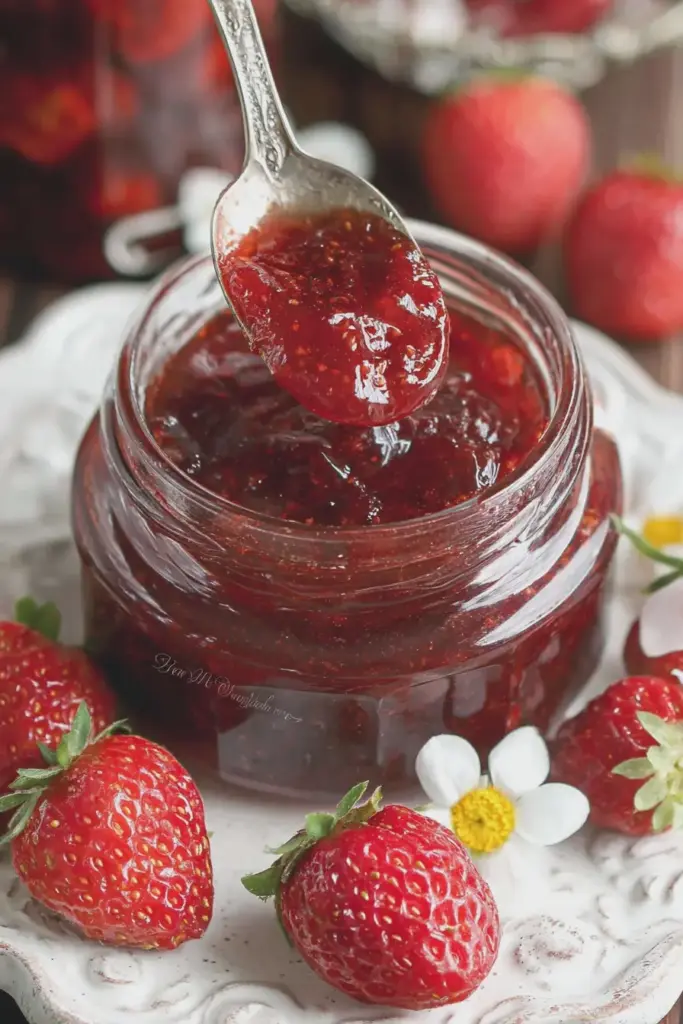
I make this strawberry jam on the days I want something homemade but don’t have hours to babysit a pot. In my kitchen it starts the same way every time: ripe strawberries, a little sugar, a squeeze of lemon, and a splash of balsamic. The hands-on active time is short, and the maceration does the heavy lifting so the jam develops deep, bright flavor with very little fuss.
I like small batches because they finish quickly and they taste fresh—vibrant red, glossy, and slightly loose so they’re perfect for spooning over yogurt or spreading on toast. The aroma while it’s cooking is straight summer: sweet, slightly tart, with a warm, caramel edge that comes from reducing the fruit.
Over the years I’ve learned the moments that matter—how long to macerate, when to lower the heat, and how to test for a set without pectin. Those small adjustments are what make a reliable jam that you can pull together between bedtime and breakfast the next morning.
The result is a jam that feels gourmet but behaves like a weekday condiment: vivid color, a pourable French-style texture if you prefer, and a complex lift from the balsamic that keeps it from tasting flat on the first spoonful.
Why This Strawberry Jam is Perfect for Busy Mornings
This recipe works for mornings because prep is minimal and the active cook time is short—most of the work is passive maceration. Make a batch the night before and you’ll have a fridge-ready, spreadable jam by breakfast. Small-batch making keeps jars rotating quickly, which means you always have a fresh jar rather than something that’s been sitting for months.
Think about the uses: spooned onto toast, swirled into yogurt, spooned over hot cereal, or dotted on pancakes. The bright red color and fresh strawberry aroma make ordinary breakfasts feel lifted without extra effort.
Everything You Need for Strawberry Jam (4 Ingredients)
- Strawberries – The foundation. Use the ripest berries you can find for the best natural sweetness and color; underripe fruit will need more sugar and longer cooking.
- Granulated sugar – Balances acidity and helps with preservation and texture. You can reduce it slightly, but the flavor and set will change.
- Lemon juice – Adds brightness and helps the jam set by providing acidity; it also keeps the color vivid.
- Balsamic vinegar – A small splash adds depth and complexity, cutting through sweetness with a gentle tang and a subtle dark fruit note.
The Secret to a Looser, French-Style Jam
- Cook the fruit just long enough to thicken but not so long that it becomes a solid spread. Stopping while it’s still glossy and slightly pourable yields a French-style jam that’s great on scones and yogurt.
- Natural pectin in the berries influences texture: if your berries are especially ripe they’ll set more slowly into a looser jam; firmer fruit will give a thicker result. Adjust your cook time accordingly.
- Lower the heat as soon as the mixture reaches a steady boil to avoid over-reduction and preserve a fresh strawberry flavor and bright color.
- If you want a thicker preserve, cook a little longer and skim foam frequently; for a looser jam, stop earlier and let it cool—the jam will continue to thicken as it cools.
Why a Splash of Balsamic Changes Everything
A little balsamic vinegar adds more than acidity: it deepens the fruit notes and rounds the sweetness so the jam never tastes cloying. The vinegar’s subtle molasses and raisin-like undertones complement strawberries and bring out savory pairings: try the jam with creamy cheeses or roasted pork.
The balsamic will also darken the jam slightly and give it an aromatic lift that you can smell as it finishes cooking—more complex than plain strawberry jam. It pairs well with herbs like basil and can harmonize with warm spices if you choose to add them.
Pair the jam with a sweet-and-salty snack for contrast:
How to Make Strawberry Jam (Step-by-Step)
- Mix chopped strawberries with sugar and lemon juice in a large bowl so the sugar can pull out the juices; let the bowl sit in the fridge for several hours or overnight to macerate and intensify flavor.
- Transfer the macerated strawberries and their juices to a wide, heavy-bottomed pot to promote even cooking and faster evaporation.
- Add the splash of balsamic vinegar and stir to combine before any heat hits the pot so the vinegar evenly blends into the fruit.
- Bring the mixture up to a steady simmer over medium heat, stirring often to prevent sticking and to break down the pieces of fruit for a more even texture.
- When it reaches a full boil, lower the heat slightly to maintain a gentle, steady boil; watch closely and skim any foam that forms to keep the jam clear and bright.
- Cook until the jam thickens to your preferred consistency—this typically takes under half an hour of active cooking time for small batches. Remember the jam will thicken as it cools.
- Cool to room temperature before refrigerating, or follow safe hot-water canning practices if you plan to preserve jars long-term.
Use this jam to add a twist to desserts: Try using this strawberry jam in our strawberry cheesecake tacos for a delightful twist on dessert.
Pro Tip for Strawberry Jam: How to Tell When It’s Set — without Pectin
- I always use the cold-plate test: chill a small plate in the freezer, drop a spoonful of jam on it, wait a minute, and tilt the plate—if the jam wrinkles and holds shape it’s set.
- Watch the temperature if you have a thermometer: a jam often reaches a reliable set around the range where water boils minus a specific margin, but the plate test is more practical for home cooks.
- Don’t confuse thick foam with set—foam can rise even when the jam is still liquid underneath. Skim foam during cooking and test beneath the surface.
- If the jam is too runny after cooling, return it to a simmer and reduce it a bit more, testing frequently so you don’t over-thicken.
Troubleshooting
- If your jam tastes flat, I find a tiny extra splash of lemon brightens it without making it tart; add cautiously and taste as you go.
- If it’s too sweet, a bit more balsamic or a pinch of salt will bring balance—do this near the end of cooking so the flavor blends but doesn’t overpower.
- If the jam sticks and scorches, transfer it off the heat quickly, soak the pot, and in future use a heavier pan and stir more often during the boil stage.
- If you see cloudiness or an off smell in a stored jar, don’t taste it; discard it and sanitize your jars thoroughly before the next batch.
Health-Conscious Variations and Flavor Add-Ins
- Reduced-sugar approach: cut the sugar slightly and extend maceration overnight so the fruit releases more juice and flavor; expect a looser set.
- Alternative sweeteners: try a blend of sugar and a natural sweetener designed for preserves, keeping in mind preservation and texture will differ.
- Herb additions: add fresh basil or a sprig of thyme near the end of cooking and remove before bottling for a bright herbal lift.
- Warm spices: a small stick of cinnamon or a pinch of ground ginger during cooking can create a cozy, spiced jam.
- Gourmet pairing idea:
Enhance your jam with ideas from our homemade strawberry truffles to add a gourmet touch.
How to Store, Refrigerate, and Can Small-Batch Jam
- For short-term use, cool jars to room temperature, seal, and refrigerate—most homemade jam will keep about two weeks in the fridge.
- If you want longer storage, use a proper hot-water canning method with sterilized jars and follow tested processing times for small-batch preserves.
- Label each jar with the date and contents; I write the month and year directly on the lid so nothing gets forgotten in the back of the fridge.
- Store sealed, canned jars in a cool, dark place; once opened, keep refrigerated and use within a few weeks for best flavor.
- If you need storage inspiration, think about uses that require portioning and freezing or preserving:
I keep a jar of this jam on hand for quick breakfasts and easy gifts. It’s simple enough for a weekday, but the balsamic gives it a touch of sophistication when you want something a little more interesting than plain preserves.
Frequently Asked Questions
Can I make strawberry jam without pectin?
Absolutely! This recipe uses a natural method to achieve the perfect jam set without the need for commercial pectin.
How long will homemade strawberry jam last?
If stored in the refrigerator, your homemade strawberry jam can last for up to two weeks. For longer storage, consider canning it using hot water canning instructions.
What can I use balsamic vinegar for in the jam?
Balsamic vinegar adds a unique depth of flavor to the jam, making it stand out. It pairs wonderfully with breakfast items like toast, yogurt, and oatmeal.
Can I reduce the sugar in this recipe?
Yes, you can experiment with reducing the sugar, but keep in mind that sugar helps with both the taste and preservation of the jam.
How do I know when my jam is set?
To check if your jam is set without pectin, drop a spoonful onto a cold plate. If it holds its shape after a minute, your jam is ready!
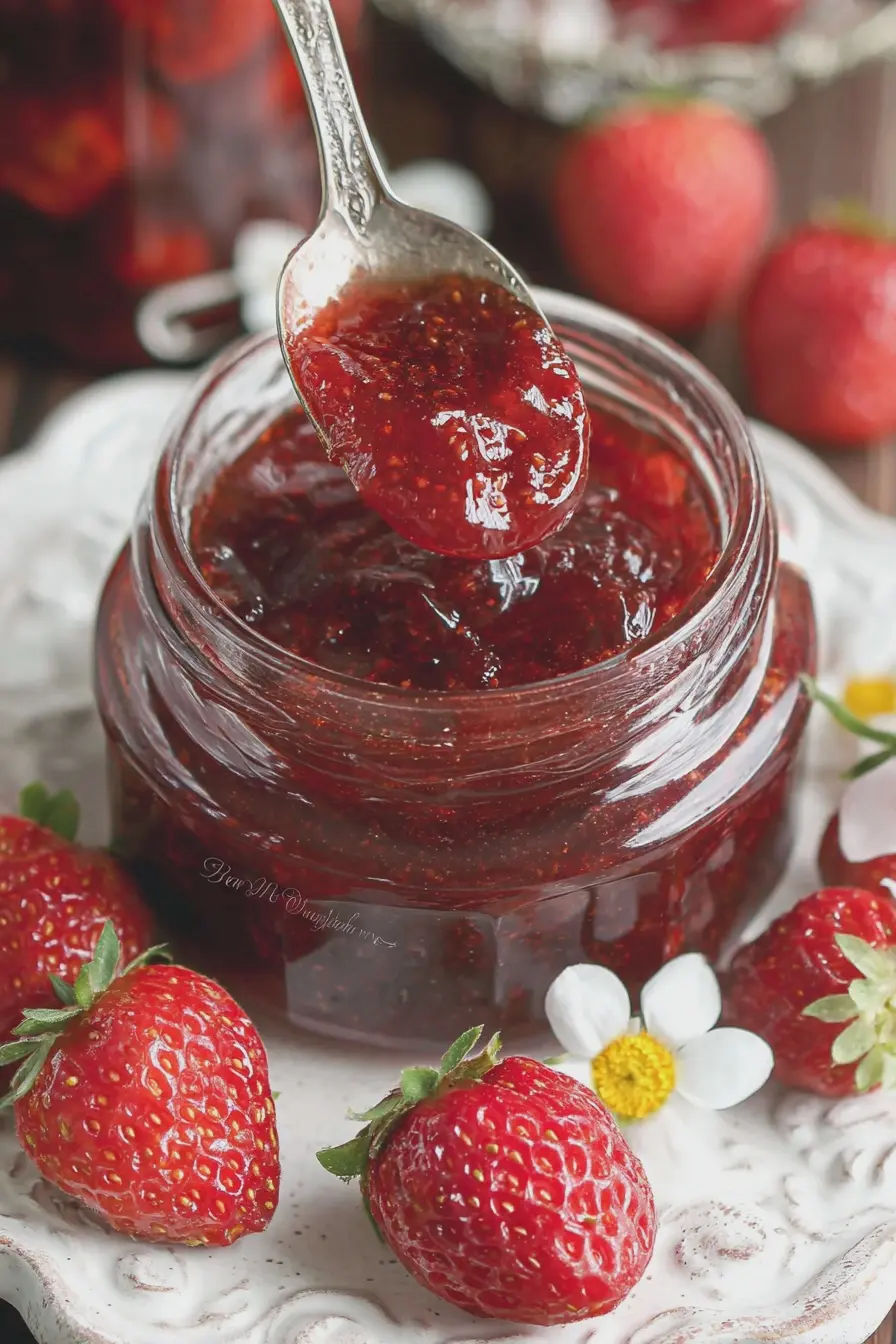
Strawberry Jam (Strawberry Preserves) with Balsamic Vinegar
Ingredients
Equipment
Method
- In a large bowl, mix together strawberries, lemon juice, and sugar.
- Let strawberry mixture sit for at least 4 hours or up to overnight to macerate and release their juices.
- Transfer berry mixture to a pot and stir in balsamic vinegar.
- Slowly bring mixture to a boil over medium heat, stirring often to prevent sticking.
- Reduce temperature to medium-low if strawberry mixture is about to boil out of your pot. Cook until thickened, about 20 minutes.
- If you are going to store in the refrigerator, cool until room temperature first then refrigerate. Or, if you are canning your jam, follow hot water canning instructions.