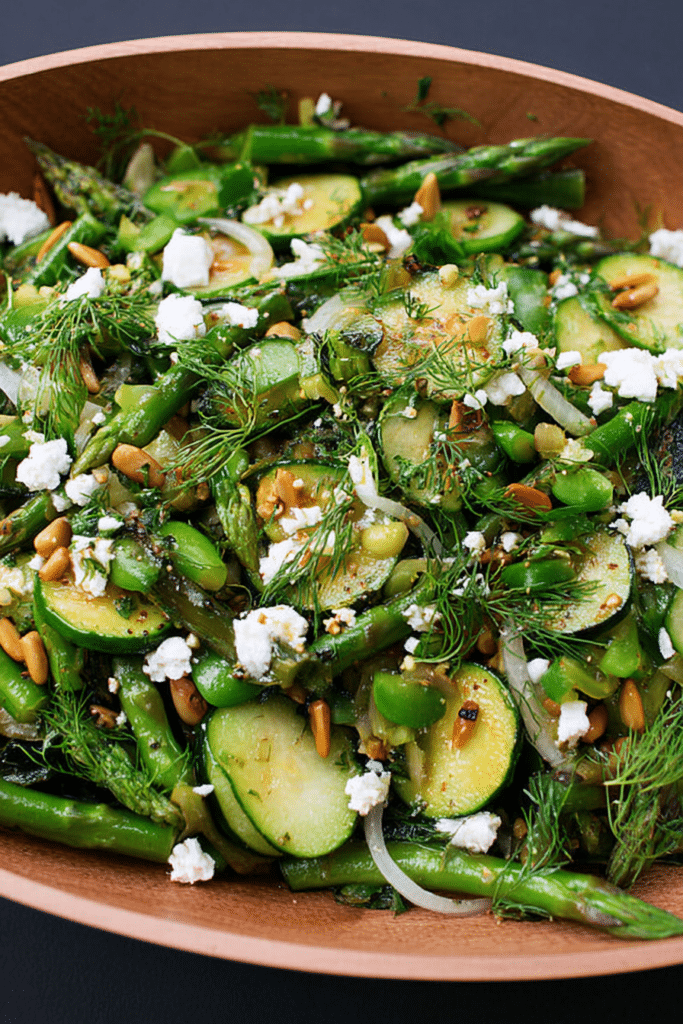
I make this sautéed spring vegetable salad every year as the markets fill up with tender asparagus and small, glossy zucchini. The first time I cooked it I remember that snap — the asparagus breaking so cleanly under the knife — and the way the kitchen smelled when the zucchini hit the hot oil: warm, slightly sweet, with a hint of char. It’s one of those recipes that looks humble in the pan but tastes layered and bright on the plate. You can serve it warm straight from the skillet or let it cool and eat it cold the next day; both ways are good and depend on the mood of the meal.
This salad is deceptively simple: a quick sear on zucchini rounds, a brief sauté of asparagus, a lemony Dijon vinaigrette, bright dill, salty feta, and a crunchy scattering of pistachios. It’s the kind of dish I bring to backyard lunches and weekday dinners alike. It holds well, it travels well, and it’s forgiving — which I appreciate on busy nights when I don’t want anything fussy but still want seasonal flavor.
Ingredients You’ll Need
Here’s what I usually keep on hand for this salad. I’ll note a few tips on picking the freshest items — local farmers’ markets are my go-to when spring is at its peak.
Consider adding honey roasted carrots with feta and dill to bring a delightful sweetness to this spring vegetable salad.
- Avocado oil – neutral high-heat oil for a clean sear on zucchini and asparagus.
- Zucchini – small to medium, sliced into thick rounds; gives a tender, slightly sweet base when seared.
- Asparagus – fresh, with woody ends removed and cut into short pieces; adds snap and green flavor.
- Kosher salt – seasons the vegetables and brings out natural sweetness.
- Cracked black pepper – adds warmth and a little bite.
- Crumbled feta – salty, tangy finish that balances the lemon in the dressing.
- Salted pistachios – lightly crushed for crunch and a buttery, nutty note.
- Fresh dill – chopped; bright herbal lift that’s classic with spring veg.
- Extra virgin olive oil – for the vinaigrette; choose a fruity one for best results.
- Fresh lemon juice – for acidity; it brightens the whole salad.
- White wine vinegar – soft, tangy acid to round the dressing.
- Honey – balances acidity and salt with a hint of sweetness.
- Dijon mustard – emulsifies the vinaigrette and adds subtle sharpness.
Step-by-Step Instructions
I always follow a small routine that keeps the vegetables bright and stops them from turning limp: dry them well, use a hot pan, and don’t overcrowd. The recipe I tested yields about 6 servings and takes roughly 30 minutes total (15 minutes prep, 15 minutes cook). Here is the step-by-step version I use and the reasons behind each move.
- Prep the vegetables: Wash and thoroughly dry the zucchini and asparagus. Trim the zucchini ends and slice into 3/4–1-inch-thick rounds so they hold their shape while searing. Snap or trim the woody ends from the asparagus and cut into roughly 2-inch pieces. Drying is critical — water on the surface makes the veggies steam instead of sear.
- Crush the pistachios: Put salted pistachios in a zip-top bag and gently pound them with a rolling pin or the bottom of a saucepan. You want some small shards and a few bigger pieces for texture. During one test batch I accidentally pulverized them into dust; a lighter hand keeps the crunch and looks prettier on top of the salad.
- Make the lemon Dijon vinaigrette: In a small bowl whisk together about 1/4 cup extra virgin olive oil, a tablespoon of fresh lemon juice, a tablespoon of white wine vinegar, a tablespoon of honey, a teaspoon of Dijon mustard, and a pinch of kosher salt and cracked black pepper. Taste and adjust: if it tastes flat, add a little more salt — salt lifts flavors more than sugar does. If it’s too sharp, a touch more honey softens it. This dressing is intentionally balanced to finish the warm vegetables without overpowering them.
- Heat the pan: Place a large sauté pan or skillet over medium-high heat. Add about 2 tablespoons of avocado oil and let it come up to shimmer — you should see it move in the pan and it will smell faintly buttery but clean. Use a pan large enough so the zucchini slices can lie down without touching; crowding is the fastest way to make them soggy.
- Sear the zucchini: Once the oil is hot, add the zucchini rounds center side down and leave them undisturbed for 3–4 minutes. You’re aiming for a golden-brown sear. If the zucchini slides when you try to turn it, it likely hasn’t developed a crust yet — give it another 30–60 seconds. Polite searing makes the texture interesting: caramelized edges and a slightly creamy center.
- Add the asparagus: Flip the zucchini and add the asparagus pieces to the pan. Season with a pinch of kosher salt and a few turns of cracked black pepper. Sauté for another 3–5 minutes, tossing occasionally, until the asparagus starts to soften but still has a little bite. If you prefer softer asparagus, give it an extra minute or two; for crisper tips, remove the pan from heat sooner.
- Check doneness: Taste a piece from the pan. Zucchini should be tender but not mushy; asparagus should be tender through the spear but still bright green. If vegetables look pale and floppy, that’s a sign the pan temperature was too low — raise the heat next time and sear in batches if needed.
- Assemble: Transfer the warm vegetables to a serving dish and let them cool for a minute so the dressing clings instead of immediately slipping off. Spoon the lemon Dijon vinaigrette over the vegetables (start with a little and add more to taste), then scatter crumbled feta, the crushed pistachios, and chopped fresh dill on top. Toss gently to combine and taste for seasoning; you may want a few more flakes of salt to balance the lemon.
- Serve: This is best served right away while it’s still warm, but it also keeps well chilled. If you’re taking it to a potluck, assemble it in the pan and bring the dressing on the side — guests can add as much as they like.
Timing tips: zucchini slices are thicker and take slightly longer to brown; asparagus cooks fast and can overcook in a heartbeat. If you’re short on time, cut the zucchini a little thinner — just be careful not to make them paper-thin or they’ll fall apart in the pan.
Nutritional Benefits of the Salad
This salad is a tidy package of spring nutrition. Asparagus is rich in folate, vitamin K, and is a good source of fiber. Zucchini provides vitamin C, potassium, and more fiber with very few calories. Pistachios add plant-based protein and healthy monounsaturated fats, while feta contributes calcium and a salty tang in modest amounts. Using extra virgin olive oil in the dressing supplies beneficial unsaturated fats and antioxidants, and the lemon gives you a burst of vitamin C that helps iron absorption.
This salad pairs well with spring vegetable soup, which also emphasizes the nutritional benefits of seasonal produce.
The recipe I tested is about 205 calories per serving with a balance of fat and fiber that keeps you satisfied without weighing you down — great for plant-forward meals, light lunches, or alongside a piece of grilled protein for a fuller plate.
Variations: Dressings and Additions
There are lots of ways to make this salad your own. The core technique — quick high-heat sautéing — works with many spring vegetables and dressings.
For a heartier meal, try adding garlic parmesan roasted Brussels sprouts to your sautéed vegetable salad.
- Lemon herb vinaigrette – swap the Dijon for a teaspoon of finely chopped tarragon or chives for a brighter, herb-forward dressing.
- Creamy yogurt-dill – whisk plain yogurt with lemon, a little olive oil, and dill for a cooling dressing that pairs well with feta.
- Balsamic glaze – a drizzle of reduced balsamic over the finished salad adds sweet-tart depth that’s lovely with the pistachios.
- Protein options – grilled chicken strips, a can of rinsed chickpeas, or flaked baked salmon make this a main course. Toasted quinoa folded in will also add body and hold up well to the warm vegetables.
- Nuts and seeds – swap pistachios for toasted almonds, walnuts, or pumpkin seeds to vary the crunch and flavor profile.
- Cheese swaps – goat cheese or ricotta salata can replace feta for a creamier or milder salty finish.
Serving Suggestions for Entertaining
When I serve this salad at gatherings I think about contrast: warm vegetables, cool feta, crunchy pistachios. That contrast makes a simple platter feel intentional.
Impress your guests by serving the sautéed spring vegetable salad alongside a refreshing Greek salad for a vibrant meal.
- Family-style: Pile the warm vegetables on a large shallow platter, sprinkle pistachios and feta on top, and set the dressing in a small pitcher so guests can dress to taste.
- Plated: Spoon a bed of warm vegetables onto each plate, place a small scoop of crumbled feta in the center, and finish with a few whole pistachios and a herb sprig for an elegant touch.
- Garnishes: Fresh dill or lemon zest adds color and an extra aromatic pop. A little flaky sea salt at the end livens up every bite.
- Pairings: This salad pairs beautifully with grilled fish, roasted chicken, or even as part of a cold buffet. Its warm, bright flavors complement richer mains and roasted meats.
Meal Prep Tips for Sautéed Salad
I often save time by prepping components in advance. Here’s the workflow I use when I want this salad on hand for a few lunches or a quick weeknight meal.
- Make ahead: Sauté the vegetables and cool them completely before storing in an airtight container in the refrigerator for up to 3 days. Don’t dress them until just before serving — the dressing will make them soggy if added too early.
- Storage: Keep the dressing in a separate jar in the fridge. The vinaigrette can last a week refrigerated; give it a good shake before using.
- Reheating: Gently rewarm portions in a skillet over medium-low for a few minutes; avoid microwaving too long or the zucchini will turn soft and watery. Reheating in a hot pan restores a bit of the original sear.
- Batching: Cook larger batches of zucchini and asparagus and rotate the toppings — some days add feta and pistachios, other days add roasted chickpeas and a tahini dressing for variety.
- Avoid freezing: I don’t recommend freezing the sautéed vegetables — their texture becomes mushy after thawing.
Conclusion and Final Thoughts
At its heart this sautéed spring vegetable salad is about timing and contrast: a quick pan sear for brown caramelized edges, a bright acid finish, and crunchy, salty toppings. I’ve made small adjustments over the years — a touch more lemon here, a milder vinaigrette there — but the core technique stays the same and reliably delivers. It’s an easy way to showcase seasonal produce and makes for a flexible side or a light main depending on what you add.
Try it while your market has the best asparagus and baby zucchini. Taste as you go, don’t be afraid to tweak the dressing to your palate, and enjoy how a few simple cooking cues elevate the vegetables from plain to memorable. If you try a variation you love, I’d encourage you to note what you changed — that’s how this recipe becomes truly yours.
FAQ
Can I use other vegetables in this sautéed spring vegetable salad?
Absolutely! Feel free to swap in your favorite spring veggies like bell peppers, snap peas, or green beans. Just adjust cooking times as needed to ensure everything is perfectly tender.
Is it possible to make this salad ahead of time?
Yes, you can prep the sautéed vegetables in advance and store them in the fridge. Just remember to add the dressing just before serving to keep it fresh and vibrant.
What other toppings would work well with this salad?
You can get creative! Try adding grilled chicken, chickpeas for extra protein, or other nuts like almonds or walnuts for a different crunch.
How long can I keep the leftover salad?
Leftover sautéed spring vegetable salad can be kept in an airtight container in the fridge for up to 3 days. Just note that the veggies may lose some of their crispness.
Can I serve this salad cold?
Yes! While it’s delicious warm, you can also enjoy it cold, especially on a hot day. Just let it cool down before adding the dressing.
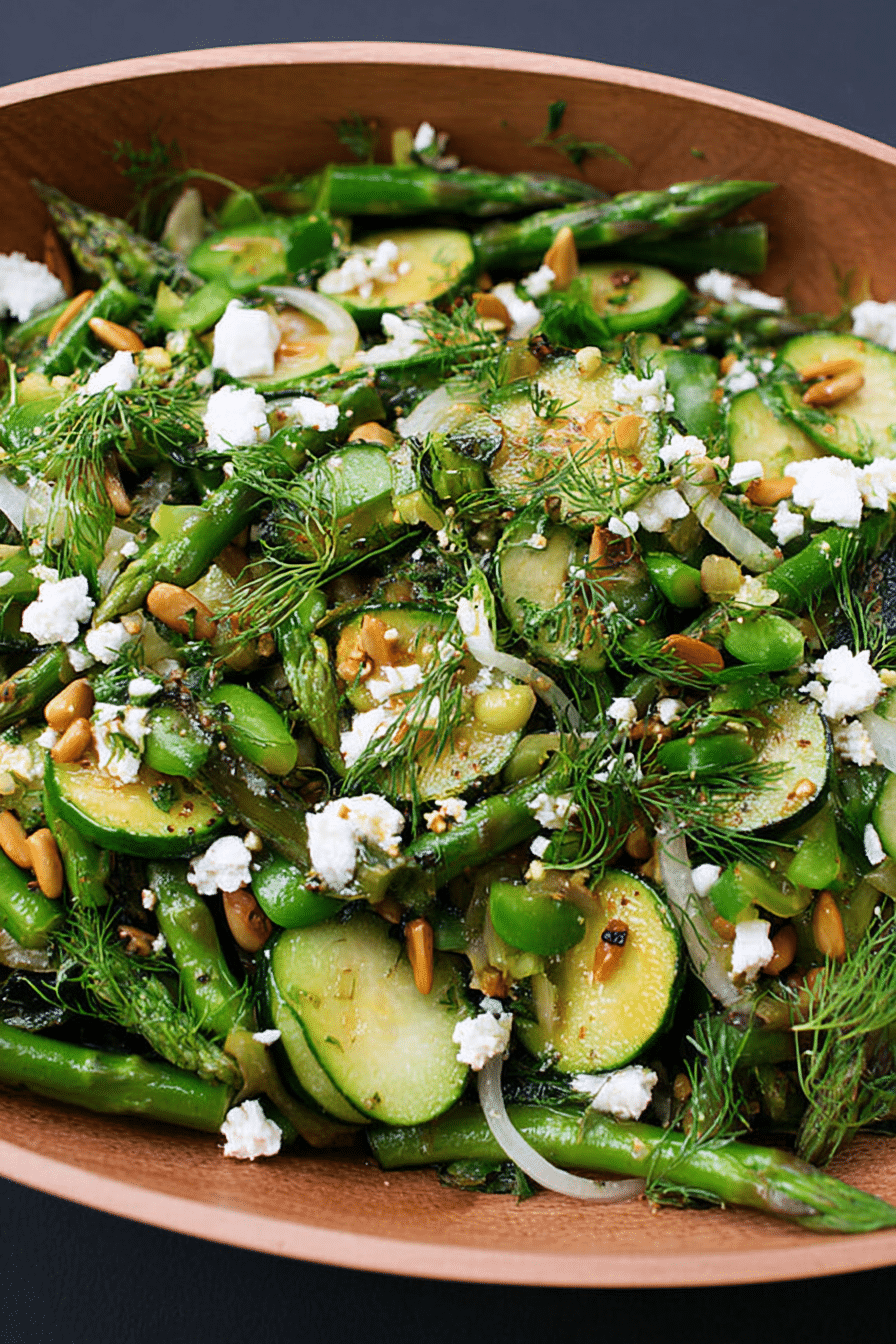
Sautéed Spring Vegetable Salad
Ingredients
Method
- Wash, dry, and remove the ends from the zucchini and asparagus. Slice zucchini into ¾-1 inch thick slices and asparagus into 2-inch pieces. Crush the pistachios and chop dill.2 medium zucchini, 2 bundles asparagus, pinch kosher salt, ⅓ cup salted pistachios, ¼ cup extra virgin olive oil, 1 tablespoon lemon juice, 1 teaspoon Dijon mustard, pinch kosher salt
- Combine olive oil, white wine vinegar, lemon juice, honey, Dijon mustard, kosher salt, and black pepper in a bowl. Whisk until well combined.2-4 tablespoons dill, 1 tablespoon white wine vinegar, 1 tablespoon honey, 1 teaspoon Dijon mustard, few turns cracked black pepper
- Heat a large pan over medium high heat and add avocado oil. Sauté zucchini for 3-4 minutes until lightly browned, then add asparagus and season. Cook until tender.2 medium zucchini, 2 bundles asparagus, pinch kosher salt, few turns cracked black pepper, ⅓ cup crumbled feta
- Transfer vegetables to a serving dish, top with feta, pistachios, dill, and dressing. Serve warm.⅓ cup crumbled feta, ⅓ cup salted pistachios, 2-4 tablespoons dill, ¼ cup extra virgin olive oil, 1 tablespoon honey