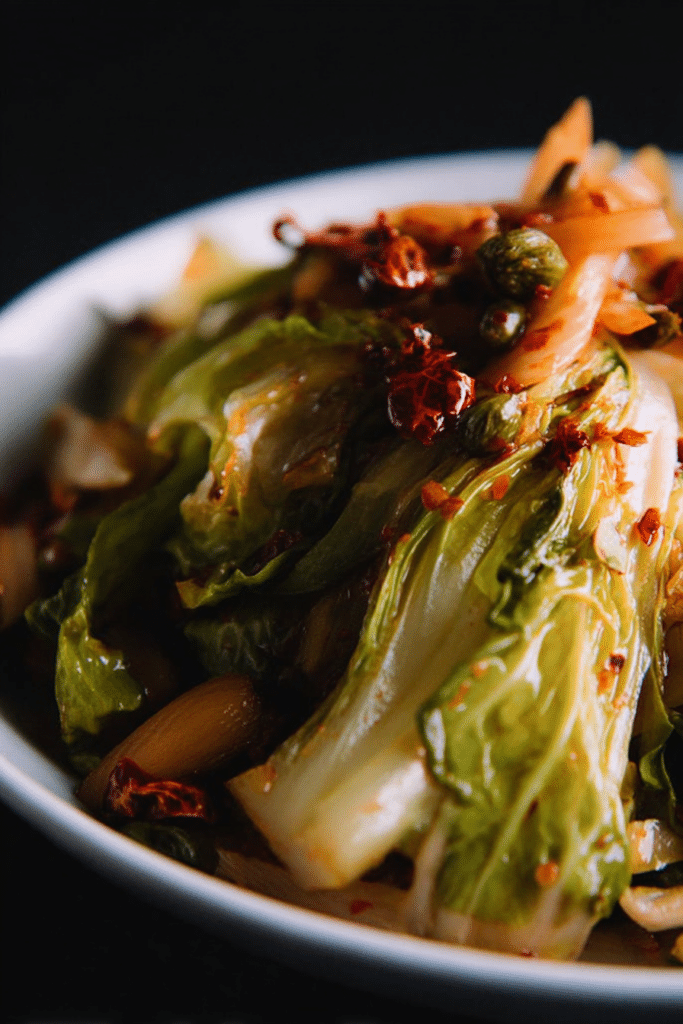
I make this Sichuan hand-torn cabbage stir-fry when I need a fast, satisfying vegetable dish that still feels special. In my kitchen it’s a go-to: minimal prep, a hot pan, and a few bold pantry ingredients turn plain cabbage into something bright, fragrant, and slightly mouth-tingling.
I like that the technique is forgiving — tearing the leaves by hand keeps the texture tender-crisp while the quick blast of high heat keeps the cabbage from going limp. The aroma of toasted Sichuan pepper and garlic hitting hot oil is one of the quickest ways to make a weekday dinner feel intentionally delicious.
I value speed and clarity: this recipe is built for busy nights, uses ingredients you can usually keep on hand, and comes together in the time it takes to cook rice. The result is a fragrant, colorful plate that pairs with steamed rice, noodles, or a simple protein.
Make sure the cabbage is dry, the pan is hot, and you move fast — those three things are how I make this dish reliably crisp and flavorful every time.
Why This Sichuan Hand-Torn Cabbage Stir-Fry Is Perfect for Busy Weeknights
This recipe minimizes chopping, maximizes flavor, and finishes fast. You get vibrant color, a satisfying crunch, and bold aromatics with just a handful of pantry staples. The visual contrast of bright green cabbage with red chilies and golden garlic makes it feel like more than a quick side.
Sensory note: imagine the bright garlic scent, the toasty perfume of Sichuan pepper, and the hot oil giving the cabbage a glossy sheen — all in under ten minutes of active cooking.
Everything You Need for Sichuan Hand-Torn Cabbage Stir-Fry
Use fresh ingredients and a hot pan. If you like cabbage recipes, you might also enjoy this easy fried cabbage that is quick to prepare.
- Flat cabbage (or napa) – Tears into irregular pieces that hold texture; substitute with any cabbage you prefer, but watch cooking time.
- Fresh garlic – Adds savory aroma; slice thin so it browns quickly without burning.
- Dried chilies – Provide heat and color; remove seeds for milder flavor.
- Sichuan peppercorns (huajiao) – Give the characteristic numbing note; toast lightly to release aroma.
- Roasted rapeseed or neutral oil – A high smoke point oil is best for quick searing and flavor infusion.
- Light soy sauce – For savory umami and a touch of saltiness; add late so it perfumes instead of steaming the veg.
- Aged black vinegar – A small splash brightens and rounds the dish.
- Salt and a pinch of sugar – Basic seasoning to balance the flavors.
- Essential tools – A wok or heavy pan and a good spatula; a wok gives the best high-heat results but any sturdy pan works.
Achieving Perfect Texture: Hand-Tearing and High Heat
Hand-tearing preserves the cabbage’s cellular structure, so the pieces keep a bit more bite than a knife-cut leaf. The ragged edges also char slightly at high heat, creating more flavor and contrast.
High heat triggers quick browning on the leaf edges and keeps the center crisp. Work quickly: overcooking turns the cabbage soft and watery. The Maillard reaction on the torn edges is where much of the savory complexity comes from.
Sensory focus: you want the cabbage to look glossy, with translucent edges and a snap when you bite it — not lifeless or steaming-wet.
Hot-Oil vs Cold-Oil: Choose Your Method
Both methods are fast and valid. Choose based on your pan and how hands-on you want to be.
- Hot-oil method (fast, smoky, intense) – Heat your wok or pan until it smokes, add oil, then immediately add aromatics. This gives a sharper toasted flavor and works well if your pan tolerates very high heat (cast iron or carbon steel).
- Cold-oil method (gentler, controlled, cleaner) – Start aromatics in cold oil and warm slowly to draw out fragrance without burning. Remove the peppercorns before they darken, then crank heat for the final sear. This method is good for nonstick pans or if you prefer more control over browning.
- When to pick which – Use hot-oil when you want a smoky, assertive finish and your pan can handle it. Use cold-oil when you’re using delicate cookware or when you want to avoid any bitter, burnt notes.
How to Make Sichuan Hand-Torn Cabbage Stir-Fry (Step-by-Step)
Follow these steps and keep the pan hot. If you love this dish, be sure to check out my Chinese chicken cabbage stir fry for another great way to enjoy cabbage.
- Wash and dry the cabbage thoroughly; tear about half the head into 2-inch pieces. Thinly slice the garlic and break the dried chilies into sections.
- Choose your method: for hot-oil, heat the empty pan until smoking and then add oil; for cold-oil, add oil to a cold pan with peppercorns and warm gently until fragrant.
- Add your peppercorns and chilies to the hot oil briefly to perfume it; remove peppercorns if using the cold-oil method and they start to darken.
- Return the pan to very high heat, add the cabbage, and stir or toss rapidly to coat each piece in oil; season with salt and a pinch of sugar.
- Stir-fry about two minutes until the leaves become bright and the edges turn slightly translucent and blistered.
- Pour soy sauce down the wall of the pan (not directly on the cabbage) so it can sizzle and spread, then add a quick splash of aged black vinegar the same way to let the aroma rise.
- Toss briefly, plate, and if you removed the toasted peppercorns earlier, scatter them over the finished dish before serving.
Troubleshooting:
- If the garlic burns, lower the heat and add the cabbage immediately; I sometimes slice the garlic a bit thicker if my pan runs hot.
- If the cabbage becomes soggy, your pan wasn’t hot enough or you cooked too long — dry the cabbage well and shorten the cook time next round.
- If the dish lacks numbing sensation, lightly toast a few more Sichuan peppercorns in a dry pan and grind them for a final sprinkle.
Pro Tip for Sichuan Hand-Torn Cabbage Stir-Fry: Balancing Heat, Numbing, and Umami
- Adjust the dried chilies for heat level — remove seeds to tame the fire, keep them for more punch.
- Use Sichuan peppercorns sparingly at first; their numbing effect is strong and you can always add more after tasting.
- Add soy sauce late so it flavors without steaming the cabbage; add vinegar last so its aroma lifts off the pan.
- I pay attention to texture before seasoning: when edges turn translucent and the center still snaps, that’s the right moment to finish.
- Health note: cabbage is high in fiber and low in calories — this dish is a quick way to get a large portion of veg on the table.
How to Store, Reheat, and Make-Ahead This Stir-Fry
Store in an airtight container in the refrigerator. For a comforting meal, pair this dish with a warm bowl of slow cooker French onion soup.
- Refrigerate within two hours and eat within 3–4 days for best texture.
- To reheat, toss briefly in a hot skillet to refresh the sear and keep the cabbage crisp — avoid long microwave reheating, which makes it soggy.
- To make ahead, stop just before adding soy and vinegar; refrigerate and finish in a screaming-hot pan when you’re ready to serve.
Easy Variations and What to Serve with It
- Add protein: firm tofu, thinly sliced chicken, or quick-cooking shrimp can be added — cook the protein first, remove, then follow the cabbage steps and return the protein at the end.
- Season swaps: try a splash of toasted sesame oil at the end or a handful of chopped scallion for freshness.
- Seasonal veg: fold in thinly sliced carrots, bell pepper, or baby bok choy for color and variety.
- Serving ideas: serve over steamed rice, with plain noodles, or alongside a simple braised tofu for a fuller meal.
- Pairing suggestion: for a contrasting comfort element, serve with garlic butter chicken bites with creamy parmesan pasta to round out the table.
Frequently Asked Questions
Can I use other types of cabbage for this stir-fry?
Absolutely! While flat cabbage is recommended for its texture, you can substitute with napa cabbage or any other kind you prefer. Just keep in mind that the cooking time may vary slightly.
What if I can’t find Sichuan peppercorns?
If Sichuan peppercorns are unavailable, you can use a mix of black pepper and a dash of lemon zest to mimic the numbing sensation, although it won’t be exactly the same.
How spicy is this dish?
The spice level can be adjusted based on the amount of dried chilies you use. If you’d like a milder dish, consider using fewer chilies or removing the seeds before cooking.
Can I make this dish vegan?
Yes! This recipe is already vegan-friendly as it doesn’t include any animal products. Just ensure that the soy sauce you use is also vegan.
What should I serve with Sichuan Hand-Torn Cabbage Stir-Fry?
This stir-fry pairs wonderfully with steamed rice or noodles. You can also serve it alongside a protein like tofu or tempeh for a complete meal.
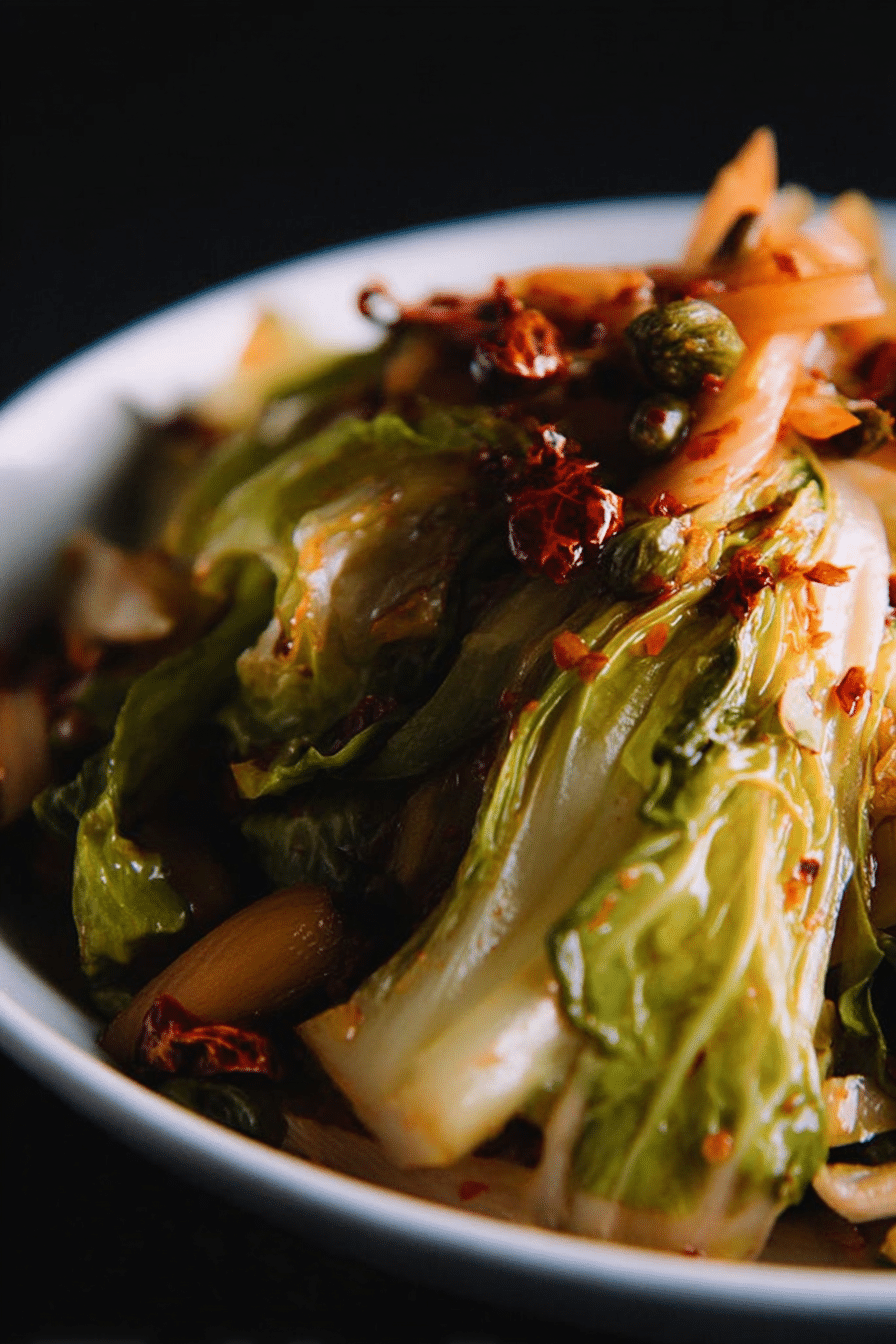
Sichuan Hand-Torn Cabbage Stir-Fry
Ingredients
Equipment
Method
- Wash and scrub any dirt off the outer leaves of the cabbage, then pat dry or set aside until dry.
- Tear up half the head into about 2-inch square sections.
- Thinly slice the peeled garlic and set aside.
- Chop the dried chilis into halves or thirds (the more seeds exposed, the hotter the dish) and set aside.
- Heat the pan and add oil before adding huajiao, chopped chilies, and garlic. Stir-fry rapidly until fragrant.
- Add the shredded cabbage, salt, and sugar. Stir-fry for about 2 minutes until the cabbage changes color.
- Pour soy sauce and vinegar down the wall of the pan and briefly stir-fry to distribute.
- Serve immediately and enjoy!