- Prep
- 35 min
- Total
- 35 min
- Serves
- 4
- Calories
- 280 kcal
- Carbs
- 20.00 g
Introduction
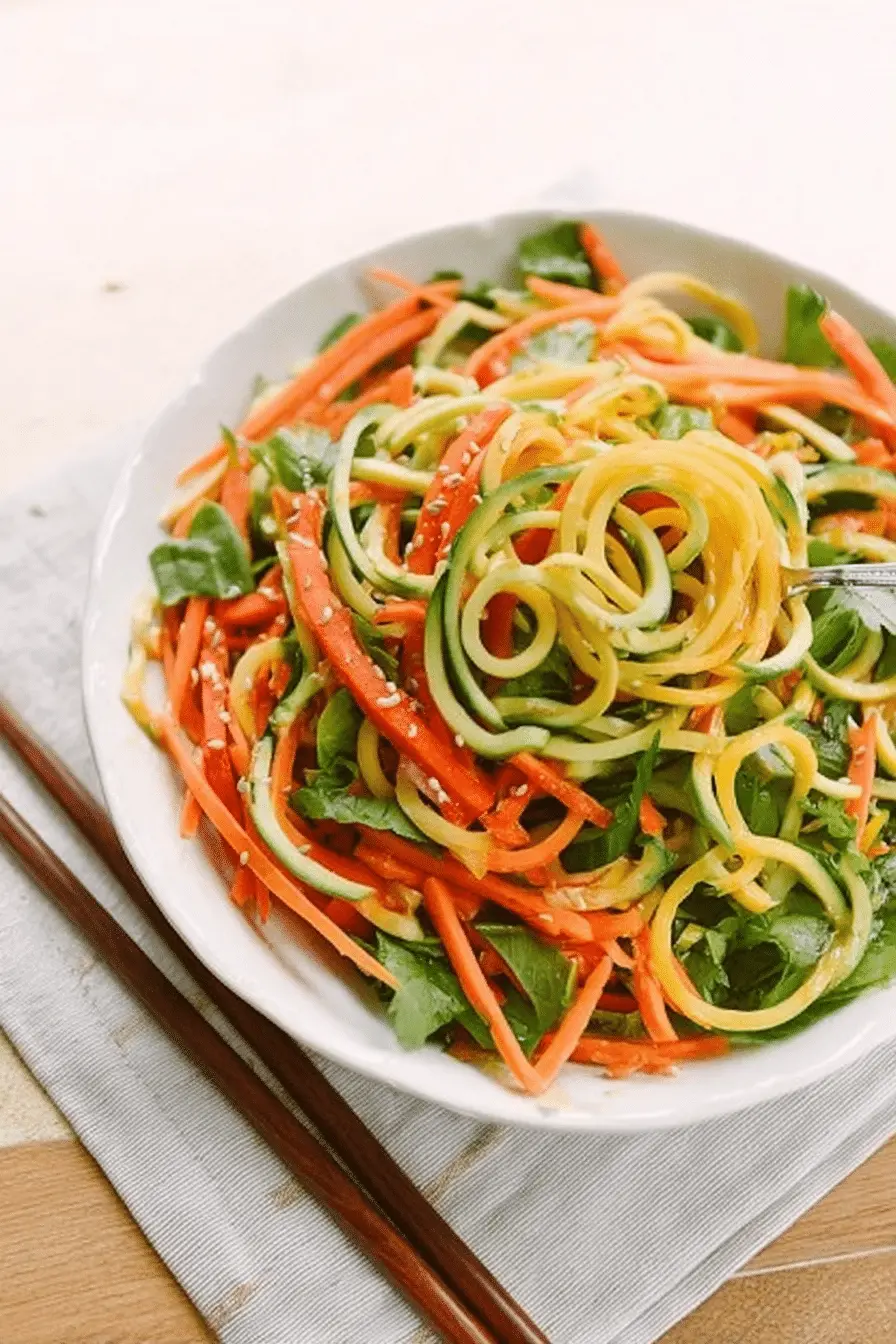
I made this Cold Spiralized Sesame Noodle Salad on a humid Saturday afternoon when I needed something bright, crunchy, and impossibly easy; the kitchen felt warm, but the salad stayed cool and refreshing. The first thing that hits you is that nutty sesame aroma as you whisk the dressing — it’s immediate and comforting, like a reminder that simple ingredients can be thrilling. Visually it’s upbeat: ribbons of zucchini and carrot curl around pops of green spinach and edamame, flecked with toasted almonds and sesame seeds. The textures are what keep me reaching back for another bite — slippery, slightly chewy vegetable noodles, the gentle pop of edamame, and the crunch of almonds. I’ve made a version of this many times — sometimes as a light lunch, sometimes as a side for a barbecue, and once as a potluck contribution that disappeared in minutes. I learned a few things from those attempts: pat the cucumber noodles dry, don’t overdress so the noodles don’t go soggy, and always toast the almonds for that warm flavor lift. The result is a flexible dish: it’s at home on a warm weeknight, in a packed lunch jar, or on a picnic blanket.Ingredients Needed for Spiralized Sesame Noodle Salad
Below I break the ingredients into groups so you can quickly see swaps and what each item brings to the bowl. I list these in a conversational way so you can eyeball amounts as you get confident with the salad.- Spiralized noodles – zucchini, carrot, and seedless English cucumber for crunchy, low-carb ribbons that mimic noodles; use a medium blade for pleasant bite.
- Veggies – baby spinach, shelled edamame, and thinly sliced bell pepper or cucumber for freshness and color.
- Dressing components – tahini (or creamy almond butter), rice vinegar, tamari or soy sauce (or gluten-free tamari), a touch of sesame oil, honey to balance, fresh grated ginger, minced garlic, and a drizzle of sriracha or red pepper flakes if you like heat.
- Garnishes – toasted unsalted almonds for crunch, toasted sesame seeds for nuttiness, and thinly sliced scallions for a fresh oniony lift.
Step-by-Step Instructions
Below is how I cook it in my kitchen — little cues and observations included so you know what to expect.- Spiralize the vegetables — I use a handheld spiralizer for zucchini, carrot, and cucumber. Aim for long ribbons so the noodles drape nicely; Blade D (medium) makes strands that are sturdy but still tender. Pat the cucumber noodles dry on paper towels to remove excess moisture; otherwise the salad can get watery.
- Prep the other vegetables — defrost shelled edamame under cold running water if frozen, then drain well. Stack spinach leaves and slice into thin ribbons; thinly slice any bell pepper or scallion. Arrange everything in a large mixing bowl so you can toss easily.
- Make the dressing — whisk together tahini (or almond butter), rice vinegar, tamari or soy, toasted sesame oil, a little honey, freshly grated ginger, a pressed garlic clove, a spoonful of sesame seeds, and sriracha if you want heat. The dressing should be creamy and pourable; if it’s too thick, thin with a teaspoon or two of warm water at a time. Taste it: if it’s flat, it probably needs salt or more tamari; if it’s too sharp add a little honey.
- Toss everything — pour the dressing over the noodles and vegetables and toss gently but thoroughly so every ribbon is lightly coated. If the bowl tastes too acidic, stir in a tiny extra drizzle of sesame oil or a pinch of sugar to round it out. Serve immediately for crispness, or chill for an hour for the flavors to meld. Note: this salad will thicken slightly as it cools because the sesame component sets a bit — that’s normal.
- Optional cooking notes — if you prefer roasted or sautéed vegetables, pre-roast thin asparagus spears or quickly sauté bell peppers and chill before adding. I once briefly sautéed the carrots with a splash of oil and soy; it softens them and warms the sweet notes, but you lose the raw crunch.
- Mushy salad: usually from overdressing or wet cucumber noodles. Fix by draining noodles well and refrigerating the salad in a colander for 15 minutes to let excess moisture drip away. Add dressing sparingly.
- Too salty: if the dressing goes salty because of extra tamari, add a splash of rice vinegar and a teaspoon of honey to rebalance.
- Clumpy tahini dressing: Tahini can seize up and look grainy. Whisk in warm water a teaspoon at a time until it smooths out to a creamy consistency.
Nutritional Benefits of Key Ingredients
This salad is a nutrient-dense, vegetable-forward dish. Here’s what the main players bring to the table and how they fit into common dietary plans.- Zucchini & carrot noodles – low in calories, high in hydration and fiber. Zucchini is a good source of vitamin C and potassium, while carrots deliver beta-carotene (pro-vitamin A) for eye health.
- Cucumber – mostly water, great for hydration and adding a crisp mouthfeel without many calories.
- Spinach – iron, folate, and vitamin K; thinly sliced so it integrates with the noodles and adds soft leafy texture.
- Edamame – a plant-based protein that also provides fiber and isoflavones. Adding edamame bumps up the protein content without heavy animal fats.
- Tahini & sesame oil – source of healthy fats and calcium (especially from tahini). These oils help absorb fat-soluble vitamins from the vegetables and give the dressing its signature nutty depth.
Tips for Seasonal Vegetable Swaps
One of the nicest things about this salad is how it adapts to what’s fresh at the market. Swap in seasonal produce and you’ll be rewarded with better texture and flavor.- Spring – thinly spiralized asparagus or shaved radishes add a peppery crispness.
- Summer – add corn kernels or heirloom cherry tomatoes for sweetness and juiciness.
- Fall – try thin ribbons of roasted butternut squash or even lightly steamed pumpkin for a sweeter, heartier version.
- Winter – use shaved Brussels sprouts or raw fennel for bite and structure.
Protein Pairing Suggestions
To make this salad a more filling main, add a simple protein. Think lightly seasoned and not too heavy so you don’t overpower the sesame dressing. For a delicious protein option, try pairing your salad with easy honey mustard chicken. Enhance your meal by adding garlic butter shrimp to your spiralized noodle salad. Other ideas from my kitchen: pan-seared tofu tossed in a little tamari and cornstarch for crispness, or thinly sliced grilled chicken brushed with a sesame-soy glaze. For shrimp, a quick sear in butter and garlic takes five minutes and the warm shrimp contrast nicely with the chilled salad.Creative Serving Ideas
Presentation can turn a weekday meal into something special. Here are a few of my favorite ways to serve this salad:- Layer it in mason jars for grab-and-go lunches — keep dressing in the bottom and add noodles last so they stay crisp.
- Serve in butter lettuce leaves as little hand-held cups — it becomes a bright, crunchy wrap that’s great for parties.
- Plate it as a chilled bed for warm grilled proteins — the temperature contrast is delightful.
Storage Tips for Leftovers
I always plan for leftovers when I make this — it stores well for a short time but you’ll need to treat it carefully so textures stay pleasant.- Refrigeration: store in an airtight container for about 1–2 days. The salad lasts best toward the earlier end of that window; cucumbers and zucchini release water over time.
- Reviving soggy noodles: if the noodles soften after sitting, drain any excess liquid, pat dry, and add a handful of fresh raw ribbons or extra toasted almonds for crunch. A squeeze of fresh lemon brightens the flavors again.
- Make-ahead strategy: keep the dressing separate and toss just before serving for maximum crispness, especially if you plan to eat it over two days.
Conclusion: Enjoying Your Refreshing Salad
This Cold Spiralized Sesame Noodle Salad is one of those recipes I return to because it’s forgiving, bright, and quick. You’ll notice small wins as you make it: the way the dressing smooths into a glossy coating, the pleasant chew of the vegetable noodles, and the pop of almonds under your fork. It won’t always be identical — sometimes I swap in roasted squash in the fall, other times I double the edamame for more protein — but the core idea stays the same: fresh produce, a nutty sesame dressing, and textures that keep every bite interesting. Try it, tweak it, and make it your own. If you’ve got a variation that worked — like a new nut, a different herb, or a protein swap — I love hearing about those little experiments. Cooking is better when shared.FAQ
How long can I store the spiralized sesame noodle salad in the fridge? You can store the salad in an airtight container in the fridge for about 1-2 days. For optimal freshness, enjoy it within this time frame! Can I use other vegetables for the noodle salad? Absolutely! Feel free to substitute with seasonal vegetables such as bell peppers, asparagus, or even sweet potatoes to create your own unique version. Is this salad gluten-free? Yes, the salad can be made gluten-free by using gluten-free tamari instead of soy sauce. Just be sure to check all labels of the ingredients you use! How can I boost the protein content of this salad? You can add grilled chicken, shrimp, or tofu to increase the protein content. These additions will complement the salad's flavors while making it more filling. What is the best way to serve this salad? This salad can be served in bowls, but for a fun twist, try using mason jars for meal prep or lettuce wraps for a fresh take!Recipe Card
Delicious Spiralized Sesame Noodle Salad: A Colorful Summer Delight
- Prep
- 35 min
- Total
- 35 min
- Serves
- 4
- Calories
- 280 kcal
- Carbs
- 20.00 g
Ingredients
- 1 seedless English cucumber(Blade D, noodles trimmed)
- 1 large carrot(peeled, Blade D, noodles trimmed)
- 1 medium zucchini(Blade D, noodles trimmed)
- 1/2 cupshelled frozen edamame ((defrosted or peas))
- 4-5 cupsspinach ((thinly sliced))
- 1/2 cuproughly chopped roasted unsalted almonds
- 1/4 cuprice vinegar (for the dressing)
- 2 tablespoonstahini or creamy almond butter (for the dressing)
- 2 tablespoonstamari or soy sauce (for the dressing)
- 1 tablespoonsesame oil (for the dressing)
- 1 teaspoonhoney (for the dressing)
- 1 tablespoonfreshly grated ginger (for the dressing)
- 1 clovegarlic ((pressed and minced) for the dressing)
- 1 tablespoonsesame seeds (for the dressing)
- 1 teaspoonsriracha sauce or chili garlic sauce or red pepper flakes (for the dressing)
Instructions
- 1
Pat the cucumber noodles dry to remove excess moisture. Combine in a large mixing bowl with the carrot and zucchini noodles. Stir in the edamame, spinach, and almonds.
- 2
In a separate bowl, whisk together all the dressing ingredients until creamy, tasting and adjusting as necessary.
- 3
Drizzle the dressing over the noodle salad and toss well to combine. Serve right away or refrigerate for 1-2 days for optimal freshness.
You might also like
Reviews
Be the first to review this.