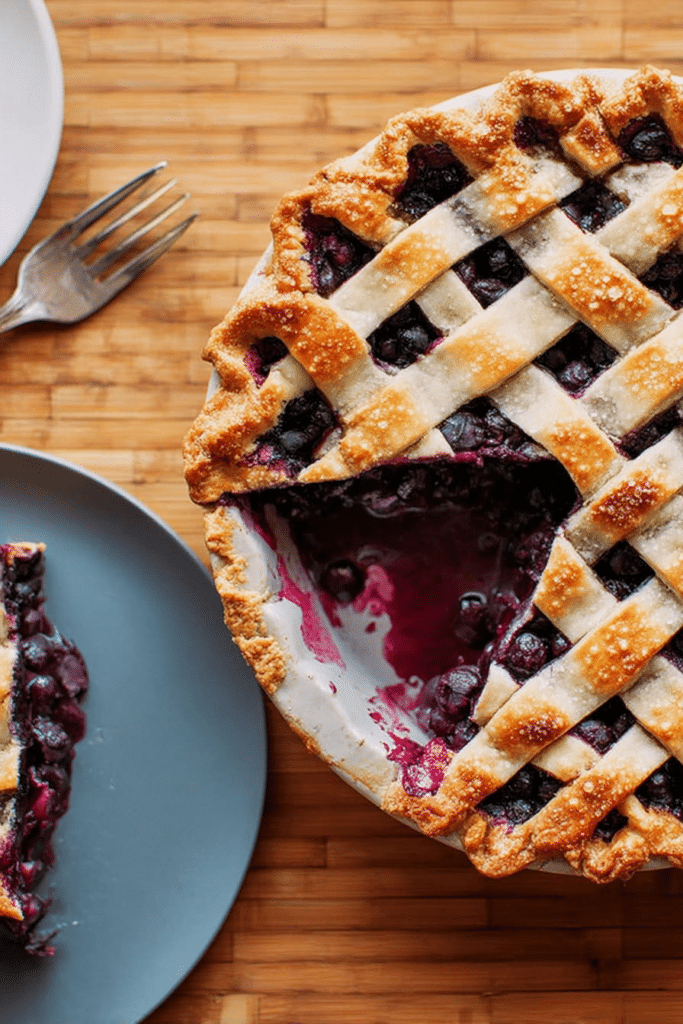
I grew up with summer pies cooling on window sills, and this blueberry lattice pie is the kind of dessert that sends me straight back to those sunlit afternoons. In my kitchen the smell of blueberries mingled with warm citrus always signals the end of a long, good day. I still remember the first time I wove a lopsided lattice and served it anyway; everyone asked for seconds.
Over the years I’ve learned which small choices make the biggest difference: the balance of butter and shortening in the dough, the flirt of orange zest in the filling, and the confidence to let the filling bubble away until it sings. I share those habits because they’ve kept this pie reliably tender and true to the memory of summer.
Making a lattice top feels ceremonial — it’s part craft, part comfort. I approach it like a letter I’m sending to the people at my table: a visible, hand-made promise that this pie was made with care. The end result is worth the gentle fuss: a glossy, jewel-toned blueberry filling peeking through a golden, flaky web of pastry.
When friends ask for a showstopper for a picnic or a family dinner, I point them toward this blueberry lattice pie because it tastes like summer and looks like celebration, even if your lattice isn’t perfectly even. For another bright summer option, try our lemon blueberry tart alongside this pie for a citrus-berry pairing that complements the flavor profile beautifully.
Why This Blueberry Lattice Pie Is a Summer Showstopper
The charm of this blueberry lattice pie comes from the way three simple elements—berry, citrus, and butter—play together. Ripe blueberries bring sweetness and a slight tartness; orange zest adds a floral lift that keeps the filling from being cloying; and a browned, buttery lattice gives texture and a warm, toasty note.
There’s also a visual story: the lattice is a traditional pastry signature that signals home baking and attention. Even a rustic braid looks celebratory when the fruit underneath glistens. Serve it warm from the oven or at room temperature to conjure that nostalgic summer feeling at any gathering.
Everything You Need for Blueberry Lattice Pie
Gathering tools and choosing quality ingredients before you start keeps the process calm and joyful.
- Rolling pin – For even dough thickness; a lighter pin helps prevent overworking the dough.
- 9-inch pie dish – A shallow, even-sided dish encourages a neat lattice and even baking.
- Sharp knife or pastry wheel – To cut clean lattice strips.
- Bench scraper – Helpful for lifting dough and cleaning your work surface.
- Mixing bowls – One for the dough, one for the filling; stainless or glass keeps ingredients cool.
- Butter and vegetable shortening – Butter gives flavor; a bit of shortening helps the dough hold structure and yields a flakier texture when combined.
- All-purpose flour – The backbone of the crust; unbleached flour gives a clean flavor.
- Sugar and cinnamon – Sugar sweetens and helps thicken the filling; cinnamon adds warmth and depth.
- Orange zest – Brightens the berries and lifts the overall sweetness.
- Fresh blueberries – Seek plump, taut berries for the best texture; if you must substitute, see the next section.
- Egg wash – Brushed on the lattice to encourage browning and shine.
The Secret to a Flaky Lattice Crust
- Keep your fats very cold. Solid chunks of butter and shortening create distinct layers that steam during baking; that steam separates the dough into flakes. Cut the fat into the flour until pea-size bits remain, rather than a uniform paste.
- Work quickly and lightly. Overworking melts the fat into the flour and develops gluten, which yields toughness instead of flake. Handle the dough just until it holds together when pressed.
- Layering matters. When you roll the dough gently and fold it a couple of times during shaping, you build thin strata of fat and flour. Those strata are what become crisp, visible layers after baking.
- Chill before rolling and again before baking. Cold dough relaxes and firms, which reduces shrinkage and helps you achieve a neat edge and well-formed lattice. Chilling also re-solidifies any fats that warmed during shaping.
- Use an egg wash and a sprinkling of sugar on the lattice. The wash promotes deep color and the sugar gives a hint of crispness and sparkle.
Choosing the Best Blueberries (and Substitutes)
Choosing excellent fruit is the easiest way to improve the pie without changing technique. Look for berries that are deep-blue all over with a slight silvery bloom; they should be plump and springy to the touch but not mushy. A faint sweetness on the nose and a fresh berry aroma are signs of ripeness.
If fresh blueberries are scarce, blackberries or raspberries can work, though they will change the sweetness and texture—blackberries bring more structure, raspberries more tartness. Frozen blueberries are an acceptable stand-in if you thaw and drain them well first to avoid excess moisture in the filling.
Store fresh berries in a single layer or shallow container and use them within a couple of days for best flavor. For more berry-based recipes that celebrate the season, try making blueberry cream cheese bread as a sweet companion to pie day.
Why Chilled Ingredients Make a Better Crust
- Cold fats remain solid longer in the mixing and rolling stages, which creates distinct pockets that steam and lift the dough in the oven. I once rushed a crust and ended up with a heavy, dense bottom—cold butter prevents that.
- Temperature controls work at multiple stages: chilled butter, chilled mixing bowls, and ice water keep the dough cohesive without becoming greasy. Ice water adds just enough moisture to bind the flour without melting the fat.
- Chilling between steps firms the dough so you can handle it gently without distortion, which means less shrinkage and a prettier finished pie.
- Example results: warm dough means a tapered, tough edge and collapsed lattice; properly chilled dough yields a crisp edge and tall, flaky layers when sliced.
How to Make Blueberry Lattice Pie (Step-by-Step)
- Make the dough quickly: combine flour, sugar, and salt, then work in cold butter and shortening until the mixture looks like coarse meal with pea-size bits of fat remaining.
- Add ice water one splash at a time until the dough just comes together when pressed. Form into two disks, wrap, and chill for at least an hour so the fats re-solidify.
- Preheat the oven to a high temperature to begin. Toss the berries with sugar, a little flour to thicken, cinnamon, and grated orange zest until evenly coated. The filling should be juicy but not soupy before it goes into the crust.
- Roll out one disk on a lightly floured surface to fit a 9-inch dish; ease it into the pan without stretching. Trim the overhang to leave a neat border for crimping later.
- Pour the filling into the pie shell and spread it evenly but gently so as not to crush the berries. If the filling seems very wet, give it a short rest to let juices mingle before placing the lattice on top.
- Roll the second disk and cut into even strips. Weave into a lattice over the berries: lay half the strips parallel with spacing, fold back alternating strips, place a perpendicular strip, and continue until the top is covered. Trim the strips at the rim and crimp to seal.
- Brush the lattice with beaten egg mixed with a touch of water and sprinkle the sugar over the top to encourage browning and a gentle crunch.
- Bake at the initial high temperature for color, then reduce heat to finish cooking without overbrowning the crust. Bake until the crust is a deep golden brown and the filling is bubbling in the center. Allow the pie to cool so the filling sets before slicing.
- Troubleshooting while you work:
- If the dough feels sticky or overly soft, chill it again for 20–30 minutes — I do this more than once on hot days.
- If the filling looks too runny after the first bake period, give it additional low-temperature time; bubbling indicates the thickener has activated.
- If the crust browns too quickly, tent the edges with foil to prevent burning while the center finishes baking.
Pro Tip for Blueberry Lattice Pie: Make a Flaky Gluten-Free or Vegan Crust
- Gluten-free flour blends: Use a blend formulated for baking that contains a binder like xanthan gum or add a small amount separately to mimic the elasticity of gluten. The dough will be more fragile, so chill it thoroughly and roll between sheets of parchment to transfer it safely.
- Vegan fat swaps: Replace butter with cold, solid coconut oil or a high-quality vegan butter; combine with a portion of vegetable shortening for structure if desired. Keep fats cold and work exactly as you would with butter to preserve flakiness.
- Adjust hydration: Gluten-free flours can be thirstier or absorb moisture differently. Add ice water gradually until the dough holds together but is not sticky; err on the side of a slightly drier dough so it rolls more easily.
- Texture tips: I like to incorporate a touch of almond flour into a gluten-free mix for a tender crumb and nutty flavor, but do a small test to judge how the blend behaves under your rolling pin.
- Oven and baking adjustments: Gluten-free crusts often brown quicker; watch the bake and tent edges if they darken before the filling is set.
- Resources: Seek out reputable gluten-free blends labeled for pastries and vegan butter brands that list a high content of plant-based fats for better flavor and structure.
How to Store, Reheat, and Serve Your Blueberry Lattice Pie
Store leftover pie covered in the refrigerator for up to three days to keep the filling fresh. If you prefer the crust crisp, reheat slices in a moderate oven for several minutes rather than using the microwave. A few minutes at a moderate temperature refreshes the pastry without drying the fruit.
For serving, a scoop of vanilla ice cream or a dollop of lightly sweetened whipped cream pairs beautifully with the warm berries and flaky crust. A small sprinkle of grated orange zest over the top just before serving brightens the whole slice.
If you enjoy fruity pies, don’t miss out on our strawberry-rhubarb pie, a classic dessert that pairs beautifully with summer flavors.
Creative Variations and Flavor Additions
- Add fresh herbs: A few chopped basil leaves folded into the filling just before baking add a surprising herbal lift—use sparingly so the berry flavor still leads.
- Spice play: Stir a pinch of nutmeg or a touch more cinnamon into the sugar mix for warmth and complexity.
- Mixed fruit: Combine blueberries with sliced peaches or cherries for a more textured filling; adjust sweetener to taste depending on fruit sweetness.
- Crumb topping: For a hybrid, top half the pie with a buttery crumble instead of lattice for contrasting textures.
- Bright add-ins: A splash of citrus liqueur or a few drops of almond extract can shift the profile—add cautiously so you don’t mask the berries.
- For portable snacks, try these ideas alongside the pie: blueberry cheesecake protein balls make a nourishing complement.
Frequently Asked Questions
Can I use frozen blueberries instead of fresh ones?
Yes, you can use frozen blueberries! Just make sure to thaw and drain them beforehand to avoid excess moisture in the pie.
What can I substitute for vegetable shortening in the crust?
You can use additional unsalted butter or coconut oil as a substitute for vegetable shortening in the crust.
How do I know when the pie is done baking?
The pie is done when the crust is golden brown and the filling is bubbly, usually about 30 minutes at 400°F followed by 20 more minutes at 325°F.
Can I make the pie crust ahead of time?
Absolutely! You can prepare the pie crust in advance and keep it wrapped in plastic wrap in the refrigerator for up to 2 days.
What’s the best way to store leftover blueberry lattice pie?
Store any leftover pie in the refrigerator, covered, for up to 3 days. You can reheat it in the oven for a few minutes to warm it up!
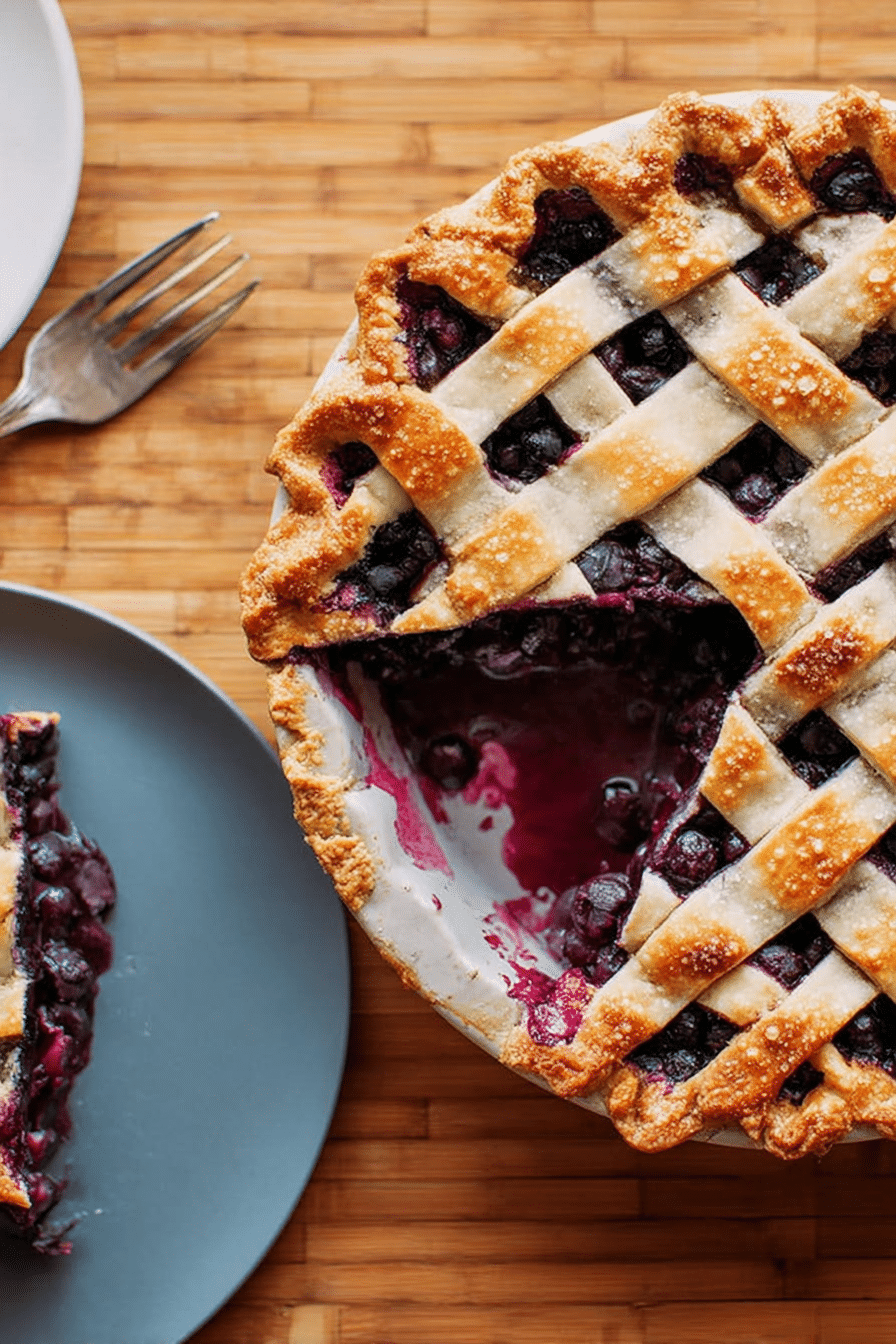
Blueberry Lattice Pie
Ingredients
Equipment
Method
- To make the crust, combine the flour, 2 teaspoons of sugar and salt in a large bowl. Use your fingers to rub in the butter and shortening until the mixture resembles coarse meal. Gradually and lightly mix in just enough ice water so the dough can be gently pressed into a ball. Flatten into a disk, wrap in plastic and refrigerate for 1 hour.
- To make the filling, preheat the oven to 400 degrees. Combine the sugar, cinnamon, flour and orange zest. Place the blueberries in a large bowl and toss with the sugar mixture.
- Divide the dough in half and roll out 1 piece on a lightly floured surface and fit into a 9-inch pie plate. Place the filling in the dish. Roll out the remaining dough, cut 1/2-inch-wide strips and weave into a lattice top. Seal, trim and crimp the edges. Brush the top pastry with the egg wash and sprinkle it with the remaining sugar.
- Bake for 30 minutes. Reduce temperature to 325°F and bake until crust is browned and filling is set, about 20 minutes longer. Cool on a rack. Cut into wedges and serve.