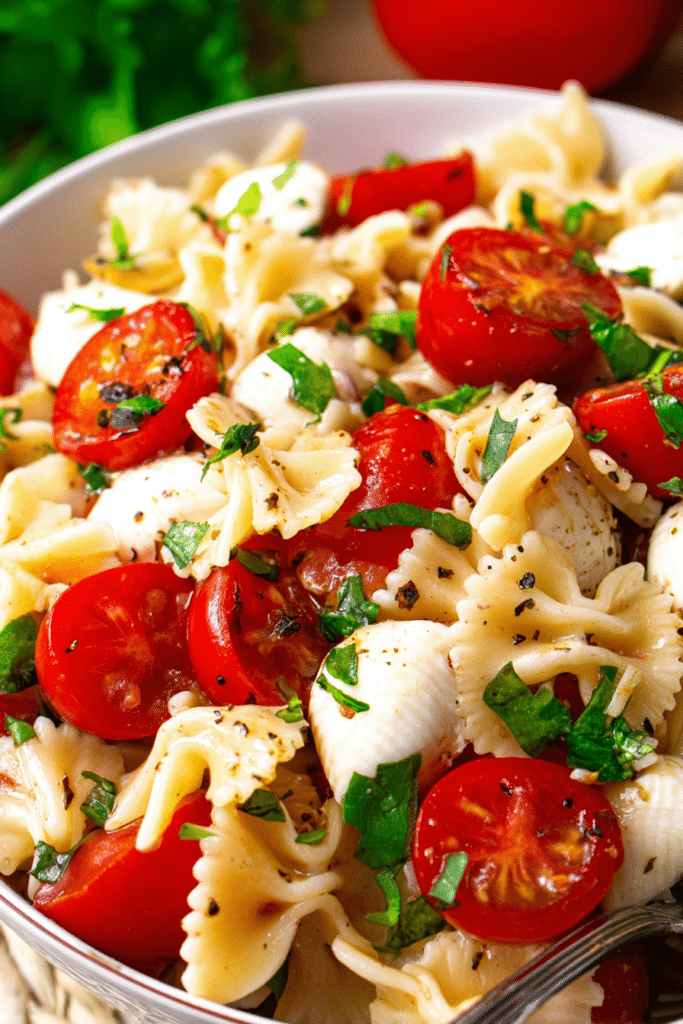
I make this Caprese pasta salad on repeat when the week is hectic and the family still wants something that looks like effort but tastes like care. In my kitchen it has become the go-to: it comes together fast, travels well, and cleans up quickly. Over the years I learned which shortcuts actually help and which ones turn the salad limp — so I always keep a few simple rituals in place.
My favorite part is how bright the bowl looks on the table: glossy tomatoes, little white mozzarella pearls, dark-green ribbons of basil, and pasta that still has a little bite. I’ve made mistakes too — too much dressing, chopping tomatoes too small, or tossing everything while the pasta is steaming — and I’ll tell you exactly what I changed so your salad stays fresh and snappy.
This recipe is really about timing and respect for ingredients. Prep ahead where it helps (the dressing, the pasta) and wait to combine the delicate items until the last moment. I promise this keeps flavors vivid and textures lively, which is exactly what you want when time is short but expectations are high.
I love bringing this to backyard gatherings because it travels easily and looks gorgeous when you serve it right out of a simple bowl. The methods below are built around saving time without sacrificing that fresh, summery feeling.
Why This Caprese Pasta Salad Is Perfect for Busy Weeknights
This salad is designed to reduce nightly decision fatigue while still delivering big, fresh flavor. Here’s why it works when your schedule is tight:
- Make-ahead components: You can mix the dressing and cook the pasta earlier in the day so dinner assembly is just a toss-and-serve step.
- Minimal cleanup: One pot for the pasta, one jar for the vinaigrette, and one bowl to combine—less dishwashing when time is short.
- Versatile for occasions: It fits a family dinner, a potluck, or a packed picnic — scale ingredients and swap add-ins depending on the crowd.
- Fast to finish: From fridge-to-table in about 20–25 minutes if you prepare the pasta ahead, so it’s perfect after work or after practice.
Everything You Need for Caprese Pasta Salad
Shopping tip: choose the freshest produce you can find and plan to assemble the most delicate items at the end. Here’s a conversational look at what I use and why:
- Olive oil – The base of the dressing; choose a fruity extra-virgin for bright flavor.
- Balsamic vinegar – Adds sweetness and acidity; a good aged balsamic brings depth without overpowering.
- Lemon juice – A splash keeps the dressing lively and helps the tomatoes stay bright.
- Garlic – Fresh minced garlic adds punch; use less if you want a milder finish.
- Italian seasoning – A blend of dried herbs for savory warmth; fresh oregano or thyme works too.
- Kosher salt & black pepper – Essential for seasoning; taste and adjust at the end.
- Pasta (small shapes) – Farfalle, penne, or other small pasta hold the dressing and mix well with tomatoes and cheese.
- Mozzarella (pearls or cubes) – Creamy and mild; keep refrigerated until assembly so it stays firm.
- Grape or cherry tomatoes – Sweet, juicy, and small; halving them keeps texture and bite consistent.
- Fresh basil – Adds aroma and freshness; slice or tear right before adding so it stays vibrant.
The Secret to Bright, Non-Soggy Pasta Salad
Keeping the salad lively is about stopping heat, protecting delicate pieces, and using acid smartly. These specific techniques will help every time:
- Cook to just shy of al dente – The pasta should be firm enough to hold shape once chilled; overcooked pasta becomes mushy quickly.
- Rinse immediately with cold water – This halts the cooking and cools the pasta fast so it doesn’t steam the cheese and tomatoes when mixed.
- Dress the pasta first – Toss cooled pasta with most of the vinaigrette so it absorbs flavor without drowning the softer ingredients.
- Hold off on adding tomatoes until the end – Add tomatoes just before serving to prevent them from releasing juice into the salad for too long.
- Control the acid – A bright acid (lemon or vinegar) keeps colors vivid and balances the oil; add it gradually and taste as you go.
Why Temperature & Timing Matter for Fresh Flavors
When ingredients are at the right temperature they look, smell, and taste their best. I pay attention to these timing rules in my kitchen:
- Slightly chilled is ideal – Serve the salad cool but not fridge-cold; this keeps the basil aromatic and the cheese soft but not sloppy.
- Let flavors meld briefly – After tossing, let the salad rest for 15–30 minutes so the dressing unfolds, but don’t let it sit for hours with cut tomatoes.
- Dress late for transport – If you’re taking the salad to a BBQ, keep the acidic vinaigrette separate and dress just before serving to avoid sogginess during transit.
- Pairing timing: For a heartier meal, consider serving this with roasted or pan-seared proteins; it pairs especially well alongside roasted chicken dishes like Garlic Butter Chicken Pasta served warm.
How to Make Caprese Pasta Salad (Step-by-Step)
These are the practical steps I follow in my kitchen. Measure the components beforehand and keep delicate items chilled until the last minute.
- Cook the pasta until it’s just firm to the bite, then drain and rinse under cold water to stop the cooking immediately.
- Whisk or shake the dressing ingredients in a jar until the oil and acids are well combined and the garlic is evenly distributed.
- Toss the cooled pasta with most of the dressing so it soaks in flavor; reserve a little dressing to finish or for later adjustments.
- Add mozzarella pearls and gently fold them into the pasta so they stay intact rather than breaking up.
- Fold in halved tomatoes and sliced basil right before serving to maintain their freshness and texture.
- Taste and adjust seasoning with salt and pepper; finish with a small extra drizzle of dressing if the salad seems dry.
Pro Tip for caprese pasta salad: Make-Ahead Dressings That Hold Up
- Oil & acid pairings – Extra-virgin olive oil with balsamic for a sweeter profile, or olive oil with lemon for a brighter finish.
- Garlic strategy – Mince the garlic and let it sit in the acid for a few minutes to mellow the raw edge before adding oil.
- Storage – Keep dressings in a sealed jar in the refrigerator; they stay fresh for several days and just need a shake to recombine.
- Make small adjustments – If the dressing separates after chilling, bring it to room temperature briefly and shake; taste before using.
- Flavor variations – Stir in a touch of Dijon mustard for body, or a small spoonful of honey for balance if your balsamic is very tangy.
Easy Variations: Vegan, Gluten-Free & Low-Fat Swaps
Adapt the salad easily to fit dietary needs without losing character. Here are clear swaps I recommend:
- Vegan – Replace mozzarella with cubed ripe avocado, marinated tofu, or a store-bought vegan mozzarella alternative; add fresh herbs for extra aroma.
- Gluten-free – Use a gluten-free small pasta (rice, corn, or chickpea-based) and cook it to the same al dente principle so it keeps texture.
- Low-fat – Reduce the oil in the dressing and replace part of it with plain Greek yogurt or thinned nonfat yogurt for creaminess without the calories.
- Pesto twist – For a different flavor profile try a pesto-caprese version; it adds an herby kick and pairs well with the salad base: Pesto Caprese Pasta Salad.
How to Store, Serve, and Transport for Picnics or BBQs
Here are practical steps I use when I’m packing this salad for a trip or storing leftovers:
- Layer for transport – Keep pasta and dressing in one container and soft ingredients (mozzarella, basil, tomatoes) in a separate container to avoid soggy results.
- Use sealed jars for dressing – A screw-top jar is perfect; it won’t leak and you can shake the dressing right before pouring.
- Keep cool – Use an insulated cooler or ice packs so cheese and tomatoes stay chilled until serving.
- Assemble at the last minute – If possible, combine everything 10–20 minutes before serving so flavors marry but textures remain fresh.
- Serving ideas – Serve in a wide, shallow bowl for a pretty presentation; it pairs beautifully with summer salads like a Summer Peach Blueberry Kale Salad for a balanced picnic spread.
User-Generated Content & Community Feedback
I love seeing how readers make this recipe their own. Folks often send photos showing different swaps, and many have offered helpful tips on timing and portioning. If you try a twist that worked well, share a photo and a quick note — those small adjustments help the whole community cook better.
Many readers love pairing their Caprese Pasta Salad with a refreshing Mediterranean Chickpea Salad, which has been a hit in our community. Your adaptations and photos help others see possibilities and improve the base recipe, so please post what you try.
Frequently Asked Questions
Can I make Caprese Pasta Salad ahead of time? Yes! This salad can be made ahead of time. Just prepare the ingredients and dress it right before serving to keep it fresh and vibrant.
What type of pasta is best for Caprese Pasta Salad? Small pasta shapes like farfalle or penne work best for this salad as they hold onto the dressing and mix well with the other ingredients.
How do I prevent the pasta from getting soggy? Make sure to rinse the cooked pasta with cold water to stop the cooking process. This helps maintain the texture and prevents sogginess.
Can I make this salad vegan? Absolutely! You can substitute mozzarella with avocado or a vegan cheese alternative to make it vegan-friendly.
What should I do with leftovers? Store any leftovers in an airtight container in the refrigerator. It’s best to consume them within 2-3 days for optimal freshness.
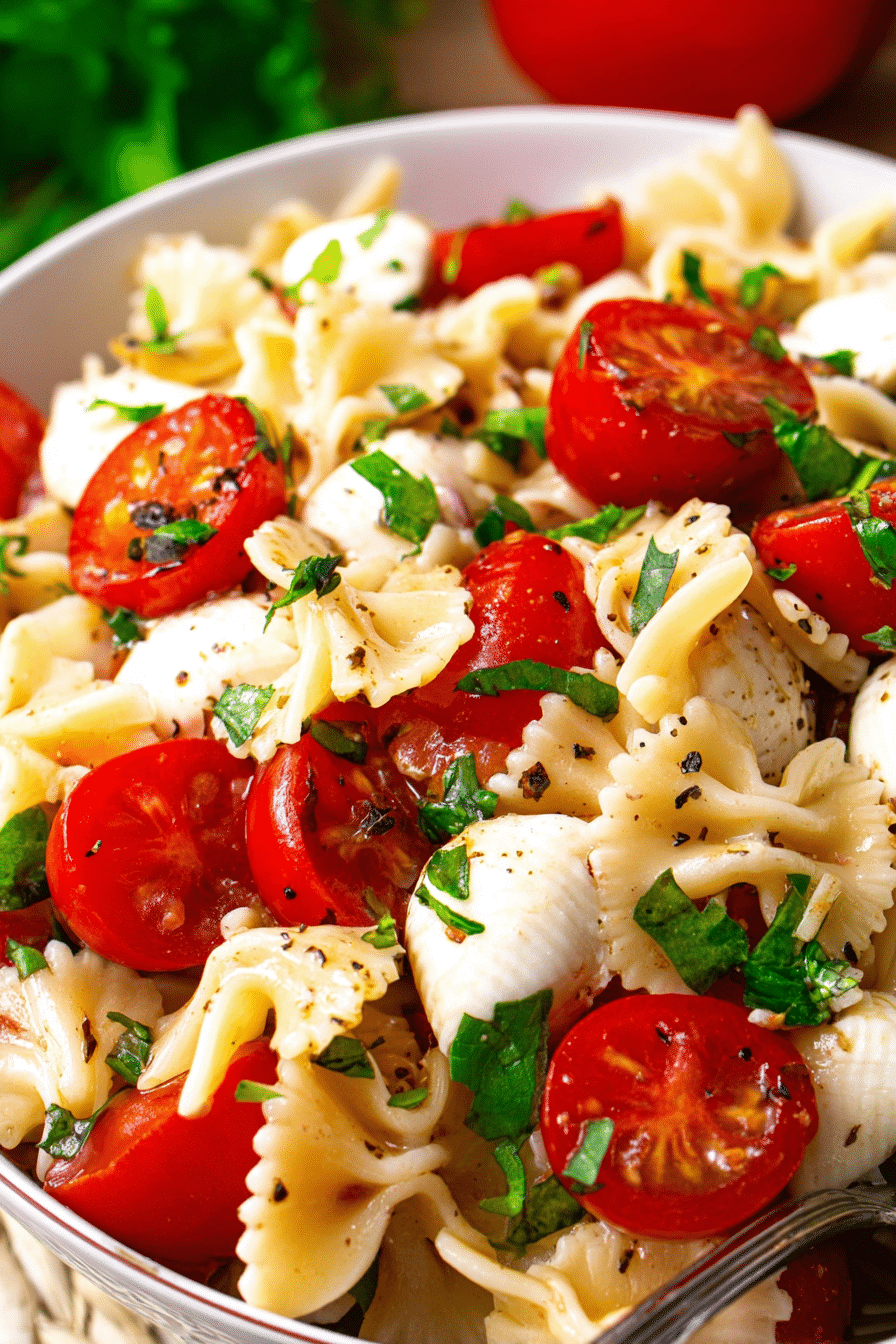
Caprese Pasta Salad Recipe
Ingredients
Method
- To a small bowl or jar with a lid, add olive oil, balsamic vinegar, lemon juice, garlic, Italian seasoning, salt, and pepper. Whisk or shake until all ingredients are incorporated. Set aside.
- Cook pasta according to package directions. Drain and rinse with cold water.
- To a large bowl add cooked pasta, tomatoes, mozzarella pearls, and basil. Drizzle with vinaigrette dressing and toss. Taste and adjust seasoning. Serve immediately.