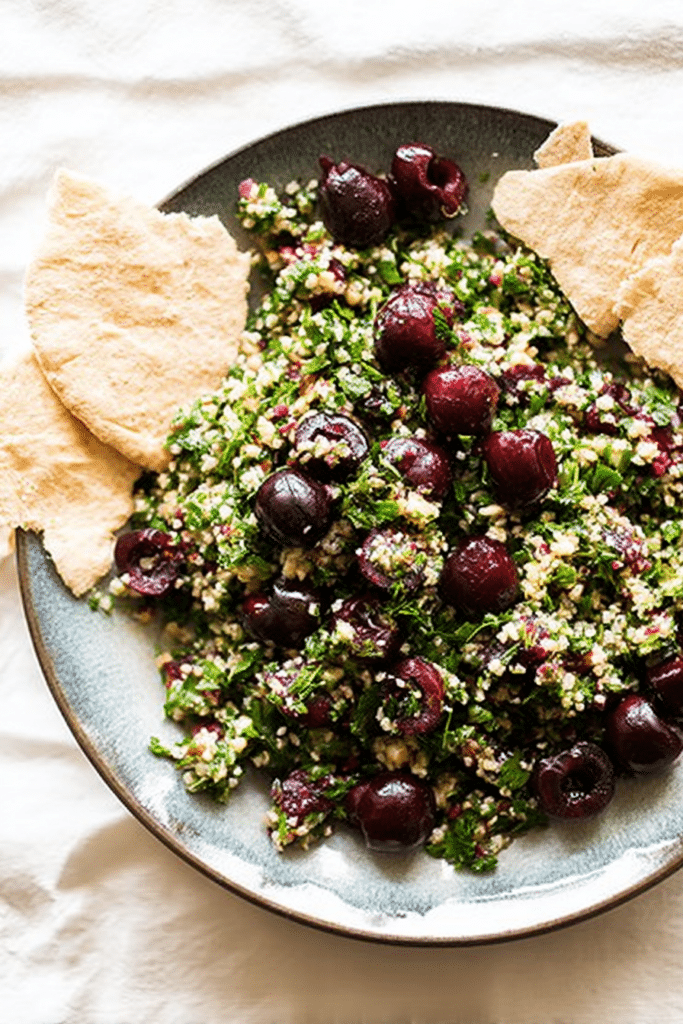
I make this Cherry Tabbouleh in my kitchen all summer long and it’s the one dish that reliably disappears first at backyard barbecues and holiday picnics. I love how the jewel-red cherries peek through a sea of bright green parsley and mint — it’s a salad that screams summer before you even taste it. I usually bring a bowl to neighborhood potlucks, brunch spread-outs, and lazy poolside lunches because it travels well and keeps its color and crunch.
When I first started adding fruit to tabbouleh, people raised eyebrows — then asked for seconds. The cherries add a welcome sweetness that plays against the lemony dressing and the peppery bite of parsley. I’ve learned small tricks in my kitchen that keep the bulgur fluffy and the herbs vivid: finely chopping the herbs, rinsing the bulgur well, and not overdressing the salad until just before serving.
This recipe is built for sharing. It’s easy to scale up for crowds, versatile enough to sit alongside grilled meats or a mezze platter, and visually confident enough to anchor a summer table. Read on and I’ll walk you through why it’s a potluck favorite, what each ingredient does, quick swaps for dietary needs, and the tiny technique notes that make it sing.
Why this Cherry Tabbouleh Salad is perfect for potlucks and summer parties
This salad stands out on a buffet table for three simple reasons: color, convenience, and refreshment. The contrast of deep-red cherries, emerald herbs, and pearl-like bulgur creates an eye-catching platter that photographs well and invites people to sample. It’s easy to prepare ahead of time — ideal for Fourth of July gatherings, casual backyard BBQs, office potlucks, or a bright addition to a brunch spread.
On hot days guests appreciate something light and bright. The herbs release an aromatic, citrusy perfume as soon as you stir the dressing, and the cherries give bursts of sweet juice against the lemon and olive oil. Because it’s served cold or at room temperature, you can assemble it in the morning and let it rest in the fridge until it’s time to serve.
Everything You Need for Cherry Tabbouleh Salad
Below I walk through the key ingredients and why each one matters. Think of this as a conversational pantry check so you know what to pick up at the market and how substitutions will affect the finished salad.
- Bulgur – The traditional grain in tabbouleh; it soaks up dressing and provides a pleasant, slightly chewy texture. If you prefer a different grain, see the swaps section.
- Fresh parsley – The backbone of tabbouleh; it gives color, a fresh grassy aroma, and a peppery finish. Use flat-leaf parsley for the best texture.
- Fresh mint – Adds a cool, bright lift that complements the cherries and lemon; chop it finely so it blends, not dominates.
- Scallions (or mild onion) – Provide a sweet-sharp onion flavor without overpowering the herbs; slice thinly so the bites stay balanced.
- Lemon juice – Brings the acidity that brightens the entire salad and balances the cherries’ sweetness; freshly squeezed is best.
- Extra-virgin olive oil – Coats the ingredients and carries the flavors; use a fruity, fresh oil for brightness.
- Salt and black pepper – Simple seasoning that rounds and lifts flavors; add a touch at a time and taste.
- Fresh cherries – The star ingredient that introduces sweetness and juiciness; feel free to use sweet Bing or Rainier cherries for mild sweetness, or slightly tart Morello cherries for contrast.
The Secret to Tabbouleh Texture: Getting bulgur just right
Bulgur’s role is all about texture. It should be tender but still have a little chew so it doesn’t turn mushy once mixed with herbs and dressing. The easiest way to get that texture is to rinse the bulgur, then soak it briefly in very hot — not boiling — water until it plumps. Resting time allows the grains to hydrate evenly and absorb lemon and olive oil without becoming gluey.
Temperature matters: hot water speeds hydration and gives a softer edge, while cooler water will leave the grains firmer. Aim for a tender, springy bite where the individual grains hold their shape and mingle with the herbs instead of collapsing into one paste-like mass. That contrast — chewy grain, crunchy herbs, juicy cherries — is what makes each forkful interesting.
How cherries change the flavor — balancing sweet, herb, and citrus
Cherries introduce a juicy sweetness that transforms tabbouleh from a savory herb salad into something playful and celebratory. When you fold halved cherries into the dressed bulgur, their sugars mingle with the lemon and olive oil and create small, bright pockets of flavor. If you use a sweeter variety like Rainier, the salad leans more dessert-like; tart varieties add contrast and highlight the lemon and herbs.
Think of the cherries as punctuation: they puncture the herbal freshness with little sweet-tart bursts. They also contribute aroma — crushed cherries release a soft, fruity perfume that pairs beautifully with mint. A good balance keeps the lemon prominent so the salad stays refreshing rather than cloying.
Quick swaps for gluten-free and vegan cherry tabbouleh
If you need to make this gluten-free, there are solid swaps that preserve the salad’s texture and flavor profile. If you’re vegan, this recipe is already friendly — there are no animal products — so your main consideration is grain choice for gluten-free diets.
- Quinoa – A great gluten-free stand-in that gives a fluffy, slightly nutty texture. Cook it, cool it, then fluff with a fork before combining.
- Cauliflower rice – For a low-carb option, finely grate or pulse cauliflower into rice-sized pieces and toss lightly raw or briefly steam it; it soaks dressing differently but keeps the salad light.
- Millet or freekeh – Both offer interesting textures if you want to experiment; millet is mild, freekeh has a smokier, chewier bite.
- For a creamy alternative topping, consider pairing with a simple yogurt-based sauce like a healthy tzatziki to add a cooling element without changing the salad’s core flavors:
For a creamy dressing alternative, consider making our healthy tzatziki sauce to enhance the flavors of your tabbouleh.
How to Make Cherry Tabbouleh Salad (Step-by-Step)
- Start by rinsing the bulgur and placing it in a bowl. Pour hot water over the grains and stir; let it sit until the bulgur is plump but still slightly chewy.
- While the bulgur is hydrating, finely chop the parsley and mint. Chop the herbs small so they mingle with the grain rather than stay in big leafy clumps.
- Trim and thinly slice the scallions so they distribute evenly through the salad — this keeps every bite balanced.
- Pit and halve the cherries. Use a sharp knife so the fruit doesn’t bruise; keep the pieces bite-sized so they fold easily into the salad.
- In a small bowl, whisk lemon juice with olive oil, salt, and pepper. Taste the dressing on its own and adjust acidity or oiliness as needed.
- Combine the drained bulgur with the chopped herbs and scallions. Drizzle in the dressing and toss gently so the grains absorb the lemony oil.
- Fold in the cherries last to preserve their shape and prevent them from bleeding too much into the greens.
- Taste and adjust seasoning — more lemon for brightness, a pinch more salt to lift flavors, or a grind of pepper for warmth — then let the salad rest briefly before serving.
Pro Tip for cherry tabbouleh salad: Dress and rest 10 minutes for brighter flavor
- I always dress the bulgur and herbs first and let the mixture sit for about ten minutes before folding in the cherries; this gives the grains time to absorb the lemon and olive oil so the overall salad tastes brighter and more harmonized.
- Letting it rest also softens the raw edge of the herbs slightly, which makes the parsley meld into the bulgur rather than standing apart.
- If you’re serving for a crowd, I sometimes wait to add half the cherries until right before serving so the bowl looks fresh and vibrant on the table.
Troubleshooting
- If the bulgur tastes underdone, I let it sit a bit longer with a splash more warm water; it will continue to hydrate while the salad rests.
- If the salad tastes flat, I add a squeeze more lemon and a tiny pinch of salt — acid and salt wake up muted flavors quickly.
- If the herbs wilt too much, I remind myself to chop them more finely next time and to avoid overmixing; gentle folding preserves texture.
- If the cherries make the salad too wet, I drain any excess juice and toss in the cherries just before serving to keep the greens from getting soggy.
How to Store, Make-Ahead, and Easy Variations
Storage and make-ahead strategy will help you plan for gatherings. I normally prepare the grain and herbs a few hours in advance, store them chilled, then dress and add cherries shortly before serving. Leftovers keep well for several days if stored properly.
- Storage – Keep the salad in an airtight container in the refrigerator for about 3–4 days. Stir before serving to redistribute dressing.
- Make-ahead – Prepare the bulgur and chop the herbs ahead of time; combine and dress the salad a couple of hours before your event so flavors meld. Hold back some cherries if you want that freshly-added look.
- Variations – Add crumbled feta or toasted almonds for salty or crunchy contrast; stir in diced cucumber for extra coolness; swap bulgur for cooked quinoa for a gluten-free version; try stirring in a spoonful of labneh or a drizzle of good balsamic for a different flavor profile.
Unique Serving Suggestions and Pairing Options
This salad is versatile on the table. Serve it as a stand-alone side at a summer cookout, spoon it into pita pockets for a light lunch, or pair it with simply grilled fish or chicken to balance richer mains. For a refreshing combination, try pairing the Cherry Tabbouleh Salad with our Mediterranean Chickpea Salad.
It also works beautifully alongside creamier mains — the acidity and herbs cut through richness. Consider a platter with grilled shrimp, slices of lemon, and a bowl of tabbouleh for contrast.
Cultural Significance and History of Tabbouleh
Tabbouleh originates from the Levant, particularly Lebanon and surrounding regions, where parsley-forward salads have long been a central part of the mezze spread. Traditional tabbouleh emphasizes herbs and a small proportion of grain; modern variations often adapt to seasonal ingredients — like fresh cherries — which reflect local harvests and contemporary tastes.
As tabbouleh has traveled, cooks have embraced different grains and add-ins, showing how a simple herb salad can evolve while honoring its roots. Explore more about Middle Eastern flavors by trying our delicious Garlic Parmesan Chicken that pairs well with tabbouleh.
Frequently Asked Questions
Can I make this Cherry Tabbouleh Salad ahead of time?
Absolutely! You can prepare the salad in advance and store it in the refrigerator for several hours. This actually allows the flavors to meld together beautifully.
What can I substitute for bulgur to make this salad gluten-free?
You can use quinoa or cauliflower rice as a gluten-free alternative to bulgur. They will both provide a nice texture and absorb the flavors well.
How should I store leftovers of the Cherry Tabbouleh Salad?
Leftovers can be stored in an airtight container in the refrigerator for about 3-4 days. Just give it a good stir before serving again!
Can I add more ingredients to this salad?
Yes! Feel free to get creative. You can add ingredients like diced peppers, olives, or even feta cheese to enhance the flavor and texture.
Is this salad suitable for vegan diets?
Yes, this Cherry Tabbouleh Salad is vegan-friendly as it contains no animal products. It’s a great addition to any plant-based meal!
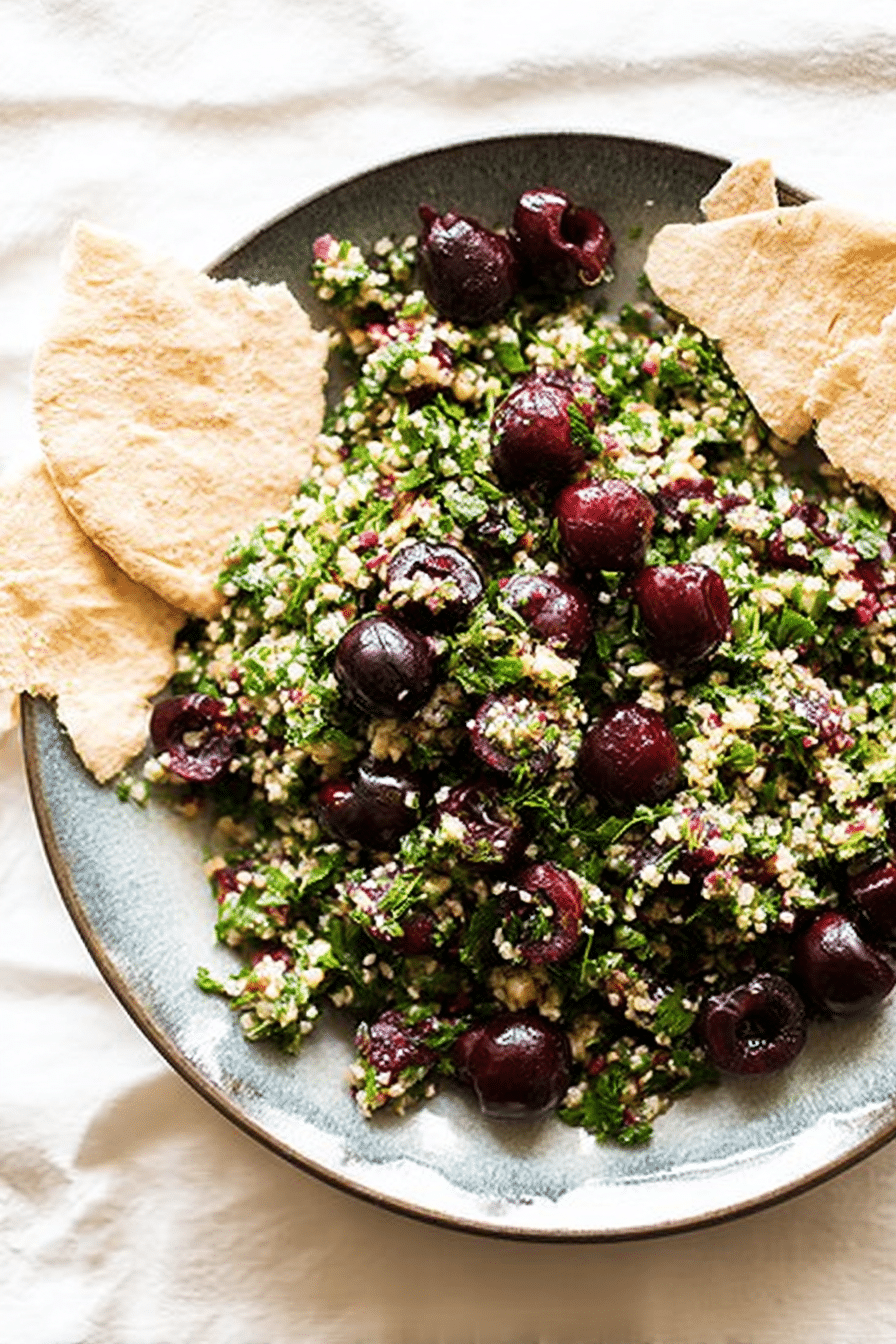
Cherry Tabbouleh Salad
Ingredients
Method
- Place the bulgur in a large bowl. Add the hot water and stir to combine. Then stir in the lemon juice. Let stand for about 10 minutes.
- Add the parsley, scallions and mint to the bowl with the bulgur and stir to combine. Drizzle in the olive oil and add the salt and black pepper, stirring to combine. Fold in the cherries.
- The tabbouleh can be served immediately or covered and chilled in your refrigerator for several hours before serving. Leftovers can be stored in your refrigerator for 3-4 days.