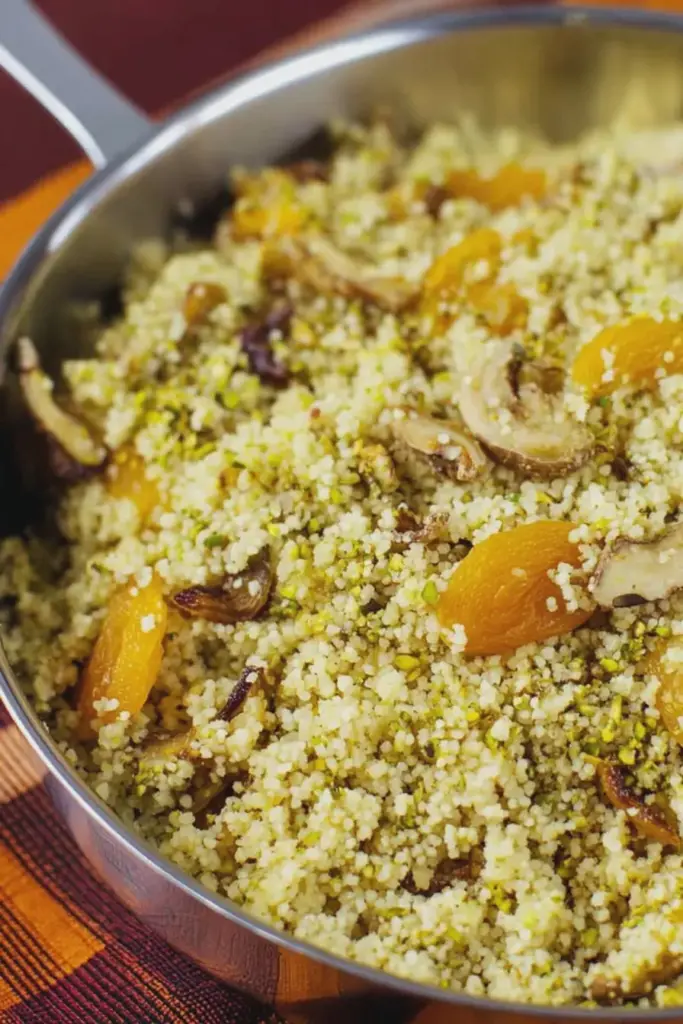
I make this couscous whenever I need a quick side that looks like I spent more time on it than I actually did. In my kitchen it’s the dish I reach for when guests drop in or when I want a colorful bowl to brighten a weekday dinner. The caramelized onions and toasted pistachios send a warm, nutty aroma through the house while the apricots add sunny pockets of sweetness.
I’ve cooked variations of this recipe hundreds of times and learned the small tricks that keep the grains light instead of gluey. A quick toast of the couscous and nuts, the right-temperature broth, and a gentle hand when fluffing make all the difference. I also love how the colors—amber apricots and green pistachios—make it feel special on a picnic spread.
Over the years I’ve adapted this to fit diets and seasons without losing its soul. I’ll share easy swaps, storage tips for make-ahead meals, and a few serving ideas that turn this humble side into a showpiece at summer gatherings. If you want something simple, vibrant and reliably good, this is the one I keep returning to.
Why this Couscous with Apricots and Pistachios is perfect for quick gatherings
This dish is made for last-minute plans: it cooks fast, travels well, and looks beautiful on a platter. The contrast of textures—the soft, pearl-like couscous, the slight chew of apricots, and the crunchy pistachios—makes it feel thoughtful even when you didn’t have time to fuss. Culturally, the combination nods to North African flavors where fruit and nuts often pair with grains for a balanced side that’s both sweet and savory.
Sensory note: expect the kitchen to smell of toasted nuts and sweet onions while the bright lemon zest lifts the final dish. It’s an easy dish to scale up for a crowd and it holds at room temperature for a while, which is ideal for picnics and potlucks.
Everything You Need for Couscous with Apricots and Pistachios
Below I cover the ingredients conversationally—what they do in the dish and how you can swap them if needed. I recommend using the freshest ingredients you can find for the best texture and flavor.
- Oil – Provides a base for sautéing the onions and toasting the couscous; use neutral oil or olive oil for an olive-forward flavor.
- Onion – Adds sweetness and depth when softened and lightly browned; shallots are a milder substitute.
- Pistachios – Give a nutty crunch and color contrast; swap with almonds, walnuts, or pecans if preferred.
- Dried apricots – Add sweet, chewy bursts; dried cranberries or raisins work as alternatives for different flavor profiles.
- Couscous – The main grain that soaks up flavor; for gluten-free diets, use quinoa or millet as a substitute.
- Broth or water – Warmer, seasoned liquid cooks the couscous; choose vegetable broth for a vegan version or a light chicken broth for more savory depth.
- Lemon zest – Adds brightness and keeps the dish from tasting heavy; lemon juice can be used sparingly if you like more tang.
Measurement tip: be precise when adding liquid to couscous—too much makes it mushy, too little leaves it dry. Use warm broth to help the grains cook evenly.
The Secret to Light, Fluffy Couscous
The key is temperature and technique. Cooking couscous in hot, seasoned liquid and letting it rest undisturbed allows each grain to hydrate without breaking down into paste. Gentle fork-fluffing after resting separates the grains and gives that desirable light texture.
- Bring your broth to a full, steady simmer before adding it to the toasted couscous so the grains absorb heat immediately.
- Cover tightly and let the couscous steam off the heat; the residual heat finishes the cooking without overworking the grains.
- After resting, fluff with a fork rather than stirring vigorously—this keeps the grains intact and airy.
- How to tell it’s done: grains should be tender but hold shape, with a subtle sheen from the oil and no gummy clumps.
Why Toasting the Couscous and Nuts Makes a Difference
Toasting develops deeper, nuttier flavors thanks to the Maillard reaction and gentle browning. For the couscous it also removes residual starch on the surface of the granules, which helps prevent clumping once the liquid is added. Toasted nuts release essential oils that amplify their crunch and aroma.
- Heat a dry skillet or one with a touch of oil over medium heat until warm—you should smell a faint nutty note before adding ingredients.
- Add the sliced onions first and cook until they are translucent and just starting to brown; this builds a savory base.
- Toss in the nuts and toast briefly until they give off an aromatic nutty scent and begin to color; watch closely so they don’t burn.
- Stir in the couscous and apricots and toast the grains for a couple of minutes, stirring almost constantly—this step deepens flavor and reduces stickiness.
- Alternatives to toast: pine nuts, chopped hazelnuts, or sunflower seeds offer different textures and flavors when toasted.
Pairings and Serving Ideas for Summer Picnics
Serve this couscous alongside simply grilled mains and bright salads for a balanced picnic platter. For a lively combination, place it next to Mediterranean chicken gyros—those savory, herb-forward wraps complement the sweet apricots and nutty couscous perfectly.
Add a colorful vegetable side—honey garlic roasted baby carrots make a great sweet-and-savory contrast and bring more color to the plate.
If you want a crunchy, green element, pair it with garlic parmesan roasted Brussels sprouts for a flavorful counterpoint. For a lighter, fruit-forward pairing try a blueberry pistachio spring salad; the shared pistachio notes tie the dishes together.
Presentation idea: serve the couscous on a wide platter, sprinkle extra chopped pistachios and lemon zest on top, and tuck grilled lemon halves or herbs around the edge for a picnic-ready display.
How to Make Couscous with Apricots and Pistachios (Step-by-Step)
- Heat oil in a large skillet over medium heat. Add the sliced onion and sauté, stirring often, until translucent and beginning to brown—this builds a sweet, savory foundation.
- Add the roughly chopped pistachios and cook for a few minutes until they release a nutty aroma and take on light color.
- Stir in the dry couscous and diced apricots, toasting for a couple of minutes while stirring almost constantly so the grains don’t scorch.
- Pour in warm broth (or water) and add lemon zest. Because the pan and couscous are hot, the liquid will steam immediately—give everything a quick stir, then cover the pan tightly.
- Remove the pan from the heat and let it sit, covered, for about five minutes so the couscous can steam and hydrate evenly.
- After resting, gently fluff the couscous with a fork to separate the grains and fold the apricots and nuts through; taste and adjust salt or lemon as needed.
- Common mistakes to avoid: adding cold liquid (which shocks the couscous), stirring vigorously after standing (which can make the grains paste-y), and toasting on too high heat (which burns the nuts and couscous quickly).
Pro Tip for couscous with apricots and pistachios: Use warm broth and fluff gently
- I always heat the broth before adding it—warm liquid helps the couscous hydrate quickly and evenly without going gummy.
- I never stir the couscous while it rests; folding gently with a fork afterward keeps the grains separate and light.
- If I’m prepping ahead, I drizzle a little olive oil over the finished couscous before covering to help preserve texture.
- For extra brightness, I zest lemon over the couscous at the end rather than during cooking so the aroma stays fresh.
How to Store, Reheat and Easy Variations to Try Next Time
Storing and reheating properly keeps the couscous from drying out and preserves its texture for make-ahead meals.
- Storage: Cool the couscous to room temperature, then transfer to an airtight container and refrigerate for up to three days.
- Reheating: Reheat gently in a pan over low heat with a splash of water or broth to restore moisture, or microwave with a sprinkle of liquid and a loose cover, fluffing halfway through.
- Troubleshooting: If leftovers seem dry, stir in a little warm broth and a squeeze of lemon; if clumpy, break them up with a fork and heat slowly to loosen the grains.
- Easy variations: Swap apricots for cherries, figs or cranberries; trade pistachios for toasted almonds; add chopped fresh herbs (mint, parsley) for a bright finish; or fold in roasted vegetables for an all-in-one salad.
Frequently Asked Questions
Can I use other nuts instead of pistachios? Absolutely! Feel free to substitute with almonds, walnuts, or even pecans for a different flavor and texture.
Is there a vegan version of this recipe? Yes! Simply replace the chicken broth with vegetable broth or water, and you’ll have a tasty vegan dish.
How do I store leftovers? Store any leftovers in an airtight container in the fridge for up to 3 days. To reheat, add a splash of water to prevent drying out.
Can I prepare this dish ahead of time? Yes, you can prepare the couscous a few hours in advance. Just fluff it before serving to restore its texture.
What can I serve with couscous for a complete meal? Pair it with grilled chicken, roasted vegetables, or a fresh salad for a delicious and balanced meal.
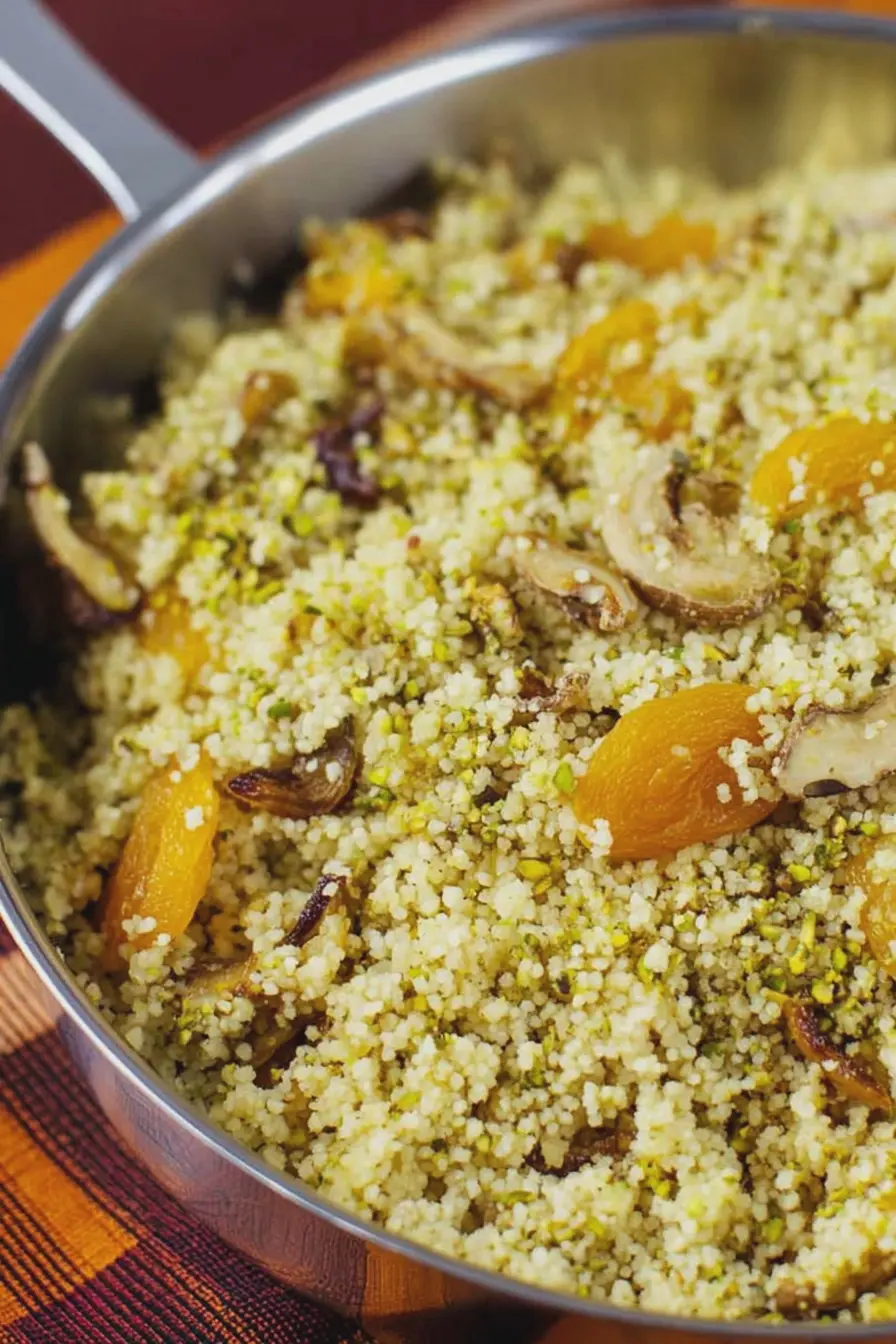
Couscous with Apricots and Pistachios
Ingredients
Method
- In a large skillet or saucepan, heat oil on medium heat. Add sliced onions and cook, stirring often, until they are transparent and begin to brown.
- Stir in the chopped pistachios and continue to cook for a few minutes.
- Add the couscous and dried apricots. This will toast the couscous which adds to the flavor and prevents it from being clumpy when done. Stir almost constantly for a few minutes so that the couscous grains do not burn on the bottom of the pan.
- Add the broth/water and lemon zest. Since the couscous is hot, the broth will start to boil immediately. Give it a quick stir and put the cover on the pan.
- Remove from the heat and let stand for 5 minutes. After 5 minutes, fluff the couscous with a fork.