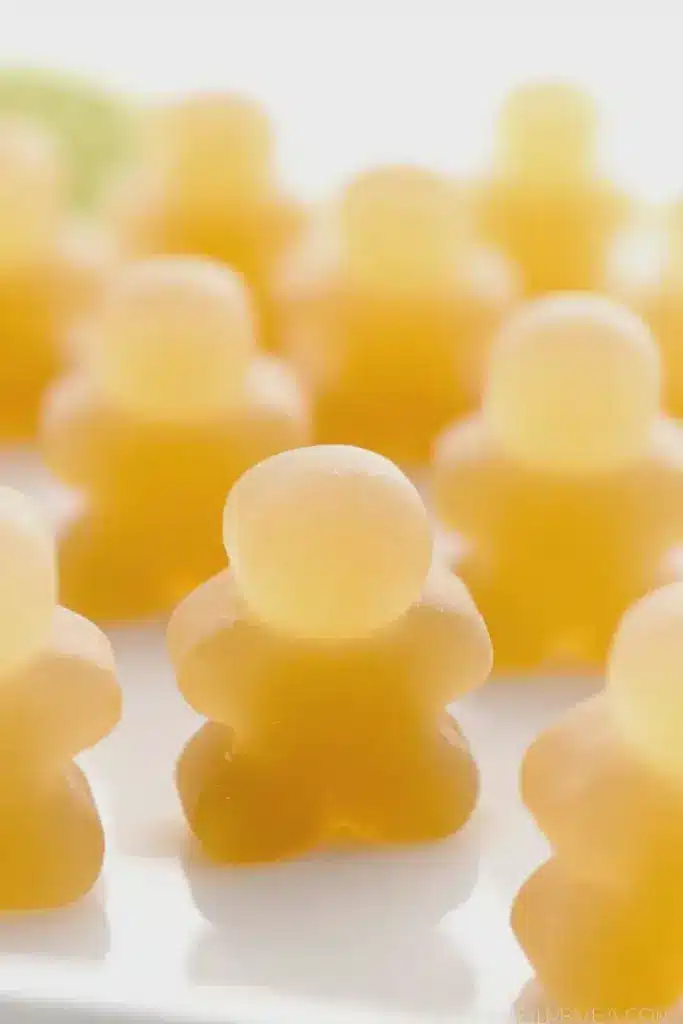
I started making these green tea, lemon & ginger gummies on a week when I wanted a small, portable snack that actually supported my digestion and immune system. I like that they have a bright, tart pop from fresh lemon, a warming ginger bite, and the soft vegetal note of green tea. In my kitchen they became the go-to afternoon pick-me-up that didn’t derail my clean-eating goals.
When I first tested the recipe I learned fast that texture matters more than strict speed—gelatin needs respect. I played with steeping times, ginger strength and a few sweeteners before landing on a batch that set perfectly: slightly firm, tender in the center, and with a clear, refreshing flavor. I made mistakes—overheated gelatin that turned rubbery, and under-bloomed gelatin that left lumps—but those trials taught me the small steps that guarantee success.
I want you to feel confident making these at home. The process is straightforward, the ingredients are simple, and you can scale or flavor them for whatever you need: a sugar-free snack, a vegan adaptation, or a jar of portable gummies to soothe a travel stomach. I’ll walk you through why these ingredients work, what to buy, how to make them step-by-step, and the exact little tricks I rely on to avoid grainy or rubbery results.
These gummies are packed with the antioxidants from green tea, the anti-inflammatory properties of ginger, and the vitamin C boost from lemon juice, making them a nutritious snacking option that’s easy to prepare for busy days.
Why These Green Tea Lemon Ginger Gummies are Ideal for Healthy Snacking
These gummies check a lot of boxes for health-conscious snacking: they’re low in processed ingredients, easy to portion, and can be tailored to your dietary needs. The combination of green tea, ginger and lemon delivers gentle antioxidant support, digestive benefits and a vitamin C lift without heavy sugars or additives.
Visually they’re appealing—pale green-gold cubes or cute shapes—while the texture is chewy but tender. The scent while you’re making them is bright and invigorating: warm ginger on the breath, a citrusy snap from lemon, and the leafy, calming notes of brewed green tea.
Everything You Need for Green Tea Lemon Ginger Gummies
- Cold water – for blooming gelatin and diluting flavors as needed.
- Unflavored gelatin powder – the setting agent and protein component (you can use a powdered vegan alternative if needed—see variations).
- Strongly brewed green tea – brewed and cooled; provides the base flavor and antioxidants.
- Ginger juice – freshly juiced or squeezed from grated ginger for bright heat.
- Fresh lemon juice – for acidity, brightness and vitamin C.
- Optional sweetener – honey, a liquid sugar substitute or gentle sweetener if you prefer a sweeter gummy.
- Molds or a shallow dish – silicone molds give neat shapes; a small baking dish is fine if you’ll cut into squares.
- Small saucepan and whisk – for gently warming the mixture and dissolving gelatin without overheating.
Why Each Ingredient Helps: Green Tea, Ginger, Lemon & Gelatin
- Green tea – contributes antioxidants (catechins) that support cellular health and give a subtle vegetal flavor.
- Ginger – offers anti-inflammatory and digestive benefits and a warming spice that reduces nausea.
- Lemon – adds vitamin C, bright acidity and balances the ginger’s heat.
- Gelatin – provides structure and chew while supplying amino acids that can support gut lining and joint connective tissue.
Nutrition Breakdown: What to Expect per Serving
Nutrition will vary depending on whether you add sweetener and how many pieces you cut. Below are approximate values for a moderate serving size (roughly a small handful):
- Calories: ~40–70 per serving (lower if unsweetened; higher if honey or sugar is added).
- Protein: ~1.5–3 g (from gelatin).
- Carbohydrates: ~2–12 g (mostly from any added sweetener or natural sugars in ginger).
- Fat: negligible.
- Functional compounds: green tea catechins, gingerols from ginger, and vitamin C from lemon.
These gummies make a light, nutrient-forward snack that supports an active, health-conscious lifestyle: they’re not a meal replacement but a small, intentional bite that can help calm the stomach and add antioxidants between meals. A common misconception is that gummies are inherently empty calories; when you make them at home with minimal sweetener and real ingredients, they can be a purposeful addition to your snack rotation.
Choosing Quality Ingredients: Organic Tea, Fresh Ginger, and Gelatin Alternatives
Choose the best you can—your gummy will taste as good as the ingredients you pick. I reach for organic tea when I can to avoid pesticide residues and for a cleaner flavor. Fresh ginger should be firm, fragrant and slightly spicy when you grate it—this gives the gummies a lively heat.
If you prefer a vegan version, you can substitute gelatin with agar-agar or pectin. The setting behavior differs: agar sets firmer and faster and needs a different technique and ratio; pectin works well with added sugar and acid. If you experiment with alternatives, expect to tweak temperatures and setting times.
If you don’t have ginger juice on hand, you can make it by juicing fresh ginger or by finely grating it and squeezing the grated flesh through a cheesecloth or nut milk bag to extract the juice—this works very well in a pinch.
How to Make Green Tea Lemon Ginger Gummies (Step-by-Step)
- Bloom the gelatin: pour cold water into a small saucepan and sprinkle the gelatin evenly over the surface; let it sit undisturbed so the powder absorbs the water and becomes spongy.
- Brew a strong green tea and measure out the required amount; remove the bags and allow it to cool slightly so it isn’t piping hot.
- Add the brewed tea, ginger juice and lemon juice to the bloomed gelatin; gently warm the saucepan over low heat and whisk until the gelatin has fully dissolved and the liquid is smooth. Do not boil.
- If you’re adding honey or another liquid sweetener, stir it in now and taste; adjust to your preference.
- Pour the mixture into silicone molds or a shallow dish to a uniform depth; tapping lightly on the counter smooths the surface and removes air bubbles.
- Refrigerate until fully set—at least a couple of hours—before unmolding or cutting into pieces.
Pro Tip for green tea lemon ginger gummies: preventing grainy or rubbery texture
Pro-Tips, Troubleshooting, and Variations are formatted below as bulleted lists for quick scanning.
- Heat gently: I always dissolve gelatin over low heat. High heat can break down gelatin’s setting properties and make the texture rubbery.
- Bloom properly: Let the gelatin sit long enough in cold water to swell before you add heat. Skipping this step is the most common cause of lumps.
- Measure gelatin accurately: Too much gelatin yields an overly firm gummy; too little won’t set well. Weighing or using precise volumetric measures helps.
- Avoid boiling: Once gelatin is dissolved, keep the mixture below a simmer. Boiling can denature the gelatin.
- Strain if needed: If your ginger pulp or tea bits create cloudiness, strain the warm mixture through a fine mesh before pouring into molds.
How to Store, Make-Ahead and Easy Variations (Vegan, Sugar-Free & More)
- Storage: Store the gummies in an airtight container in the refrigerator for up to two weeks to keep them fresh.
- Make-ahead: You can prepare large batches and freeze them in a single layer on a tray, then transfer to a freezer-safe container; thaw in the fridge before serving.
- Sugar-free option: Skip the honey and use a liquid non-caloric sweetener to taste; be mindful that some sweeteners affect set and mouthfeel.
- Vegan alternative: Use agar-agar or pectin in place of gelatin, adjusting the method—agar needs boiling to dissolve and sets firmer, while pectin often requires sugar and acid balance.
- Flavor variations: Swap part of the green tea for mild white tea, add a small amount of fruit puree for color and flavor (remember puree adds pectin and water which can affect the set), or add a touch of turmeric for an anti-inflammatory boost.
Frequently Asked Questions
What health benefits do these gummies offer? – These gummies are packed with the antioxidants from green tea, the anti-inflammatory properties of ginger, and the vitamin C boost from lemon juice, making them a nutritious snacking option!
Can I substitute the gelatin with a vegan alternative? – Absolutely! You can use agar-agar or pectin instead of gelatin to make a vegan version of these gummies.
How should I store the gummies after making them? – Store the gummies in an airtight container in the refrigerator for up to two weeks to keep them fresh.
What if I don’t have ginger juice? – You can make ginger juice by juicing fresh ginger or finely grating it and squeezing out the juice using a cheesecloth.
Can I adjust the sweetness of the gummies? – Yes! You can add honey to taste, or use a sugar substitute if you prefer a different sweetener.
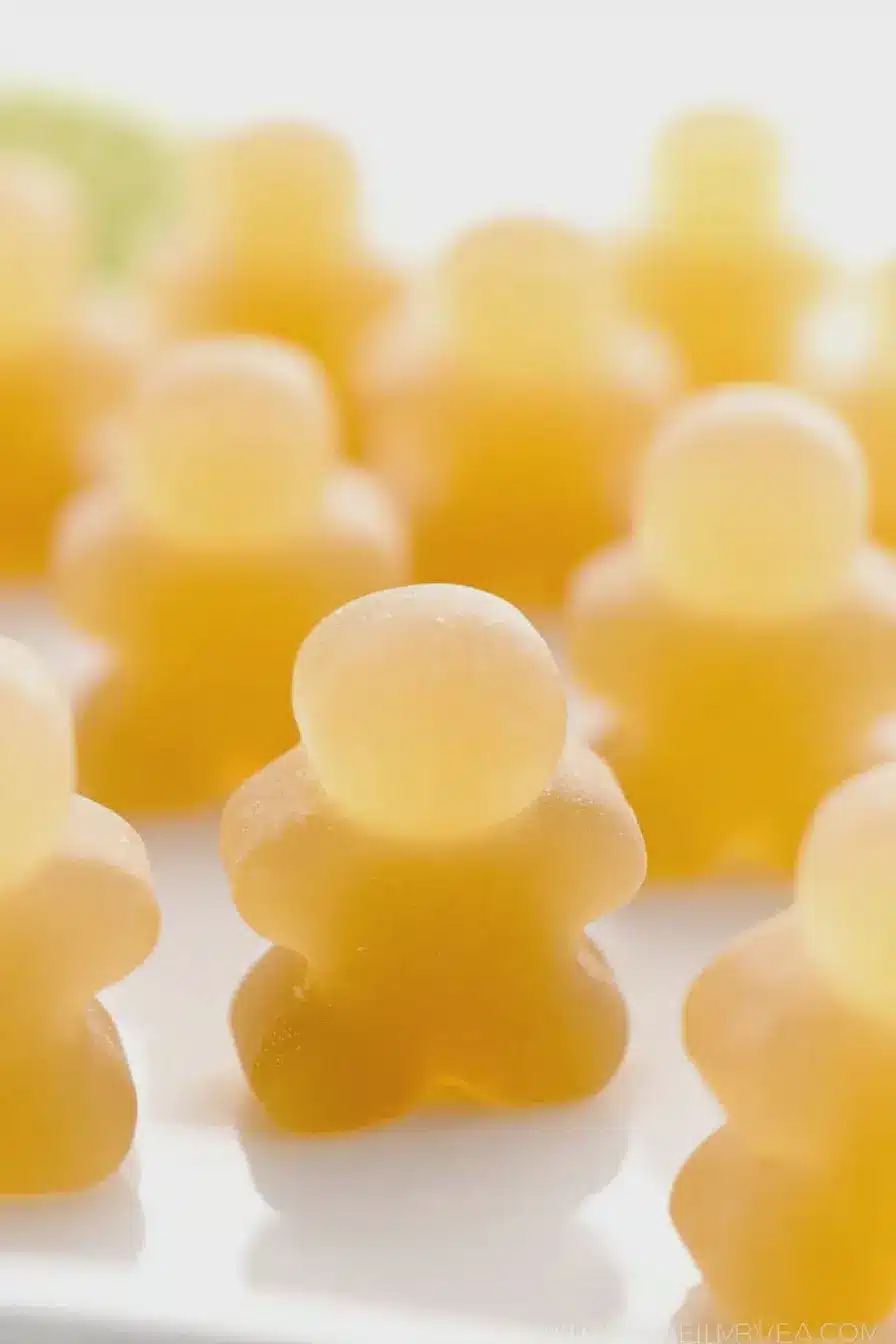
Green Tea, Lemon & Ginger Gummies
Ingredients
Method
- Pour the water into a saucepan. Sprinkle the gelatin powder over the surface of the water and allow to dissolve. Set aside.
- Make the tea in accordance with instructions for steeping time. Remove tea bags and make sure you have 1/2 cup brewed tea.
- Add the brewed tea, ginger juice, and lemon juice to the saucepan with the bloomed gelatin. Gently warm the saucepan and stir until all the gelatin has dissolved and there are no lumps. Do not overheat. If you're adding honey, do that now.
- You can pour the gelatin mixture into molds or into a baking dish. Refrigerate for at least 2 hours to set before trying to remove them from a mold or cut them into pieces.