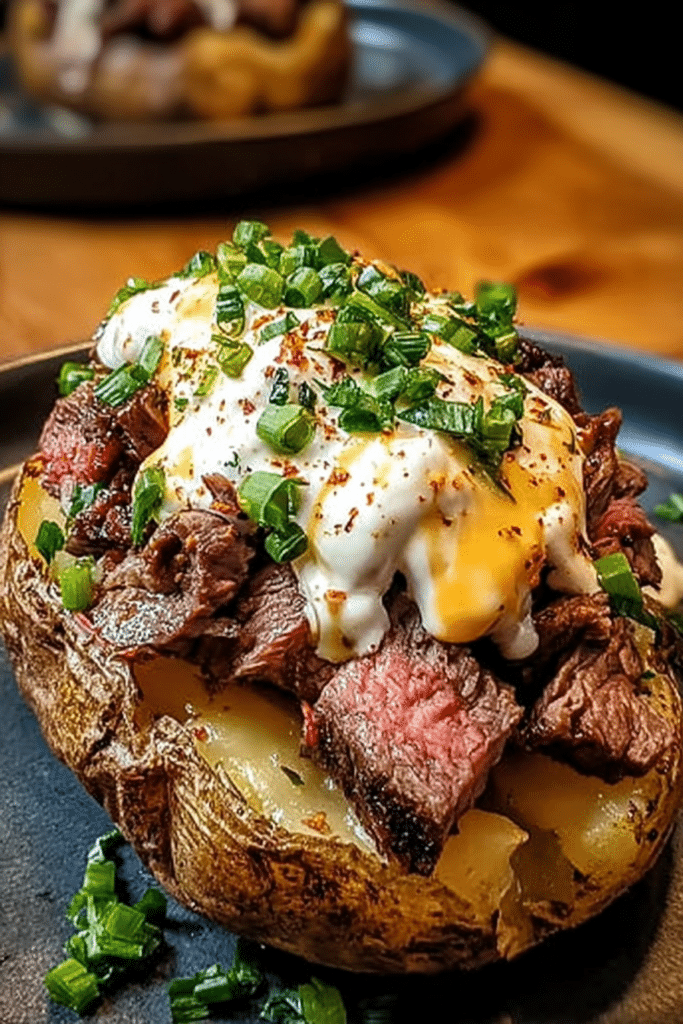
I fell for loaded steak potatoes the first time I served a version of this at a weeknight dinner that turned into a full-on party. In my kitchen the aroma of baking russets and sizzling steak is the kind of thing that makes people linger at the table. I like to start early with perfectly dry skins on the potatoes and a well-seasoned skillet so the steak bites finish with a caramelized crust without overcooking the interior.
Over the years I’ve learned to balance the textures—crispy potato skin, pillowy potato interior, and steak that’s tender but still has a bite. The cream sauce is the glue: rich and silky, brightened with a squeeze of lemon and fresh parsley so the dish never feels heavy on the palate. When I plate these for friends, I pay attention to presentation—fluted potatoes, steak arranged on top, a ribbon of sauce and a scatter of herbs—and it always makes the meal feel special.
I’ll be honest: the little details make the difference. Salt the potato skins well before roasting, let the steak rest, and finish the sauce off the heat so the cheese melts into a glossy emulsion. Those techniques turn a comforting meal into something you’re proud to serve at a dinner party.
Below you’ll find everything you need to shop and prep, practical timing and temperature cues I rely on, and a few swaps that keep this dish adaptable for different diets and time constraints.
Why Loaded Steak Potatoes Are the Ultimate Dinner-Party Main
Loaded steak potatoes pair familiar comfort with thoughtful refinement—rich, savory steak and a silky cream sauce balanced by citrus and fresh herbs. The contrast of textures is what sells the dish: crunchy skin, fluffy interior, and tender steak all in one bite. This combination is visually striking on a platter and easy to portion for guests, so it reads as both generous and composed.
Sensory notes: as the potatoes finish in the oven you’ll smell warm, toasty starch; when the steak hits the pan you’ll hear a satisfying sizzle and see a deep brown crust form. That swirling steam and glossy sauce are what guests remember.
This recipe is versatile—swap toppings, tweak the sauce for more tang or heat, or change the steak cut for budget or flavor—and it remains an elegant centerpiece for an intimate dinner or a larger gathering. Remove any overblown marketing language and focus on the practical moments that create delight for your guests.
Everything You Need for Loaded Steak Potatoes
Below I list the key ingredients and tools I always have on hand when I make this. I won’t include exact measurements here—those are in the recipe card handled elsewhere—but I’ll explain the role of each ingredient and offer substitutions for dietary needs.
- Russet or baking potatoes – Provide a fluffy interior and sturdy skin for loading; use Yukon gold for a creamier texture.
- Olive oil – Helps crisp the potato skins and carries salt evenly.
- Steak (NY strip, ribeye, sirloin, tenderloin) – The flavor anchor; choose marbled cuts for richness or lean cuts for a lighter plate.
- Cajun or savory seasoning blend – Adds depth and a warm spice note; omit or reduce for milder preferences.
- Butter and garlic – For finishing the steak and layering into the potato for richness.
- Heavy cream – Creates the silky sauce; substitute a full-fat dairy alternative for a different texture or a lighter cream option if needed.
- Parmesan – Adds umami and helps the sauce thicken; use a hard aged cheese substitute for plant-based versions.
- Fresh parsley and lemon – Brighten the sauce and cut through the richness.
- Red pepper flakes and cracked pepper – Provide subtle heat and finishing seasoning.
Kitchen tools I rely on:
- Sheet pan and parchment for roasting potatoes
- Heavy skillet or cast-iron pan for searing steak
- Whisk and wooden spoon for the sauce
- Instant-read thermometer for precise steak doneness
Dietary variations: for gluten-free, this recipe is naturally safe if your seasonings are gluten-free; for keto, use a smaller potato portion or swap with roasted turnips; for plant-based, substitute firm marinated mushrooms or seared cauliflower steaks and use nondairy cream and parmesan alternatives.
Choosing the Right Steak: Cuts, Marbling, and Portioning
Marbling—the thin streams of fat running through the muscle—is what gives the steak flavor and juiciness when you cook it quickly. Look for even, white marbling rather than large pockets of fat. Ribeye and NY strip give the richest results; sirloin is leaner but very flavorful; tenderloin is extremely tender but milder in beef flavor.
For portioning, aim for steak bites that are roughly the size of a large olive or small walnut so they sear quickly and keep a tender interior. For a dinner-party main, plan on a slightly generous portion per guest so there’s plenty to top the potatoes.
Don’t be shy about quick resting: even five minutes off the heat improves tenderness and juiciness. If you’d like a complementary side, consider pairing your loaded steak potatoes with our garlic butter steak bites.
How to Achieve Tender Steak Bites (Timing & Temperature)
- Pat your steak pieces very dry and season them just before cooking so they develop a quick, even crust.
- Preheat your skillet until it is very hot; a heavy cast-iron pan holds heat and gives the best sear.
- Sear the steak bites in a single layer; cook undisturbed for about 60–90 seconds per side for small bites to achieve medium-rare, adjusting time slightly for larger pieces. Look for a deep brown crust before flipping.
- Use an instant-read thermometer for precision: target roughly 120–125°F for rare, 130–135°F for medium-rare, and 140–145°F for medium. Remember residual carryover will raise the temperature a few degrees while resting.
- After searing, reduce the heat and finish in the pan with a touch of butter and garlic if desired—this bastes the meat and adds flavor without overcooking.
- Let the steak rest in a warm spot for at least 3–5 minutes before you assemble the potatoes; resting lets juices redistribute so the bites remain tender once cut or served whole.
Make the Savory Cream Sauce: Key Steps for a Silky Texture
- Start by gently sautéing garlic in butter over medium-low heat until fragrant; avoid browning the garlic to prevent bitterness.
- Add the cream and bring it to a gentle simmer—do not boil aggressively. Simmer until the sauce has slightly reduced and thickened, about a few minutes; this concentrates flavor without breaking the emulsion.
- Off the heat, whisk in grated parmesan so it melts smoothly into the cream; adding cheese while the sauce is too hot can cause graininess, so temper the temperature if needed.
- Season with red pepper flakes, freshly cracked pepper, and a small pinch of salt; finish with lemon juice and fresh parsley to balance richness and add brightness.
- If the sauce becomes too thick after resting, whisk in a splash of warm cream to loosen it before serving for a glossy finish.
For an even more indulgent experience, pair your potatoes with creamy garlic parmesan mushrooms.
How to Make Loaded Steak Potatoes (Step-by-Step)
- Preheat your oven and roast the cleaned, dried potatoes rubbed with oil and salt until the skins are crisp and the interiors are fork-tender.
- While the potatoes roast, trim and season the steak and cut it into bite-sized pieces so it cooks quickly and evenly.
- Sear the steak bites in a hot skillet, finishing them with butter and garlic to create glossy, flavored bites; move them to a warm resting spot.
- Make the cream sauce in the same skillet to capture those fond bits—sauté garlic in butter, add cream, reduce briefly, then stir in cheese, parsley, and lemon to finish.
- Split the hot potatoes, loosen the interiors with a fork, and add a smear of softened butter to each before piling on the steak bites.
- Spoon the warm parmesan cream sauce over the steak and potatoes, garnish with chopped parsley, and serve immediately so the contrast of hot potato and warm sauce is preserved.
Presentation tip: arrange the potatoes on a warmed platter, place steak bites slightly offset so you can see the potato interior, and drizzle sauce in a steady ribbon for a refined look.
Troubleshooting
- Soggy potato skin: Roast on a hot sheet pan and space potatoes apart so hot air circulates; using dry potatoes and a light coating of oil helps crispness.
- Grainy sauce: Remove from heat before adding cheese and stir quickly; if it still grains, strain and whisk in a touch more warm cream.
- Overcooked steak: Reduce sear time and use an instant-read thermometer; sear on high and finish on lower heat or briefly in the oven if needed.
- Too-thick sauce after cooling: Rewarm gently and whisk in a splash of cream or warm broth to reach the desired consistency.
Pro Tip for loaded steak potatoes: Air-Fryer, Keto, and Plant-Based Swaps
Note to content team: Please present the ‘Pro-Tips’, ‘Troubleshooting’, and ‘Variations’ sections as bulleted lists for quick scanning.
- Air-fryer shortcut: Cook smaller potatoes or par-cooked potato halves at a high temperature for a crisp skin in a fraction of the oven time—watch closely for doneness.
- Keto swap: Use roasted cauliflower florets or a halved baked turnip in place of potatoes and keep the cream sauce intact for richness.
- Plant-based protein: Sear thick slices of marinated king oyster mushrooms or tempeh and use nondairy cream and a vegan parmesan-style cheese for the sauce.
- Flavor boosters: Finish the steak with a pat of compound butter (herbs, lemon zest, or anchovy) for an extra layer of flavor that melds into the sauce.
How to Store, Reheat, and Make-Ahead Loaded Steak Potatoes
- Storage: Keep steak, potatoes, and sauce stored separately in airtight containers in the refrigerator for up to 3 days to preserve texture and flavor.
- Reheating potatoes: Warm in a 350°F oven until hot, loosely covered with foil to prevent drying; you can refresh the interior with a pat of butter before serving.
- Reheating steak: Gently warm steak bites in a skillet over medium-low heat with a splash of broth or butter to avoid overcooking.
- Reheating sauce: Warm the cream sauce slowly over low heat, whisking and adding a little extra cream if it thickened in the fridge.
- Make-ahead plan: Roast potatoes and prepare the sauce earlier in the day; sear the steak just before guests arrive and assemble to serve at peak temperature.
Variations and Pairing Suggestions
- Cheesy twist: Fold shredded sharp cheddar into the potato interior before topping with steak for an extra comfort-food note.
- Herb-forward: Swap parsley for chives or tarragon in the sauce for a different herbal character.
- Spice-forward: Add smoked paprika or a pinch of cayenne to the steak seasoning for a smoky heat that plays well with the cream.
- Lighten up: Use Greek yogurt thinned with milk for a tangy sauce alternative and choose lean steak cuts.
- Pairing ideas: Serve alongside a crisp green salad or roasted vegetables; for a complementary side, try a steakhouse potato salad: steakhouse potato salad.
- Vegetarian accompaniment: For a meat-free table, offer cheesy garlic zucchini boats as a bright, savory side: cheesy garlic zucchini boats.
Frequently Asked Questions
Can I use different types of steak for Loaded Steak Potatoes? Absolutely! You can use cuts like NY strip, ribeye, sirloin, or tenderloin. Choose the one that fits your taste and budget!
How do I know when the potatoes are done baking? The potatoes are done when they are fork-tender. This usually takes 50-60 minutes at 425°F, but checking them occasionally is a good idea!
Can I make the cream sauce in advance? While it’s best to make the cream sauce fresh, you can prepare it ahead of time and gently reheat it before serving. Just add a little extra cream if it thickens too much.
What are some good topping variations for Loaded Steak Potatoes? Consider toppings like crispy bacon, sour cream, green onions, or cheese! You can mix it up based on your favorite flavors.
Is there a way to make Loaded Steak Potatoes healthier? You can make swaps like using leaner cuts of meat, lighter cream alternatives, or even plant-based proteins to suit your dietary needs.
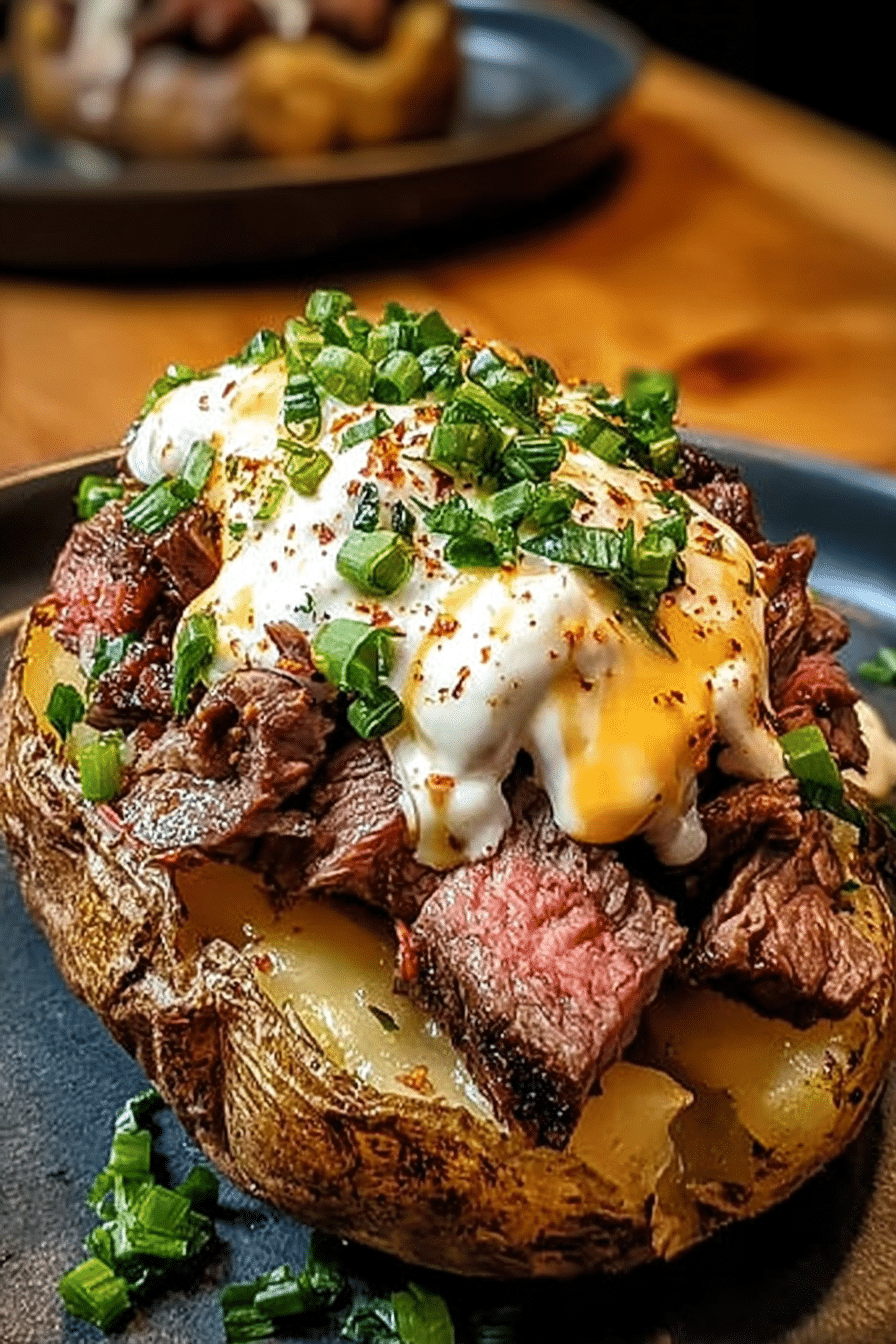
Loaded Steak Potatoes
Ingredients
Method
- Preheat your oven to 425°F and line a baking pan with parchment paper.
- Rub the cleaned and dried russet potatoes with olive oil, then generously sprinkle all sides with sea salt. Place the potatoes on the prepared baking pan and bake for 50-60 minutes, or until fork-tender.
- While the potatoes are baking, trim any excess fat from the steak and cut it into 2-inch pieces. Drizzle with 2 tablespoon of avocado oil and coat with Cajun seasoning.
- Heat the remaining 2 tablespoon of avocado oil in a cast-iron skillet over medium-high heat. Cook the steak bites undisturbed for 2 minutes, then flip and cook for an additional minute. Reduce heat to low and cook for one more minute.
- Move the steak to one side of the pan and add 2 tablespoon of butter and 1 tablespoon of minced garlic. Sauté until fragrant, then toss the steak in the garlic butter.
- In the same skillet, add the remaining 2 tablespoon of butter and 1 tablespoon of minced garlic. Sauté until fragrant, then whisk in the heavy cream. Bring to a simmer and reduce for 3-5 minutes.
- Stir in the grated parmesan cheese, red pepper flakes, and a pinch of salt and pepper to taste. Finish by stirring in fresh parsley and lemon juice.
- Lightly drop each baked potato to loosen the interior, then cut a slit down the center and fluff with a fork. Spread softened butter inside each potato.
- Divide cooked steak bites among the potatoes and spoon creamy parmesan sauce over the top. Serve immediately, garnished with additional fresh parsley if desired.