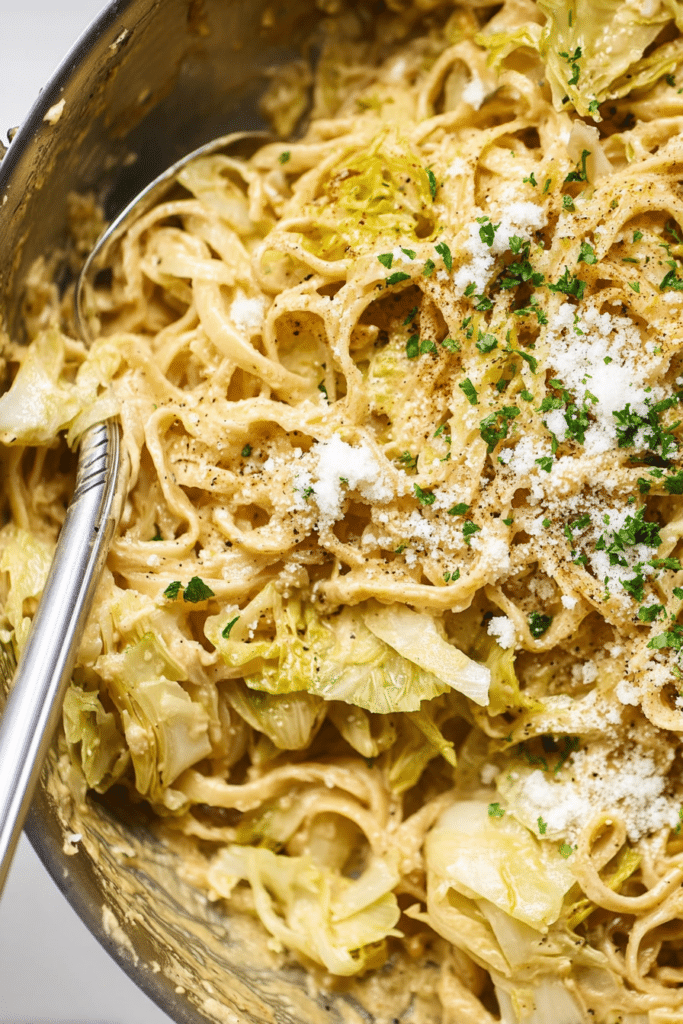
I started making this melty cabbage pasta carbonara on nights when the fridge looked bare but my appetite didn’t. In my kitchen I learned that a head of cabbage—cheap, hardy, and quietly sweet when cooked—can stretch a pound of pasta into a satisfying family meal. The first time I folded soft ribbons of cabbage into the pasta and a glossy egg-and-cheese sauce, I knew I had a go-to that felt both indulgent and sensible.
This recipe lives at the intersection of affordable, satisfying, and nutritious. I use pantry stalwarts—olive oil, anchovies, eggs, and Pecorino—to give big flavor without expensive add-ons. The cabbage brings fiber and volume so one package of pasta feeds more mouths; it also soaks up the savory anchovy-olive oil base, which means you don’t miss a traditional carbonara’s punch even with fewer noodles.
I love how the kitchen smells as the cabbage browns and the anchovies dissolve into a fragrant paste. The scene in my skillet—shiny olive oil, softened green ribbons, and steam rising—always tells me dinner will be comforting and cheap in the best way. If you’re feeding a few people on a weekday, this is the sort of dish that makes the pantry feel generous.
Why This Melty Cabbage Pasta Carbonara Works for Budget Cooks
Why This Melty Cabbage Pasta Carbonara Works for Budget Cooks
This dish is built around inexpensive, high-impact ingredients: cabbage, pasta, eggs, and a little cheese. Cabbage is widely available year-round and costs a fraction of many other vegetables, yet it gives the same bulk and mouthfeel once it’s caramelized and reduced. Visually, picture bright green ribbons wilted into a glossy, saucy bed of pasta—the aroma is a cozy blend of browned cabbage, garlic-forward anchovy paste, and the warm, salty scent of Pecorino.
- Versatility: Use what’s in season or on sale; cabbage pairs easily with pantry proteins like bacon or canned tuna.
- Stretch factor: Swapping half the pasta for cabbage lowers meal cost per serving and increases satiety.
- Nutritional advantage: Cabbage adds fiber, vitamin C, and volume with very few calories compared to richer vegetable add-ins.
Everything You Need for Melty Cabbage Pasta Carbonara
Here’s a conversational pantry check and why each item matters. I’ll note easy swaps so you can keep costs down without sacrificing flavor.
- Cabbage – The star stretch ingredient; wilts into sweet, tender ribbons and adds fiber and bulk.
- Dry pasta – Any shape works; it’s the canvas for the sauce and cabbage.
- Eggs – Create the glossy, rich sauce without cream; they emulsify with pasta water to coat every strand.
- Pecorino or hard salty cheese – Adds sharpness and body; grated finely for a smooth sauce.
- Anchovies – Small but mighty: they dissolve into the oil and give savory depth; choose quality-packed fillets for best flavor.
- Olive oil – Heats into a shiny base for the anchovy paste and helps caramelize the cabbage.
- Lemon – Zest and juice brighten the finished dish and cut through the richness.
- Salt & pepper – Season carefully; kosher or coarse salt helps draw moisture from the cabbage as it cooks.
- Tools – Large skillet (nonstick preferred), big pot for pasta, tongs for tossing, and a bowl for whisking eggs.
The Secret to a Silky Carbonara Sauce Without Cream
The creamy texture comes from emulsifying beaten eggs with starchy pasta water and the warm pasta—not from heavy cream. As you whisk a small amount of hot pasta water into the eggs, you temper them so they won’t scramble when they hit the pan. The starch in that water helps the egg proteins bind with the oil and cheese into a glossy, clingy sauce.
- Always temper: While whisking constantly, add a slow stream of hot pasta water into the eggs to bring them up to temperature before mixing with the pasta.
- Low heat finish: Add the egg mixture over the pasta while tossing on the lowest possible heat to gently thicken the sauce without scrambling.
- Use residual heat: Turn off the burner as soon as the sauce coats the pasta; the pan’s warmth finishes the silkiness.
Stretching Ingredients: How Cabbage Saves Money and Adds Bulk
Cabbage cooks down a lot and keeps a pleasant tooth when braised or sautéed slowly, which means a little goes a long way. It soaks up flavor—especially when cooked with anchovies and olive oil—and its natural sweetness balances the salty cheese. Health-wise, cabbage is low in calories but high in fiber and vitamin C, so you get fullness and nutrients for very little cost.
Cabbage is also wildly adaptable; I use it to bulk up many pasta dishes when I want to economize without making the meal feel skimpy.
Cabbage can also enhance a variety of pasta dishes, including our baked macaroni and cheese.
How to Make Melty Cabbage Pasta Carbonara (Step-by-Step)
Follow these manageable steps so the timing of pasta and cabbage lines up and the sauce comes out silky.
- Bring a large pot of salted water to a rolling boil so you can cook the pasta to just al dente when the cabbage is ready (about 8–12 minutes depending on shape).
- Heat olive oil in a large skillet until shimmering; add anchovy fillets and press them into the oil to dissolve into a paste, cooking for a couple of minutes until fragrant.
- Add thinly sliced cabbage and salt, then cover and cook undisturbed for several minutes to let it steam and soften; uncover and continue cooking until very tender and starting to caramelize (roughly 10–15 minutes total in the pan).
- While the cabbage cooks, whisk eggs and extra yolks with grated Pecorino, black pepper, and a pinch of salt; temper this mixture by slowly whisking in a small amount of the hot pasta water so it warms without scrambling.
- When the pasta is just al dente, transfer it with tongs directly into the skillet with the cabbage, leaving some starchy water behind; add lemon zest and lemon juice and toss so the pasta absorbs the flavors.
- Pour the tempered egg-cheese mixture into the center of the pasta while tossing constantly, then warm the pan on the lowest setting and keep tossing until the sauce thickens and clings to the noodles (about 1–2 minutes). Remove from heat promptly to prevent overcooking.
- Taste and season with extra salt and pepper as needed; serve immediately with additional grated cheese and chopped parsley if you like.
Pro Tip for melty cabbage pasta carbonara: Prevent Scrambled Eggs
I treat the egg step like a gentle finishing move—rushed heat is the main reason eggs curdle. These quick, scannable pro-tips will help you keep the sauce silky.
- Temper the eggs: While whisking constantly, add a slow stream of hot pasta water to the beaten eggs before combining with the pasta.
- Low, then off: Add the egg mixture while tossing on the lowest heat; remove the pan from the burner as soon as the sauce coats the pasta.
- Use tongs for control: Tossing with tongs helps you combine quickly and evenly, minimizing hot spots that scramble the eggs.
- Work in small batches: If your skillet is crowded, coat half the pasta at a time for better heat control.
- If it starts to scramble: Remove from heat immediately and whisk in a splash of cold water—this can sometimes smooth the sauce back out.
Pairings, Sides, and Simple Wine Matches
This dish pairs beautifully with bright, crisp sides that cut the richness. A simple green salad dressed with a lemony vinaigrette brings freshness and texture. Pair the richness of the pasta with a refreshing tossed salad drizzled with homemade Italian dressing. For a heartier menu, a slow-braised side can work too: For a hearty meal, consider pairing your pasta carbonara with our slow cooker beef stew.
- Simple tossed salad with acidic vinaigrette to balance the creamy sauce.
- Roasted or sautéed green vegetables—broccoli rabe or green beans—if you want more veg variety.
- Wine pairings: Look for a crisp white like Pinot Grigio or a light, unoaked Chardonnay to brighten the dish; a dry, low-tannin red such as a Chianti can also work if you prefer red.
How to Store, Reheat, and Meal-Prep Melty Cabbage Pasta Carbonara
Leftovers are practical if you follow a few simple rules to preserve texture.
- Storage: Cool to room temperature, then store in an airtight container in the refrigerator for up to 3 days.
- Reheat gently: Warm in a skillet over low heat with a splash of water or broth to loosen the sauce; toss constantly until heated through and glossy.
- Freezing: I don’t recommend freezing fully dressed carbonara—the egg sauce can change texture. Instead, freeze cooked cabbage and reheat it with freshly cooked pasta and a quick egg-cheese emulsion when ready to eat.
- Meal-prep tip: Cook and store the cabbage separately and whisk the egg and cheese together the day-of; you’ll get a fresher sauce and better texture.
User-Generated Content: Variations on the Recipe
I love seeing how readers adapt this in their kitchens. Share your twists—simple swaps make this recipe work for many diets and seasons.
- Vegetarian: Omit anchovies and add a pinch of smoked paprika or capers for umami.
- Protein add-ins: Crisp pancetta, leftover roasted chicken, or sautéed mushrooms all work well.
- Different greens: Try shredded Brussels sprouts or lacinato kale if you’d like a sturdier leaf.
- Make it hearty: Readers have enjoyed adapting their recipes with favorites like creamy garlic chicken alongside this pasta for a more substantial meal.
- Gluten-free: Swap pasta for a gluten-free variety; keep cooking times in mind so you don’t overcook the noodles.
Frequently Asked Questions
Can I use a different type of pasta for this recipe? Absolutely! While the recipe calls for spaghetti, you can use any pasta shape you prefer, such as fettuccine, penne, or even gluten-free pasta.
What should I do if I don’t have anchovy fillets? If you don’t have anchovy fillets, you can substitute with a teaspoon of fish sauce or simply omit them. You\’ll still have a tasty carbonara!
How can I make this recipe vegetarian? To make it vegetarian, omit the anchovies and increase the seasoning with some additional salt and a touch of smoked paprika for depth of flavor.
Can I prepare this dish in advance? Yes, you can prepare the cabbage and sauce in advance, but it\’s best to cook the pasta fresh just before serving to maintain the desired texture.
How do I store leftovers of Melty Cabbage Pasta Carbonara? Store any leftovers in an airtight container in the refrigerator for up to 3 days. Reheat gently on the stove, adding a splash of water to bring back the creaminess.
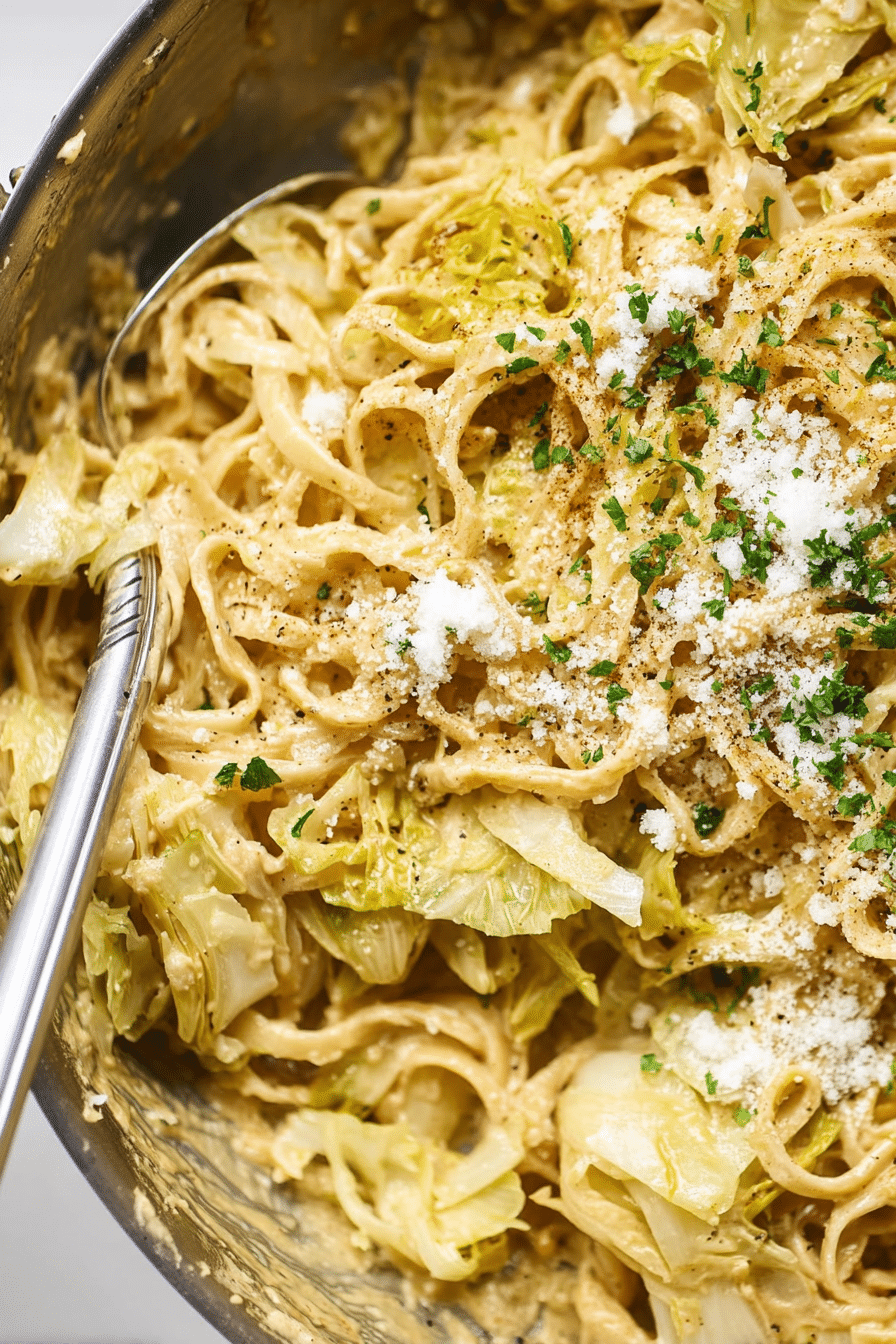
Melty Cabbage Pasta Carbonara
Ingredients
Method
- Bring a large pot of water to a boil over medium-high heat.
- Heat olive oil in a large skillet over medium heat; add anchovy fillets and cook until dissolved.
- Add cabbage and kosher salt, cover and cook undisturbed for 5 minutes.
- Stir, cover, and cook for another 5 minutes, then uncover and continue to cook until soft.
- Cook spaghetti according to package directions, adding remaining salt.
- In a bowl, whisk eggs and yolks, then combine with cheese, black pepper, and a pinch of salt.
- Slowly add pasta cooking water to egg mixture while whisking.
- Transfer spaghetti to skillet, tossing with cabbage mixture, lemon zest, and lemon juice.
- Slowly pour egg mixture into skillet while tossing pasta, and cook on low heat until thickened.
- Adjust seasoning with salt and pepper; serve with parsley and additional cheese if desired.