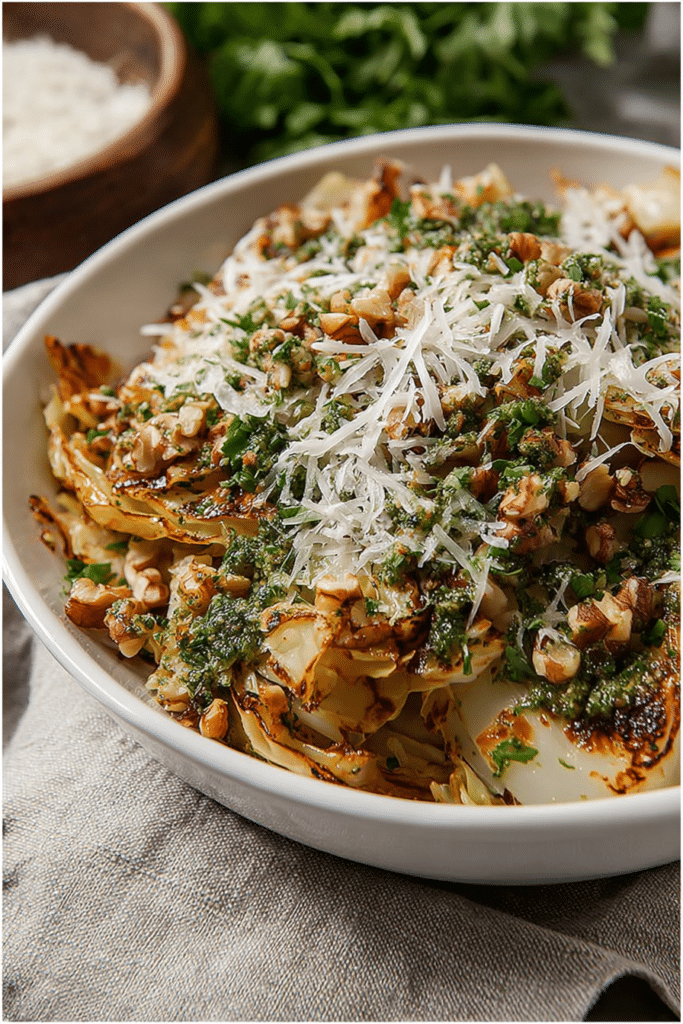
I make this roasted cabbage whenever I want a quick, no-fuss side that still tastes like I spent time on it. In my kitchen it’s a go-to: the prep takes minutes and the oven does the heavy lifting while I finish the rest of dinner. I like that the cabbage needs almost no babysitting — just a toss halfway through and it turns golden-brown with a nutty aroma.
I learned early on that a hot oven and a roomy baking sheet are the real keys. When I first started roasting cabbage I crowded the pan and ended up with limp, steamed pieces — now I spread everything out and get those nice charred edges that add texture and flavor. The finish of grated hard cheese and chopped walnuts gives a contrast of salty, crunchy bites to the soft, sweet leaves.
For busy weeknights this recipe is forgiving: you can chop the cabbage ahead of time, swap the cheese for a dairy-free option, or scale the oil back if you’re watching calories. The result is a simple side that looks homey and tastes full — browned edges, a touch of smokiness, and the warmth of toasted nuts.
Why This Roasted Cabbage Recipe Works for Busy Weeknights
This recipe fits weeknights because it requires very little hands-on time and uses common pantry spices. Expect about twenty-five minutes from start to finish — a short prep and a fast roast — and minimal cleanup (one baking sheet). Roasting concentrates cabbage’s natural sugars, so you get rich, caramelized flavor without complicated steps.
Sensory note: watch for deep golden-brown edges and inhale the warm, nutty aroma as the cabbage caramelizes. The texture contrast between tender inner leaves and crisped edges is what makes this an easy crowd-pleaser.
Everything You Need for Roasted Cabbage with Parmesan & Walnuts
- Cabbage – The star ingredient; choose a firm head with bright, unblemished leaves. Green cabbage gives the classic flavor and color.
- Extra virgin olive oil – Coats the pieces and helps with browning; better oil adds a subtle fruitiness.
- Paprika, garlic powder, onion powder – These dried spices add depth and a toasty background note without extra work.
- Sea salt & pepper – Salt brings out sweetness; pepper adds a gentle bite.
- Parmesan or a hard cheese – A salty, crumbly finish that melts slightly on warm cabbage; use a similar hard cheese if you prefer a different flavor.
- Walnuts – Provide crunchy texture and a toasty, buttery counterpoint to the soft cabbage.
- Fresh parsley – Brightens the dish and adds a fresh herbal note at the end.
This roasted cabbage pairs beautifully with balsamic glazed roasted vegetables for a complete meal or as a vivid side next to simply roasted proteins.
The Secret to Crispy, Charred Edges
To get crisp, browned edges you want quick, dry heat and room for air to circulate. That’s what creates caramelization rather than steaming. I pay attention to the following practical points when I roast cabbage.
- Preheat the oven high so the surface of the cabbage can brown quickly — that initial heat jump-starts caramelization.
- Toss the cabbage with oil and spices so every piece gets a light coating; clumps won’t brown evenly.
- Use a wide baking sheet and spread the cabbage in a single layer when possible; if pieces overlap, rotate and toss halfway through the roast to expose new surfaces.
- Watch for color rather than relying on the clock — aim for deep golden-brown tips and a little blackening at the very edges for flavor.
Listen for a subtle sizzle as the cabbage hits the hot pan, and expect a satisfying crunch on the outer leaves when it’s done.
Why Oven Temp and Sheet Size Matter
Oven temperature controls how fast the cabbage browns and how much moisture is driven off. A hotter oven shortens cook time and encourages deeper browning; a lower oven will cook through but might leave the edges pale. The baking sheet’s surface area changes how much each piece touches metal and how much air flows under and around the cabbage.
- If you want faster browning, use a higher temperature and watch closely the last few minutes.
- Choose a larger sheet for better single-layer distribution; crowding means the cabbage steams instead of roasts.
- If you must crowd the pan, roast in two batches or increase the time slightly and stir more often to encourage even color.
Visual cue: deep golden-brown patches and a roasted, slightly sweet aroma are signs you nailed the temperature and spacing.
Simple Swaps: Make It Vegan or Low-Calorie
Keeping this recipe flexible makes it easy to fit different diets without losing the roasted flavor you want.
- Vegan cheese substitute – Use nutritional yeast for a salty, cheesy note or choose a vegan hard-style cheese for a closer melt.
- Lower oil – Cut back the oil and use a light spray to reduce calories; the cabbage will still caramelize if you make sure pieces aren’t crowded.
- Nut swap – Use toasted almonds or pecans if you prefer their texture or flavor over walnuts.
- Seasoning swaps – Smoked paprika adds deeper smokiness; a pinch of red pepper flakes gives a warm kick without extra steps.
If you’re looking for a hearty main dish, consider pairing this with garlic parmesan chicken pasta for a satisfying weeknight plate.
How to Make Roasted Cabbage Recipe (Step-by-Step)
- Preheat your oven until it reaches a hot roasting temperature so the pan is ready to brown the cabbage quickly.
- Place the chopped cabbage on a large baking sheet; it’s okay if pieces touch, but avoid tightly packed piles so air can circulate.
- Drizzle the cabbage with olive oil and sprinkle on the paprika, garlic powder, onion powder, salt, and pepper; toss with tongs until pieces are evenly coated.
- Roast for about 10 minutes, then remove the pan and toss the cabbage to expose new surfaces for browning.
- Return to the oven and roast another 8–12 minutes until the edges are deeply browned and the centers are tender when pierced with a fork.
- Transfer to a bowl and finish with grated hard cheese, chopped walnuts, and parsley before serving.
For a crunchy addition, try our crispy baked garlic parmesan chickpeas alongside the roasted cabbage.
- Pro-Tips (bulleted for scannability) – I always tear a few outer leaves off and reserve them for tasting; they tell me if the cabbage is fresh. Use a metal baking sheet for faster browning. If you want more char, broil for the last 1–2 minutes while watching closely.
- Troubleshooting (bulleted for scannability) – If the cabbage is soggy, it was likely overcrowded; roast in batches next time. If the edges burn quickly, the oven rack may be too close to the broiler; move it down a notch.
- Variations (bulleted for scannability) – Add lemon zest at the end for brightness, toss in cooked bacon for a smoky-salty finish, or sprinkle za’atar for a Middle Eastern twist.
Pro Tip for Roasted Cabbage Recipe: Timing for Different Cabbage Types
Different cabbages change the cook time and texture — I test a fork for doneness rather than relying only on time.
- Green cabbage (standard) – Holds together well and crisps at the edges; use the timing above as a guide.
- Red cabbage – Slightly firmer and can take a minute or two longer to become tender; color will deepen with roasting.
- Savoy or Napa cabbage – These have thinner, more delicate leaves and will soften faster; reduce roasting time accordingly to avoid losing all texture.
- Smaller wedges or shredded cabbage – Shredded cooks quicker and crisps up fast; wedges stay juicy inside and brown on the outside.
Seasonality matters: spring cabbage tends to be sweeter and more tender while winter heads are denser and need a little more time to caramelize.
How to Store, Reheat, and Meal-Prep Roasted Cabbage
Leftovers keep well and make meal prep easy if you follow a few simple rules.
- Store in an airtight container in the fridge for up to 3–4 days; keep the cheese and walnuts on the side if you want them to stay crisper.
- Reheat in a hot skillet or in the oven on a baking sheet to revive the edges; microwaving will warm it but can make it softer.
- For meal prep, roast a double batch and portion into containers with a grain and a protein for quick lunches or dinners.
When reheating, a quick flash in a hot pan restores some of the original texture and brings back the toasty aroma.
The Health Benefits of Cabbage: More Than Just Flavor
Cabbage is a low-calorie vegetable that contributes fiber, vitamin K, vitamin C, and other micronutrients to your plate. Its fiber helps with fullness and digestive health, while vitamin K supports normal blood clotting and bone health. Roasting keeps the bowl hearty without adding many calories when you control the oil.
Adding nuts brings healthy fats and a bit of protein, and finishing with a small amount of hard cheese contributes calcium and savory flavor. If you want a dairy-free boost of umami, nutritional yeast adds a cheesy note with B-vitamins.
Learn more about the health benefits of cabbage and why it’s a great choice for your diet.
Frequently Asked Questions
Can I use different types of cabbage for this recipe?
Absolutely! While the recipe is tailored for green cabbage, you can use red cabbage or savoy cabbage for a different flavor and texture. Just keep an eye on the cooking time, as it may vary slightly.
What can I use instead of Parmesan cheese?
If you’re looking for a vegan option, consider using nutritional yeast for a cheesy flavor without the dairy. For a regular substitute, gouda or any hard cheese can work well too!
How do I know when the cabbage is done roasting?
The cabbage is done when it has crispy, charred edges and is tender. You can check by poking it with a fork; it should be easy to pierce!
Can I prepare this recipe in advance?
Yes, you can chop the cabbage and store it in the fridge for up to a day before roasting. Just toss it with the oil and spices right before you bake it for the best flavor!
What are some good sides to serve with roasted cabbage?
Roasted cabbage pairs wonderfully with grilled meats, fish, or other roasted vegetables. It also makes a great side for hearty dishes like stews!
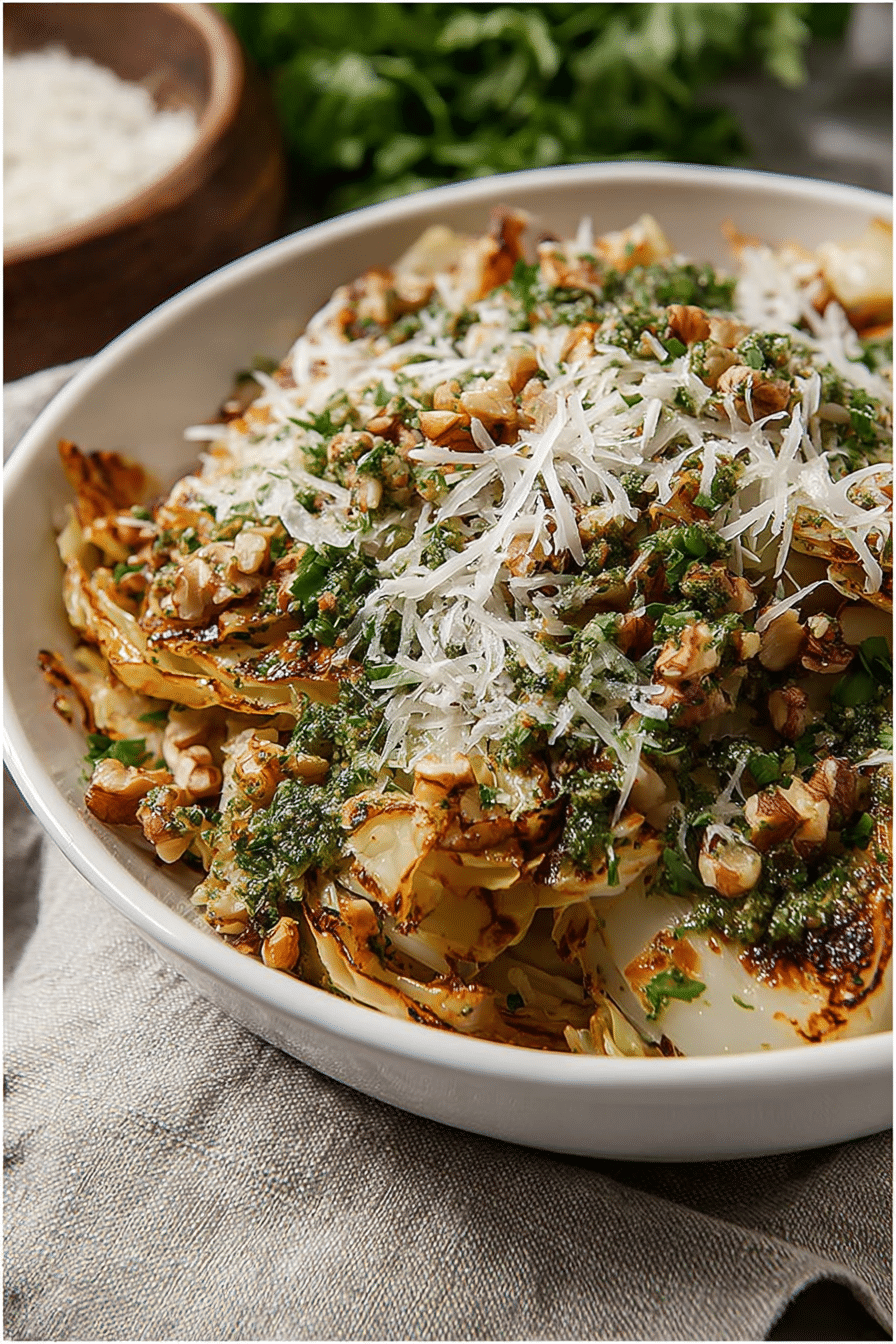
Roasted Cabbage recipe with Parmesan and Walnuts
Ingredients
Method
- Preheat the oven to 425 degrees F.
- Place the chopped cabbage on a large baking sheet. Drizzle it with the extra virgin olive oil and sprinkle on paprika, garlic powder, onion powder, salt and pepper.
- Toss the cabbage with tongs to ensure it is fully coated with oil and seasonings.
- Place it in the oven for 10 minutes. Remove and toss again before returning for another 10 minutes.
- When done, place in a bowl and top with cheese, walnuts, and parsley before serving.