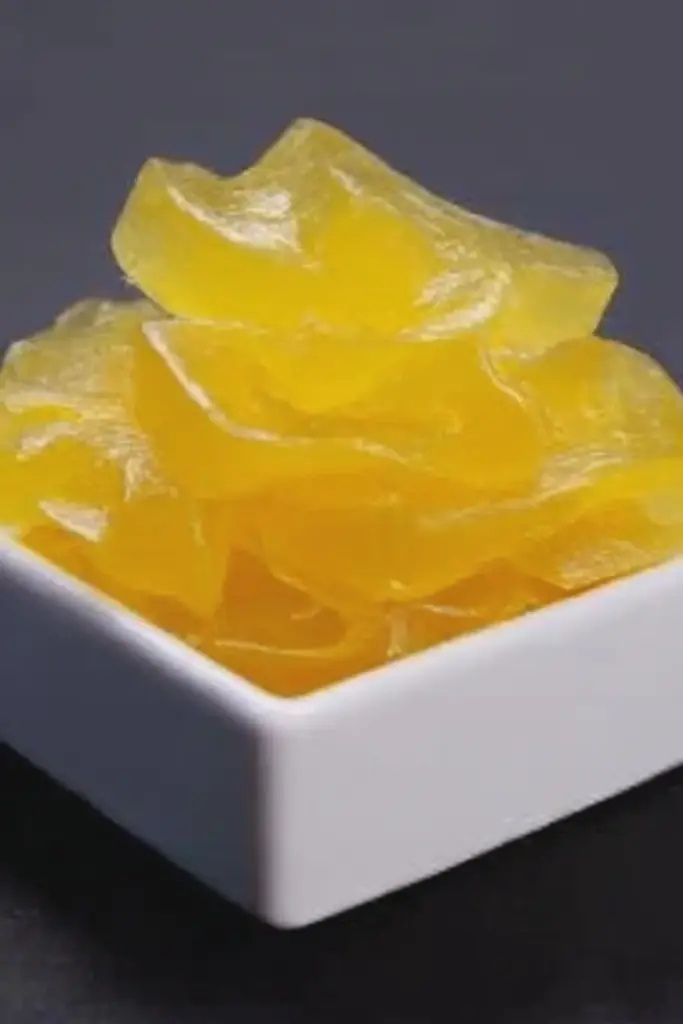
I remember the first time I tried to make gel sheets in my kitchen: bright orange liquid in a shallow tray, full of promise, that set into something either too brittle or too wobbly. It took several tries to find the sweet spot between firm and flexible, and those afternoons taught me to pay attention to tiny details—temperature, bloom time, and the order in which ingredients hit the pot.
After a few experiments I settled on an orange-ginger combination that felt modern but approachable: citrus brightness with a warm, peppery note from fresh ginger. I learned to treat the agar as the framework and the gelatin as the pliant partner; together they create a sheet that bends without snapping and releases flavor cleanly on the tongue.
In my kitchen these sheets became a fast way to add color and texture to desserts and small plates. I’ll share what went wrong for me early on and the practical fixes I use now so you can make consistent, restaurant-quality gel sheets at home without turning your counter into a chemistry lab.
My goal here is to make the technique accessible and inspiring—so you can use these sheets for elegant garnishes, playful desserts, or a surprising element on a savory plate.
Why Orange-Ginger Gel Sheets Are a Must for Creative Home Cooks
Gel sheets are an instant visual upgrade: they arrive glossy, translucent, and candy-bright, and they force you to think about texture as part of the plate. I use them when I want a tidy, flexible strip of flavor that can curl around a bite, decorate a cocktail, or act as a thin layer between components.
Compared with traditional gels, these sheets offer a unique mouthfeel: a delicate initial resistance, then a clean melt and release of flavor. That contrast—appearance versus texture—makes them especially compelling for modern home cooking.
They’re adaptable. Beyond sushi-style wraps, think of them as portable taste accents that can be cut into confetti, ribbons, or geometric shapes to finish a dessert or to contrast a rich, savory bite.
Everything You Need for Orange-Ginger Gel Sheets
I keep this process simple: good-quality juice, fresh ginger, reliable gelling agents, and a smooth, non-stick pouring surface. The aroma of warm orange and ginger as you steep them is half the pleasure—bright citrus with a spicy, woody undertone that signals flavor depth even before the gel sets.
- Ingredient list (conversational):
- Orange juice – The flavor and color backbone. Fresh-squeezed gives the best aroma and brightness; store-bought works in a pinch but tastes flatter.
- Fresh ginger – Adds warmth and a bit of bite. Substitute with ground ginger only if you’re careful about intensity, or use citrus peel for a milder spiciness.
- Agar – The plant-based scaffold that sets quickly and gives structure; use a high-quality powder for consistent results.
- Gelatin – Adds flexibility and a clean melt; sheet or powdered both work, but bloom it properly for the best texture.
- Optional spice (red pepper flakes or similar) – For a subtle heat note that balances sweetness.
- Tools – A small pot, fine mesh strainer, shallow non-stick tray or acetate sheet, and an immersion blender or whisk for uniform mixing.
Nutritionally, these sheets are light—the base is mostly juice, which supplies vitamin C and natural sugars. Fresh ginger contributes anti-inflammatory compounds and aids digestion, while the gelling agents add negligible calories. If you’re watching sugar, choose lower-sugar juice or dilute the juice with brewed tea or water; the technique remains the same.
The Secret to the Perfect Texture: Balancing Agar and Gelatin
Getting the texture right is all about proportion and role. Agar sets firmly and quickly at room temperature, while gelatin creates softness and elasticity. A higher agar ratio yields a more brittle sheet that can crack; more gelatin produces something closer to a soft gummy. The trick is using agar for structure and just enough gelatin to give the sheet that pleasant, supple bend.
Temperature matters: agar must reach a simmer to activate its gelling properties, and gelatin must be added off the heat or dissolved gently so it doesn’t degrade. When combined correctly, the two agents complement each other—agar gives snap, gelatin gives chew, and together they release flavor neatly as they warm in your mouth.
How Temperature and Timing Affect Set and Flexibility
Watch the heat closely: agar needs a brief simmer to fully hydrate and set reliably, while gelatin must bloom in cold liquid and be dissolved at a lower temperature. Overheating gelatin makes it lose its setting power; undercooking agar leaves a sticky or soft set.
- Bring the agar-containing liquid to a near-simmer and hold for a few minutes to ensure full activation.
- Bloom gelatin in cool liquid first; add it after removing the pot from heat and stir until fully dissolved.
- Pour into a thin, even layer to control set time—thinner sheets set faster and remain more flexible.
- Cool at room temperature briefly, then transfer to the refrigerator if your kitchen is warm; sudden deep chill can make sheets firmer, so moderate cooling preserves suppleness.
Troubleshooting (keep these as bulleted checks for speed):
- If sheets are brittle, reduce agar slightly or increase gelatin.
- If sheets are too soft or don’t hold shape, increase agar and ensure you simmer it long enough.
- If the mixture looks grainy or the texture is uneven, it likely wasn’t mixed or strained thoroughly—use an immersion blender and fine strainer.
- If flavor seems muted, steep aromatics longer or concentrate the juice slightly before gelling.
Choosing Flavors: Why Orange and Ginger Work Together
Orange brings bright acidity and floral citrus notes that cut through richness; ginger gives a warming backbone and subtle heat. Together they balance sweet and spicy in a way that reads as both familiar and refined. Use fresh ginger for brightness and a clean bite; candied or cooked ginger will feel sweeter and softer.
Complementary pairings: honey, sesame, soy, white chocolate, and mild cheeses all play well with citrus-ginger. For a light, airy accompaniment try our homemade orange whip, which complements the flavors of ginger beautifully.
How to Make Orange-Ginger Gel Sheets (Step-by-Step)
Below I give the process I use in my kitchen. Follow the order—each step affects the texture and clarity of the final sheet.
- Bloom gelatin in cold liquid according to type: sheet gelatin goes into cold water; powdered gelatin hydrates in a cool liquid and is set aside.
- Steep fresh ginger and any spices in orange juice off the heat for several minutes to extract aromatics; then strain to remove solids for a clear sheet.
- Return strained juice to a pot, sprinkle in the agar while whisking or using an immersion blender to avoid clumps.
- Bring the mixture to a gentle simmer and hold for a few minutes to fully activate the agar.
- Remove from heat and whisk in the bloomed gelatin until fully dissolved and the liquid is glossy.
- Pour onto a perfectly flat, slightly slick surface (acetate on a tray or a silicone mat), tilting to create an even, thin layer.
- Let the sheet set at room temperature briefly until no longer tacky, then chill slightly if needed before peeling or cutting.
For an upscale dessert presentation, consider serving your gel sheets alongside rich seafood or butter-forward bites—try them with a buttery preparation like creamy garlic butter lobster tails for contrast and color.
Pro Tip for orange-ginger gel sheets: Creative Uses Beyond Sushi
Note: Present the Pro Tips, Troubleshooting, and Variations sections as bulleted lists for high scannability.
- Use thin strips as bright garnish on panna cotta, semifreddo, or lemon tart for a citrus snap.
- Cut into confetti or shapes with small cutters and scatter over salads or savory canapés for color and a burst of flavor.
- Wrap a small gel ribbon around chilled cocktail glass rims or drop a delicate square into an Old Fashioned for a scent lift.
- Add a gel ribbon to rich fish bites—try it with honey butter garlic glazed salmon bites for an unexpected citrus note (recipe idea).
- Layer sheets between thin cake rounds or use them as a decorative band around individual plated desserts.
How to Store, Cut, and Reuse Your Gel Sheets
Store gel sheets flat, separated by parchment or acetate, in an airtight container in the refrigerator to keep them from sticking and losing moisture. They hold for several days, but the brighter the juice, the quicker aromatic loss can occur.
- To cut clean shapes, chill the sheet until just firm, use a sharp knife or small cutters, and warm the blade slightly if the gel sticks.
- Leftover sheets can be layered into parfaits, shredded and tossed into fruit salads, or melted gently to glaze pastries.
- When reusing, avoid repeated freeze-thaw cycles; refrigeration only preserves texture best.
Flavor Variations and Pairing Ideas
Try different juices and aromatics to expand your palette—each change will subtly affect set and flavor. For example, tart berry juices need less sweetness, while tropical juices pair beautifully with lime and chili.
- Grapefruit and lemongrass for a sharp, aromatic sheet that pairs well with coconut desserts.
- Mango and a touch of lime for tropical ribbons that brighten coconut or panna cotta.
- Pear and cardamom for a warm, fall-leaning garnish—consider pairing with spiced desserts like pumpkin pecan cobbler for contrast (pairing idea).
- Raspberry and basil for a vivid, garden-fresh finish on light chocolate desserts.
- Tea-infused gels (green tea or Earl Grey) for subtler sweetness and aromatic depth.
Frequently Asked Questions
What is the main ingredient in orange-ginger gel sheets?
The main ingredient is fresh orange juice, which gives the gel sheets their vibrant flavor and color.
How do I ensure my gel sheets have the right texture?
Balancing agar and gelatin is key; use the specified amounts and follow the instructions closely for the best texture.
Can I use other fruits instead of orange?
Yes! You can experiment with other juices, but keep in mind that the gelatin and agar ratio may need adjustments for different flavors.
How long does it take to make orange-ginger gel sheets?
The preparation time is about 15 minutes, and the cooking time is around 30 minutes, so you can have them ready in about 45 minutes.
What are some creative uses for gel sheets besides sushi?
These gel sheets can be used as garnishes, in desserts, as flavor elements in salads, or even cut into interesting shapes for party platters.
Orange-Ginger Gel Sheets
Ingredients
Method
- If using sheet gelatin, place it in a bowl of cold water to bloom. If using powdered gelatin, combine it with 50 grams of water and 100 grams of orange juice. Let the gelatin bloom for 5 to 10 minutes.
- While the gelatin is blooming, place the remaining orange juice, ginger, and red pepper flakes in a pot. Bring to a simmer, remove from the heat and let steep for 10 minutes. Strain the orange juice and return to the pot.
- Sprinkle in the agar and mix well with an immersion blender. Bring to a simmer while stirring occasionally. Let simmer for 3 to 5 minutes then remove from the heat.
- If using powdered gelatin, whisk in the water-orange juice mixture and let dissolve. If using sheet gelatin, squeeze out the water and add the sheets, whisking them into the agar mixture until they dissolve.
- Spoon some of the gel base onto a flat, plastic surface, tipping the surface until the gel evenly coats it. Let the sheet set for a few minutes, and then the gel sheet will be ready to use.