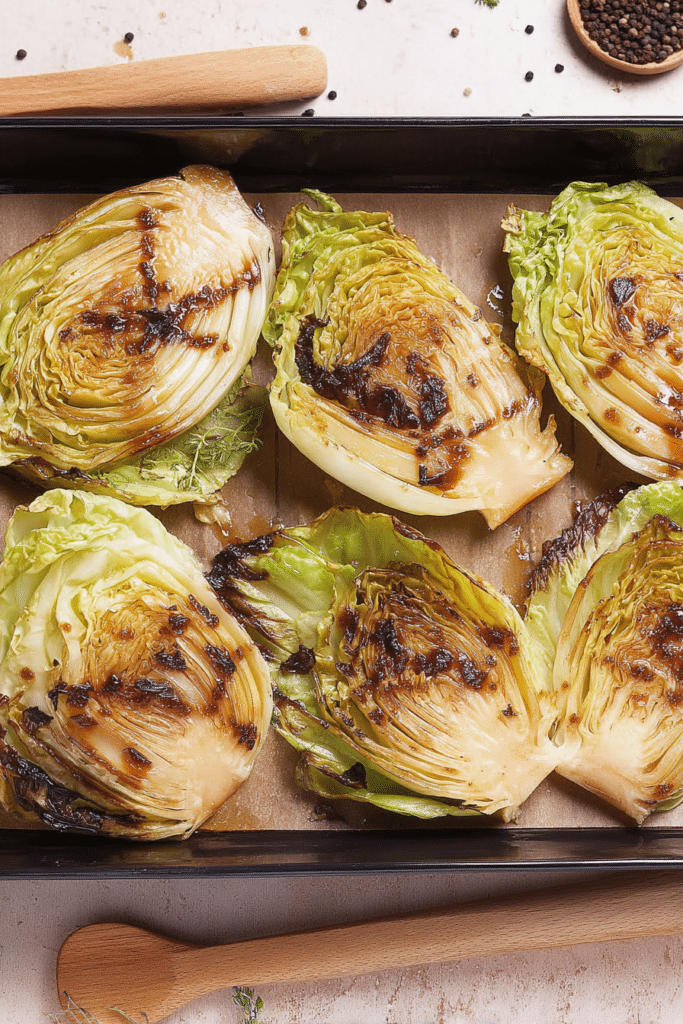
I started roasting cabbage because I needed a side that required almost no babysitting: a quick five-minute assembly and an oven that does the rest. Over the years I’ve tweaked heat, timing, and that mustard-lemon glaze until the wedges come out with deep golden edges and a tender core. This is the version I make when the week is long and I want something reliable, healthy, and a little interesting.
In my kitchen the most convincing thing about this dish is the aroma — the sharp tang of mustard and lemon warming in olive oil, then the sweet, savory scent of caramelizing cabbage filling the house. I’ll be honest: early attempts were either too soggy or underbrowned. Those mistakes taught me the two-stage roast and the importance of spacing the wedges on the pan.
I like that it’s forgiving. You can prepare the oil-mustard mix ahead, roast a batch for the week, or pack wedges cold for lunches. The final garnish of parsley brightens the plate and makes the dish look like you put in more effort than you did. That’s a small, satisfying win on busy nights.
Read on for everything you need, step-by-step technique, quick variations, and simple storage tips so this becomes a go-to side in your rotation.
Why this oven baked cabbage recipe is perfect for busy weeknights
Minimal hands-on time: you spend minutes prepping and the oven handles the rest. That makes it ideal when you need a cooked vegetable without constant attention.
Versatile with main dishes: it pairs with simple proteins, grains, or can be served at room temperature for picnics and work lunches. If you want another cabbage-based dinner option to try soon, you can also try our Cabbage Roll Casserole for another tasty way to enjoy cabbage.
Make-ahead friendly: the oil-mustard mixture can be mixed ahead and stored; roasted wedges hold up well refrigerated and taste fine at room temperature, which is handy for packed meals.
Sensory note: as it roasts you’ll notice a sharp, tangy aroma from the mustard and lemon, then the kitchen fills with a toasty, slightly sweet smell as the edges caramelize — a clear cue that the cabbage is nearing perfect.
Everything You Need for Oven Baked Cabbage Recipe
Below I walk through the ingredients and why each matters. I also list easy swaps so you can adapt this to what you have on hand and to different diets.
- Green cabbage – The firm head gives even wedges that brown well. Swap for Savoy if you want a slightly more delicate leaf texture.
- Olive oil – Carries flavor and promotes browning; using a good-quality extra virgin oil adds a pleasant fruity note. Use a neutral oil if you prefer a cleaner flavor.
- Lemon juice – Brightens the cabbage and helps tenderize the outer layers. Lime or a splash of vinegar works if you don’t have lemon.
- Wholegrain mustard – Gives texture and tang to the glaze; it’s the flavor anchor of the dish. See the mustard section below for alternatives.
- Sea salt & freshly ground black pepper – Essential for seasoning; kosher salt is a fine swap depending on your pantry.
- Fresh parsley – Adds color and a fresh herbal finish; chives or dill are fine substitutes if you want a different note.
Sensory focus: finely chopped parsley sprinkled at the end adds a bright green contrast and a fresh herbal fragrance that cuts through the roasted richness.
How to Make Oven Baked Cabbage Recipe (Step-by-Step)
These are the tried-and-true steps I use in my kitchen. Follow them for even wedges, an evenly applied glaze, and consistent roasting results. Troubleshooting tips follow to address common problems I ran into during testing.
- Preheat your oven to a high temperature so the cabbage browns quickly when it hits the pan. Let the oven fully reach temperature before you slide the pan in.
- Remove any outer leaves and cut the head into equal wedges, slicing through the core so each wedge stays intact while roasting. Even-size wedges ensure uniform cooking.
- Pat the wedges dry with a towel if they’re damp — moisture is the enemy of crisp edges.
- Whisk together olive oil, lemon juice, and wholegrain mustard in a small bowl so the mixture emulsifies and spreads easily.
- Brush one side of each wedge with the mixture using a pastry brush, then season with salt and pepper. Brush the other side and season it as well so both sides carry flavor.
- Arrange wedges in a single layer on a parchment-lined roasting pan with ample space between pieces; crowding causes steaming instead of roasting.
- Roast for the first stage until the side touching the pan is deeply browned (this is the step that gives you the caramelized base). Then turn each wedge and roast again until the edges are caramel and the center is tender with a touch of chew.
- Finish with a sprinkle of chopped parsley and serve immediately or cool for later use.
Sensory focus: watch for the oil mixture to glisten on the cabbage and listen for a confident sizzle as the wedges roast — that sound tells you browning is happening.
Troubleshooting (from my kitchen notes)
- If the wedges are browning on the top but still raw at the core, cut your wedges more evenly or increase the roasting time in the second stage. I learned that thicker wedges need a few extra minutes after turning.
- If the cabbage is soggy instead of crisp, check for crowding on the pan and make sure wedges are dry before oiling. In a humid kitchen I pat them extra dry.
- If the edges char too quickly, your oven runs hot — lower the temperature by 25°F and extend roast time. I test with my oven thermometer to be sure of actual temperature.
- Uneven browning? Rotate the pan halfway through the first roast because many ovens have hot spots.
The Secret to Perfect Caramelized Edges
Caramelization is where the flavor lives. The Maillard reaction and sugar breakdown on the surface create deep, savory notes and a touch of sweetness you’ll notice as the cabbage browns.
- Use high heat for quick surface browning without overcooking the core — that contrast is what makes each bite interesting.
- Turn the wedges halfway through so both sides achieve that deep golden color; don’t skip this or you’ll get one-sided caramelization.
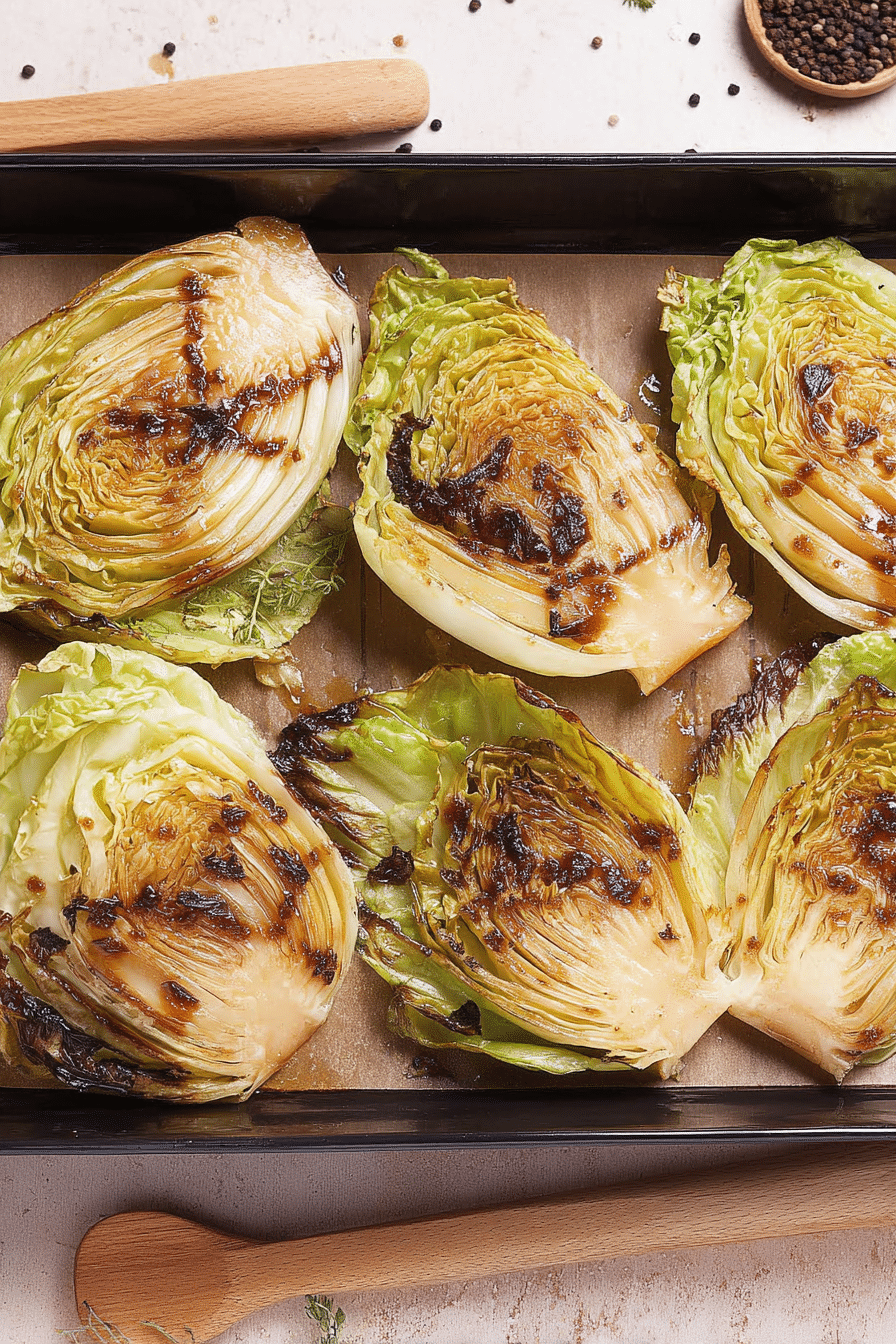
- Recognize the cue: when the edges are a deep golden-brown (not black), and the aroma is toasty and slightly sweet, the cabbage is at peak caramelization.
- Oven variation: on fan/convection ovens lower the temperature slightly and check earlier, since circulating air accelerates browning.
Sensory focus: that deep golden color and the savory, toasted aroma from the edges signal optimal flavor — aim for rich brown, not burnt black.
How to Get Crispy, Not Soggy Cabbage
Achieving crispiness is about managing moisture and heat.
- Dry the wedges thoroughly before oiling — any surface water turns to steam and prevents browning.
- Space the wedges on the pan so air circulates between pieces; overcrowding traps steam and softens the cabbage.
- Use a high roast temperature to promote quick surface browning; if your oven runs hot, reduce by a small increment and watch closely.
- Choose a rimmed baking sheet over a shallow pan so juices can collect and the cabbage sits on a hot surface for better browning.
Sensory focus: you want a satisfying snap at the edge and a tender bite in the middle — that contrast is the hallmark of a well-roasted wedge.
The One Ingredient That Changes Everything: Wholegrain Mustard
Wholegrain mustard does two jobs: it gives a bright, slightly acidic tang that cuts through the cabbage’s sweetness and it adds tiny bursts of texture from the mustard seeds. I prefer it because it creates flavor pockets in the glaze.
- Flavor swaps: if you like heat, try a stone-ground Dijon; for smoky depth, a half-and-half mix with smoked paprika works well.
- Pairings: mustard pairs nicely with cracked black pepper, a pinch of cumin for warmth, or a light drizzle of honey for contrast.
- Textural note: the grainy seeds provide a pleasant pop against the roasted cabbage; smooth mustards will give the same acidity but less texture.
Sensory focus: smell the bright tang of mustard as you whisk it into the oil — it announces itself immediately and holds up through roasting.
Pro Tip for oven baked cabbage recipe: Use high heat and two-stage roasting
- Start at high heat to develop the caramelized base, then turn and finish until the wedges are tender but still have chew.
- Make the oil-mustard mix ahead and refrigerate — bring it back to room temperature and whisk before using.
- Use an oven thermometer to account for ovens that run hot or cool; this small step fixes many browning issues.
- After roasting, let the wedges rest a few minutes; resting allows juices to redistribute and intensify the flavor.
Sensory focus: the satisfying crackle when you cut into a bronzed wedge is what these tips aim for — crisp edges with a glossy, tender interior.
Quick Variations: Spices, Nuts, and a Honey Drizzle
Small additions change the personality of the dish — try a single tweak or combine a couple for something more playful. For an added indulgence, serve this with Garlic Parmesan Chicken to complement your meal.
- Smoky: sprinkle smoked paprika or a pinch of chipotle powder into the oil for warmth and color.
- Mediterranean: a dusting of za’atar and a squeeze of lemon at the end adds herbal complexity.
- Crunch: toss roasted walnuts or hazelnuts over the finished wedges for toasty crunch.
- Sweet contrast: a thin drizzle of honey or a maple reduction just before serving balances the savory caramelization.
- Garlic-forward: mix in a little minced garlic or garlic powder to the oil for savory depth.
Sensory focus: colorful spices against green cabbage and a glossy sheen from a honey drizzle make the plate pop and taste layered.
How to Store, Reheat & Make-Ahead This Oven Baked Cabbage Recipe
Leftovers are easy and still delicious if handled correctly. Store, reheat, and plan ahead using the tips below. For a complete dinner, consider pairing your cabbage with Creamy Garlic Butter Shrimp.
- Storage: cool wedges to room temperature, then place in an airtight container and refrigerate. They’ll keep well for several days.
- To retain texture: reheat in a hot oven or toaster oven on a rimmed sheet to revive crisp edges. A quick flash under a hot broiler also works — watch closely so they don’t burn.
- Microwave option: microwave for convenience, then finish briefly in a hot skillet to bring back some surface crisp.
- Make-ahead: mix the oil-mustard dressing in advance and store chilled; brush on just before roasting so it stays fresh and bright.
- Flavor melding: refrigerated wedges develop deeper flavor overnight, so making them a day ahead can be an advantage for packed lunches.
Sensory focus: properly stored cabbage keeps a fresh-sweet aroma; reheating with dry heat restores the toasty notes and crisp edges.
Frequently Asked Questions
How long does it take to bake cabbage in the oven?
Around 40 minutes at a high temperature, turning the wedges halfway through for even cooking.
Can I prepare the olive oil mixture ahead of time?
Yes. You can make the olive oil, lemon juice, and mustard mixture ahead to save time when you’re ready to cook.
What kind of cabbage should I use for this recipe?
A large head of green cabbage works best because it yields evenly sized wedges that roast nicely. Savoy is an alternative if you want a more tender leaf.
Can I add other ingredients to the oven baked cabbage?
Absolutely. Experiment with spices, nuts, or a drizzle of honey for added flavor and presentation.
How do I store leftover oven baked cabbage?
Store leftovers in an airtight container in the refrigerator. They also taste great at room temperature, making them convenient for lunches or picnics.
Oven Baked Cabbage Recipe with Mustard Sauce
Ingredients
Method
- Preheat the oven to 450°F.
- Line a roasting pan or baking sheet with parchment paper.
- Cut the cabbage into 8 same-size wedges, cutting through the core and stem end. Arrange in a single layer on the pan and set aside.
- In a small mixing bowl, whisk together the olive oil, lemon juice, and mustard.
- Using a pastry brush, brush the tops of each cabbage wedge with the mixture, then season generously with sea salt and freshly ground black pepper.
- Turn the cabbage wedges carefully, brushing the other side with the mixture and adding more salt and pepper.
- Roast the cabbage wedges for around 20 minutes until the side touching the pan is nicely browned.
- Remove from the oven, turn each wedge carefully, and then place back in the oven for an additional 20 minutes, until caramel in color and cooked through with a bit of chewiness remaining.
- Remove from the oven, sprinkle with parsley, and serve immediately.