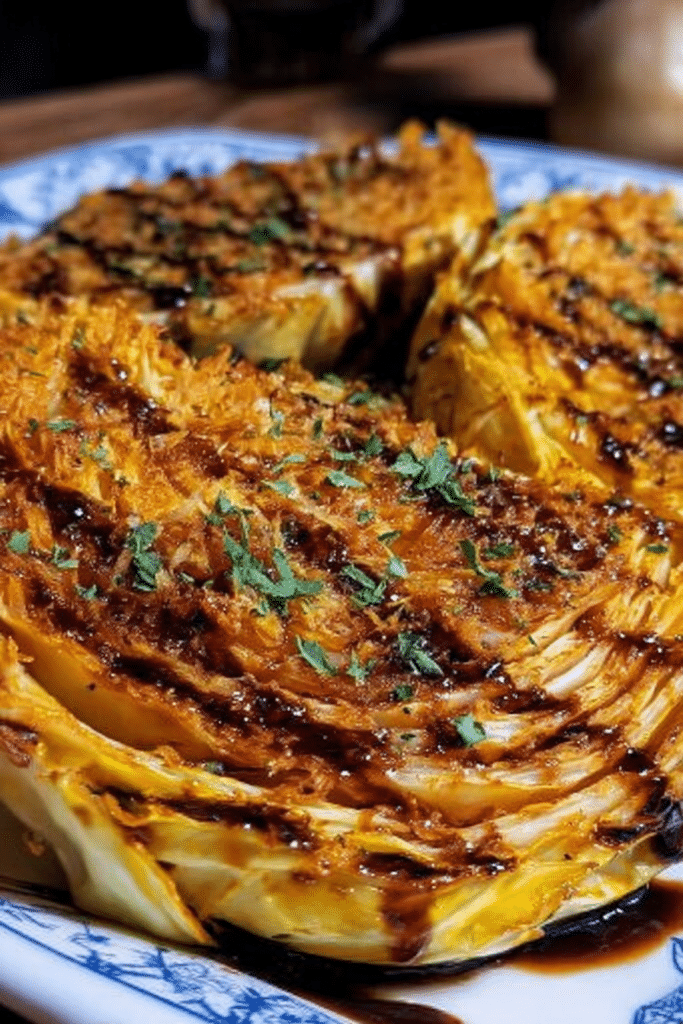
I stumbled onto cabbage steaks in my kitchen one restless weeknight and I’ve been making them regularly ever since. I like that they feel indulgent—crispy parmesan crust, garlicky edge—while still being a genuinely light, veggie-forward side. In my kitchen they bridge the gap between comfort and clean eating.
I love how roasting concentrates cabbage’s sweetness; the smell of garlic and browned cheese fills the air and makes the whole house feel cozy. Because cabbage is so forgiving, you can be flexible with seasoning and method and still end up with something impressive on the plate.
As someone focused on healthy, simple cooking, these steaks are my go-to when I want a low-carb side that holds up to bold mains or can even star as a meatless main. I’ll share the small technique changes I learned that keep the cheese crisp and the cabbage tender, plus easy make-ahead tips that keep leftovers from going soggy.
Why Parmesan Garlic Cabbage Steaks are a Healthier, Flavor-Packed Side
Cabbage is an underappreciated vegetable for anyone seeking nutritious, low-carb options. It’s rich in vitamin C and vitamin K, which support immune health and bone strength, and it provides fiber that helps you feel satisfied without loading up on calories. The natural sugars in cabbage caramelize when heated, delivering a sweet balance to the savory parmesan and garlic.
Parmesan contributes savory umami and a boost of protein without a lot of added volume—so you get flavor and a protein nudge while keeping the dish light. Olive oil supplies heart-healthy fats that help your body absorb the fat-soluble vitamins in the cabbage, and a little smoked paprika or black pepper adds warmth without extra carbs.
Picture a vibrant, slightly browned cabbage wedge: the edges are golden and crunchy, the core tender and slightly sweet, and the kitchen smells like toasted garlic and cheese. That combination is what makes this dish satisfying for both weeknight dinners and simple meal-prep.
Everything You Need for Parmesan Garlic Cabbage Steaks
Below I list the core ingredients and the tools that make the process fast and reliable. I recommend using the freshest produce you can find—crisper cabbage will hold its shape better under heat. If you like serving a potato side with this, these cabbage steaks pair nicely with a heavier fry or roast.
For a delicious side dish, consider pairing your cabbage steaks with crispy parmesan roasted potatoes.
- Cabbage (green or red) – The base: sturdy, slightly sweet when roasted. Choose a dense head so steaks hold together.
- Parmesan cheese – Gives the crispy, savory crust. For a lighter option use less or swap to a finely grated variety for even browning.
- Olive oil – Coats and helps brown the cabbage; also carries flavors and healthy monounsaturated fat.
- Garlic (minced) – Adds bright, aromatic savory notes; can be substituted with garlic powder if needed.
- Smoked paprika or black pepper – Adds warmth and depth; smoked paprika gives a subtle smoky character perfect for grilling.
- Balsamic vinegar or glaze – A finishing splash for brightness and a touch of sweetness.
- Fresh parsley or Italian herbs – For a fresh, herbal finish and color.
- Essential tools – A sharp chef’s knife for clean slices, a rimmed baking sheet (or grill basket), parchment or a nonstick surface, and an oven, grill, or air fryer depending on your method.
Nutrition Breakdown: Protein, Fiber, and Healthy Fats per Serving
Here’s a practical view of how this dish fits into a balanced, vegetarian plate. Exact numbers depend on portion sizes and how much cheese or oil you use, so I provide approximate ranges and the main contributors so you can adjust as you like.
- Calories (approx.) – Expect a moderate calorie count per steak, largely driven by the cheese and oil. A single steak typically falls in a range that keeps this suitable as a low-carb side.
- Protein – Parmesan supplies a good amount of protein relative to most vegetables, helping this dish feel satisfying on a vegetarian plate.
- Fiber – Cabbage contributes valuable fiber that supports digestion and satiety; it’s a smart way to bulk up meals without carbs from grains.
- Healthy fats – Olive oil provides monounsaturated fats which aid in absorbing fat-soluble vitamins (A, D, E, K) present in the cabbage and help keep you full longer.
Think of this dish as a nutrient-dense, low-carb option that pairs well with lean proteins or can stand alone with a grain or bean salad. If you need precise nutritional tracking, I recommend inputting your final portion sizes and exact ingredient amounts into your preferred nutrition calculator.
The Secret to Crispy Parmesan and Tender Cabbage
The trick is simple: high heat and a generous bed of cheese. High heat promotes caramelization on the cabbage edges while melting and toasting the parmesan into a crunchy crust. Keeping the steaks an even thickness ensures they cook uniformly—too thin and they’ll over-crisp; too thick and the center won’t soften.
For extra flavor, I sometimes brush one side with the oil-cheese mixture, press it onto a small pile of grated parmesan on the pan, and then flip once toward the end so both sides get some crisping. The contrast between the crunchy cheese and the tender core is what makes these feel like a treat.
Learn more about achieving that perfect garlic flavor in other dishes like our garlic parmesan chicken meatloaves, which use similar techniques for toasty, garlicky crusts.
Grill, Roast, or Air Fry — Best Cooking Methods Compared
Each cooking method brings a slightly different texture and flavor. Choose based on what you want from the finished dish and what equipment you have on hand.
- Roasting (oven) – Reliable and low-attention. High oven heat helps the cheese brown and the cabbage caramelize. It’s the easiest method for larger batches.
- Grilling – Adds smoky char and a fire-roasted flavor. Brush steaks well and use an oiled grate or a grill basket to prevent sticking; this method crisps the edges especially nicely.
- Air frying – Fast and efficient for smaller batches. The circulating hot air crisps the cheese while using less oil—great when you want a lighter finish with similar crunch.
If you want a complementary dish full of similar flavors, try pairing cabbage steaks with a garlic-and-cheese pasta side like our garlic parmesan chicken pasta when serving a larger meal.
How to Make Parmesan Garlic Cabbage Steaks (Step-by-Step)
- Preheat your chosen cooking surface so it’s hot enough to sear quickly; this creates that desirable crust.
- Wash the cabbage and slice it into even steaks, keeping the core intact so each steak holds together when you flip it.
- Mix oil, minced garlic, pepper, and smoked paprika; brush both sides of each steak so the flavors penetrate the leaves.
- Make small heaps of grated parmesan on your baking surface or grill tray and set each cabbage steak directly on top—this helps the cheese form a crisp base.
- Cook until the cheese is deeply golden and crisp and the cabbage interior is tender when pierced with a knife; timing varies by method, so watch for visual cues rather than just the clock.
- Finish with a quick drizzle of balsamic and a scatter of fresh parsley for brightness before serving.
Troubleshooting (what I learned the hard way)
- If the cheese melts but never crisps, your surface isn’t hot enough—raise the temperature and give it a few more minutes.
- If steaks fall apart when you flip them, your slices were too thin or the core was removed—keep the core and slice about an inch thick for stability.
- If the center is undercooked while edges brown, reduce heat slightly and extend the cook time so the heat penetrates without burning the crust.
- I’ve found that flipping only once late in the cook preserves the cheese crust better than frequent flipping—less handling equals better texture.
Pro Tip for Parmesan Garlic Cabbage Steaks: Make-Ahead & Reheat Without Soggy Cheese
- Cool completely on a wire rack before storing—this prevents trapped steam from making the cheese soggy.
- Store in a shallow, airtight container with paper towels between layers to absorb excess moisture.
- Reheat in a hot oven or an air fryer rather than the microwave; the dry heat restores crispness quickly.
- If you plan to meal-prep, store the balsamic and fresh herbs separately and add them just before serving to keep flavors bright.
- I often make a double batch and re-crisp leftovers under the broiler or in the air fryer for a few minutes—that brings back almost-new texture.
How to Store, Reheat, and Easy Variations (Including a Vegan Option)
- Refrigerating – Keep steaks in a single layer or separated by parchment in an airtight container for up to 3 days.
- Freezing – Freezing is possible but will soften the texture; flash-freeze on a sheet first, then transfer to a bag for up to 1 month. Reheat from frozen in an air fryer for best results.
- Reheating – Use a hot oven, broiler, or air fryer to restore crispness. Avoid the microwave unless you’re in a rush—the crust will go limp.
Easy variations (bulleted for quick scanning)
- Swap smoked paprika for chili flakes or a touch of cayenne if you want heat.
- Add lemon zest or a squeeze of lemon after cooking for bright acidity.
- Top with toasted nuts or seeds for extra crunch and a protein boost.
- Vegan option – Omit parmesan and use a blend of nutritional yeast, toasted breadcrumbs, and a little olive oil to create a crisp, savory coating that mimics the original texture.
- Try red cabbage for color and a slightly earthier flavor; presentation is beautiful when mixed with green cabbage.
For more variations that use a similar parmesan-crisping technique, you might enjoy trying crispy parmesan zucchini fries as an alternative or companion vegetable to serve alongside these steaks.
Serve these cabbage steaks hot and crisp with a simple protein, a grain, or as a standout vegetarian main. They’re flexible enough to pair with a simple roast chicken, a bean salad, or a creamy grain like polenta.
Frequently Asked Questions
What type of cabbage is best for cabbage steaks?
Green cabbage is the most common choice for making cabbage steaks due to its flavor and texture, but you can also use red cabbage for a colorful twist.
Can I use a different oil instead of olive oil?
Yes, you can substitute olive oil with other oils like avocado oil, canola oil, or sunflower oil for a different taste or dietary preference.
How do I achieve crispy parmesan on my cabbage steaks?
Make sure to roast the cabbage steaks at a high temperature and pile enough parmesan cheese on each steak to create a crispy crust.
Can I grill cabbage steaks instead of roasting them?
Absolutely! Cabbage steaks can be grilled for a smoky flavor. Just make sure to brush them with oil and seasoning before placing them on the grill.
What are some variations I can try with this recipe?
You can experiment with different spices, add a splash of lemon juice for brightness, or even make a vegan version by omitting the parmesan cheese and using nutritional yeast instead.
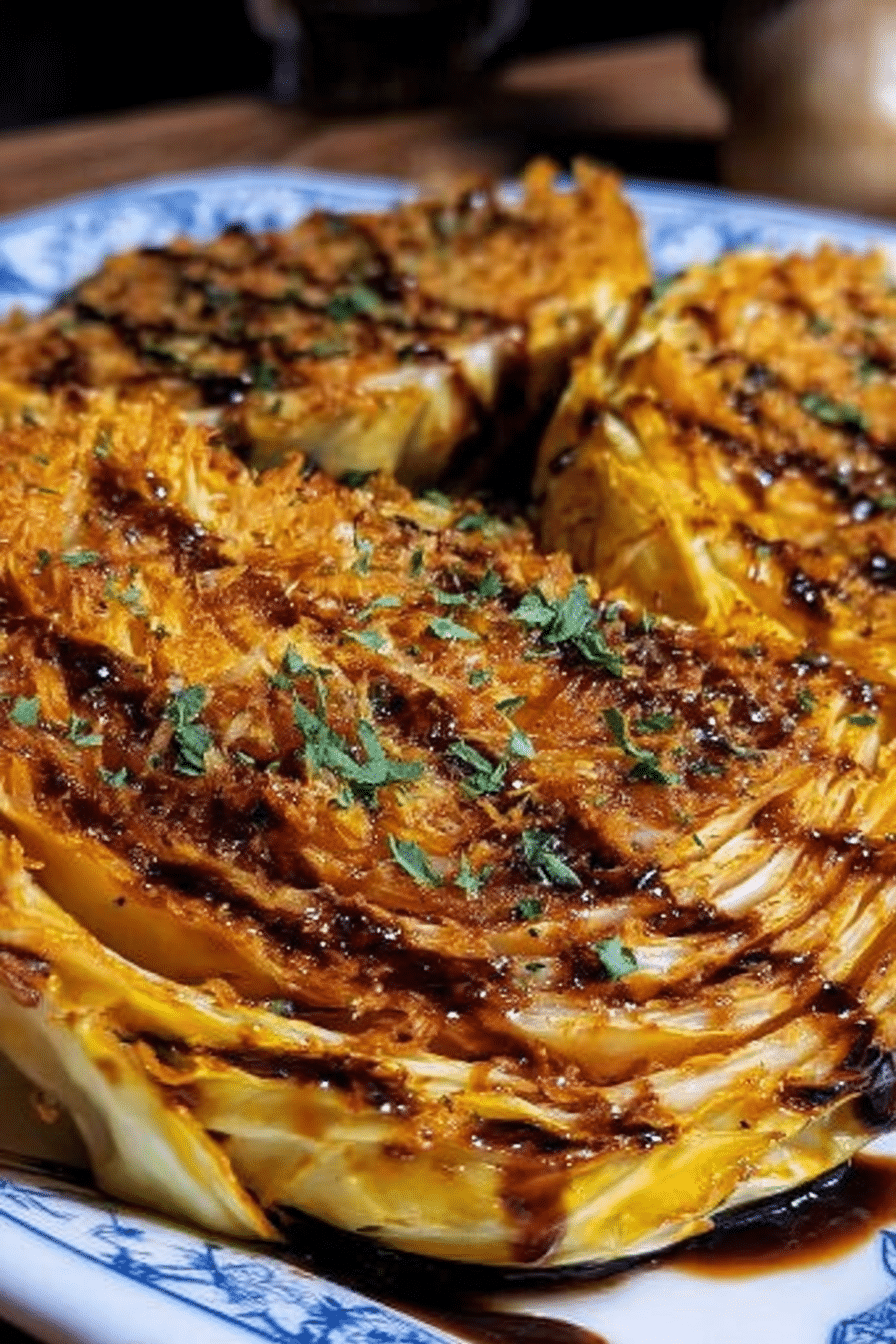
Parmesan Garlic Cabbage Steaks
Ingredients
Method
- Preheat the oven to 425 degrees and line a baking sheet with parchment paper. Wash and slice the cabbage in half vertically. Then slice "steaks" from one of the halves, about 1 inch thick, and through the stem, so they hold together.
- Combine olive oil, 1/3 cup of grated Parmesan, garlic, salt, pepper, and smoked paprika in a bowl. Brush both sides of the cabbage steaks.
- Using the remaining Parmesan add piles onto the baking sheet, one for each steak (about 1/3 cup for each). Place each cabbage steak onto its cheese bed. Roast for 20-25 minutes, until the cheese is browned and very crispy. Before serving, drizzle with balsamic vinegar and add fresh parsley. Eat immediately.