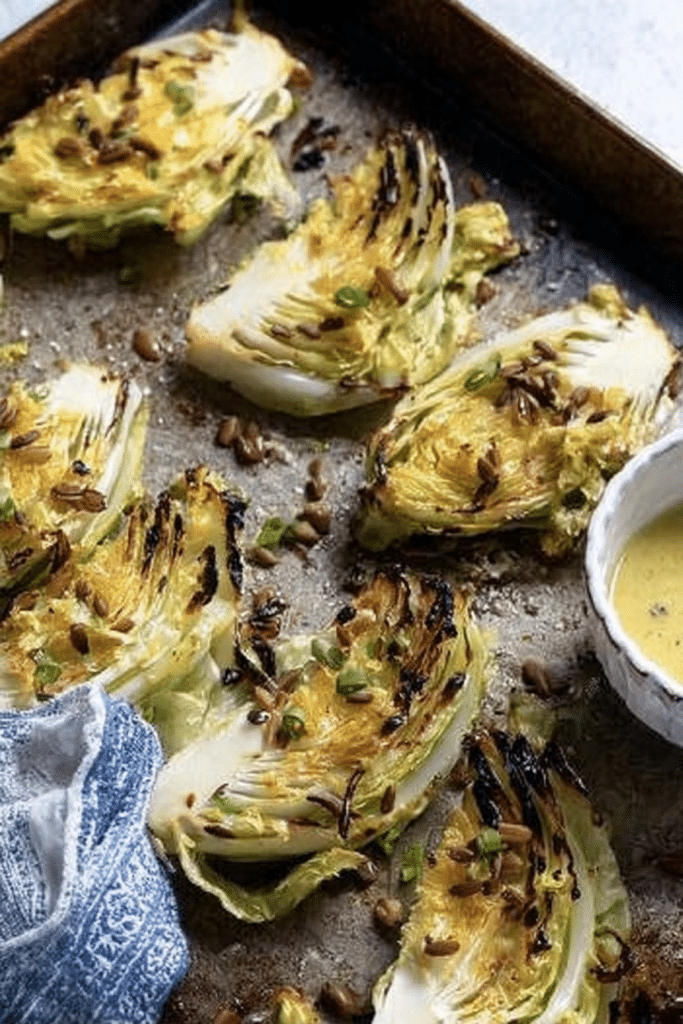
I first started roasting cabbage as a way to turn a cheap, humble head into something worth bringing to the table when guests arrived. In my kitchen I learned that a quick roast at high heat gives the cabbage edges a toasty, almost nutty note that makes the whole dish feel intentional rather than an afterthought. I like how the leaves keep enough structure to hold a warm sauce, so each wedge becomes a vessel for flavor.
Over time I began finishing the wedges with a warm miso, ginger, and scallion butter—an idea born from pantry staples and late-night experimenting. The miso gives a gentle umami backbone, the ginger adds a bright snap, and the scallions bring a sweet oniony lift. I often make this on weeknights but I’ll also serve it at dinner parties alongside roasted fish or grilled meats; it reads elegant without fuss.
In this piece I’ll walk you through why this simple vegetable deserves space on your menu, what to keep on hand, and the little techniques that ensure glossy sauce, crisp edges, and perfect texture. I’ve learned the hard way that small details—thickness of the wedge, oven temperature, when to finish the butter—make the difference between an average side and something people ask about.
Seasonal, local produce matters here: choose a firm cabbage with tight leaves for the best texture. If you’re curious about different cabbage types, the FAQ below answers whether other varieties work well for roasting.
Why Roasted Cabbage Wedges with Miso Ginger Scallion Butter Belongs on Your Menu
This dish balances umami from miso, sweetness from cooked scallions, and the earthiness of roasted cabbage into a composed side that pairs with both casual and formal meals. The contrast—tender inner leaves and caramelized, slightly crisp edges—creates interest on the plate. It’s versatile: serve it next to grilled fish, as an accompaniment to a roast, or as a warm topping for a grain bowl. Using seasonal and local cabbage will heighten freshness and texture, which you’ll notice immediately when you slice into a wedge and inhale the ginger-scented butter.
Everything You Need for Roasted Cabbage Wedges with Miso Ginger Scallion Butter
Choose the best-quality fresh ingredients you can find; they make a measurable difference here. If you don’t have every tool, I include easy substitutions so you can make the dish without specialty equipment. For even roasting, use parchment or a silicone baking mat to prevent sticking and encourage even browning.
- Green cabbage – The sturdy leaves hold up when roasted; Napa or Savoy can be used for a different texture and milder flavor.
- Extra-virgin olive oil – Coats the wedges and promotes browning; use a neutral oil if you prefer a cleaner taste.
- Kosher salt – Brings out the cabbage’s natural sweetness; adjust to taste.
- Scallions – They provide sweet, bright aromatics when sautéed; reserve some raw for garnish if you like a fresher bite.
- Butter or plant-based alternative – Gives the sauce a glossy finish; swap for vegan butter for a dairy-free version.
- Fresh ginger – Finely grated for aromatic warmth and a slight peppery bite.
- Brown sugar – A touch helps balance miso’s saltiness and encourages caramelization in the pan.
- Rice vinegar – Adds acidity to brighten the sauce; lemon can work in a pinch.
- Miso paste – The umami anchor; choose white or mellow white for a subtler flavor, or try a darker miso for more intensity.
- Nuts (pistachios or walnuts) – Provide crunch and visual contrast; toasted for more flavor.
- Baking sheet and parchment or silicone mat – For even heat and easy cleanup; a cast-iron pan can be used for direct roasting if you prefer.
The Secret to Perfectly Caramelized Cabbage Edges
Caramelization is what turns cabbage from bland to noteworthy. The Maillard reaction—browning between amino acids and sugars—creates deep, toasty flavors that taste richer and more complex. Slicing and thickness matter; thicker wedges hold together better and develop a contrasting tender interior and crisp rim, while thinner slices brown faster but can become limp.
Watch for rich brown edges and a toasty aroma as your cue to remove the wedges from the oven. If browning is uneven, rotate the baking sheet halfway through and consider moving the rack up to capture more radiant heat on the edges.
Why Miso and Ginger Lift Simple Vegetables
Miso is fermented soy with concentrated glutamates that add savory depth—this is why a small amount transforms vegetables from sweet to savory without overwhelming them. Ginger contributes aromatic heat and aids digestion; it brightens the sauce and pairs especially well with brassicas like cabbage. Together they balance the dish: miso gives weight, ginger lends lift, and the scallions add sweetness and green notes.
Nutritionally, cabbage brings fiber and vitamins, miso supplies beneficial fermented compounds and some minerals, and ginger has anti-inflammatory properties. These ingredients together make a flavorful side that also has healthful benefits.
Why Temperature Matters When Roasting Cabbage
High heat is your ally for browning. A thoroughly preheated oven ensures the cabbage hits hot air immediately and begins to brown before it steams out. If the oven is too cool the wedges will release moisture and steam rather than caramelize, yielding a soggy texture. Good air circulation is essential—avoid overcrowding the pan so each wedge browns evenly and you get that satisfying sizzling sound as the edges crisp.
How to Make Roasted Cabbage Wedges with Miso Ginger Scallion Butter (Step-by-Step)
- Preheat the oven until it’s fully hot so the cabbage begins browning on contact.
- Cut the cabbage into sturdy wedges that retain some core to hold the leaves together; trim excess core if needed.
- Place wedges on a lined baking sheet, rub with oil, and sprinkle with salt so the surface is evenly seasoned.
- Roast the wedges until the centers are tender and the edges are deeply browned and slightly crisp; rotate the pan if one side browns faster.
- While the cabbage roasts, sauté the sliced scallions briefly in oil until they soften but remain bright.
- Add butter, grated ginger, a touch of sugar, vinegar, and a splash of water; whisk until the butter melts and the sauce is cohesive.
- Remove the pan from heat, whisk in miso until the sauce is smooth and glossy—finishing off the heat keeps the scallions lively.
- When the cabbage is done, spoon the warm miso-ginger scallion butter over each wedge and sprinkle with chopped nuts for crunch. Serve immediately.
Pro Tip for roasted cabbage wedges with miso ginger scallion butter: Finish the miso butter off the heat and pour warm to preserve scallion brightness
- I always take the pan off the heat before adding miso so the sauce stays glossy and the scallion flavor stays fresh—miso can lose its nuance if overheated.
- Pour the sauce warm, not piping hot, so it coats the wedges without wilting the bright scallion slices too much.
- Toast the nuts briefly in a dry pan to boost aroma before scattering them over the finished dish; I do this last for texture contrast.
Vegetarian, Vegan, and Protein-Forward Variations to Try
- Vegan butter swap – Use a plant-based butter to keep the sauce dairy-free while maintaining the glossy finish.
- Tofu or tempeh – Pan-fry marinated tofu or tempeh and serve alongside the wedges for a protein-forward plate.
- Legume boost – Add a spoonful of roasted chickpeas or a bed of lentils under the wedges to turn this into a complete meal.
- Grains – Serve over warm farro or brown rice and drizzle the miso-ginger butter to make a hearty grain bowl.
How to Store, Reheat, and Make-Ahead Roasted Cabbage Wedges
Proper storage preserves texture and flavor so leftovers remain appealing.
- Refrigeration: Store cooled wedges and the miso butter separately in airtight containers; this prevents the cabbage from becoming soggy.
- Reheating: Re-crisp wedges in a hot oven or toaster oven rather than the microwave to restore the caramelized edges and keep the interior tender.
- Make-ahead: You can prepare the miso ginger scallion butter in advance and refrigerate it; warm it gently before serving and whisk to recombine.
- Troubleshooting – If the cabbage turns out limp, roast at a higher temperature and avoid crowding the pan next time; if the sauce tastes too salty, add a little acidity or a splash of water to balance it.
Serving suggestions: pair these wedges with simply roasted fish, a roasted chicken, or tuck them into bowls with grains and a protein of your choice. The dish works equally well as a composed side at a dinner party or a quick weeknight complement.
Frequently Asked Questions
Can I use a different type of cabbage for this recipe?
Absolutely! While green cabbage works best for roasting, you can experiment with other varieties like Napa or Savoy cabbage for different flavors and textures.
What can I substitute for miso paste?
If you don’t have miso paste, you can use tahini or a soy sauce-based mixture, although the flavor will be different. Miso provides a unique umami taste that is hard to replicate.
How can I make this dish gluten-free?
To make this recipe gluten-free, use gluten-free miso paste and ensure that your soy sauce (if used as a substitute) is gluten-free as well.
Can I prepare the scallion butter in advance?
Yes, you can prepare the miso ginger scallion butter ahead of time and store it in the refrigerator for a few days. Just warm it up slightly before drizzling over the roasted cabbage.
What should I serve with roasted cabbage wedges?
Roasted cabbage wedges pair wonderfully as a side with grilled meats, fish, or even as a hearty topping on grain bowls. Get creative and enjoy!
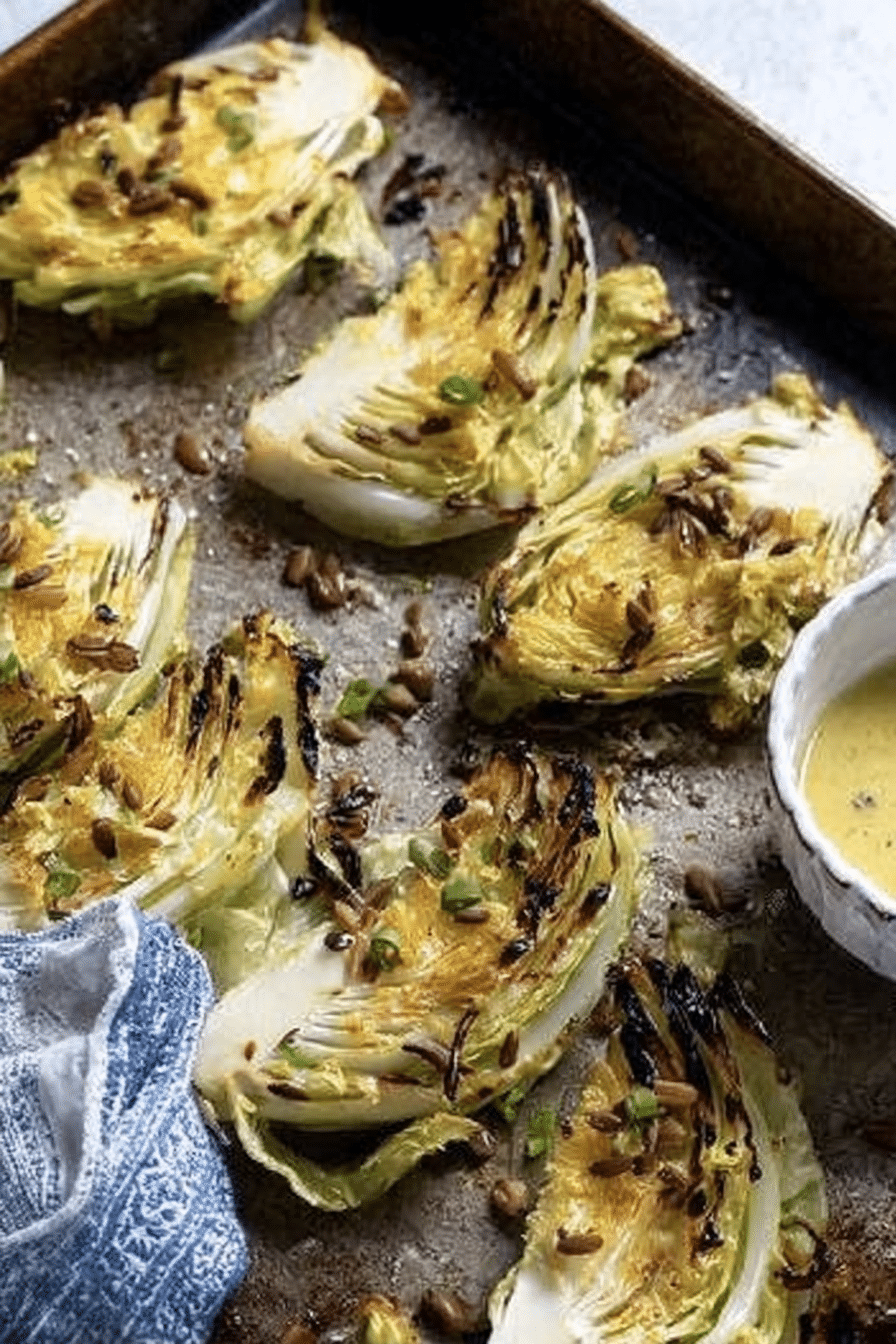
Roasted Cabbage Wedges with Miso Ginger Scallion Butter
Ingredients
Method
- Pre-heat oven to 450 degrees F.
- Cut the cabbage in half through the core and then into 4 wedges. Place on a baking sheet, drizzle with olive oil, and sprinkle with salt.
- Roast until the cabbage is tender and crispy, for about 20-25 minutes.
- In a skillet, heat olive oil and sauté scallions, then add butter, ginger, brown sugar, vinegar, and water. Whisk until creamy.
- Drizzle the miso butter over the cabbage and scatter with nuts before serving.