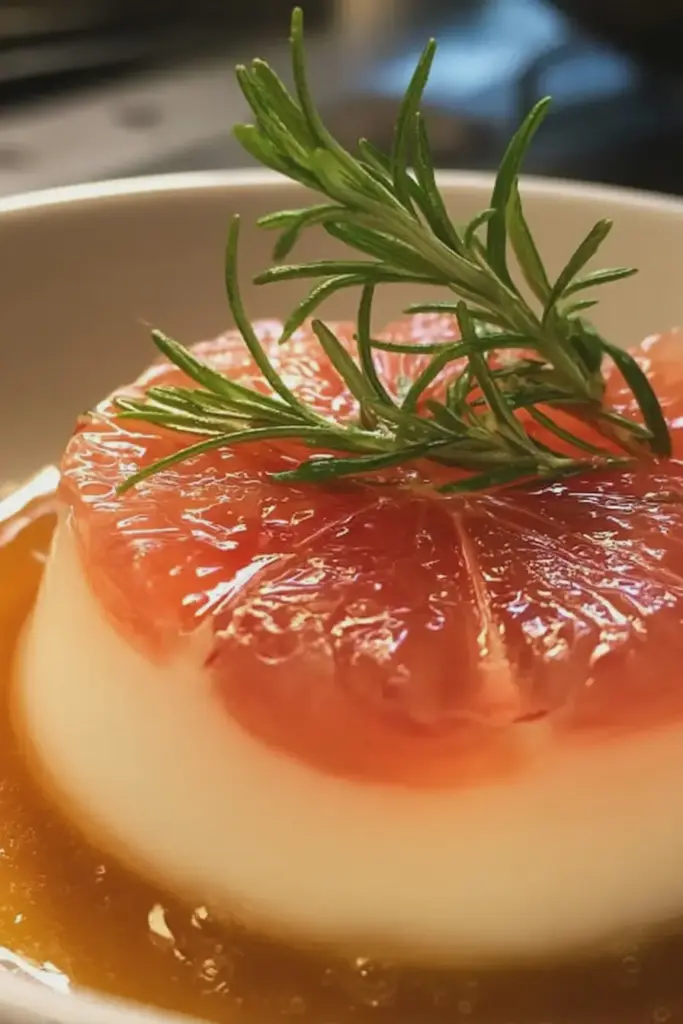
I have a soft spot for panna cotta because it feels like theatre in a ramekin: deceptively simple ingredients that finish as something utterly refined. In my kitchen I’ve learned that the smallest choices — which sprig of rosemary, how long you steep, or the type of honey you reach for — change the final perfume and mouthfeel. I first paired rosemary with honey on a whim for a winter dinner and the restrained herb cut through the cream in the most flattering way.
Over many runs of this recipe I made every mistake you can imagine: over-steeping rosemary until the panna cotta tasted medicinal, under-blooming gelatin so the layers collapsed, and using bottled citrus juice that dulled the top layer’s shimmer. Those errors taught me to respect temperature and timing; they also convinced me that grapefruit jelly is the best foil for the honeyed cream because its acid brightens and its color pops on the plate.
When I plate this for guests I aim to deliver contrast at first sight and harmony on the palate. A satiny panna cotta with a faint herb aroma, topped with translucent pink grapefruit jelly and a final drizzle of honey and a tiny rosemary tip — it’s simple, intentional, and quietly sophisticated. I’ll share the techniques that make it reliably silky, the small adjustments that prevent common problems, and a few elegant plating ideas so this dessert looks as considered as the rest of your menu.
Why Rosemary Honey Panna Cotta Belongs on Your Dinner-Party Menu
This dessert reads as thoughtful and restrained on a menu: panna cotta is familiar yet flexible, and the rosemary–honey pairing feels unexpected without being fussy. Rosemary lends savory, piney notes that lift the honey’s floral sweetness, preventing the cream from feeling cloying. The grapefruit jelly adds a clean, citrus counterpoint that refreshes the palate between bites.
Because panna cotta can be made ahead and unmolded or served in its ramekin, it’s a hostess-friendly finale: you can focus on the main course and bring a composed dessert to the table. For a seasonal tasting menu, I like pairing it with small, contrasting bites — for example, a nutty caramelized nibble that echoes the honey.
Impress your guests by pairing this dessert with caramelized pumpkin maple marshmallow bites for a delightful end to the meal.
Everything You Need for Rosemary Honey Panna Cotta
Use fresh, high-quality ingredients and the right tools to emphasize the panna cotta’s silkiness and the jelly’s clarity. Below are the ingredient highlights and essential equipment you’ll want on your counter before you begin.
- Heavy Cream – The backbone of the panna cotta; choose a fresh, full-fat cream for the richest mouthfeel.
- Milk – Lightens the cream slightly and helps the texture stay spoonable rather than cloying; dairy or a creamy plant milk works here.
- Fresh Rosemary – Use sprigs with bright green needles; the herb’s oils release easily when gently steeped.
- Honey – Choose a mild, floral honey to complement rather than overwhelm; stronger varietals will shift the dessert’s balance.
- Unflavored Gelatin – The classic gelling agent for a clean, cuttable set; alternatives are possible (see vegan swaps).
- Fresh Grapefruit Juice and Zest – Fresh juice gives clarity and brightness that bottled juice lacks; zest adds aromatic oils for the top layer.
- Sugar – Lightens the grapefruit’s tartness and enhances clarity in the jelly.
- Ramekins or Molds – Choose shallow, wide ramekins for easier unmolding and a refined silhouette; clear glass shows the jelly layer beautifully.
- Fine-Mesh Sieve – For straining both the infused cream and the grapefruit juice so every layer is glossy.
- Small Saucepan and Thermometer – Gentle, controlled heat is everything; a thermometer keeps you from scalding the cream.
How Rosemary and Honey Create a Balanced Flavor Profile
Rosemary brings piney, resinous top notes and a subtle savory edge; honey contributes fructose and glucose that round the palate and add floral aromatics. Chemically, honey’s sugars suppress sour perception slightly, so the grapefruit layer needs only a modest amount of sweetener to taste balanced and lively.
Temperature matters: aromatic compounds in rosemary are more volatile at warmer temperatures, so steep briefly and strain while the cream is still warm to capture the herb’s perfume without bitterness. The panna cotta served chilled will present sweeter and less aromatic than when warmed slightly — that’s why the grapefruit jelly is crucial: its acidity wakes up the palate and sharpens the honey’s nuance.
The Secret to a Silky, Spoonable Panna Cotta
The texture comes down to two technical truths: correct gelatin hydration (blooming) and precise temperature control when incorporating the gelatin. Get these right and the result glides across the tongue; get them wrong and you’ll see graininess or a rubbery set.
- Gelatin and Blooming – Bloom gelatin in cold liquid long enough so it softens uniformly; I always check by pressing a granule between my fingers to ensure it yields before warming.
- Heat Control – Heat cream to barely simmer (small bubbles at the edge) — overheating can destroy the delicate proteins and alter mouthfeel. Bring the cream up slowly and remove from heat before steeping the rosemary.
- Incorporation – Warm the bloomed gelatin just until dissolved; never boil. Whisk it into the creamy base in thin streams so it disperses evenly.
- Strain and Chill – Strain the mixture to remove herb bits and any undissolved granules. Cool gently before pouring over the set jelly to avoid breaking the layers.
Pro-Tips (I write these from many trial runs in my kitchen):
- I steep rosemary for a precise, short window — long enough to perfume the cream but not so long it becomes resinous.
- I never add honey to a scalding cream; the residual heat dissolves it more gently and preserves its floral notes.
- Chill the panna cotta on a level surface so the jelly layer sets flat and looks polished when plated.
Troubleshooting (I’ve fixed these common issues on the fly):
- If the panna cotta is grainy, you likely overheated the cream or didn’t fully dissolve the gelatin — reheat gently and whisk until smooth, then strain.
- If it’s too firm, reduce the gelatin slightly next time; if too loose, let it set longer in the fridge before serving.
- If rosemary tastes sharp, the herb was over-steeped; in future starts, shorten steep time and use younger springs.
Presentation: Layer and Plate the Grapefruit Jelly Beautifully
Color theory in plating works in your favor here: the soft cream of the panna cotta is a neutral canvas that makes the grapefruit’s pink-coral hue sing. When you pour a translucent jelly over the set cream it creates a jewel-like layer that catches the light — a small flourish that looks far more elaborate than it is.
Think texture contrast: a glossy jelly, a satin cream, and a tiny crunchy element such as toasted almond slivers or candied citrus peel make each spoonful interesting. Garnish sparingly — a micro-sprig of rosemary, a faint dusting of zest, and a barely-there drizzle of honey are all you need for elegance.
Layering technique: pour the grapefruit jelly gently over the back of a spoon held just above the panna cotta to avoid breaking the set surface. If you plan to make the jelly yourself for an extra-refined result, learn how to make your own grapefruit jelly to elevate the presentation of your rosemary honey panna cotta.
How to Make Rosemary Honey Panna Cotta (Step-by-Step)
- Prepare the grapefruit jelly: warm fresh grapefruit juice with zest and a small amount of sugar over low heat, then sprinkle gelatin over the warm juice to bloom; stir until dissolved and pour into your ramekins. Chill until the jelly is firmly set.
- Infuse the cream: heat cream and milk slowly until just below a simmer, remove from heat, add rosemary sprigs, and steep briefly to capture aroma without bitterness; strain out the rosemary.
- Dissolve gelatin: bloom gelatin separately in cold water, then warm gently until fully dissolved; whisk it into the warmed cream mixture off the heat until completely incorporated and silky.
- Sweeten and combine: whisk honey into the warm cream until fully melted and integrated; taste and adjust the balance while warm, keeping in mind chilling will temper sweetness.
- Assemble the layers: cool the panna cotta base slightly so it’s warm but not hot, then pour it over the set grapefruit jelly in each ramekin. Cover and refrigerate until fully set and spoonable.
- Unmolding and serving: to unmold, dip the bottom of the ramekin briefly in hot water, run a thin knife around the edge, and invert onto a plate; garnish judiciously and serve chilled.
Variations (bulleted for quick reference):
- Swap rosemary for thyme or lemon verbena for a subtler herbal note.
- Use blood orange juice in place of grapefruit for a deeper color and sweeter top layer.
- Add a touch of citrus liqueur to the jelly for an adult finish, but reduce added sugar slightly to keep balance.
Pro Tip for Rosemary Honey Panna Cotta: Vegan & Lactose-Free Swaps
I often adapt this dessert when guests need dairy-free options; the goal is to preserve creaminess and the honey/rosemary relationship without sacrificing texture.
- Use agar-agar or a commercial plant-based gelling blend in place of gelatin; note these set differently — agar gives a firmer, more jelly-like texture, so reduce quantity and test small batches.
- Replace heavy cream with full-fat coconut milk or a rich oat cream; coconut will carry more coconut aroma, while oat stays neutral and silky.
- Swap honey for maple syrup or agave to keep it vegan; expect slightly different aromatic notes — maple brings warmth, agave is cleaner and sweeter.
If you’re looking to make it suitable for everyone, check out our vegan & lactose-free swaps.
How to Store, Make-Ahead, and Reheat Panna Cotta
This is a true make-ahead dessert: you can prepare both layers a day in advance and keep them refrigerated until service. Store panna cottas in their ramekins covered with plastic wrap or an airtight lid to prevent fridge odors from seeping in and to preserve that pristine surface.
- Refrigeration window: keep fully set panna cottas chilled for up to two to three days for peak texture and flavor.
- Freezing note: panna cotta generally loses its delicate texture if frozen and thawed; I avoid freezing unless absolutely necessary.
- Reheating: instead of warming the panna cotta itself, allow it to sit at cool room temperature for a few minutes before serving — reheating will compromise the set.
For tips on how to store and reheat panna cotta, check out our guide to avoid any kitchen mishaps.
Serving suggestions: serve the panna cotta chilled on small dessert plates with a single rosemary tip and a few micro-zest curls for color; pair with a light, citrus-forward dessert wine or a floral tea to complement the honey and herb notes.
Frequently Asked Questions
Can I make rosemary honey panna cotta in advance? Absolutely! This dessert is perfect for make-ahead. You can prepare it a day before your dinner party and store it in the fridge until you’re ready to serve.
What can I substitute for honey in this recipe? For a vegan or lower-sugar option, you can use maple syrup or agave nectar instead of honey for a similar sweetness.
Is there a way to make this panna cotta dairy-free? Yes! You can use coconut milk or almond milk instead of heavy cream and regular milk to make a dairy-free version.
How do I know when the panna cotta is set? The panna cotta is set when it is firm to the touch but still slightly jiggles. It should hold its shape when inverted onto a plate.
Can I use other flavors of jelly besides grapefruit? Definitely! Feel free to experiment with other citrus juices like orange or lemon, or even berry juices for a different taste.
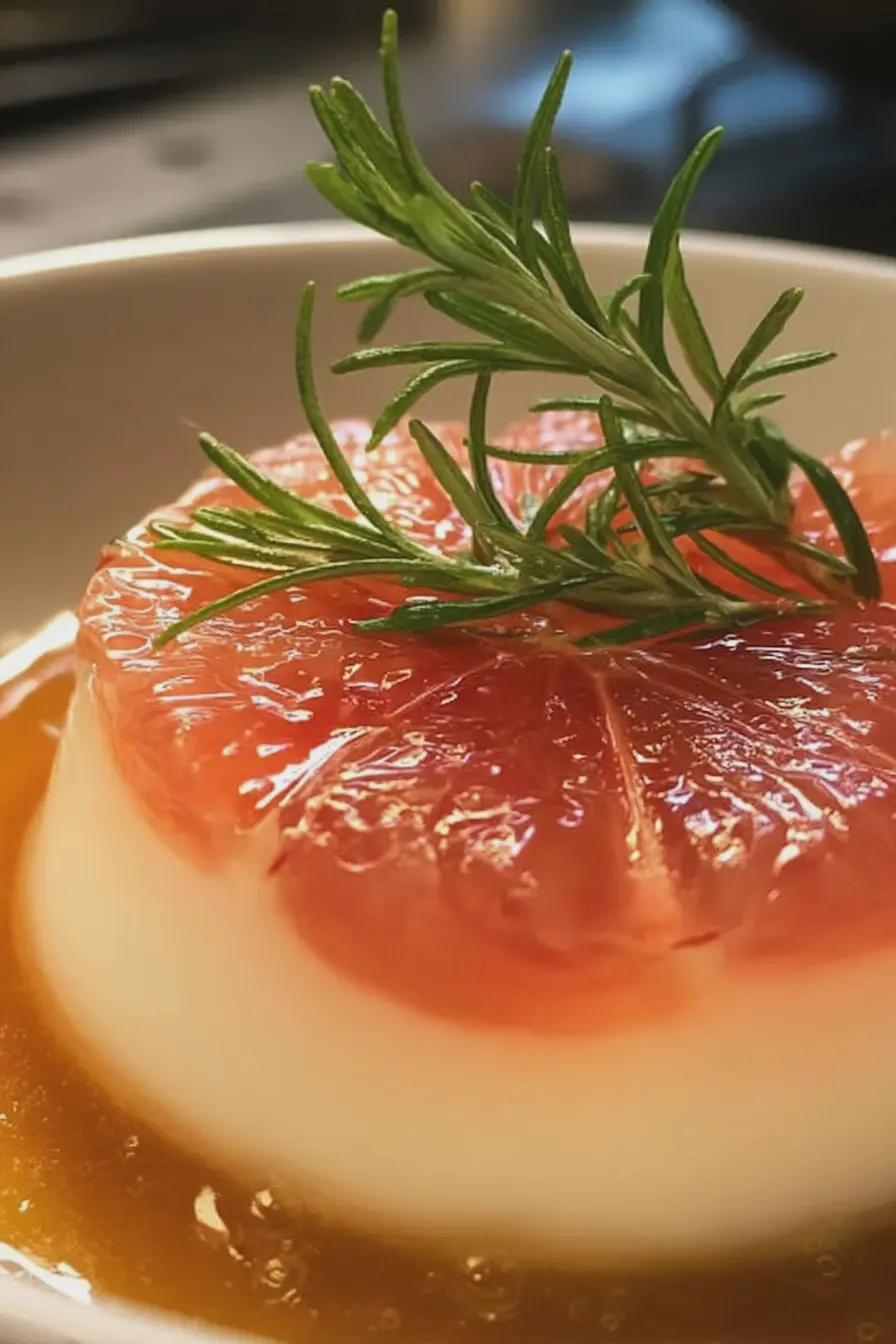
Rosemary Honey Panna Cotta with Grapefruit Jelly
Ingredients
Method
- Juice the fresh grapefruits until you have one cup, strain the juice to remove pulp. Warm the juice with grapefruit zest in a saucepan over low heat for 5 minutes. Sprinkle gelatin over the juice and let bloom for 5 minutes, then stir and refrigerate for at least 2 hours until set.
- In a saucepan, combine heavy cream and milk, bring to a simmer while stirring. Remove from heat, add rosemary and steep for 10 minutes. Strain the infused cream into a bowl, mix in honey until fully dissolved.
- Sprinkle gelatin over cold water and let sit for 5 minutes to bloom. Reheat cream mixture and whisk in bloomed gelatin until dissolved.
- Pour the panna cotta mixture carefully over the set grapefruit jelly in ramekins, then cover with plastic wrap and refrigerate for at least 4 hours.
- Dip ramekins in hot water for 10 seconds, run a knife along the edges, invert onto a plate to serve.
- Garnish with fresh berries, mint, or a drizzle of honey before serving.