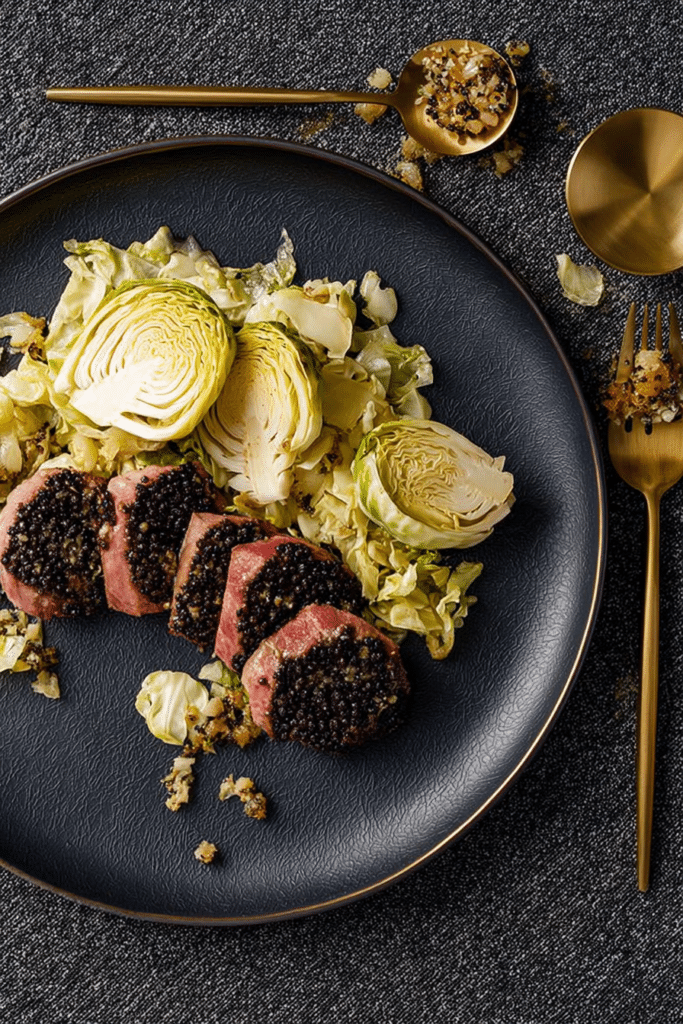
I first cooked this tenderloin with pointed cabbage and truffle on a quiet evening when I wanted a dish that felt festive without being fussy. The contrast between the velvet of the meat, the bright snap of cabbage and that faintly animal, earthy perfume of truffle convinced me to stop saving truffle for special occasions. I make the truffle butter ahead so the aroma blooms as soon as the slices meet warm steak.
In my kitchen I learned that technique matters as much as ingredients: a confident sear, a patient rest and a gentle finish for the cabbage. The rice—Venere in this case—adds a nutty, almost smoky backbone and a dramatic visual counterpoint. Guests comment on the scent first, then the texture: that is precisely what I aim for.
I cook this when I want to impress without adding stress. There are small, repeatable actions that deliver a restaurant-quality plate: chill the truffle butter, time the rice, and let the meat relax under foil. Below I share the precise reasoning and tips I use in my kitchen so you can replicate the results with confidence.
Why this Tenderloin with Pointed Cabbage and Truffle fits ambitious home cooks
This is a recipe that rewards attention to detail. Truffle introduces an impossible-to-ignore aromatic depth; when married to a properly seared tenderloin and bright, slightly acidic pointed cabbage, the result is both luxurious and balanced. The textures are complementary: a glossy crust on the meat, silky truffle butter, tender-charred cabbage and chewy Venere rice.
Sensory notes to imagine: the truffle’s earthy, musky perfume as you slice into warm butter; the sizzle of the seared tenderloin; the glossy sheen of cabbage tossed with rendered bacon and vinegar. This dish asks you to practice three precise techniques—truffle butter preparation, high-heat searing and gentle braise-style sautéing of cabbage—and rewards you with spectacular presentation and flavor.
Everything You Need for Tenderloin with Pointed Cabbage and Truffle
High-quality ingredients and the right tools make the difference. Use the freshest truffle or a high-grade truffle product, a heavy skillet for even searing, and a sharp thermometer for accuracy. Below I separate cookware from key ingredients so you can assemble everything before you begin.
- Cookware & Tools – Heavy-bottomed pan or cast-iron skillet for searing; non-stick pan for cabbage; saucepan with a lid for Venere rice; instant-read thermometer; cling film for truffle butter; carving knife and board.
- Plating & Warmth – Foil for resting the tenderloin, warm plates to maintain temperature during service.
Ingredient discussion (conversational):
- Tenderloin – The central protein: choose fine-grained muscle, well-trimmed. Substitute with pork loin or venison if preferred (see Dietary Swaps below).
- Pointed cabbage – Offers a tender heart and sweeter leaves than standard cabbage; it softens quickly and takes on a glossy finish when sautéed with bacon and vinegar.
- Truffle (or truffle products) – Fresh truffle gives the most complex aroma; truffle butter or a high-quality truffle oil can be used when fresh isn’t available.
- Bacon or pancetta – Provides fat and smoky-salty contrast that seasons the cabbage; use good-quality cured pork for best flavor.
- Venere rice – A black rice with a nutty bite and striking color that contrasts beautifully on the plate; it tolerates longer cooking and stands up to bold flavors.
- Artichoke hearts – Add texture and a delicate, slightly tangy counterpoint to the rich meat and butter.
- Butter & olive oil – Use a good finishing butter for richness and a neutral or extra-virgin olive oil for sautéing as appropriate.
The Secret to Silky Truffle Butter and How to Slice It
Truffle butter is both a flavor amplifier and a finishing touch that visually signals luxury. The method is simple but the timing and temperature are important: you want the butter to be thoroughly mixed with truffle and chilled so it slices cleanly and melts slowly on hot meat.
- Soften unsalted butter just until pliable; fold in finely grated or minced truffle (or truffle product) and a small pinch of salt until evenly combined.
- Spoon the mixture onto cling film, roll into a tight cylinder, twist the ends and press to form a smooth log. Chill until firm—this step is essential for neat slicing.
- For service, remove from the fridge and slice straight from the log into thin rounds. If the butter is too cold to slice cleanly, let it sit for a minute; if too soft, return to chill briefly.
- Presentation tip: place a slice on each hot tenderloin half just before plating so the butter melts slowly, creating a glossy sauce that carries the truffle aroma.
Getting the Perfect Tenderloin: Sear, Rest and Temperature Guide
The Maillard reaction is responsible for the deep, savory crust that defines a great sear. High dry heat and minimal movement in the pan create a caramelised surface and concentrated flavor; then resting allows juices to redistribute for an even, tender interior.
- Pat the tenderloin dry and season simply; preheat a heavy pan until it is smoking hot so the meat forms a crust instantly.
- Sear the meat on each side without crowding the pan—this is where the Maillard reaction happens and you should see a deep brown crust.
- Use an instant-read thermometer and target the following internal temperatures for finished carryover: rare 120–125°F (49–52°C), medium-rare 130–135°F (54–57°C), medium 140–145°F (60–63°C). Remove the meat a few degrees before the lower end of your target because it will continue to rise while resting.
- Wrap the seared tenderloin loosely in foil and rest for about 10 minutes; do not skip this step—resting is what keeps the meat moist.
Common issues and how I handle them (Troubleshooting):
- If the crust is pale, the pan wasn’t hot enough—dry the meat thoroughly and preheat the pan longer next time.
- If the interior is overcooked, reduce searing time, and finish the last degrees in a low oven next time; I also lower the pan heat briefly to slow the outside browning while the interior comes up.
- If the meat is unevenly cooked, consider tying the tenderloin to promote even thickness or use the thermometer in the thickest portion to check doneness.
For additional technical pointers on searing and resting, consult this tenderloin cooking guide:
For detailed instructions on achieving the ideal doneness, check out our tenderloin cooking guide.
How to Cook Venere Rice to Al Dente Every Time
Venere rice has a firm bite and a nutty aroma; it benefits from a gentle simmer and adequate hydration. Unlike short-grain varieties, it holds its structure and needs a little more time to reach al dente.
- Rinse the rice briefly if needed to remove any excess starch; then toast it lightly in a little oil to awaken its nutty aroma before adding simmering water or stock.
- Bring to a boil, reduce to a gentle simmer, cover and cook until the grains are tender but still have a slight bite—this usually takes longer than white rice, so check at the advised interval and continue until al dente.
- If the grain surface appears dry before the center is done, add a splash of hot water and continue cooking; drain any excess water at the end if necessary.
- Finish by fluffing with a fork and seasoning—Venere’s color and texture are visual assets on the plate, so keep it slightly glossy rather than gluey.
For step-by-step guidance on this rice variety, you can read more here:
How to Make Tenderloin with Pointed Cabbage and Truffle (Step-by-Step)
Here is the logical order I use to keep timing tight and flavors focused. Follow these steps to coordinate rice, meat and vegetables so everything arrives at the table warm and perfectly done.
- Prepare the truffle butter first: mix, roll and chill so it is ready to finish the meat.
- Begin the Venere rice next since it takes the longest; bring it to a simmer and set a timer for regular checks.
- Render the diced bacon in a non-stick pan until crisp, remove excess fat if desired, then add torn pointed cabbage and a smashed garlic clove; toss with a splash of vinegar and sauté until just tender but still bright.
- In a heavy pan, heat oil until shimmering, season the tenderloin, then sear 2–4 minutes per side depending on thickness to form a deep crust; transfer to foil and rest for 8–10 minutes.
- While the meat rests, quickly stir-fry the artichoke hearts in olive oil until warmed and slightly caramelised; keep warm.
- Slice the rested tenderloin on a bias, place slices on warm plates, top with rounds of truffle butter and serve alongside the Venere rice, cabbage and artichokes.
Pro-Tips (bulleted for scannability):
- Chill and slice the truffle butter in advance to control the melt rate on the hot meat.
- Use the bacon fat to sauté the cabbage for added depth; the vinegar brightens and balances the richness.
- Warm plates in a low oven so the truffle butter melts elegantly but the meat remains hot.
Pro Tip for tenderloin with pointed cabbage and truffle: choosing fresh truffles and sensible substitutes
Fresh truffles reward careful selection: look for firm flesh, a strong, earthy aroma and no soft spots. Price and availability vary by region, so sensible substitutes are often necessary; quality truffle butter or a small amount of well-made truffle oil can stand in without overpowering the plate.
- Fresh truffle signs: firm to the touch, fragrant even when uncut, free of moisture and mould.
- Substitutes: high-quality truffle butter, a judicious drizzle of truffle oil, or a sautéed wild mushroom ragù to reproduce earthy notes.
- Regional note: summer truffles are more floral and delicate while winter truffles are more pungent—choose according to how forward you want the truffle character to be.
Further reading on sourcing is here:
Learn more about choosing fresh truffles to elevate your dish to new heights.
How to Store, Reheat and Make-Ahead Tenderloin with Pointed Cabbage and Truffle
Preserving the texture and aroma after cooking requires care. I avoid reheating the tenderloin at high heat; instead, gentle methods keep it tender. Make truffle butter ahead and store it cold to save time on the day of service.
- Storage: keep components separate—meat, truffle butter, cooked cabbage and rice—in airtight containers in the refrigerator to prevent flavor transfer.
- Reheating meat: use a low oven (around 250°F/120°C) until warmed through, or gently warm sliced meat in a skillet with a splash of stock to avoid drying.
- Reheating vegetables and rice: warm gently in a pan with a touch of butter or oil; add a splash of water if the rice has stiffened to revive tenderness.
- Make-ahead: prepare truffle butter up to one week in advance; cook the rice fully and reheat as above. Keep the cabbage slightly underdone when first cooking so it can be refreshed quickly before serving.
Dietary Swaps and Alternative Meats
This framework adapts well to other proteins and diets with only minor adjustments to technique and timing. Below are tested alternatives that preserve the dish’s character.
- Venison or game: leaner and more intensely flavored—sear quickly and reduce resting time; expect faster carryover; consider a touch more fat in the pan to prevent dryness.
- Pork tenderloin: similar in size to beef tenderloin but requires a slightly higher internal temperature; watch closely to keep it juicy and use the same searing technique.
- Vegetarian option: large seared king oyster mushroom steaks or smoked-seared tofu topped with truffle butter replicate the savory, umami profile while keeping the plate balanced.
- Timing notes: denser proteins may need a gentler finish in the oven; lean cuts will benefit from a short rest under foil to redistribute juices.
Serving suggestions: slice the tenderloin diagonally to show the rosy interior, place a round of chilled truffle butter on top to melt attractively, and arrange Venere rice and the cabbage in complementary scoops for an elegant plate. A light, fruity red wine cuts through the richness and complements the earthy truffle notes.
Frequently Asked Questions
Can I use a different type of rice instead of Venere rice? Yes, you can substitute Venere rice with other types of rice such as Arborio or jasmine rice, but the cooking time and texture may vary. Venere rice has a unique nutty flavor and its black color adds a visual appeal.
How do I know when the tenderloin is cooked to the right doneness? For medium-rare, aim for an internal temperature of 130-135°F (54-57°C). Use a meat thermometer for accuracy. Let the tenderloin rest for about 10 minutes after cooking for the juices to redistribute.
What are some good substitutes for truffle oil? If you don’t have truffle oil, you can use regular extra virgin olive oil mixed with a small amount of garlic or a dash of mushroom oil for a similar earthy flavor.
Can I prepare the truffle butter ahead of time? Absolutely! You can prepare the truffle butter in advance, roll it in cling film, and store it in the refrigerator. It can be kept for up to a week, and it’s a great way to elevate other dishes too.
What can I serve with tenderloin and pointed cabbage? This dish pairs wonderfully with a side of roasted vegetables or a fresh salad. A glass of red wine, like a Pinot Noir, also complements the flavors beautifully.
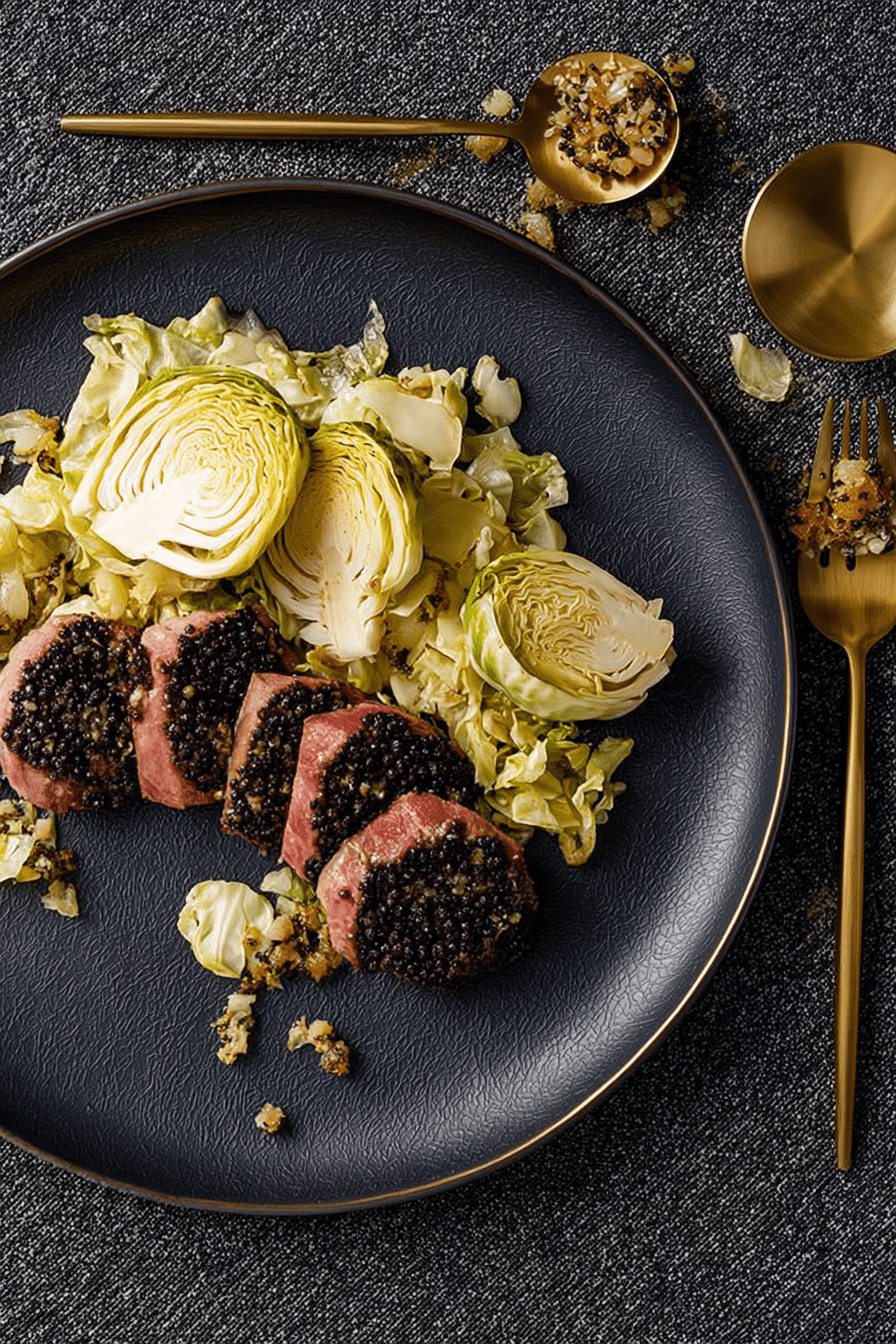
Tenderloin with pointed cabbage and truffle
Ingredients
Method
- Mix the butter with the truffle, season with salt. Place the butter on a piece of cling film, shape into a roll, chill until ready to serve.
- Heat the oil in a pan. Add the rice and sauté until translucent, stirring constantly. Pour in the water, bring to the boil, season with salt. Cover and cook over a low heat for approx. 40 mins., stirring occasionally, until al dente. Drain the rice, if necessary.
- Heat the oil in a wide frying pan. Season the meat, fry for approx. 3 mins. on each side. Remove, wrap in foil, leave to rest for approx. 10 mins.
- Without adding any oil, gently fry the bacon in a non-stick frying pan until crispy. Add the cabbage, garlic and vinegar, sauté for approx. 5 mins., season. Remove and keep warm.
- Heat the oil in a frying pan, stir fry the artichokes for approx. 3 mins.
- Remove the meat from the foil, cut in half diagonally, cut the truffle butter into slices, serve both with the rice, cabbage and artichokes.