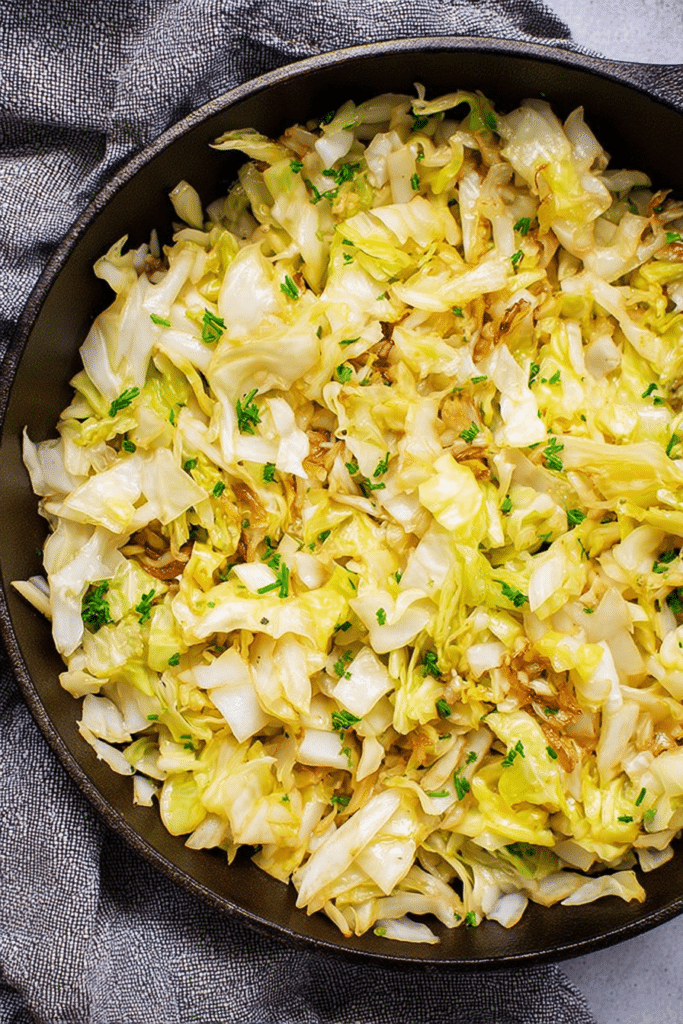
I make this sautéed cabbage on the busiest evenings when I want something bright and fast on the plate. I love how a humble head of cabbage becomes a crunchy, lemony side in under twenty minutes — the garlic scent fills the kitchen and the pan sings as the edges brown. It’s one of those dishes I turn to when time is tight but I still want food that feels cared for.
In my kitchen I learned a few small moves that make a big difference: shred the cabbage thin, get the skillet screaming hot, and don’t crowd the pan. Those three things preserve that fresh green snap while coaxing a little caramelized sweetness from the edges. The result is a side that’s texturally lively and bright enough to sit next to bold mains.
I also appreciate how forgiving this recipe is. You can swing it toward vegan by skipping butter, bulk it up with a quick protein addition, or season it more assertively if your weeknight main is simple. Below I’ll walk you through what I keep on hand, the techniques I rely on, and a few flavor and storage notes that save me time later.
Every time I make it I take a moment to inhale: the sharp lemon top note cutting through the warm garlic and butter — that contrast is what keeps me coming back on busy nights.
Why this sautéed cabbage is a busy‑night game changer
This recipe is built for speed and impact. Prep is minimal and the cook time is short, so you can have a healthy, crunchy side while the main finishes. Cabbage is nutrient-dense and low in calories, offering fiber and vitamin C with almost no fuss. Pairing it with a simple protein or grain gives you a balanced plate without extra dishes to wash.
Smell and sight: imagine the sharp citrus scent of lemon lifting the warm garlic aroma, with bright green cabbage turning slightly glossy and studded with golden-browned edges. That sensory contrast—fresh and toasty—makes it feel like more than a quick fix.
Everything You Need for Sautéed Cabbage With Lemon & Garlic
Here’s what I keep within arm’s reach when I make this: a roomy skillet you can heat hot, a sharp knife or shredding tool, and a sturdy spatula for tossing. These few tools make the technique quick and predictable.
- Cabbage – The base: crisp, slightly sweet, and forgiving. Green or white cabbage both work; use the freshest head you can find for snap.
- Olive oil – Provides a clean fruitiness and raises the smoke point if you’re skipping butter.
- Butter – Adds creamy, rounded richness and helps the cabbage brown; swap for oil to keep it vegan.
- Garlic – Brings aromatic depth; mince finely so it releases without burning.
- Lemon (zest + juice) – Zest gives a bright citrus perfume while juice finishes the dish with acidity that balances fat.
- Salt & pepper – Small amounts amplify flavors; season early and adjust at the end.
- Optional herbs (parsley or dill) – Fresh herbs add color and a fresh finish if you have them on hand.
The secret to the perfect crunch (why shredding and heat matter)
Texture is the point: you want crispness with a few brown, slightly sweet ribs. Shredding and heat control are your best friends here. Thinner pieces increase surface area so more of the cabbage hits the hot pan and caramelizes instead of steaming to limpness.
- Use a sharp knife, mandoline, or the slicing disk of a food processor to get even, thin ribbons; consistent pieces cook at the same rate.
- If the skillet is crowded, the cabbage steams. Cook in batches if you need to so each piece can touch the hot metal and brown.
- High initial heat sears the edges quickly; then lower slightly to finish without over-softening the center.
- Pat dry any damp outer leaves before shredding to reduce steam and speed browning.
Why high heat makes the best browned edges
High heat triggers Maillard reactions — the same chemistry that makes a good sear on meat — which create complex, toasty flavors and tiny golden flecks along the cabbage ribs. Those browned bits add contrast to the raw brightness of the center leaves and create visual appeal on the plate. You’ll hear the pan sizzle and see the edges turn from pale green to honey-gold; that’s the moment to start nudging pieces so they brown evenly rather than burn.
Brief, intense heat prevents the cabbage from going mushy. The goal is charred accents, not a uniformly wilted pile.
Flavor boosters: how lemon, garlic and butter work together
Garlic gives savory backbone and aroma when it hits fat; butter tames garlic’s bite and adds silky texture. Lemon lifts everything — zest in the pan gives immediate citrus oil aroma, while a splash of juice at the end brightens and balances the richness. Together they create contrast: warm, savory butter and garlic with a lively citrus finish.
For a similar interplay of garlic and buttery flavor, try pairing this cabbage with a richer main such as garlic parmesan chicken to mirror the aromatics and add protein.
How to Make Sautéed Cabbage With Lemon & Garlic (Step‑by‑Step)
- Heat a large skillet over high heat until it’s very hot but not smoking; add oil and butter and let the butter foam.
- Add finely chopped garlic and lemon zest; stir for just a few seconds until fragrant, watching closely so the garlic doesn’t brown too fast.
- Toss in the shredded cabbage, season with salt and pepper, and let it sit undisturbed for about 30 seconds so the bottom layer can brown.
- Stir well, lower the heat to medium-high, and continue cooking, stirring occasionally, until the cabbage softens slightly and the edges show golden-brown spots (about 3–4 minutes total from when you added the cabbage).
- Finish with a squeeze of lemon juice and toss with chopped parsley or dill if using; adjust seasoning and serve immediately to preserve crunch.
Troubleshooting
- If the cabbage is soggy, you likely overcrowded the pan—cook smaller batches or use a larger skillet.
- If the garlic bittered, the pan was too hot or the garlic pieces were too large—lower the heat and mince garlic finely next time.
- If there’s no browning, increase the heat and make sure cabbage pieces are dry and have space to contact the pan.
Pro Tip for Sautéed Cabbage With Lemon & Garlic: Swap butter for olive oil to keep it vegan or add bacon/tofu for protein
- Swap butter for a good olive oil to make this vegan and keep a silky mouthfeel; toasted sesame oil adds a toasty twist if you want an Asian-leaning profile.
- For protein, crisp small bacon pieces first in the pan, remove, then use the rendered fat to sauté the cabbage before returning the bacon at the end.
- For vegetarian protein, press and cube firm tofu, pan-sear until golden, and toss with the finished cabbage for a sturdy meal.
- If you’re looking for a vegan protein option, try this vegan pasta primavera to complement the dish.
How to Store, Reheat, and Customize This Sautéed Cabbage
Proper storage preserves texture and flavor so leftovers still feel like a treat.
- Store cooled cabbage in an airtight container in the refrigerator for up to three days; avoid adding extra lemon juice before storing as it softens the leaves over time.
- Reheat briefly in a hot skillet to revive some of the crunch; a quick flash in a microwave will warm it but can make it softer.
- Customization ideas: fold the cabbage into warm grains for a bowl, stuff into a wrap with roasted protein, or toss with chili flakes and smoked paprika for a spicier profile.
Serving Suggestions and Pairing Ideas
This cabbage plays well with a wide variety of mains and can be the bright counterpoint to richer dishes. I often plate it alongside grilled or pan-seared proteins, or tuck it into bowls with rice or quinoa for a fast weeknight bowl. For a quick, flavorful pairing, serve it with garlicky shrimp — the two make an easy, balanced dinner.
This sautéed cabbage pairs beautifully with garlic butter shrimp for a delightful meal.
Nutritional Benefits of Cabbage and Garlic
Cabbage is low in calories but relatively high in fiber and vitamin C, which supports digestion and immune health; garlic contributes plant compounds linked with immune support and a savory depth that lets you use less salt. Together they form a light, nutrient-forward side that complements heavier mains without weighing you down.
For more ways to enjoy cabbage, check out our delicious cabbage roll casserole, which uses cabbage in a heartier format when you want to stretch ingredients into a full meal.
Recipe Variations for Dietary Preferences
- Vegan: Replace butter with olive oil or vegan butter; finish with lemon for brightness.
- Gluten-free: Naturally gluten-free as written; add tamari instead of soy sauce if you want an umami lift.
- Low-carb/keto: Keep the base but increase butter and add crumbled bacon or a fatty fish to make it more satiating.
- Spicy: Add red pepper flakes or smoked paprika when the garlic cooks for a smoky heat.
Frequently Asked Questions
Can I make this sautéed cabbage recipe vegan?
Absolutely! You can swap the butter for olive oil to make it vegan-friendly.
How can I customize the flavor of the sautéed cabbage?
You can add ingredients like bacon or tofu for protein, or experiment with spices such as paprika or red pepper flakes for extra flavor.
What are some common mistakes to avoid when sautéing cabbage?
One common mistake is adding too much liquid to the pan, which can lead to steaming instead of achieving that perfect sautéed texture.
How can I store leftovers of this sautéed cabbage?
Store the leftovers in an airtight container in the fridge for up to 3 days. Reheat in a skillet or microwave before serving.
What goes well with sautéed cabbage?
Sautéed cabbage pairs beautifully with grilled meats, fish, or even alongside grains like rice or quinoa for a hearty meal.
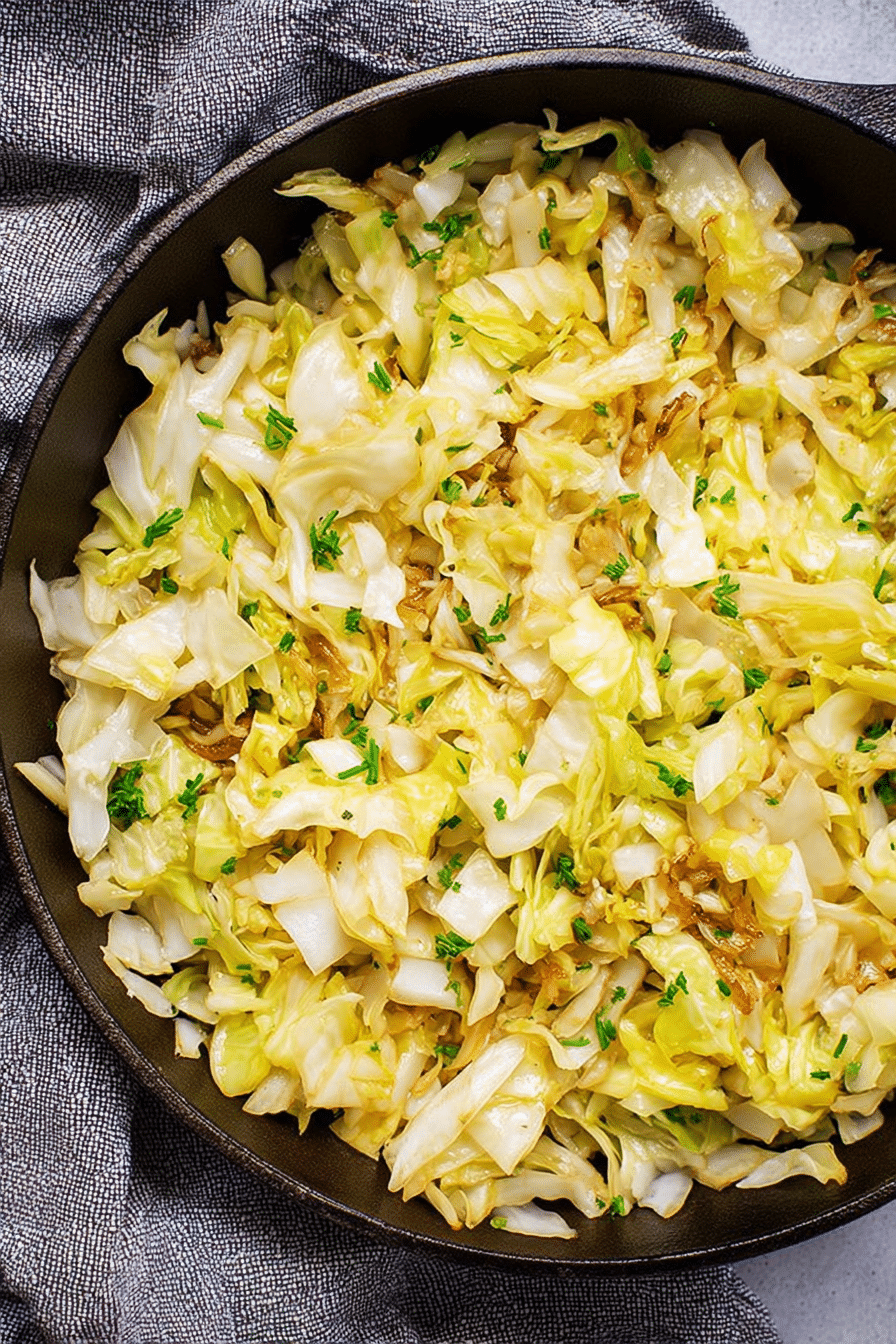
Sautéed Cabbage With Lemon & Garlic
Ingredients
Method
- Heat olive oil and butter in a skillet over high heat.
- Add garlic and lemon zest, stir for 10–15 seconds.
- Add cabbage, season with salt and pepper. Let sit 30 seconds.
- Stir well, lower to medium-high, and cook for 3–4 minutes.
- Finish with lemon juice and optional parsley or dill.