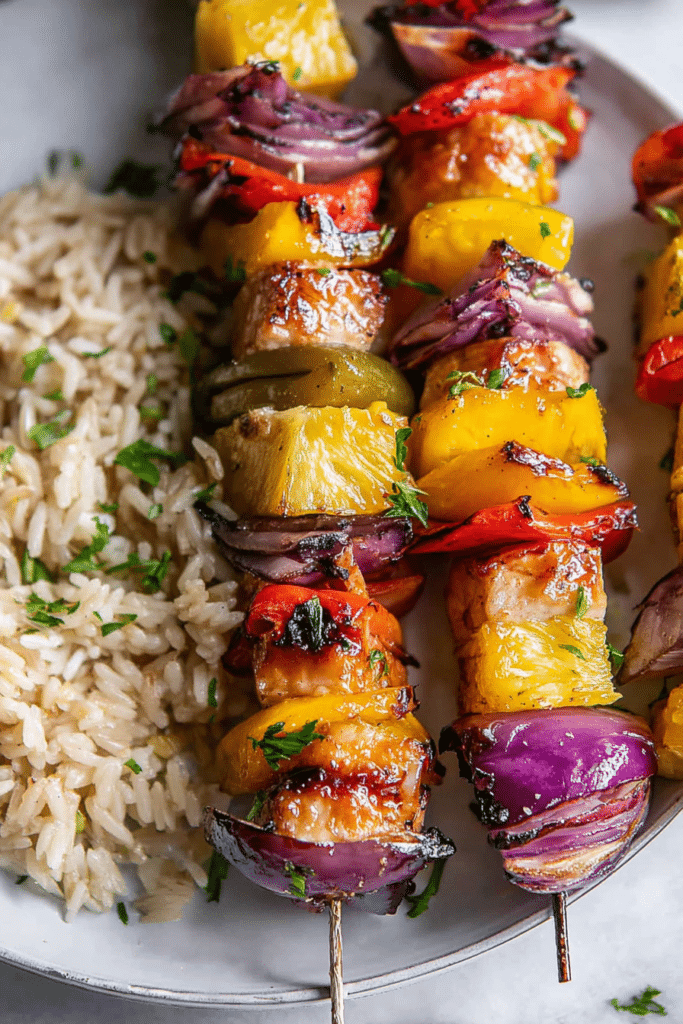
I cook these pineapple chicken kabobs on any weeknight when I want something that looks like a celebration but comes together with very little fuss. In my kitchen I learned to keep the prep tight: quick chop, a short marinade, and a hot grill. That way dinner is done before anyone starts to grumble.
I like to prep the chicken and the marinade first, then soak the wooden skewers while the chicken is resting in the fridge. That small habit keeps the skewers from burning and saves time at the grill. I also always reserve some marinade to thicken into a glaze — brushing it on toward the end gives the kabobs that glossy, caramelized finish that everyone notices.
What I love most is how forgiving this recipe is: the smell of fresh pineapple mingling with ginger and garlic fills the backyard, the peppers add bright color, and the whole thing takes under 30 minutes of active work. I’ll share the tips I use to keep the chicken juicy, the fruit intact, and the timing predictable so you can get a hot plate to the table fast.
Before we dive into the how-to, here’s a quick heads-up to myself and anyone else adapting this piece: generate the Pro-Tips, Troubleshooting, and Variations sections as bulleted lists for high scannability.
Why These Pineapple Chicken Kabobs Are Perfect for Busy Weeknights
These kabobs are designed around speed and accessibility. You can chop everything in one short session, toss the chicken in a simple marinade, and either grill immediately after a short rest or assemble the skewers ahead of time. The ingredients are commonly found at most grocery stores, and the colorful presentation makes them feel special without extra work.
On busy nights you want a recipe that won’t demand babysitting. These kabobs respond well to a quick grill — the pineapple caramelizes, the chicken takes on a touch of smoke, and the vegetables stay bright and slightly crisp. Imagine the sweet citrus of pineapple meeting savory soy and brown sugar, with a whisper of toasted sesame oil and ginger in the background.
They’re flexible too: serve them with rice for a family meal, tuck pieces into warm tortillas for an easy handheld dinner, or slide them onto a platter for backyard guests. For another pineapple-and-chicken option you might try a sweet-and-sour pineapple broccoli chicken stir fry alongside these skewers to vary the textures and keep things interesting: sweet and sour pineapple broccoli chicken stir fry.
Everything You Need for Pineapple Chicken Kabobs
Below I talk through the core ingredients and why they matter. When you shop, pick produce that’s fresh and vibrant — ripe pineapple should smell sweet at the stem end and give very slightly when pressed.
- Chicken breast – Lean and quick-cooking; cut into even cubes so pieces cook at the same rate. You can swap to thigh meat for a richer flavor and more forgiving cooking.
- Fresh pineapple – Adds sweetness and a tenderizing acid; choose fruit that’s fragrant and not overly fibrous. Canned pineapple won’t caramelize the same way.
- Bell peppers – Provide color and a sweet crunch; use mixed colors for a lively plate.
- Red onion – Gives a gentle bite and caramelizes nicely; cut into chunks similar in size to the chicken.
- Soy sauce (reduced sodium or tamari) – Balances the sweetness; reduced sodium keeps the glaze from becoming too salty.
- Pineapple juice – Supplies acidity for tenderizing and a tropical backbone for the marinade.
- Fresh garlic and ginger – Bright aromatics that add depth; they beat powdered versions for freshness and clarity of flavor.
- Brown sugar and ketchup – Combine to form a sticky, caramel-ready glaze when heated.
- Sesame oil and olive oil – Sesame oil provides toasted flavor in small amounts; olive oil helps prevent sticking on the grill.
- Cornstarch – Used to thicken the reserved marinade into a basting sauce so it clings to the kabobs.
The Secret to Tender, Juicy Grilled Chicken
The short version: the pineapple juice’s acidity gently breaks down muscle fibers and the savory-sweet marinade adds flavor beneath the surface. But there’s a balance — too long in an acidic mixture will make the chicken mushy. I stick to a brief window and let the marinade do the work without overdoing it.
Choose the right cut: chicken breast will cook quickly and stay lean, while thighs are more forgiving if you’re worried about drying out. Whatever you pick, cut the pieces uniformly so each cube hits the same temperature at the same time. The visual cue I use is evenly sized, glistening cubes that look coated but not drenched when they hit the skewers.
How Long to Marinate (and Why It Matters)
- Minimum marinate time: plan on at least one hour so the flavors penetrate and the pineapple juice has time to tenderize the surface.
- Maximum marinate time: no more than three hours to avoid the chicken becoming overly soft from the acidic juice.
- Food safety: always marinate in the refrigerator in a sealed container or bag. Never reuse raw marinade unless you cook it first into a glaze.
- Visual cues: the chicken will look slightly paler and feel more pliable when it’s absorbed the marinade; it should not be falling apart.
Best Veggie & Pineapple Prep for Even Cooking
- Cube everything to the same size so the peppers, onion, pineapple, and chicken finish at the same time. Aim for pieces about the same thickness.
- Choose peppers that are firm and glossy — sweet red, orange, or yellow peppers offer a nice contrast to the pineapple’s sweetness and the chicken’s savoriness.
- Brush the veggies and pineapple lightly with oil and a pinch of salt before skewering to encourage even browning and reduce sticking on the grill.
- For very juicy pineapple, pat the pieces with a paper towel if they feel wet; excess surface moisture inhibits caramelization.
How to Make Pineapple Chicken Kabobs (Step-by-Step)
- Place your chicken cubes in a sealed bag or shallow dish and pour over the prepared marinade. Reserve about one portion of that marinade to turn into a basting glaze later.
- Soak wooden skewers in water while the chicken marinates to prevent burning; if you use metal skewers this step isn’t necessary.
- Toss the pineapple, peppers, and onions with a little oil and salt so they’re ready to thread.
- Assemble the skewers alternating chicken, pineapple, and vegetables so flavors are distributed evenly. Discard any marinade that was in contact with raw chicken before cooking, except the reserved portion.
- Turn the reserved marinade into a glaze by simmering it with a cornstarch slurry until thickened; set aside off the heat.
- Heat your grill to medium. Oil the grates to reduce sticking and place the skewers on the hot grill. Cook for a few minutes per side until the chicken has nice char marks, flipping once or twice.
- Brush the cooked sides with the warm glaze after flipping so the sugars caramelize without burning. Continue rotating and glazing until the chicken reaches safe doneness (use a thermometer to confirm).
- Let the kabobs rest a couple of minutes before serving so juices redistribute; serve immediately.
For a spicy variation you can add a smoky chipotle honey glaze as an alternate finishing sauce; this approach pairs well if you’re making other skewers like honey chipotle chicken skewers alongside these kabobs: honey chipotle chicken skewers.
If you want a milder, herb-forward contrast, try making garlic parmesan chicken skewers as an additional option when you grill for a crowd: garlic parmesan chicken skewers.
Pro Tip for Pineapple Chicken Kabobs: Make It Gluten-Free or Low-Carb
Here are quick swaps and ideas to keep the recipe friendly to different diets. Also, if you’re crafting a unique menu, consider pairing your kabobs with an inventive side like birria ramen for an unexpected contrast.
- Gluten-free: use tamari instead of regular soy sauce.
- Low-carb: swap rice for cauliflower rice or serve the kabobs over a bed of grilled zucchini ribbons.
- Oil-free grilling: brush veggies lightly with citrus juice and use a nonstick grill mat.
- Sugar reduction: use a smaller amount of brown sugar or swap for a monk-fruit sweetener that caramelizes.
Variations
- Vegetarian: thread halloumi or tofu with pineapple and peppers; press and freeze-firm the tofu before marinating for better texture.
- Seafood: use large shrimp or firm fish cubes (like swordfish) and cut marinating time way down to preserve texture.
- Flavor twists: add a touch of chili paste to the marinade for heat, or throw in fresh cilantro after grilling for brightness.
- Sides: serve with steamed rice, a simple cabbage slaw, or grilled corn for a complete meal.
Troubleshooting
- If the chicken dries out: check that your grill isn’t too hot and avoid overcooking; pieces should register 165° F and be removed promptly.
- If pineapple falls apart on the grill: choose slightly less ripe fruit and make sure pieces are uniformly sized; pat dry before skewering.
- If the glaze burns: brush it on late in the cook and use medium heat so sugars caramelize without charring.
- If skewers stick to the grill: oil the grates well and soak wooden skewers thoroughly before use.
How to Store, Reheat, and Make-Ahead Pineapple Chicken Kabobs
- Storage: cool kabobs to room temperature, then refrigerate in an airtight container for up to 3–4 days.
- Freezing: remove the skewers from wooden sticks if possible and freeze the meat and vegetables in a single layer; transfer to a freezer bag and use within 2 months.
- Reheating: gently reheat in a low oven or on a warm grill to preserve juiciness; avoid high heat that will dry the chicken. You can also reheat in a skillet with a splash of water and a lid to steam briefly.
- Make-ahead: assemble skewers a few hours in advance and keep them covered and chilled on a tray. Bring them to room temperature for 10–15 minutes before grilling for more even cooking.
Frequently Asked Questions
How long should I marinate the chicken for the kabobs?
You should marinate the chicken for at least 1 hour and up to 3 hours for the best flavor and tenderness.
Can I make these kabobs gluten-free?
Absolutely! Use tamari instead of soy sauce to make the kabobs gluten-free.
What vegetables work best with pineapple chicken kabobs?
Bell peppers and red onions are great choices, but feel free to add other veggies like zucchini or cherry tomatoes for more variety.
How do I know when the chicken is fully cooked?
The chicken is ready when it reaches an internal temperature of 165°F. Use a meat thermometer to check for safety.
Can I prepare the kabobs ahead of time?
Yes! You can assemble the kabobs and store them in the fridge until you’re ready to grill. Just be sure to marinate the chicken beforehand.
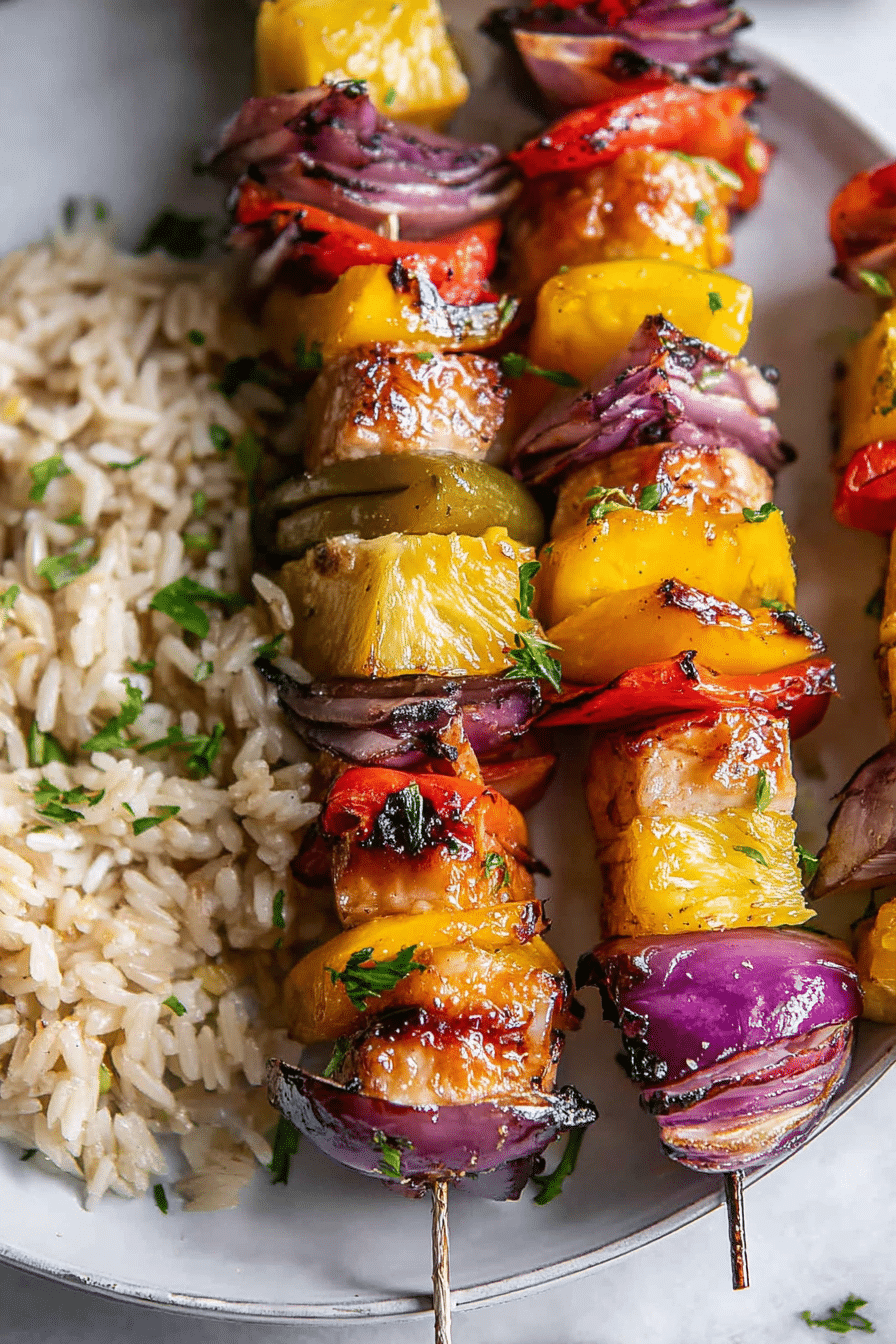
Pineapple Chicken Kabobs
Ingredients
Method
- Place the chicken pieces in a gallon size zippered plastic storage bag and set aside.
- In a small mixing bowl whisk together the marinade ingredients through the pepper. Measure out and transfer ⅔ cup of the marinade to a small container and refrigerate for later. Pour the remaining marinade over the chicken in the bag. Press out as much air as possible, seal the bag, and transfer it to the refrigerator. Marinate for at least 1 hour and no more than 3 hours.
- If using wooden skewers, place them in a long container and cover with water. Soak them while the chicken is marinating to help prevent burning on the grill.
- When ready to cook, prepare the grill (start the coals or preheat a gas grill over MEDIUM heat).
- While the grill is heating, toss the pineapple, peppers, and onion in a large bowl with 2 tablespoons of olive oil, and season with ¼ teaspoon salt and ¼ teaspoon pepper.
- Assemble the skewers by threading them with an equal amount of chicken, veggies, and pineapple. Discard the chicken marinade.
- Combine the cornstarch and water in a small bowl. Pour the reserved marinade into a small saucepan and place over MEDIUM-LOW heat. Add the cornstarch slurry and stir, cooking until thickened. Remove from heat and set aside.
- Brush the grill grates with olive oil, if needed. Transfer the skewers to the grill and cook for 5 to 6 minutes, or until nicely browned. Flip the kabobs, brush the grilled side with the basting sauce, and cook for an additional 4 to 5 minutes until the chicken reaches 165°F. Flip them once more and brush with any remaining basting sauce. Transfer the kabobs to a serving platter and serve.