- Prep
- 30 min
- Cook
- 5 min
- Total
- 45 min
- Serves
- 16
- Calories
- 116 kcal
- Protein
- 2.00 g
- Carbs
- 11.00 g
- Fat
- 7.00 g
Introduction
The first time I made zeppole di San Giuseppe at home I remember the little explosions of steam when I split one open — the pastry was warm, the cream smelled of vanilla, and the powdered sugar floated off like confetti. Zeppole are more than a sweet treat; they’re a family ritual in my house for St. Joseph’s Day. I’ve baked, fried, and experimented with dozens of batches to learn what works and what doesn’t, and I want to share what I’ve learned from real kitchen-late-night testing, the kind where you lick the spoon and decide whether the filling needs a touch more lemon.The Significance of Zeppole di San Giuseppe
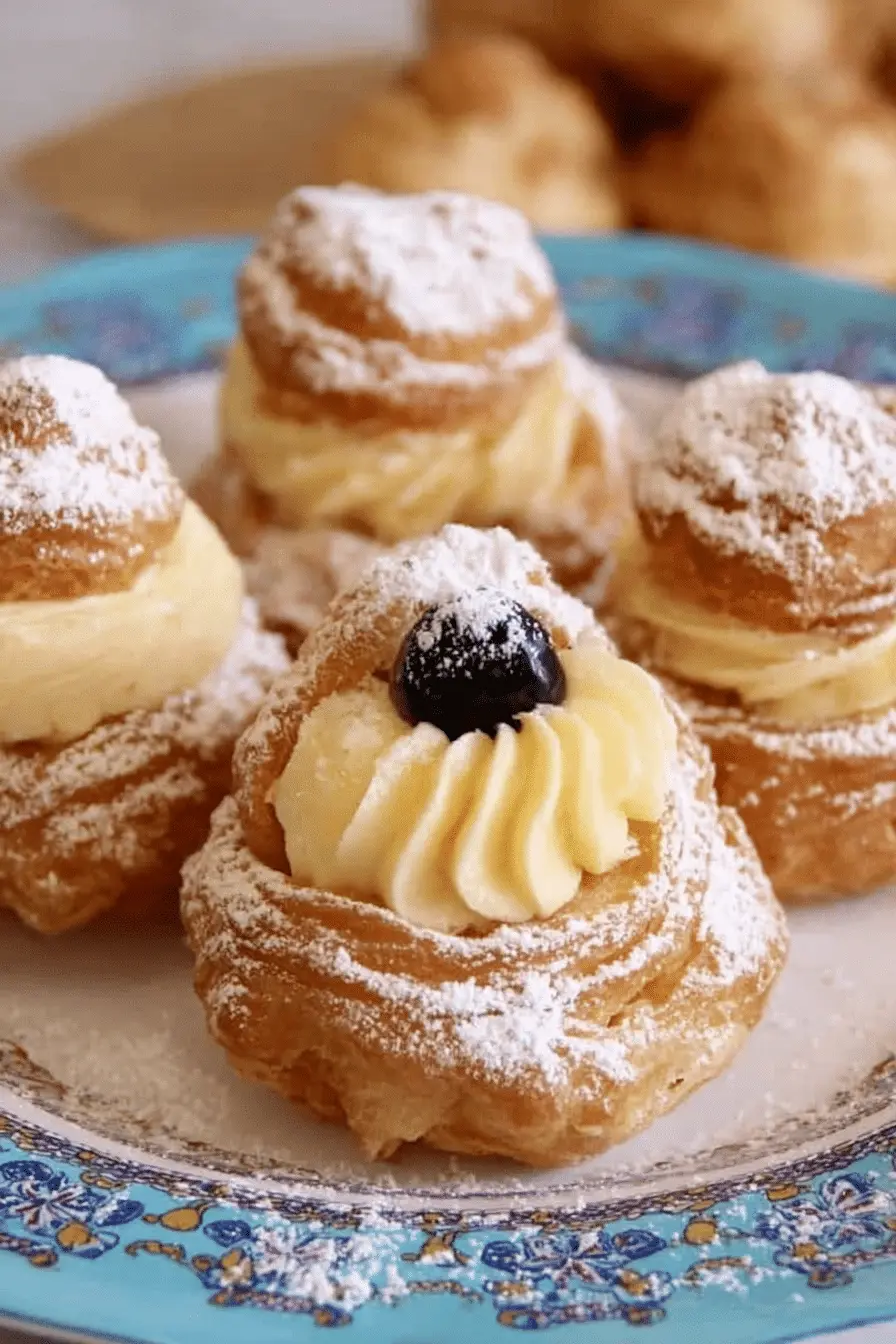
Zeppole di San Giuseppe are the pastry ambassadors of March 19th in many Italian households — bright, sweet, and slightly nostalgic. In Italy they’re associated with St. Joseph’s Day and often show up at church fêtes, family tables, and bakery windows. They’re a symbol of celebration but also of simple generosity: a fried or baked choux puff stuffed with creamy filling and crowned with a cherry. Other popular Italian pastries, such as Italian nut roll cookies, also share a place in cultural celebrations. Growing up, my Nonna would tuck a zeppola into my coat as we left the procession — warm and slightly greasy in the best possible way, a smell of butter and powdered sugar that still transports me. Different regions have different takes: some prefer ricotta-filled variations, others emphasize the pastry cream version that we’ll make here. The ritual of making, filling, and sharing zeppole is as important as eating them.Ingredients Needed for Zeppole di San Giuseppe
- Unsalted butter – brings richness to the choux and lets you control the salt level;
- Sugar – a touch in the dough for balance, plus powdered sugar to finish;
- Water – the steam engine for choux; hot water makes the pastry puff beautifully;
- All-purpose flour – gives structure to the choux; substitute with gluten-free blend for diet needs;
- Eggs – the leavening and binding power; room temperature eggs incorporate more evenly;
- Pastry cream (crema pasticcera) – the traditional filling, smooth and vanilla-scented; ricotta or chocolate are common alternatives;
- Powdered sugar – for dusting; it adds sweetness and a pretty finish;
- Cherries – maraschino or glazed cherries make the classic crown; fresh berries also work.
Step-by-Step Instructions to Make Zeppole di San Giuseppe
Below is the tested recipe I use in my kitchen. I’ve written these steps the way I actually make them — with sensory cues and small troubleshooting notes so you don’t end up with flat or greasy puffs.- Gather the exact recipe ingredients: 4 oz unsalted butter, 1 tsp sugar, 8 oz water, 1 cup flour, 4 eggs (room temperature), 1 recipe crema pasticcera (see pastry cream below), powdered sugar for sprinkling, and 16 cherries (optional).
- Make the choux pastry: Combine the butter, sugar, and water in a medium saucepan over medium heat and bring to a rolling boil. Watch the pan — as soon as the butter fully melts and the mixture boils, remove from heat. That boiling moment is important: the water and butter must be hot so the flour cooks properly when added.
- Add the flour all at once and stir vigorously with a wooden spoon for about a minute until the dough pulls away from the sides and forms a smooth ball. You’ll see a thin film on the bottom of the pan — that’s the flour cooking off. If you don’t dry the dough enough here, the choux will be loose and won’t puff properly.
- Remove from heat and let the dough cool briefly — stir it in the pan to release steam. This cooling is not just about comfort; if you add eggs while the dough is too hot, the eggs will scramble. I let it sit 2–3 minutes, then add one egg and beat until fully incorporated before adding the next.
- Continue adding the eggs one by one until the mixture is smooth and satiny. The final batter should fall from a spoon in a slow ribbon. If it’s too stiff, add a teaspoon of water or a small extra egg white; if it’s too runny, it won’t hold shape when piped.
- Transfer the batter to a piping bag fitted with a plain nozzle or simply spoon rounds onto a baking tray lined with parchment or a silicone mat. For classic zeppole, pipe rounds about 3 inches apart — they’ll expand. If you want a hollow center, pipe a small peak in the middle or press a small dip with the back of a teaspoon before baking.
- Bake: Bake at a moderate oven temperature for about 30 minutes (my oven runs true at 375°F/190°C). Don’t open the oven door during the first 20 minutes — that sudden influx of cool air can collapse the puffs. Once they’re golden and puffed, turn the oven off and leave them inside for 10 minutes before removing to a rack to cool; this helps dry the interior and prevents sogginess.
- While the choux are baking, prepare the pastry cream (crema pasticcera). I make a classic custard with milk, egg yolks, sugar, cornstarch, and vanilla. Chill fully; it needs to be cold to pipe neatly into the warm (but not hot) puffs.
- Using a skewer or small piping tip, make a hole in the side of each choux and fill with pastry cream using a piping bag. Put an extra dollop of cream in the small indentation on top and dust generously with powdered sugar.
- Finish with a cherry on top. Serve warm or at room temperature. If you plan to transport them, fill them just before serving to avoid the pastry getting soggy.
Tips for Perfecting Choux Pastry (Expert Notes)
I’ve ruined plenty of batches to learn these lessons. Here are the tips I now never skip:- Heat control: Bring the water-butter mix to a true boil before adding flour so the dough cooks properly.
- Drying the dough: Stir on the heat after adding flour until the dough forms a ball and a sheen appears on the pan — that indicates moisture has evaporated.
- Eggs at room temperature: They incorporate more easily; cold eggs can make the dough seize.
- Texture check: Batter should drop from a spoon in a thick ribbon. Too thin — add a bit more flour; too thick — add a touch of water or another egg white.
- Oven discipline: Don’t open the oven door early. Also, if the choux brown too quickly, reduce temperature a bit and extend bake time to dry them out without burning.
- To avoid greasy zeppole: Ensure the interior is dry before filling — that “oven off” rest helps. Also, for fried versions, keep oil at steady temperature (around 350°F/175°C) so they cook quickly without soaking oil.
- Piping technique: Hold the bag vertically and pipe with steady pressure. A plain round tip yields classic shape. If your puffs flop, pipe onto a very hot sheet so they start setting immediately.
Variations of Fillings and Flavors
Across Italy you’ll find many delicious takes on the zeppola filling. Here are the ones I make the most and how I tweak them:- Classic pastry cream (crema pasticcera) – silky, vanilla-scented, sometimes with a hint of lemon zest; my go-to for balance.
- Ricotta filling – slightly grainy and tangy, often sweetened and flavored with orange zest and a touch of cinnamon; popular in southern regions.
- Chocolate cream – fold melted dark chocolate into pastry cream for a rich, sophisticated option.
- Fruit compote – cook down berries or cherries with a little sugar and lemon; cool completely before filling to avoid soggy pastry.
- Liqueur-flavored creams – a splash of Limoncello or rum in the cream adds grown-up depth; add sparingly to avoid thinning the custard.
The Culinary History of Zeppole di San Giuseppe
Zeppole’s history is a patchwork of regional practices and centuries-old Catholic traditions. Originally, fried doughs were common across Europe as cheap, celebratory foods that used simple pantry staples: flour, eggs, and fat. In Italy, the association with St. Joseph grew because March 19th is his feast day, and communities used the occasion to prepare sweets and share them among neighbors. The exact origin of the name is debated — some trace it to the Latin word for foam or to local dialects. Over time, the choux-based version blossomed into what we now call zeppole di San Giuseppe: a light puff filled with cream, crowned with a cherry. Bakers in Naples would offer versions fried or baked, stuffed with ricotta or crema pasticcera, and the tradition spread to Italian emigrant communities worldwide. In my experience testing many variations, the pastry cream-filled, baked version wins for reliability — it’s easier to execute at home and less prone to oil temperature issues that can ruin fried batches.Serving Suggestions and Pairings
Serve zeppole the day you make them for the best texture: crisp-ish shell, airy interior, and cool, smooth filling. Plate them on a large platter dusted with extra powdered sugar and garnish with extra citrus zest for brightness. They’re small and shareable — ideal for a family table or a communal festa. Pair your delicious Zeppole di San Giuseppe with a traditional dessert like classic tiramisu for a well-rounded Italian meal.- With coffee: An espresso or a creamy cappuccino cuts the richness nicely.
- With wine: A sweet or lightly sparkling dessert wine (like Moscato d’Asti) complements the cream without overpowering it.
- For a party: Pipe the creams at the last minute and set them out for guests to fill their own — it’s interactive and prevents soggy shells.
Make-Ahead, Storage, and Safety Notes
If you need to prepare in advance, bake the choux shells a day ahead and store them in an airtight container at room temperature. Keep the pastry cream refrigerated up to 2 days. Fill the zeppole only a few hours before serving — once filled, they’re best eaten within the same day. Leftovers (if any) keep well in the fridge for up to 3 days but expect the shell to soften as it absorbs moisture from the cream. Food safety note: pastry cream contains eggs and milk — keep it chilled and discard if left at room temperature for more than two hours.FAQ
What is a zeppole di San Giuseppe? Zeppole di San Giuseppe are traditional Italian pastries made from choux pastry, typically filled with pastry cream and often topped with a cherry. They are especially associated with St. Joseph's Day celebrations in Italy. Why are zeppole eaten on St. Joseph's Day? Zeppole are tied to St. Joseph's Day as a tribute to St. Joseph, who, according to legend, sold pancakes to provide for his family during their time in Egypt. This connection has made sweet treats like zeppole a cherished part of the celebration. Can I make zeppole gluten-free? Yes! You can use gluten-free flour or a gluten-free all-purpose baking mix as a substitute for regular flour in the zeppole recipe, allowing those with dietary restrictions to enjoy this delicious treat. What other fillings can I use for zeppole? While pastry cream is traditional, you can get creative with fillings! Ricotta, fruit compotes, and chocolate are popular alternatives. Feel free to experiment with flavors to suit your taste! Can zeppole be made ahead of time? It's best to serve zeppole fresh for optimal taste and texture. However, you can prepare the choux pastry in advance and fill them right before serving for convenience.Conclusion: Celebrate with Homemade Zeppole
Making zeppole di San Giuseppe at home is less about perfection and more about the ritual — the hiss of butter in the pan, the glossy custard, and that satisfying dusting of sugar. Try the classic pastry cream version first; once you’re comfy with the choux, branch out into ricotta or chocolate fillings. I make these every March and sometimes mid-winter when we need a little sunshine on the table. Consider making homemade chocolate turtles as a sweet treat to complement your zeppole spread this Father's Day.Recipe Card
Delicious Zeppole di San Giuseppe: Celebrate St. Joseph's Day with This Italian Classic
- Prep
- 30 min
- Cook
- 5 min
- Total
- 45 min
- Serves
- 16
- Calories
- 116 kcal
- Protein
- 2.00 g
- Carbs
- 11.00 g
- Fat
- 7.00 g
Ingredients
- 4 ozunsalted butter
- 1 tspsugar
- 8 ozwater
- 1 cupflour
- 4 largeeggs, at room temperature
- 1 recipecrema pasticcera
- ¼ cuppowdered sugar, for sprinkling
- 16 piecesFabbri cherries (optional)
Instructions
- 1
First, make the choux pastry by combining the butter, sugar, and water in a medium saucepan over medium heat, bringing it to a rolling boil.
- 2
Add the flour all at once and vigorously stir with a wooden spoon for about a minute until the mixture forms a ball.
- 3
Remove from heat and continue stirring to cool the dough. When it cools slightly, add an egg and beat well until fully incorporated before adding the next. Repeat with the remaining eggs until you achieve a smooth and satiny batter.
- 4
Transfer the mixture into a piping bag or spoon it onto a baking tray lined with a silicone mat or parchment paper, forming small puffs about 3 inches apart.
- 5
Pipe the upper section of the pastry to create a small hole in the center, or use the back of a teaspoon to create one.
- 6
Bake for about 30 minutes. Turn off the oven and let them sit for 10 minutes, then transfer to a cooling rack.
- 7
While the cream puffs are baking, prepare the pastry cream.
- 8
Using a skewer, make a hole in the side of each choux pastry and fill with pastry cream using a piping bag. Top with more filling in the indentation and dust with powdered sugar.
- 9
Finish with a cherry or your choice of topping. Repeat the process with the remaining pastries.
You might also like


Reviews
Be the first to review this.