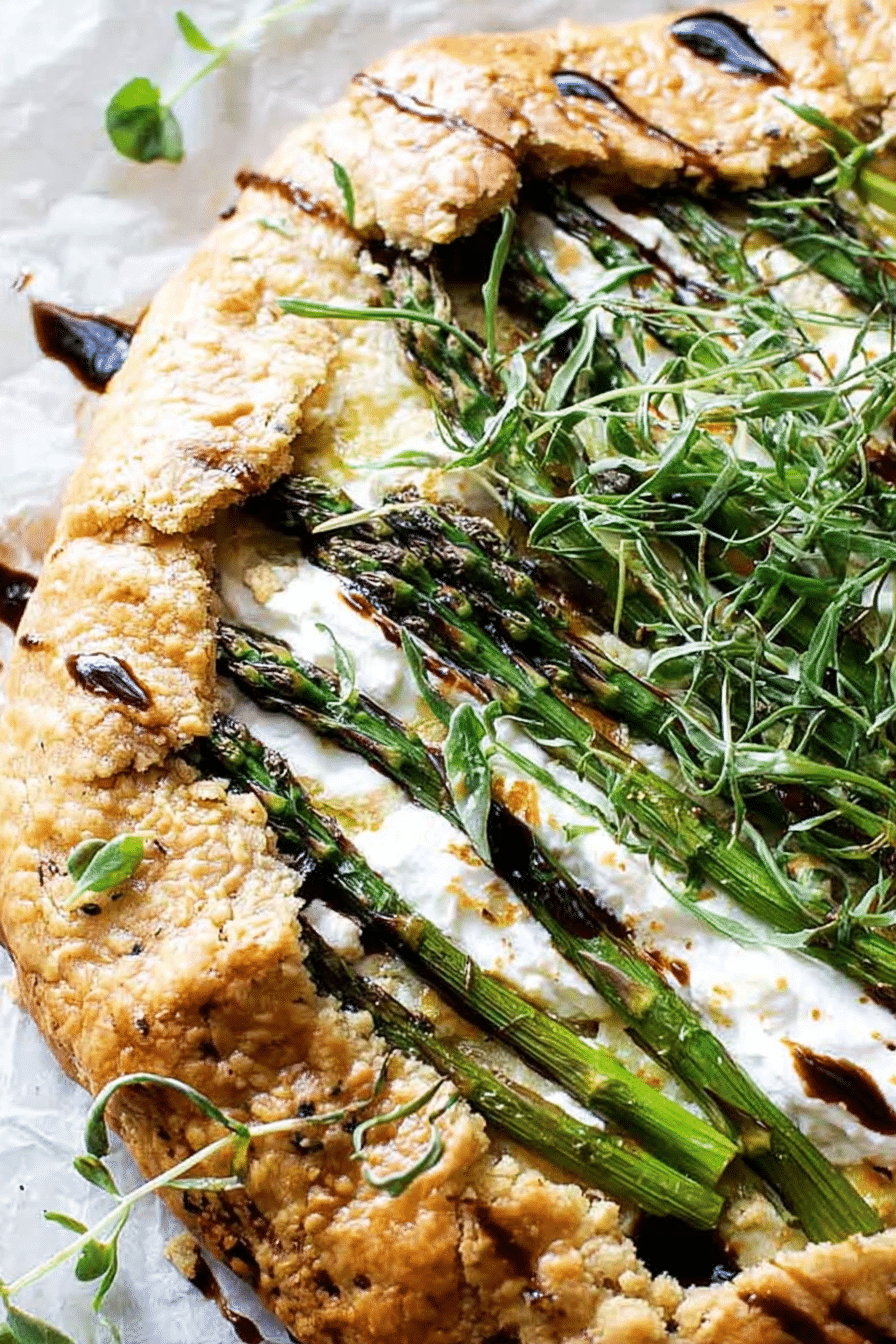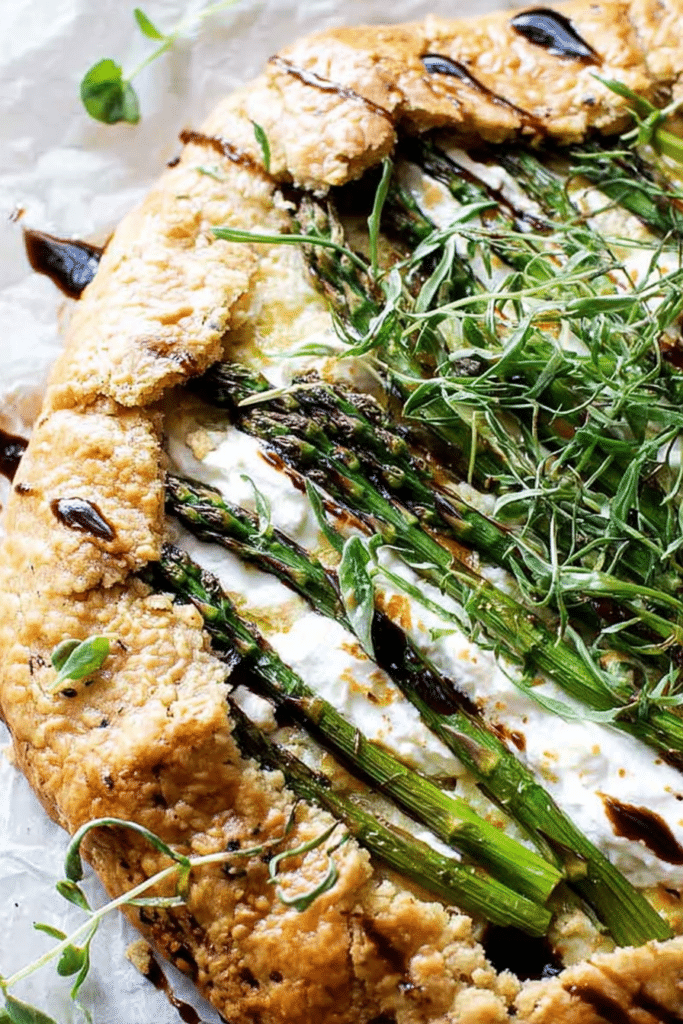
I first brought this asparagus galette to a spring brunch when asparagus was at its brightest and the market smelled of wild herbs. I remember carrying the tart across the patio — the crust golden and rustic, the asparagus tips still vivid green, the leeks glossy and sweet. Guests gathered around the cutting board like it was a centerpiece, and that moment convinced me this tart belongs at any table where you want a little theatricality without fuss.
In my kitchen the galette lives somewhere between relaxed and showy: the free-form crust keeps it approachable, while the jammy leeks and torn burrata add a gesture of luxury. I’ve learned that a few small choices — resting the dough, gentle heat for the leeks, and scattering the burrata only after the tart comes from the oven — make all the difference between “good” and “I need the recipe.”
I’ll be frank: I have messed up the crust more times than I care to admit. Sticky dough, overworked gluten, and leeks that browned too quickly taught me patience. Those mistakes are why I share the precise techniques here — so you can host confidently and enjoy that intoxicating aroma of warm cheese and spring vegetables filling the room.
Make this when you want something that looks like you worked for hours but lets you keep one eye on the guests. If you adore asparagus, try pairing this with a bright pasta for the same dinner —
If you love the flavors of asparagus, you might also enjoy making our lemon asparagus pasta for your next gathering.
Why Entertainers Reach for This Asparagus Galette
This galette is the kind of dish hosts reach for because it reads as both casual and elegant: the rustic crust keeps it relaxed, the layered filling is visually stunning, and the mix of textures satisfies a crowd with varied tastes. I’ve used it as a brunch centerpiece, a potluck showstopper, and a springtime appetizer plated on a wooden board.
- The look: vivid asparagus tips, glossy leeks, and torn burrata create an immediate visual focal point at the table.
- The balance: buttery, flaky pastry contrasts with creamy ricotta and the vegetal snap of asparagus — it appeals to many palates without being fussy.
- The flexibility: you can serve it warm or at room temperature, which frees you to mingle rather than stand over an oven.
I’ve watched friends pass around slices and compare notes on the leeks alone — it’s a conversation-starter. If you want another asparagus-forward crowd pleaser to rotate into your menu, consider adding lemon asparagus pasta to your repertoire for a complementary course.
Everything You Need for Asparagus Galette with Jammy Leeks and Ricotta
Fresh ingredients and a couple of solid tools make this recipe effortless. Below I talk through each critical ingredient and the equipment I reach for when I’m hosting.
- All-purpose and whole-grain pastry flours – Create a tender, slightly nutty crust; you can sub with a gluten-free flour blend if needed.
- Cold butter – The workhorse for flakiness; keep it chilled until the last moment.
- Ice water – Binds the dough without melting the butter.
- Leeks – Provide sweet, jammy depth; trim and wash thoroughly to remove grit.
- Asparagus – The star vegetable; choose firm, straight spears with bright tips.
- Ricotta – Acts as the creamy base layer that keeps the filling moist and slightly tangy; can be swapped for a lighter or dairy-free ricotta alternative.
- Parmesan or Pecorino – Adds savory saltiness and umami; grated and scattered for a crisp top.
- Burrata – Torn over the hot tart at the end for a luxurious finishing touch; soft fresh cheeses like burrata are optional and added after baking.
- Olive oil and egg wash – Oil lightly seasons the dough and an egg wash gives the rim a glossy, golden finish.
- Optional finishing touches – Balsamic glaze, flaky sea salt, and cracked black pepper for contrast and brightness.
Equipment I reach for:
- Food processor (or pastry cutter) for quick dough mixing.
- Rolling pin and parchment paper for easy rolling and transfer.
- Baking sheet or pizza pan with a rim to catch any drips.
- Nonstick skillet for gently cooking the leeks.
Emphasizing substitutions up front helps when you’re planning for dietary needs: a store-bought gluten-free crust or a nut-based crust works in a pinch, and cultured nut ricotta or silken tofu blended with lemon and salt can replace dairy ricotta.
The Secret to a Flaky Galette Crust
Flakiness is all about cold fat, minimal handling, and a short rest. I always keep my butter in the freezer until just before pulsing, and I treat the dough gently; if it feels warm, I refrigerate it again. The rest period relaxes gluten and makes rolling predictable.
- Keep the butter cold: work quickly so pea-sized butter pieces remain intact in the dough — those pockets create flaky layers as they steam in the oven.
- Pulse, don’t overwork: use a food processor in short bursts or a pastry cutter until the mixture looks like coarse sand with some larger bits.
- Test for cohesion: add cold water sparingly until the dough holds when you squeeze a small handful; too much water gives a tough crust.
- Chill: form into a disk and rest the dough well chilled; this firms the fat and prevents shrinkage while baking.
- Roll carefully: roll between parchment, turning the dough often and using light pressure to avoid tearing; if the dough resists or cracks, tuck the edges gently and chill briefly.
- Egg wash and gentle folding: brush the rim for color, and fold the border over the filling in sections, pressing just enough to hold — don’t seal tightly, the cracked edges are part of the charm.
How to Get Jammy Leeks Without Browning
Jammy leeks should be soft, glossy, and sweet without any caramelized or bitter notes. The trick is medium heat, frequent stirring, and patience so they release moisture and soften slowly rather than sear.
- Trim and clean leeks very well to remove sand — slice into thin half-moons and spin dry.
- Start with melted butter over medium heat, then add the leeks and a pinch of salt to coax out moisture.
- Cook slowly, stirring frequently, lowering the heat if you see any browning; the goal is translucent, tender leeks that hold together like jam.
- If the pan dries and the leeks aren’t soft, add a splash of water to loosen and continue cooking gently.
- Finish with a light seasoning — a little acid at the end (a squeeze of lemon) brightens the sweetness if desired.
If you want a comforting follow-up that highlights leeks in another way, try my take on a classic:
To further explore the versatility of leeks, check out our recipe for classic potato leek soup.
Choosing Cheeses: Ricotta, Burrata and Smart Substitutes
Cheese selection determines texture and flavor balance. Ricotta creates a cooling cushion for the vegetables; grated hard cheese adds savory, melty crispness; and burrata brings a creamy flourish when added post-bake.
- Ricotta – Mild, creamy base that prevents dryness and marries well with herbs; for a lighter option choose a drained ricotta or a cultured nut ricotta for dairy-free diets.
- Parmesan/Pecorino – Salty, umami-forward grate for depth and a golden top; use a vegetarian hard cheese if avoiding animal rennet.
- Burrata – Tucked on after baking, it provides a silky, luxurious finish; if you’re dairy-free, use a chilled cashew cream or a soft almond-based cheese for a similar effect.
- Goat cheese or cream cheese – Good swaps for ricotta when you want tang or creaminess; keep in mind stronger cheeses will dominate the flavor profile.
Choosing the right substitute keeps the galette’s character intact: aim for something creamy and slightly tangy to mimic ricotta’s role, and choose a meltable hard cheese to replace Parmesan’s savory lift.
How to Make Asparagus Galette with Jammy Leeks and Ricotta (Step-by-Step)
The method is simple: make and chill the dough, gently render the leeks, assemble, bake until golden, then finish with burrata and a drizzle. Follow these steps and you’ll have a galette that looks like a centerpiece and tastes like spring.
- Prepare the dough: pulse flours with cold butter until coarse, add just enough ice water for cohesion, form into a disk and chill until firm.
- Make the leeks: slice, wash thoroughly, and cook slowly in butter with a pinch of salt until jammy and tender; let cool slightly before using.
- Preheat the oven to a high temperature to ensure a crisp crust and set up a baking surface (a rimmed sheet or pizza pan works well).
- Roll the dough between sheets of parchment to a broad circle, transfer on the lower parchment to a pan, and brush the center with a little olive oil to create a barrier between crust and filling.
- Spread a blanket of ricotta over the oiled center, leaving a wide border; scatter half of the grated hard cheese over the ricotta.
- Evenly distribute the jammy leeks, then arrange trimmed asparagus spears on top; sprinkle the remaining grated cheese.
- Fold the rimed dough up and over the filling in sections, creating pleats and leaving the center exposed; brush the crust with an egg wash for color.
- Bake until the crust is deeply golden and the filling is set — the asparagus should remain vibrant and just tender.
- Remove from the oven and immediately tear or cut the burrata into pieces, distributing it across the hot tart so it softens but doesn’t fully melt.
- Finish with a light drizzle of balsamic glaze, a scatter of flaky sea salt, and cracked black pepper; slice and serve warm or at room temperature.
Pro Tip for asparagus galette with jammy leeks and ricotta: Make-Ahead, Gluten-Free & Dairy-Free Swaps
To keep entertaining stress-free, plan which components you can make early and which are best finished at the last minute. I typically bake the galette the morning of the event and add the burrata just before serving.
- Make-ahead: The dough can be refrigerated for up to a week or frozen for longer; jammy leeks refrigerate well and can be reheated gently before assembly.
- Freeze-friendly: Assemble the galette unbaked, freeze on a tray until firm, then wrap and store; bake from frozen, adding a few extra minutes to the cooking time.
- Gluten-free crust options: Use a tested gluten-free all-purpose blend or a nut-and-oat crust; keep the dough chilled and handle gently to prevent crumbling.
- Dairy-free cheese swaps: Replace ricotta with blended silken tofu or a cultured cashew ricotta; use almond-based soft cheese in place of burrata and nutritional yeast or dairy-free hard cheese for savory notes.
- Batch tips: Make the leeks and grate the hard cheese the day before to shave time on the day of the event.
- Pairing for a heartier menu: If you want a main course alongside the galette, try a richer protein —
If you’re looking for a main course, consider pairing the galette with our creamy garlic chicken for a complete meal.
Wine Pairings and Side Dishes for Spring Brunch
Pairing this galette calls for wines that accentuate freshness without overwhelming the cheeses: crisp, herbal whites and lively rosés complement the asparagus and leeks beautifully.
- Sauvignon Blanc or Vermentino — bright acidity and green notes to echo the asparagus.
- Dry Rosé — a crowd-pleasing choice that adds fruit brightness while keeping the meal light.
- Champagne or dry sparkling wine — for a celebratory brunch, the bubbles cleanse the palate between bites.
Side dishes to round out the table should be seasonal and light: a simple peppery salad, roasted new potatoes, or a chilled vegetable platter. For an appetizer that echoes the galette’s ricotta, try a small crostini plate —
Consider serving our delightful ricotta crostini with peas and mint as an appetizer alongside the galette.
How to Store, Reheat, and Serve Leftovers
Leftovers keep well and are easy to revive. I always slice a few wedges and store them flat to preserve the crust.
- Storage: Place cooled slices in an airtight container in the refrigerator for up to 3 days; separate layers with parchment to prevent sticking.
- Reheating: Warm slices in a preheated oven or toaster oven until the crust crisps and the filling is just warmed through; avoid the microwave if you want to keep the crust flaky.
- Serving ideas: Turn slices into quick open-faced sandwiches with arugula, or chop and fold into a frittata for a next-day brunch option.
Frequently Asked Questions
- What is an asparagus galette?
An asparagus galette is a rustic, free-form tart typically made with a flaky pastry crust and filled with fresh asparagus, cheese, and other flavorful ingredients like jammy leeks, ricotta, and burrata. It’s a delicious way to celebrate spring!
- Can I make the galette crust ahead of time?
Absolutely! You can prepare the galette crust in advance and refrigerate it for up to a week. This makes it super convenient for entertaining or meal prep.
- What type of cheese can I substitute in the recipe?
If you don’t have ricotta or burrata on hand, you can substitute with cream cheese for ricotta and other soft cheeses like goat cheese for burrata. Feel free to experiment with your favorite cheeses!
- How do I store leftovers?
To store leftovers, place them in an airtight container in the fridge. Reheat gently in the oven to keep the crust crispy, or enjoy at room temperature!
- What can I serve with the galette for a complete meal?
Consider serving the galette with a light salad or a side of roasted vegetables for a complete meal. It’s also great with a glass of white wine for a spring brunch!