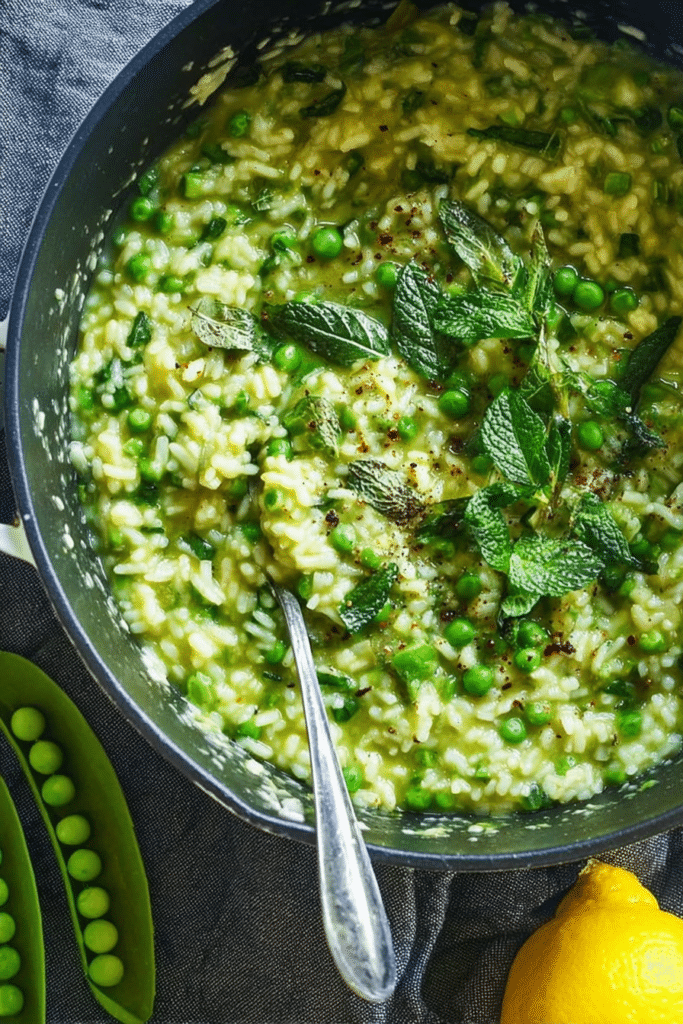
I make this pea risotto on busy weeknights when I want something that feels special without a lot of fuss. I love how the sweetness of peas and the brightness of lemon and mint come together in a bowl that’s comforting yet light. In my kitchen it’s the dish I turn to when I want fast flavor and simple ingredients.
What I appreciate most is the minimal hands-on time: a short bit of prep, a steady rhythm at the stove, and a finished risotto that feels like it took longer than it did. The aroma of shallots softening in olive oil and the green perfume of fresh peas and mint always makes the kitchen feel lively.
I often top this risotto with a seared piece of fish or a few pan-roasted scallops to turn it into a complete meal for the family. If I’m keeping it vegetarian, a drizzle of good olive oil, a little grated cheese, and extra lemon brightens it right before serving.
My goal when I cook this is to keep things straightforward: fresh flavor, fast technique, and a forgiving method that works whether I’m using fresh spring peas or a bag from the freezer.
Why this pea risotto is the quick, fresh dinner your week needs
This recipe hits the sweet spot for busy households: limited prep, predictable timing, and bright seasonal flavor. You’ll smell the sweetness of peas and the citrus lift of lemon while the rice cooks into a creamy texture that still holds a little bite. It’s adaptable — pair it with seared fish or scallops for protein, or let it stand alone as a satisfying vegetarian main.
- Minimal active prep so you can manage other tasks while it cooks.
- Fresh peas and mint give a quick hit of seasonality without complicated steps.
- Finishes quickly and pairs easily with simple proteins or a crisp salad for a complete meal.
Everything You Need for Pea Risotto
Below are the ingredients and tools that make this risotto simple and reliable. I keep these items on hand so the recipe is always quick to pull together.
- Arborio rice – The high-starch short-grain rice that creates risotto’s signature creamy texture.
- Vegetable or chicken stock – Hot stock is essential for even cooking and consistent texture; use whatever suits your diet.
- Olive oil – For sautéing aromatics and finishing the dish if you want a silkier mouthfeel.
- Shallots or mild onion – Builds the savory base without overpowering the peas.
- Garlic – Brightens the savory notes; add sparingly to avoid bitterness.
- White wine or acid – A splash helps deglaze the pan and lift flavors; lemon juice is an easy substitute.
- Fresh or frozen peas – Fresh peas offer a sweeter snap; frozen peas are fast and keep the color vivid.
- Grated hard cheese (Pecorino or Parmesan) – Adds savory depth and creaminess without cream.
- Lemon zest and fresh mint – Finishers that give the risotto its bright, spring character.
- Optional finishing oil (truffle or extra virgin olive oil) – A small drizzle takes the bowl up a notch if you like an aromatic finish.
Tools: a heavy-bottomed pot or Dutch oven, a small saucepan for blanching or heating peas, a ladle, and a blender or immersion blender for the pea puree if you want a vibrant green finish.
Nutrition note: this risotto is carbohydrate-forward with a modest amount of protein and healthy fats from olive oil and cheese. Using vegetable stock and skipping cheese easily lowers saturated fat for a lighter finish.
Fresh vs. Frozen Peas: When to Use Each (and How to Prep Them Fast)
Both fresh and frozen peas can make an excellent risotto; choose based on seasonality and time. You should be able to see and smell the bright green color and sweet pea aroma as you work.
- Fresh peas – When peas are in season, blanch them briefly to brighten the color and concentrate the sweetness. Bring salted water to a boil, add peas, cook until tender-crisp, then shock in ice water to preserve color.
- Frozen peas – Perfectly acceptable year-round and save time. Thaw quickly under running warm water or add them directly to the risotto at the end so they heat through without overcooking.
- Quick puree – Reserve a portion of your blanched or thawed peas and puree with a little water and olive oil (or a handful of spinach for bluer-green color) to stir into the risotto for vibrancy and extra pea flavor.
- Fast prep tip – Keep a bag of frozen peas in the fridge for weeknight cooking; they thaw fast and keep work minimal.
The Secret to Silky, Speedy Risotto
Risotto’s creaminess comes from the starch released by the rice and the gentle agitation during cooking. You’ll watch the rice change from opaque to glossy as the starch loosens and creates that silky sauce.
- Always use hot stock so the temperature stays steady and the rice cooks evenly.
- Stir at regular intervals rather than constant stirring; this encourages starch release without wasting time.
- Add liquid gradually so the rice absorbs it slowly and finishes al dente with a creamy surrounding sauce.
Troubleshooting (bulleted for quick scanning):
- Too soupy: Continue cooking off a little liquid without adding more stock until it tightens; finish with cheese off heat to bind.
- Grainy or undercooked rice: Your stock may have been too cool or you added liquid too quickly; keep stock warm and be patient between additions.
- Mushy rice: You cooked it too long or added too much liquid at once; next time reduce liquid and test for a slight bite early.
How to Make Pea Risotto (Step-by-Step)
Follow this simple sequence; I write the steps so you can work confidently and keep other parts of dinner moving.
- Warm your stock in a small saucepan and keep it at a gentle simmer.
- In a heavy-bottomed pot, heat oil over medium-low heat and soften shallots and garlic until fragrant and translucent.
- Add the Arborio rice and toast briefly until the edges are translucent, coating each grain in oil.
- Deglaze the pan with wine or a splash of water with lemon, stirring until the liquid is absorbed.
- Add hot stock in increments, stirring at regular intervals and allowing the rice to absorb liquid between additions. Continue until the rice is tender with a slight bite.
- Meanwhile, blanch fresh peas or gently heat frozen peas; reserve some for texture and puree some with a bit of water and oil for color and flavor.
- When the rice is cooked, remove from heat and fold in grated cheese, lemon zest, the whole peas, and the pea puree. Stir in most of the mint, reserving some for garnish. Adjust salt, pepper, and lemon to taste.
- Serve immediately with a light drizzle of oil or a few herb leaves on top.
Pro Tip for pea risotto recipe: Use hot stock and timed stirring for best texture
Pro-Tips, Troubleshooting, and Variations are presented as bulleted lists so you can scan them quickly.
- I always keep my stock simmering on the back burner; adding warm liquid keeps the rice cooking at the right pace.
- Stir every 45–60 seconds rather than constantly — it saves effort and still produces creaminess.
- Adjust the final texture by adding a splash more hot stock or a knob of butter (or olive oil) off heat to finish.
- For a brighter green, blend in a handful of spinach with your pea puree — it won’t change the flavor much but boosts color.
How to Store, Reheat, and Make-Ahead Pea Risotto
Leftovers keep well and can be transformed into a quick lunch or reworked into another dish. Proper storage and gentle reheating will help the texture come back to life.
- Storage: Cool to room temperature, then store in an airtight container in the refrigerator for up to three days.
- Reheating: Warm gently on the stove with a splash of hot stock or water, stirring until creamy. Microwaving can work if you add liquid and stir halfway through.
- Make-ahead: Cook the risotto almost to completion, let it cool, and finish it just before serving with fresh mint and cheese to retain brightness.
If you have leftover pea risotto, consider making a hearty Leftover Meatloaf Chili for a quick meal.
Easy Variations: Vegan, Gluten-Free, and Protein Topping Options
Here are quick swaps and topping ideas so this risotto fits your weeknight needs and dietary preferences.
- Vegan: Use vegetable stock and omit the cheese or stir in a dairy-free cheese alternative or nutritional yeast for savory depth.
- Gluten-free: The recipe is naturally gluten-free as long as your stock and any finishing oils are certified gluten-free.
- Protein toppings: Simple seared fish, scallops, grilled chicken, or crispy pancetta are quick ways to add protein without changing the risotto’s bright profile.
- Herb twists: Swap mint for basil or tarragon for a different aromatic finish.
For another delicious risotto option, try our Spring Green Risotto featuring asparagus and fennel.
Pairing Suggestions for Wine or Side Dishes
Think fresh and bright on the table to match the risotto’s grassy pea notes. Light, unoaked white wines complement the lemon and mint without overpowering the dish, and simple sides balance the bowl for a full meal.
- Wines: Try a crisp Pinot Grigio, a dry Sauvignon Blanc, or a youthful Vermentino.
- Sides: A crisp green salad with a lemony vinaigrette or roasted vegetables with a touch of olive oil and sea salt work well.
- Protein pairing: Pan-seared scallops or a simply seasoned piece of white fish are natural companions — for a richer pairing try garlic shrimp.
Elevate your pea risotto with a side of Creamy Garlic Parmesan Shrimp for a luxurious touch.
Frequently Asked Questions
How long does it take to make pea risotto?
Around 55 minutes total, including a short prep and about 45 minutes of cooking time.
Can I use frozen peas instead of fresh ones?
Absolutely. Frozen peas work well — add them toward the end so they heat through without losing texture.
What can I serve with pea risotto?
It’s delicious on its own but pairs beautifully with seared fish, scallops, or a fresh salad for a complete meal.
How do I store leftover pea risotto?
Store leftovers in an airtight container in the refrigerator for up to three days. Reheat gently on the stove with a little broth or water to return it to a creamy texture.
Can I make this risotto vegan?
Yes. Use vegetable stock and omit the cheese or swap in a plant-based cheese alternative to keep it vegan-friendly.
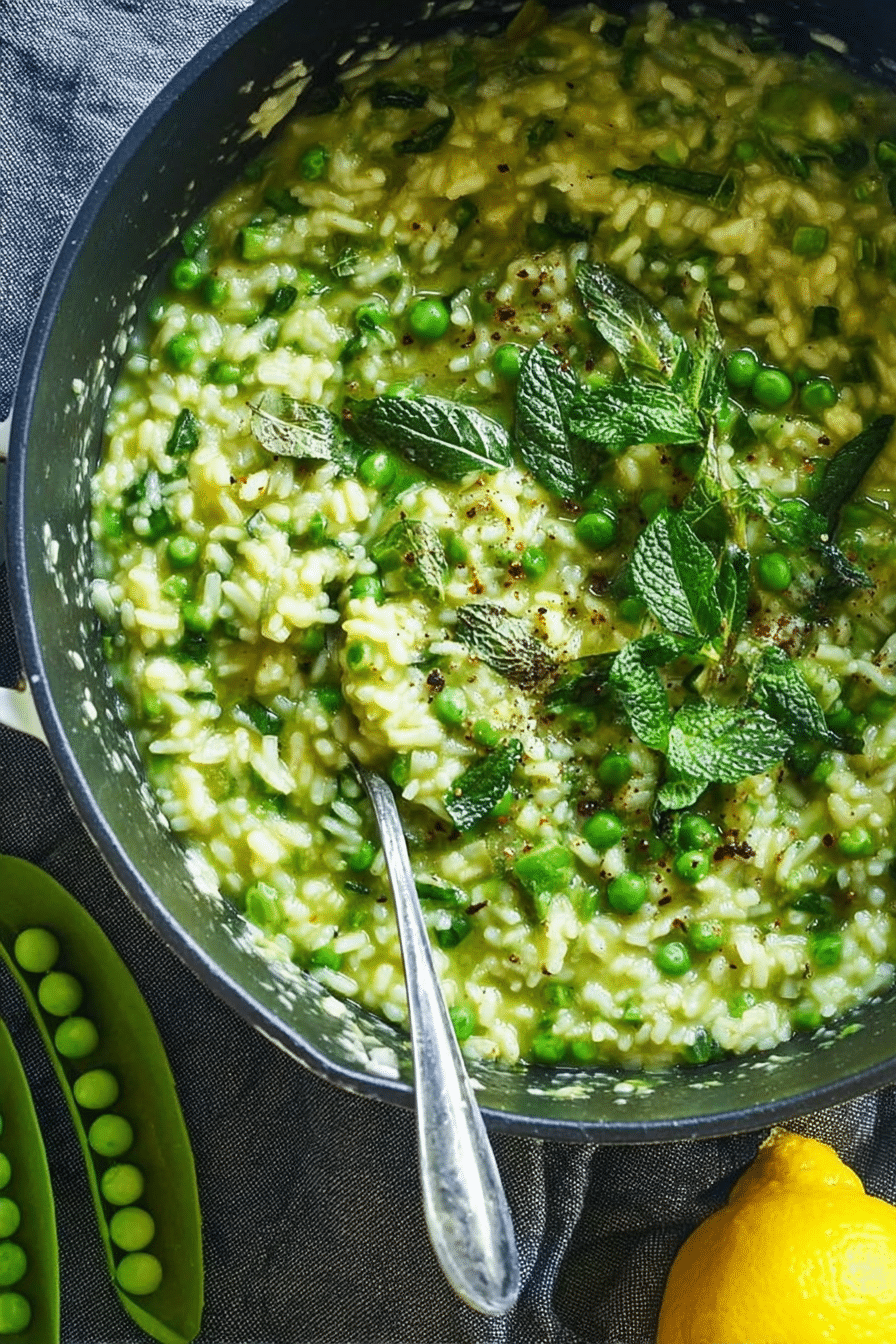
Pea Risotto Recipe
Ingredients
Method
- Heat 4 cups vegetable broth in a medium pot.
- In a heavy-bottom pot or Dutch oven, heat 2 tablespoons olive oil over medium-low heat and sauté shallots and garlic until fragrant and golden, about 5 minutes, stirring.
- Add the Arborio rice and stir to coat for one minute. Add white wine to deglaze the pan and simmer until absorbed. Gradually add hot broth, stirring every 45-60 seconds, until the rice is tender (about 20 minutes).
- Blanch the peas by boiling salted water, adding peas for 2-3 minutes, then drain.
- Blend ½ cup blanched peas with ½ cup water and 1 tablespoon olive oil until smooth, adding spinach if desired. Set aside.
- When risotto is tender, fold in Pecorino, lemon zest, blanched peas, and pea puree. Season to taste and stir in ⅔ of the mint.
- Serve the risotto with a drizzle of truffle oil and garnish with remaining mint.