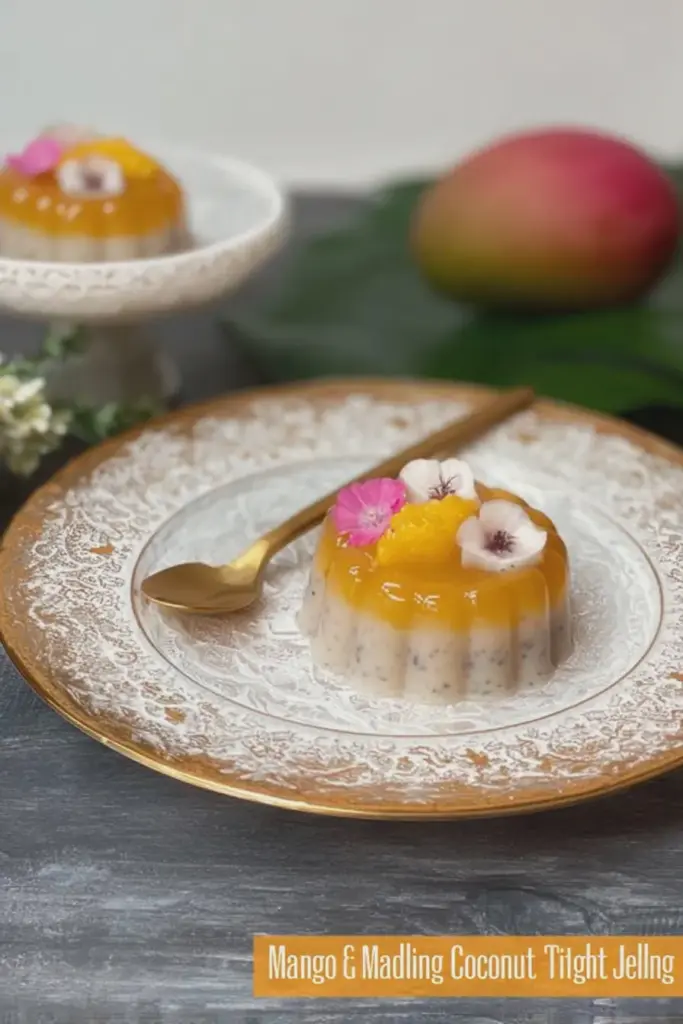
I fell in love with this mango coconut jelly the first summer I made it for a backyard party — the kind of recipe you can mix up between setting lamps and slicing citrus for cocktails. In my kitchen it became the dessert I reached for when the weather demanded something cool, bright, and cheerfully tropical. The mango layer glows like sunset; the coconut layer cools the palate, and together they feel like a small, fragrant vacation on a plate.
Over the years I’ve learned a few kitchen habits that make the difference between a pretty but runny blob and a clean, wobble‑perfect jelly that slices neatly and still jiggles. Small things — how long you simmer the agar‑agar, how gently you pour the warm coconut over the set mango, and the ripeness of the fruit — completely change the final texture. I test each batch with the spoon trick I rely on, and I’ll tell you that trick below.
I bring this dessert to summer gatherings because it’s light on the stomach, visually striking on a dessert table, and easy to scale up for a crowd. If you want a slightly richer party spread, try pairing the jelly with richer bites — I like serving it alongside something buttery and savory to balance the sweetness. For a fun contrast this summer, try it with Creamy Garlic Butter Lobster Tails served alongside this refreshing jelly.
In this piece I’ll walk you through what to buy, how to handle the agar‑agar (it behaves differently from gelatin), and my favorite ways to present the finished jellies so they look like they came from a patisserie rather than my home counter.
Why This Thai Mango Coconut Jelly Is Perfect for Summer Parties
This dessert is light without feeling insubstantial: the mango purée brings bright fruit sweetness while the coconut layer adds cooling creaminess. The colors are bold — mango yellow against soft coconut white — which makes it pop on a buffet and photograph beautifully for your party feed. Because the structure is set with agar‑agar, each portion holds its shape, making it easy to plate, stack, or serve in individual glasses.
Sensory note: imagine the floral perfume of fully ripe mangoes, the clean, slightly sweet aroma of coconut water, and the first cold bite sliding smoothly across your tongue. That contrast — vibrant fruit and cool cream — is exactly why guests go back for seconds.
If you’re curating a menu, this jelly plays well with both light and indulgent dishes. It’s lovely next to lighter seafood options; for a contrast in texture and richness, consider placing it near Creamy Garlic Butter Lobster Tails on your buffet for a memorable sweet‑and‑savory pairing.
Everything You Need for Thai Mango Coconut Jelly
Below I list the ingredients and tools you’ll want on hand, with quick notes on their roles and easy swaps if you need them. Keep the focus on freshness — ripe mango and good coconut will lift the whole dessert.
- Mango – The star: makes the purée and provides bright color and natural sweetness. Swap with ripe papaya or peach if mangoes are out of season.
- Orange juice – Adds acidity and a fresh citrus lift to the mango purée; lemon or lime works as alternatives for a tarter edge.
- Agar‑agar – The vegan gelling agent that gives the jelly its firm, glossy set. It’s different from gelatin; follow temperature tips below.
- Sugar – Balances the fruit and rounds the coconut. You can use alternative sweeteners, but soluble liquid sweeteners may change setting slightly.
- Coconut water – Keeps the coconut layer light and clean-tasting. Use plain coconut water rather than sweetened mixes for the best balance.
- Coconut cream – Adds the creamy mouthfeel for the coconut layer. Full‑fat coconut cream yields the best texture; canned full‑fat is ideal for richness.
- Fresh lime (optional) – A squeeze brightens the mango purée and cuts through sweetness; use sparingly to preserve the mango flavor.
- Tools – Blender for puréeing, saucepan for simmering agar, a heatproof bowl or jug for pouring layers, small molds or glasses for serving, and a fine sieve if you prefer an ultra‑silky purée.
The Secret to a Silky, Wobble-Perfect Jelly
Agar‑agar is less forgiving than gelatin when it comes to temperature and dissolving. It must be completely dissolved in simmering water and then gently combined with your flavored liquid while hot. Overheating won’t ruin the set, but under‑dissolved agar will leave tiny specks or a grainy texture.
Sensory focus: you should see a glossy surface, feel a firm but yielding wobble when nudged, and notice a clean break on a slice rather than a tear‑like texture. Here’s how to make that happen every time:
- Measure agar precisely and dissolve it completely in cold water before heating; this helps avoid lumps.
- Bring to a simmer and keep stirring until the liquid is clear and the agar strands are gone — a few seconds more is okay.
- Temper the flavored purée with a small amount of hot agar liquid if you’re worried about curdling or separation;
- Pour slowly over a spoon when layering to avoid heat shocking a set layer.
Choosing Ripe Mangoes and Coconut for Bright Flavor
Ripe mango is nonnegotiable for bright, juicy flavor. Look for fruit that yields slightly to gentle pressure and gives off a sweet, fruity perfume at the stem end. The flesh should be buttery and easy to purée. If the mango is underripe you’ll need more sweetener and the color won’t be as vibrant.
For the coconut element, choose pure coconut water with a clean, slightly sweet aroma and canned coconut cream that smells fresh and lacks a metallic or canned after‑note. The balance between the light coconut water and the richer cream is what keeps the dessert feeling refreshing rather than heavy.
It’s worth noting a bit of cultural context: layered mango and coconut desserts are common across Southeast Asia because the ingredients are abundant and complementary — fruit brightness paired with coconut’s cooling richness speaks to local flavor profiles and festival treats. Using ripe, seasonal mangoes connects this dish to those traditions while keeping the execution simple for a home cook.
For more mango ideas you might enjoy trying this Tropical Mango Cheesecake alongside other mango desserts at your next gathering.
Why Agar-Agar and Temperature Matter
Agar‑agar is derived from seaweed and gels as it cools; unlike gelatin, it sets firmly at room temperature and doesn’t require refrigeration to hold shape, though chilling gives a nicer snap. Its gelling strength is affected by concentration, acidity, and the presence of sugars or other solids.
Technical tips:
- Agar needs full dissolution — watch for clarity in the simmering liquid as your cue.
- High acidity (from large amounts of citrus) can weaken the gel, so add lime or lemon sparingly and test set strength if you change quantities.
- When combining hot agar solution with a cooler purée, temper by whisking a small ladle of hot liquid into the purée first, then returning the mix to the pan; this prevents separation or graininess.
- Store agar powder in a cool, dry place; old or improperly stored agar can lose strength and affect setting.
How to Make Thai Mango Coconut Jelly (Step-by-Step)
Follow these steps with care — timing and gentle handling are what give you clean layers and a silky mouthfeel. Use the bulleted workflow below and keep an eye on small cues like clarity of the agar solution and the wobble test for the mango layer before pouring the coconut.
- Peel and chop ripe mangoes, then purée them with a splash of orange juice until completely smooth; strain if you want an ultra‑silky texture.
- In a saucepan, sprinkle agar‑agar into cold water and let it hydrate briefly, then bring the mixture to a simmer over medium heat, stirring constantly until the agar is fully dissolved and the liquid is clear.
- Add sugar to the simmering agar, stir until dissolved, then mix in the mango purée and a squeeze of lime if using; keep the heat low and stir to prevent scorching.
- Remove the mango mixture from heat and pour into molds or glasses. Let this layer cool and firm at room temperature until it passes the spoon test — it should wobble but not slosh.
- Blend coconut water with coconut cream until smooth; if you like texture, pulse instead of fully emulsifying so you keep small cream pockets.
- Repeat the agar step for the coconut layer: dissolve agar in water, simmer until clear, sweeten, then stir in the coconut mixture while hot.
- Gently pour the hot coconut layer over the set mango layer — pour over the back of a spoon to diffuse the heat and avoid breaking the mango layer’s surface.
- Allow the complete dessert to cool to room temperature, then refrigerate for a few hours to firm up fully before trimming or unmolding.
Pro Tip for thai mango coconut jelly: Fixing Common Agar-Agar Issues
I test each batch and keep these quick fixes in my back pocket. They’ve saved more than one party from a disappointing dessert — keep this list handy.
- Grainy texture: Most often comes from under‑dissolved agar. Solution: reheat the mixture until fully clear and strain through a fine sieve; add a tiny extra pinch of agar if needed and reboil briefly.
- Won’t set: The agar may be old or you had too much acidic liquid. Solution: melt a small extra amount of agar in hot water, bring to a full simmer, whisk into the unset mixture, and chill to set.
- Layers mixing when poured: The coconut was too hot. Solution: cool the coconut mixture slightly and pour over the back of a spoon; allow the mango layer to reach a gentle wobble before adding the next layer.
- Too firm or rubbery: You used too much agar. Solution: for future batches reduce the agar slightly; for this batch, serve in smaller scoops where firmness is less noticeable.
- Flavor too sweet or flat: Brighten the mango layer with a bit more citrus (lime or orange) and balance the coconut with a touch less sugar next time.
Party-Ready Serving Ideas and Presentation Tips
Make the dessert pop on your table with layered shots, cake‑ring molds, or trimmed cubes. I like to top each portion with thin mango slices, a curl of lime zest, or toasted coconut flakes right before serving for texture and color. For an easy party pairing, serve alongside a light tropical salad or even something buttery and savory like Creamy Garlic Butter Lobster Tails for contrast.
For a playful dessert table, offer small glasses so guests can try flavors without committing to a whole slice. If you want a tropical companion dish, pair your Thai Mango Coconut Jelly with our Hawaiian Pineapple Coconut Fluff for a bright duo that keeps the theme cohesive and summery.
How to Store, Make Ahead, and Swap Ingredients
This jelly is forgiving to make ahead: you can fully assemble it a day in advance and keep it chilled until serving. When stored correctly it keeps its texture and flavor well.
- Storage: Transfer portions to airtight containers and refrigerate; they will keep for up to three days. Allow chilled pieces to sit a few minutes at room temperature before serving for the best texture.
- Make‑ahead: You can prepare the mango layer the day before, set it, and add the coconut layer the next day; this staggers work and reduces last‑minute stress.
- Swaps and dietary notes: Use alternative sweeteners (maple or liquid sweetener) with caution — they can affect setting. For extra‑creamy results, increase the proportion of coconut cream; to keep it lighter, increase coconut water and reduce cream.
- Variation ideas: Add a thin lime gelée layer for extra brightness, or fold in small diced mango into the set mango layer for textural contrast.
If you’re looking for a comforting make‑ahead dessert to round out a menu, try making a Pumpkin Pecan Cobbler in advance for your gatherings.
Frequently Asked Questions
What can I use instead of agar-agar?
If you don’t have agar-agar, you can try using gelatin as an alternative, but keep in mind that it requires different handling and may not be suitable for vegan diets.
How can I tell if my mangoes are ripe?
Ripe mangoes should feel slightly soft to the touch and have a fruity aroma. They should also have a yellowish or reddish skin, depending on the variety.
Can I prepare the Thai Mango Coconut Jelly ahead of time?
Absolutely! You can make the jelly a day in advance and store it in the refrigerator until you’re ready to serve.
Is there a specific type of coconut cream I should use?
It’s best to use full-fat coconut cream for a rich and creamy texture. Avoid light coconut milk for the best results.
How should I store the leftover jelly?
Store any leftovers in an airtight container in the refrigerator for up to 3 days. Simply re-chill before serving.
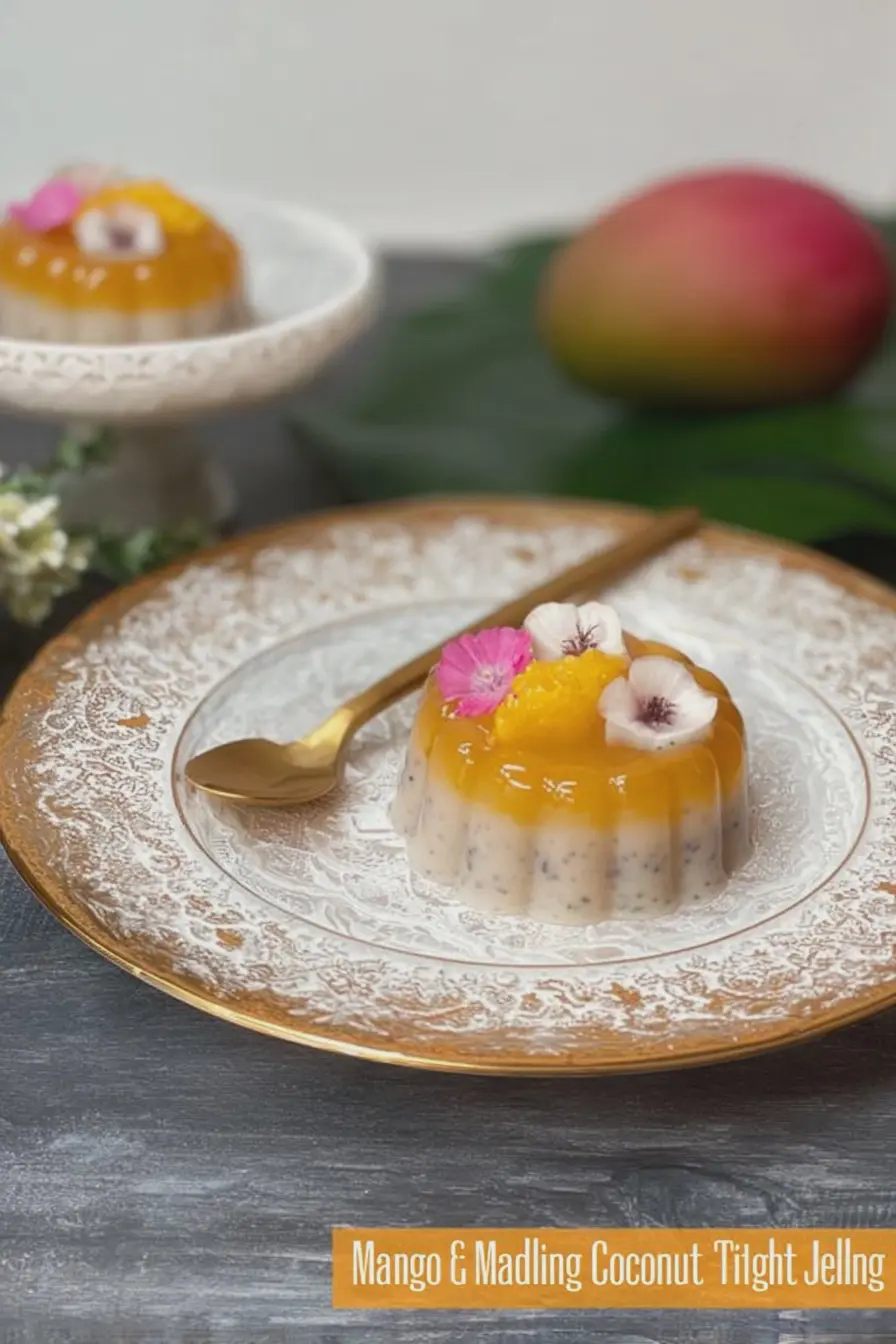
Thai Mango Coconut Jelly
Ingredients
Method
- Peel and chop the mango.
- Add it to the blender, add orange juice and blend to a smooth paste. Keep aside.
- Add agar agar to the water and then place it on the stove.
- Keep stirring the mix till the agar agar is completely dissolved.
- Take a test check. If the mix has no tiny dots, you are good to go; else boil a little longer.
- Add the sugar and stir to dissolve.
- Mix in the mango purée and stir continuously.
- Remove from fire and add lime juice if desired.
- Pour into dish/mould/shot glasses and add mango pieces. Let it set at room temperature.
- Blend coconut water and cream in a blender until smooth or slightly chunky.
- Add agar agar to water, stir and place it on fire until dissolved.
- Add sugar, stir and boil until dissolved.
- Pour the coconut mix over the mango jelly once set.
- Let the coconut layer set and refrigerate for a few hours.
- Once set, it can be cut into desired shapes and garnished.