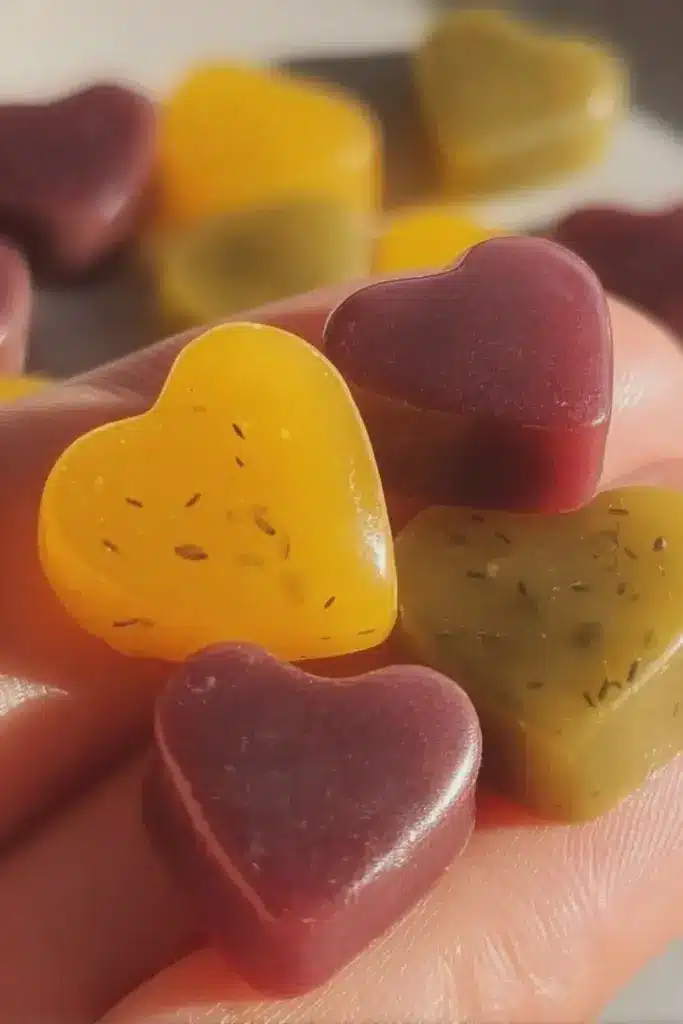
I make these vegan gummies in my kitchen on rainy afternoons when the kids need something hands-on and I want a snack that doesn’t come from a box. I like that we start with real fruit — the blender fills the room with a bright, fruity aroma that always pulls them into the kitchen. The colors are the first hit: deep berry purple, sunny mango gold, or blushing strawberry pink, and kids respond to that immediately.
What I love most is how easy they are to adjust for smaller sugar amounts. By using ripe fruit and a touch of maple or agave, we keep sweetness natural and controllable. It’s also a nice teaching moment — my older child measures, my younger presses the molds, and everyone learns a little about taste and patience.
For a fun twist, try making our Kids Dirt Dessert with Gummy Worms using these vegan gummies! I’ve turned leftovers from a test batch into gummy worms for that dessert — the kids thought it was magic.
These gummies are a quick win for family time: short cook time, minimal cleanup, and a snack you can feel good about handing to your kids. Read on for the tools, tricks, and troubleshooting I use when I make a batch in my kitchen.
Everything You Need for Vegan Gummies
Gathering the right tools makes this a simple project you can do with kids. Use fresh or frozen fruit — both work; frozen fruit can be a time-saver and gives bright flavor when thawed. Below I list tools and ingredients in a way that keeps the recipe flexible for diet needs and flavor preferences.
- Kitchen tools – Blender or food processor for smoothing fruit; small heavy-bottomed pan for heating the mixture; whisk for combining; gummy molds or small silicone ice molds; a fine-mesh sieve if you want seed-free gummies.
- * Fruit puree – The base flavor and color. Use berries for tartness, mango or peach for sweetness, or apple for a mild background note.
- * Agar agar powder – The plant-based gelling agent that creates chewiness. It’s crucial for texture; different brands vary slightly, so follow package guidance if needed.
- * Sweetener – Maple syrup, agave, or a neutral sugar substitute for lower glycemic options. Start light — ripe fruit often provides enough natural sugar for kids.
- * Acid – Lemon or lime juice is optional but brightens flavors. Use sparingly, as too much acid can weaken the gel.
Variations to suit tastes: use coconut water for a subtler flavor, add a splash of fruit juice for extra sweetness, or blend in a little coconut cream for a creamier gummy. Choose fresh fruit for vibrant taste and color; frozen fruit is a reliable, budget-friendly option that retains nutrients and color well.
The Secret to Chewy, Snackable Texture
I pay attention to two things when I want reliably chewy gummies: heat and timing. Agar agar needs a full boil to activate, and then a short simmer to make sure it dissolves and distributes evenly through the fruit. If you rush it, the mixture will look glossy but may never set properly.
Notes on acid and texture: acid brightens the fruit but reduces the gelling strength of agar agar. I usually add only a small splash of lemon juice at the end to preserve chew while keeping flavor bright. Expect a slightly firmer, snappier texture than gelatin-based gummies — that’s characteristic of agar agar.
Sensory cues: watch for the puree to reach a gentle rolling boil and then simmer for a couple of minutes while whisking. The mixture should smell clean and fruity, and it will have a slightly viscous sheen when the agar is fully dissolved.
Allergy-Friendly Swaps: Nut-free, Gluten-free, and More
These gummies are naturally gluten-free and dairy-free, but here are swaps to make them safe and appealing for more kids at the table. Always read labels on packaged ingredients to avoid cross-contact.
- Nut-free – Avoid nut milks and nut-based sweeteners. Use coconut cream or oat milk if you want creamier gummies without nuts.
- Gluten-free – Most ingredients here are naturally gluten-free; double-check any flavorings or packaged purees.
- Sugar-free – Use erythritol or a monk-fruit blend tailored for cooking. Taste and adjust; some substitutes are much sweeter than natural sweeteners.
- Allergy-safe thickening – If someone reacts to seaweed-derived products (rare), try a pectin-based gummy recipe instead, as pectin gels with sugar and acid differently.
Variations (scannable):
- Make single-fruit batches (strawberry-only, mango-only) for picky eaters.
- Blend two fruits for color contrast and balanced sweetness (raspberry + apple works well).
- Add a pinch of natural flavorings like vanilla or citrus zest for complexity.
Consider serving these gummies as a playful dessert after a hearty meal like Healthy Ground Beef Chili — theyʼre a light, fruity finish that kids enjoy.
How to Make Vegan Gummies (Step-by-Step)
- Blend your chosen fruit until smooth — this is your puree. If you want seed-free gummies, press the puree through a fine-mesh sieve.
- Measure out your working amount of puree and pour it into a small pan over medium heat.
- Add the agar agar powder and your chosen sweetener to the puree and whisk until combined.
- Bring the mixture to a gentle rolling boil, then reduce heat and simmer while whisking for a couple of minutes so the agar fully dissolves. This step activates the agar agar — don’t skip it.
- Turn off the heat, stir in a small splash of lemon juice if desired, and taste to adjust sweetness.
- Carefully pour the hot mixture into molds. Silicone molds are easiest for remove later.
- Place molds in the fridge and chill until set (at least an hour). Pop gummies out of the molds and store as directed below.
For a snack-and-supper play idea, pair these fruity treats with something savory like Fried Pickle Fritters for a family spread that surprises kids with contrasting flavors.
Why agar agar works — and how it compares to gelatin
Agar agar is a gelling agent made from red seaweed, so itʼs plant-based and suitable for vegan diets. It forms a firm, slightly springy gel that sets at room temperature and stays stable in warm conditions longer than gelatin. Nutritionally, agar agar adds very little in calories and brings trace minerals from its seaweed origin.
Compared to gelatin, agar agar sets more firmly and gives a different mouthfeel — expect a cleaner snap rather than the silky chew of gelatin. Environmentally, plant-based agar agar generally has a smaller animal-welfare footprint than gelatin, and using seaweed as a source supports diversified food systems, though sourcing practices vary by supplier.
Pro Tip for vegan gummies: Fixing gummies that won’t set
I always keep a short troubleshooting checklist handy — here are the steps I take when a batch refuses to set. These are presented as quick bullets so you can act fast.
- If gummies are too soft or never set: reheat the mixture gently until just simmering, whisk in a small extra amount of agar agar powder, bring back to a boil and simmer for 1–2 minutes, then pour into molds and chill again.
- If the texture is crumbly or too firm: the agar may be overused. Reheat the mixture, stir in a little water or fruit juice to loosen, and re-test on a small spoonful before re-molding.
- If the gummies are sticky at room temperature: chill them thoroughly before storing and keep them refrigerated; coating lightly with a dusting of powdered sugar or starch can help for short-term handling.
- Prevent seeds or pulp from interfering: strain your puree before cooking for a smooth finish that sets uniformly.
How to Store, Gift, and Pack These Gummies
Proper storage keeps the gummies chewy and bright. Keep them chilled in an airtight container for up to a week. For longer storage, freeze in a single layer on a tray and transfer to a freezer-safe bag — thaw in the fridge before serving.
- Short-term storage – Airtight container in the fridge; separate layers with wax paper to avoid sticking.
- Freezing – Flash-freeze shapes on a tray, then move to a sealed bag for up to a month; thaw in the fridge to retain texture.
- Gifting – Pack gummies in small cellophane bags or reusable tins with tissue paper; include a note about refrigeration to keep them fresh.
- Portioning – Use small mold cavities or portion into mini containers to encourage mindful snacking for kids.
If you’re looking for a sweet gift idea, pair your vegan gummies with Homemade Strawberry Truffles for a delightful treat. Clear windowed boxes or small mason jars tied with ribbon make cheerful, kid-friendly presents.
Frequently Asked Questions
Can I use any fruit for the puree?
Absolutely! You can use any fruit you like, just make sure it’s fresh and ripe for the best flavor.
What is agar agar and why is it used instead of gelatin?
Agar agar is a plant-based gelling agent derived from seaweed. It’s a great vegan alternative to gelatin, helping to create that chewy gummy texture without any animal products.
How long do these vegan gummies last?
You can store the gummies in an airtight container in the fridge for up to a week. Just make sure they’re kept cool to maintain their texture.
Can I make these gummies sugar-free?
Yes! You can use a sugar substitute like stevia or erythritol for a sugar-free version. Adjust the amount to your taste preference.
What should I do if my gummies won’t set?
If your gummies are not setting, ensure you cooked the mixture long enough for the agar agar to activate. You can reheat the mixture, adding more agar agar as needed, and then pour it into molds again.
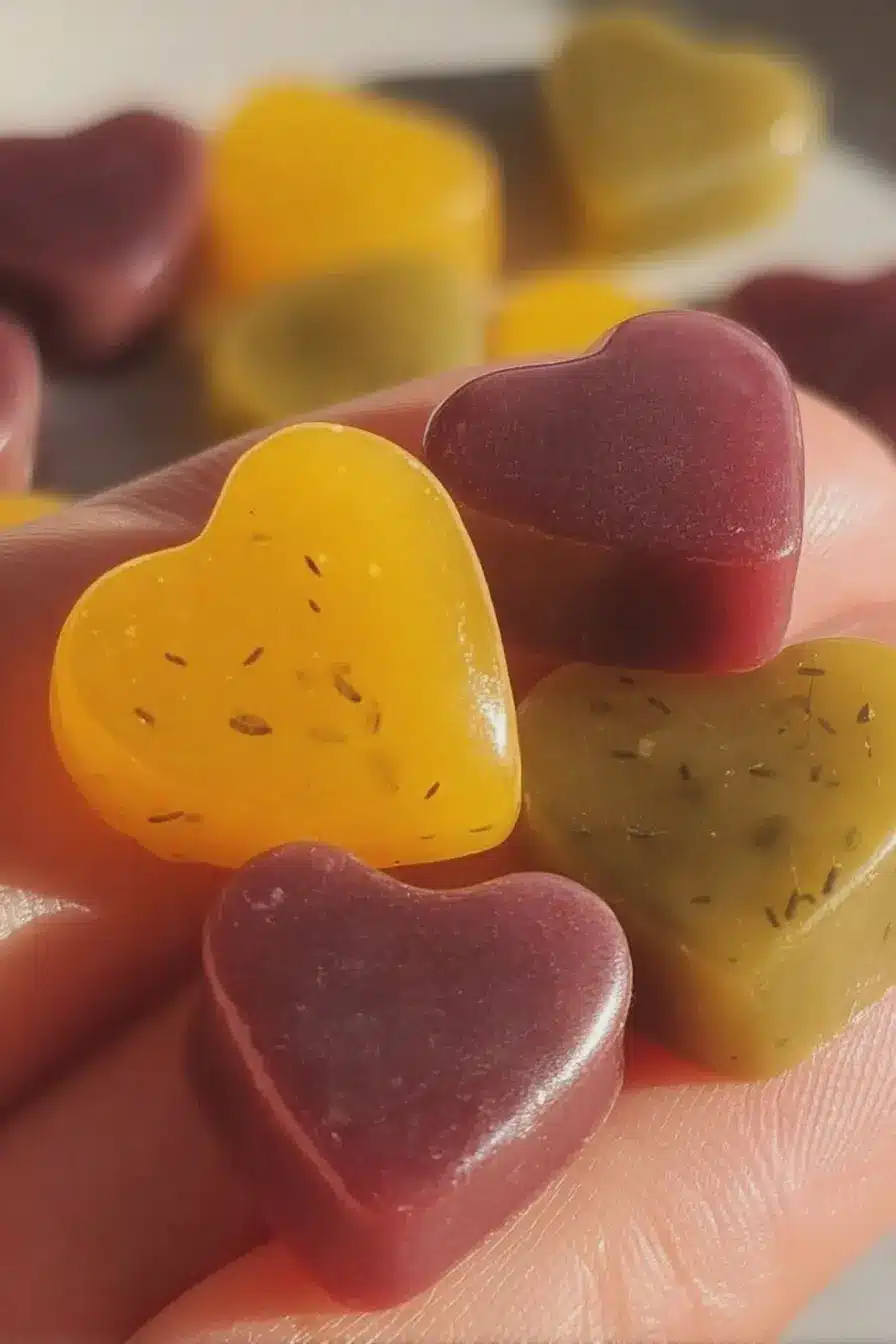
Vegan Gummies
Ingredients
Method
- Blend up fruit of your choice until you get a pureed, smoothie consistency. This is your fruit puree.
- Measure out 1 cup of the fruit puree, then in a small pan over medium heat, combine the fruit puree with the agar agar, sweetener of choice, and lemon juice. Whisk well.
- Cook until it starts bubbling, then lower the heat and cook for another 2-3 minutes to activate the agar agar.
- Next, transfer the mixture to a gummy mold or an ice mold and place in the fridge for at least an hour. Then, remove from the molds and enjoy!