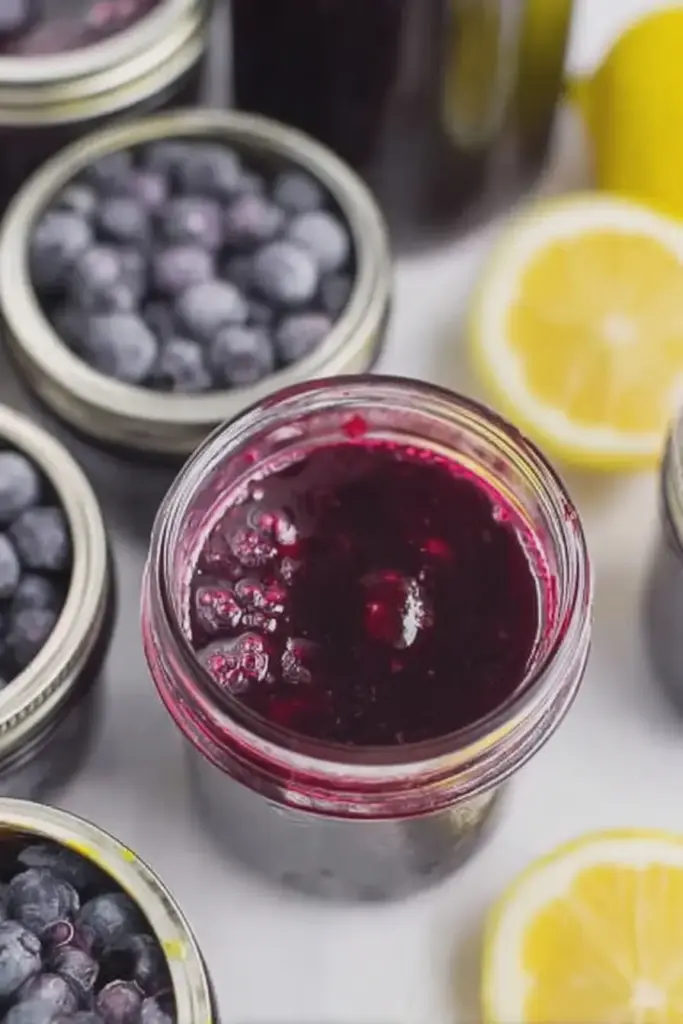
When blueberries hit peak season I like to turn a big bowl of them into something that keeps giving: jars of jam to brighten breakfasts and gifts for friends. I developed this quick method because I needed reliable results on weeknights — short active prep, predictable set, and jars that store well. Over the years I refined a few small habits in my kitchen that shave off time and improve texture without fuss.
I’m the sort of cook who watches closely the first time I try a tweak, then writes down what worked. For this jam that meant testing pectin timing, how much lemon brightens without overpowering, and how to skim foam so jars look glossy. I’ll tell you what I do in my kitchen so you can skip the experiments and get straight to the good part: jars cooling on the towel and that first spoonful warm on toast.
What I like about this version is the contrast: the deep, jammy blueberry color against the bright lift from lemon. The technique is simple — crush, heat, add pectin, then sugar — and it’s forgiving when you follow a couple of clear rules. I’ll walk you through the tools, the small science behind the set, safe canning, and a few ways to cut sugar if you want a lighter preserve.
Before we dig into the steps, note that Pro-Tips, Troubleshooting, and Variations below are presented as bulleted lists for scannability so you can find quick fixes and ideas at a glance.
Why This Quick Blueberry Lemon Jam Is Perfect for Busy Home Cooks
This jam is engineered for minimal active time: most of the process is hands-off simmering or waiting for jars to cool. You don’t need any special techniques — just a sturdy pot, a reliable heat source, and basic canning supplies. Because the method uses pectin and a short, hard boil, the jam sets quickly so you can batch multiple jars in a single afternoon.
Using seasonal, ripe blueberries gives you the best natural flavor with no complicated ingredient list. The bright lemon keeps the final flavor lively and helps retain a vivid color, which makes those jars look like you spent more time on them than you did. You can scale up easily: if you want to make several batches for gifts or pantry stock, the process repeats cleanly.
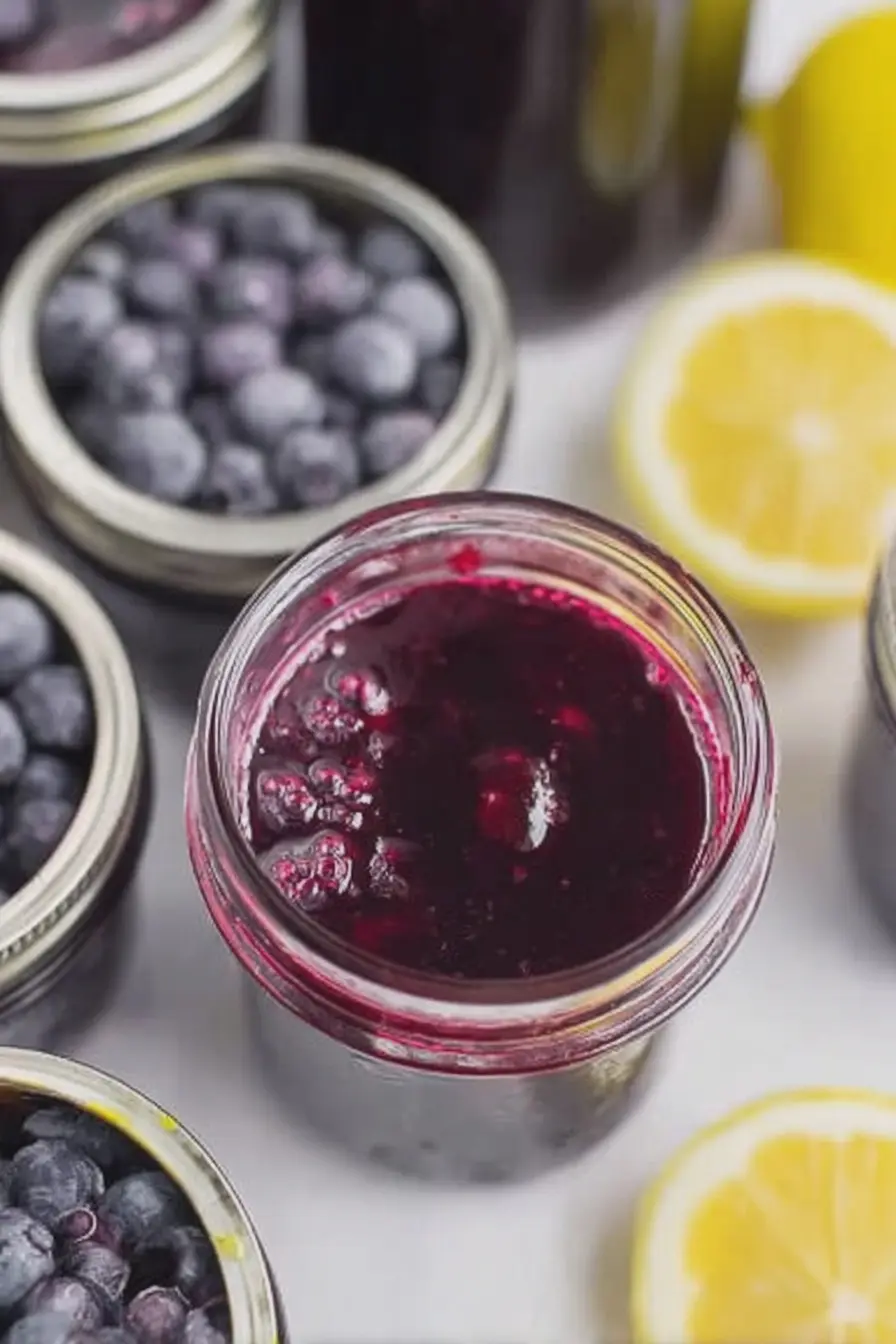
Visually, expect a deep blue-purple jam flecked with tiny bits of lemon peel if you leave the thin slices in. Aromatically, the pot will smell of cooked berries with a clear citrus top note — comforting and fresh at once.
Everything You Need for Blueberry Lemon Jam
Below are the essential ingredients and tools laid out conversationally so you see why each one matters and what you can swap. I don’t list measures here — those are handled in the recipe card elsewhere — but I’ll point out substitutions that actually work.
- Blueberries – The star: use ripe, firm berries for the best color and natural sweetness. Frozen berries are an acceptable backup in a pinch and release juice faster when cooking.
- Lemon juice – Adds acidity to help the jam set and brighten flavor. Fresh-squeezed is best for brightness; bottled can be used if fresh isn’t available.
- Lemon (thinly sliced) – Optional peel gives a fragrant citrus lift and a pretty visual contrast; remove seeds before cooking.
- Powdered fruit pectin – The reliable way to get a quick set. High-quality pectin gives consistent results; if you use a low-sugar pectin follow the package instructions.
- Sugar – Sugar aids gel formation and preservation and balances the lemon. You can reduce sugar with adjustments (see the Pro-Tips section) but it affects texture and shelf life.
- Water bath canning jars and lids – Use jars specifically made for canning and check lids for dents; always sterilize jars and keep lids sanitary.
- Large, heavy-bottomed pot – Prevents scorching while you bring the mixture to a rolling boil.
- Ladle and jar lifter – Makes filling hot jars safe and tidy.
- Sterilizing/canning supplies – A water bath canner or a stockpot with a rack, clean towels, and a thermometer if you like extra precision.
The Secret to Jam That Sets Fast
The main variable that shortens cook time is pectin. Pectin molecules bind with fruit acids and sugar to create the gel network you expect in jam. Use the correct amount of pectin and add it early in the heating stage so it activates when you bring the mixture to a full rolling boil.
Common setting issues come from not boiling long enough after adding sugar, under- or over-measuring pectin, or using underripe fruit with too little natural pectin. If your jam won’t set, don’t panic: you can return it to the pot, add a touch more pectin or cook it down a little longer, and re-can.
If you prefer a more natural approach, you can make jam without commercial pectin by cooking fruit longer to concentrate natural pectin and sugar. Expect a looser, more spreadable finish and a longer active cooking time. Be attentive to texture: the finished result will be less glossy and more spoonable.
Touch and look cues: when the pot moves from active bubbling to thicker, syrupy roiling and the spoon leaves a clearer trail, the jam is approaching set. The aroma will shift from raw fruit to a deeper, jam-like scent.
Why Lemon Juice Matters (and How Much to Use)
Lemon juice does three things: it brightens flavor, helps release the fruit’s natural pectin, and lowers the pH to a safe range for canning. For a standard batch I use an amount of lemon juice that reliably brings the mixture to the acidity pectin needs to gel — in practical terms that’s roughly three-quarters of a cup for a medium-sized batch, which often equals the juice of two or three lemons depending on size. That keeps the jam’s pH safely below 4.6 for water-bath canning.
Taste-wise, lemon balances the sweetness and prevents a cloying finish. If you like a tarter jam, add a little more lemon — taste before adding pectin and sugar so you can judge the raw balance. If you’re sensitive to acidity, keep the recommended amount; too little acid can compromise the final texture and safety.
Smell cue: the lemon’s top note should be present but not sharp; the cooked berry scent should still dominate.
Pectin vs. No-Pectin: Choosing the Right Method
Both methods work; the right one depends on how you want the final jam to behave and how much time you have.
- With commercial pectin – Pros: fast set, short cooking time, consistent results; Cons: less control over final texture and a slightly different mouthfeel than long-cooked jams.
- Without pectin (long-cooked) – Pros: pure fruit flavor, chunkier or more spreadable texture; Cons: longer active cooking time, more evaporation, and a looser set that varies by fruit ripeness.
- Alternative sweeteners – Honey and maple can work but change flavor and reduce firming power; low-calorie sweeteners maintain sweetness but may require added pectin or gelling agents to match texture.
- Simple no-pectin variation – Cook fruit with lemon and sugar until it reduces and thickens to your liking; this yields a softer, spoonable preserve best used fresh or refrigerated for shorter storage.
How to Make Blueberry Lemon Jam (Step-by-Step)
- Crush the blueberries in a large heavy pot so they release juice but still keep some texture.
- Stir in lemon juice, the thin lemon slices (if using), and powdered pectin, mixing so the pectin is evenly distributed.
- Bring the mixture to a medium-high heat until it reaches a full boil, stirring occasionally to prevent burning on the bottom.
- Add the sugar all at once and stir until dissolved; return the pot to a full, rolling boil.
- Boil hard for about one minute after reaching a full boil to activate the pectin fully, then remove from heat.
- Skim any foam from the surface for a clear-looking jar, then ladle the hot jam into sterile jars, wiping the rims clean before sealing.
- Place filled jars into a hot water bath canner with at least one inch of water over the jar tops; bring to a full rolling boil.
- Process jars in the boiling water bath for the recommended time for your jar size and altitude, then remove and let cool undisturbed for at least an hour.
Pro Tip for Blueberry Lemon Jam: Reducing Sugar Safely
Sugar plays a role in preservation and gel structure, so reducing it requires compensations. Below are practical tips, followed by short Troubleshooting and Variations lists. These three sections are presented as bulleted lists for quick scanning.
- Reduce sugar gradually – Start by reducing sugar by a small percentage and test texture; if it’s too loose, add a small amount of pectin or cook longer to concentrate the mixture.
- Use low-sugar pectin – Designed to set with less sugar and can be a straightforward swap if you prefer lower sweetness without sacrificing set.
- Try natural sweeteners carefully – Honey or maple bring flavor notes and can reduce the overall sugar load, but they change acidity and may need added pectin to reach the same firmness.
- Blend for mouthfeel – If reducing sugar makes the jam feel thin, briefly pulse with an immersion blender for a thicker, smoother texture before final boiling.
Troubleshooting (bulleted for scannability):
- If the jam is too runny after cooling, return it to the pot, add a measured bit of pectin, heat to a full boil, boil one minute, and re-can.
- If the jam tastes flat, a touch more lemon or a pinch of fine salt can brighten flavors without adding sweetness.
- If jars crack during processing, check jar condition and cooling drafts; allow jars to cool on a towel away from drafts and reprocess damaged jars in fresh jars if needed.
Variations (bulleted for scannability):
- Add a small amount of fresh rosemary or thyme during the boil and remove sprigs before jarring for a savory-herb note that pairs beautifully with cheeses.
- Stir in a splash of vanilla or a pinch of ground cardamom for a warm, bakery-like complexity.
- Make a lighter ‘stirred’ preserve by omitting commercial pectin and cooking longer; store this version refrigerated for shorter-term use.
How to Store, Can, and Gift Your Jam
Proper sealing and storage are what keep jam safe and tasty. After filling and processing jars in a boiling water bath, let them cool undisturbed on a towel. When jars are cool, check seals by pressing the center of each lid — it should not flex up and down.
If a jar didn’t seal, refrigerate it and use it within a few weeks or reprocess in a fresh jar with a new lid. Label jars with the date and store them in a cool, dark cupboard away from direct sunlight. Properly processed jars can keep up to a year; once opened, refrigerate and use within a month.
For gifting, wipe jars clean, add a handwritten label, and wrap with a ribbon. Small jars and half-pint sizes make lovely, shareable presents that show up well on a pantry shelf.
Serving Suggestions and Creative Uses for Your Jam
Blueberry lemon jam is versatile — spread it on toast, swirl it into yogurt, or pair it with soft cheeses. For sweet treats, try using your blueberry lemon jam as a filling in our blueberry lemon cookie bars for a delightful treat.
For savory-sweet play, add a touch of sweetness by serving your jam alongside lemon garlic lobster tails for a unique flavor experience, or complement a weeknight protein: your blueberry lemon jam can also complement baked sweet and sour chicken, enhancing the dish with a fruity twist.
Try the jam as a finishing glaze for roasted pork, a spread for grilled cheese with goat cheese, or as a quick topping for plain ice cream. For a simple dessert, spoon warm jam over ricotta on toasted baguette slices and finish with a few crushed nuts.
Frequently Asked Questions
What does lemon juice do in blueberry jam?
Lemon juice helps the jam set by providing acidity, which is essential for gelling. It also prevents bacteria growth in the jam.
Is blueberry jam better with or without pectin?
It depends on personal preference! Without pectin, you can make smaller batches more easily, using just simple ingredients for a pure flavor. With pectin, the jam sets faster.
Can I use lemon juice instead of pectin in jam?
While lemon juice does help with setting, it can’t fully replace pectin. It’s best to use both for the best texture and flavor balance.
What does adding lemon do to jam?
Adding lemon helps break down fruit membranes, releasing pectin, and ensures the right pH for gelling with sugar, making for a well-set jam.
How long can I store blueberry lemon jam?
When properly canned and sealed, blueberry lemon jam can last up to a year when stored in a cool, dark place.
Blueberry Lemon Jam
Ingredients
Equipment
Method
- Crush blueberries in a large pot, and stir in lemon juice, sliced lemons, and pectin.
- Heat over medium to high heat, stirring occasionally, until mixture comes to a boil.
- Add sugar, all at once, and stir until dissolved.
- Bring back to a full, rolling boil and boil for one minute.
- Remove from heat, and skim foam.
- Ladle hot jam into sterile jars, wipe rims clean, and screw down bands and lids.
- Gently place jars in a hot water bath canner, making sure the water level is at least one inch deep over the tops of the jars.
- Place the lid on the canner, and bring to a full, rolling boil.
- Boil half pints for 15 minutes, or pints for 20 minutes.
- Remove from heat and let cool for at least an hour.
- Check for seal after 24 hours, wash jars if needed, and store in a cool place out of direct light.