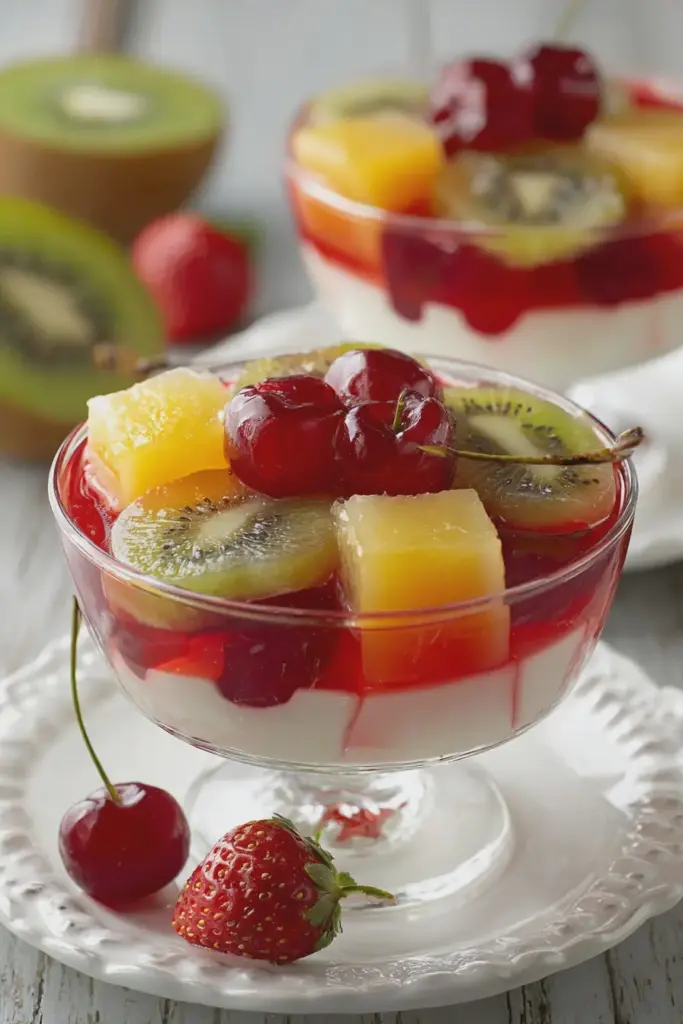
I make this jelly when I need a bright, no-fuss dessert that still looks like I put in effort. In my kitchen it’s the recipe I reach for when guests drop by unexpectedly or when I want something light after a heavy meal. It comes together fast: a gentle simmer, a few fresh fruit pieces, and time in the fridge. The colors pop and it feels refreshingly clean on the palate.
I’ve tested different juices, tried several brands of agar-agar, and learned how little room there is for error. A common mistake is not dissolving the agar fully — that’s why I always skim and watch for tiny grains to disappear. I also like to leave a few fruit pieces near the surface so the jelly looks layered and inviting when served.
The result is a silky, slightly springy jelly with bright fruit notes and a glossy finish. It’s perfect for hot afternoons, after-dinner treats, or packed into small jars for portable desserts. Because it uses agar-agar, it sets reliably in the fridge and keeps well for a couple of days without losing texture.
Below I’ll walk you through everything you need, the texture tricks I rely on, helpful swaps, and storage tips so you can make this dessert quickly and confidently.
Why this 5-Ingredient Japanese Jelly Dessert is perfect for busy cooks
This recipe is built for speed and simplicity. Hands-on time is very short, the ingredient list is short and easy to shop for, and the finished dessert stores well — which means you can make it ahead for dinners or small gatherings. Sensory-wise, think clear, jewel-toned jellies with fresh fruit suspended inside: bright sight, a light springy mouthfeel, and the fresh aroma of juice as you open the container.
Clear benefits for busy people:
- Minimal prep and short simmer time — you spend minutes, not hours, at the stove.
- Five ingredients keep grocery trips simple and substitutions straightforward.
- Versatile presentation works for casual snacks, kid-friendly treats, or a simple plated dessert for guests.
Everything You Need for 5-Ingredient Japanese Jelly Dessert
Below I describe the core ingredients and the basic tools. I focus on purpose and sensible swaps so you can adapt without measuring references here.
- Fruit juice – The base flavor. Choose a juice with good clarity and bright flavor so the jelly sets with a clean color and taste.
- Agar-agar powder – The setting agent. Look for reputable brands sold in the baking aisle or Asian groceries; quality affects how smoothly it dissolves.
- Sugar – Balances the acidity of the juice and enhances flavor. You can swap with a granulated substitute or reduce it for less sweet results.
- Fresh fruit pieces – Add texture and visual appeal. Use firmer fruits that won’t turn mushy once chilled.
- Condensed milk (optional) – A finishing drizzle for creaminess and contrast; omit for dairy-free servings.
Essential tools:
- Small saucepan for dissolving agar and heating juice.
- Fine-mesh sieve (optional) to remove any undissolved bits.
- Molds, small bowls, or jars for setting.
- A spatula and heatproof measuring cup for pouring.
The Secret to the Perfect Jelly Texture
The key is complete dissolution and gentle simmering. Agar-agar sets at a higher temperature than gelatin, so you need to bring the mixture to a simmer and keep it just below a boil long enough for every grain to dissolve. If you rush this part, you’ll see tiny specks or uneven gelatinization when chilled.
Technical points that matter:
- Agar requires active heat to dissolve. Stir continuously and watch for any grit to vanish.
- Simmer time affects firmness: a slightly longer simmer produces a firmer set; a shorter simmer yields a softer, more delicate wobble.
- Acidic juices can slightly reduce gelling strength. If using very acidic fruit, consider a small increase in dissolved agar or mixing with a sweeter, less acidic juice to balance texture.
Why Agar-Agar, Not Gelatin (Vegan-Friendly Tips)
Agar-agar is a plant-derived gelling agent made from seaweed, so it’s suitable for vegan diets and stable at room temperature once set. Gelatin is animal-derived and gives a different mouthfeel — softer and silkier when used cold, but less reliable when the dessert needs to hold shape at higher temperatures.
Practical differences:
- Agar sets more firmly and at higher temperatures than gelatin — it won’t melt as easily at room temperature.
- Agar needs boiling to activate; gelatin only needs to be dissolved at low heat or in warm liquid.
- Health-wise, agar is a fiber source and can be used in plant-based diets.
If you’re curious about alternatives, explore our guide on gelatin substitutes for versatile cooking options.
How to Make 5-Ingredient Japanese Jelly Dessert (Step-by-Step)
Follow these steps carefully and use the visual checks I mention. For beginners, watching a short demonstration helps — look for simple tutorial videos that show the simmering and pouring stages.
- Combine your chosen fruit juice with agar-agar and sugar in a saucepan; stir to distribute the powder evenly.
- Heat the mixture over medium, stirring frequently until it reaches a gentle boil and the agar appears fully dissolved.
- Simmer briefly while stirring (watch for any undissolved graininess). Remove from heat once smooth.
- Place fresh fruit pieces into molds or serving bowls so they sit where you want them in the finished dessert.
- Carefully pour the hot juice mixture over the fruit; let cool at room temperature until it stops steaming, then chill in the refrigerator until fully set (typically 1–2 hours).
- Serve chilled, optionally drizzled with condensed milk for a creamy contrast.
Pro Tip for 5 ingredient japanese jelly dessert recipe: Choosing the Right Juice
I often choose juice based on clarity and acidity. Clear, single-flavor juices give the best visual result; pulpy or cloudy juices can make the jelly look matte instead of glossy. I prefer sweeter tropical juices when I want a more dessert-like finish and less sugar added.
- Pick juices with good natural color for vibrant presentation (mango, lychee, and orange are classic choices).
- High-acid juices (like some citrus) may slightly weaken the set — blend them with milder juices if needed.
- Layer different juices for color contrast, pouring each layer after the prior one is partially set for neat bands.
- Looking for a fruity twist? Try our mango pudding recipe to inspire your juice choices.
Easy Variations and Dietary Swaps
Here are quick ideas to adapt the dessert for tastes and dietary needs. I keep these as go-to swaps depending on who I’m serving.
- Lower-sugar option: Use a low-sugar juice or cut the sugar in the cooking step; choose naturally sweet fruits to compensate.
- Dairy-free serving: Omit condensed milk or use a canned coconut condensed milk alternative.
- Allergy-friendly fruit swaps: Replace berries with stone fruit or pears if needed.
- Color play: Combine two clear juices (e.g., mango and lychee) to create layered or marbled effects.
- For more creative ideas, check out our guide on easy variations and dietary swaps to make this dessert fit your taste.
Troubleshooting
I include the issues I ran into and how I fixed them — these are the most common problems you’ll face.
- Grainy or speckled jelly — I found this happens when agar isn’t fully dissolved. Reheat gently and stir until smooth; strain if necessary.
- Jelly too soft — increase simmer time slightly or add a small additional pinch of agar in a reheated batch.
- Jelly too firm — reduce simmer time next time or dilute the juice with a splash of milder juice or water.
- Fruit sinking — arrange fruits on a shallow layer of partially set jelly, then pour the remainder after it firms a bit.
How to Store, Make-Ahead, and Serve
Store finished jelly in airtight containers in the refrigerator; it keeps its texture best for up to three days. For make-ahead service, set the jelly in individual jars or molds and keep chilled until serving — they’re easy to transport and plate. To elevate presentation, top with a small mint leaf, a thin slice of citrus, or a neat drizzle of condensed milk just before serving.
Learn more about proper ways to store desserts for maximum freshness and longevity.
Frequently Asked Questions
How long does it take to make the Japanese jelly dessert?
The total time to make the Japanese jelly dessert is about 10 minutes of active work, plus 1–2 hours of chilling time in the refrigerator.
Can I use any type of fruit juice for this recipe?
Yes! You can use any fruit juice you like, such as mango, lychee, or orange, to create various flavors for your jelly dessert.
Is agar-agar a vegan substitute for gelatin?
Absolutely! Agar-agar is a plant-based gelatin substitute made from seaweed, making it suitable for vegan diets.
How should I store the leftover jelly dessert?
Store any leftover jelly in an airtight container in the refrigerator for up to 3 days.
Can I add more fruits to the dessert?
Definitely! Feel free to add any combination of fresh fruits to the jelly for added texture and flavor.
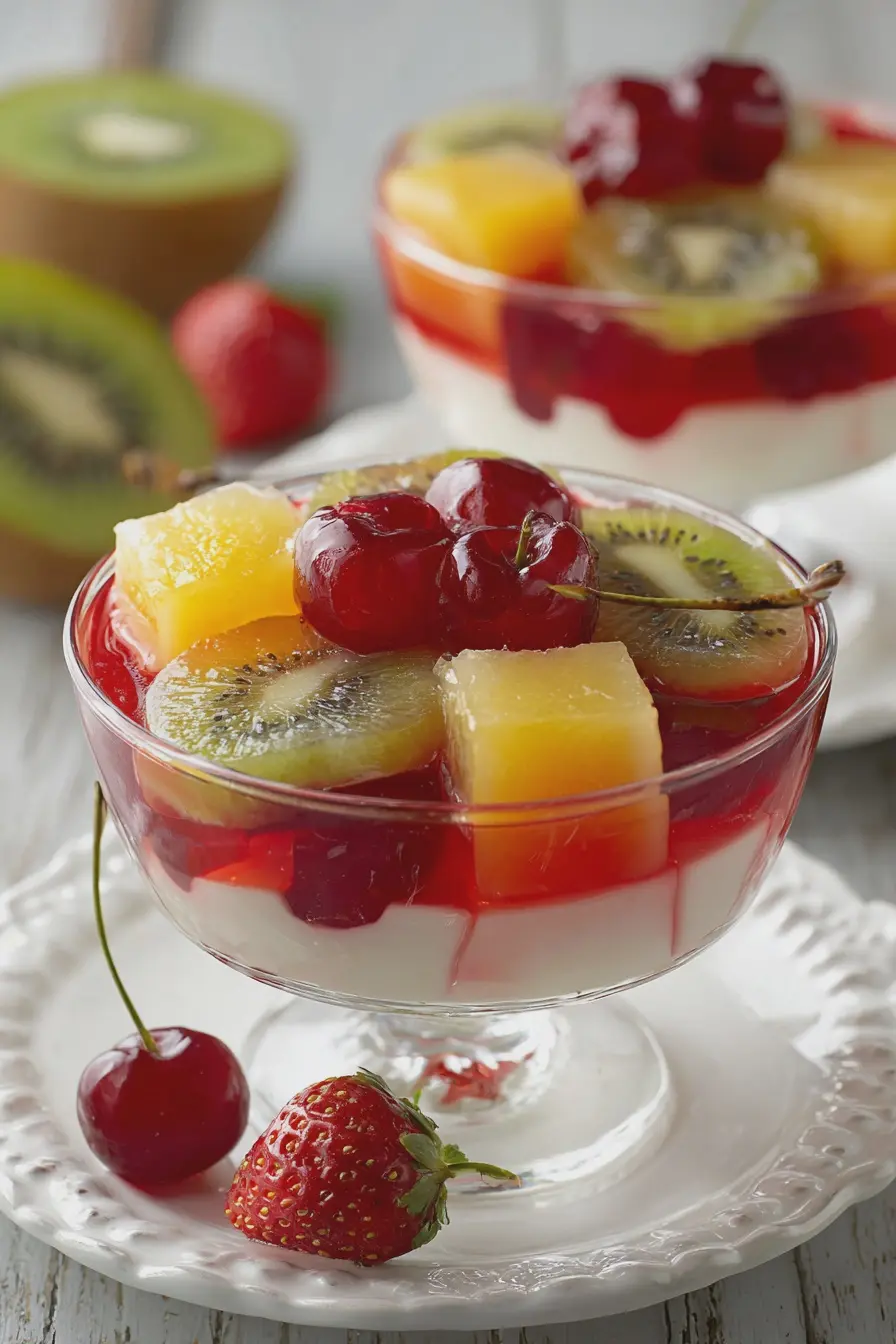
5-Ingredient Japanese Jelly Dessert Recipe
Ingredients
Method
- In a saucepan, combine fruit juice, agar-agar powder, and sugar.
- Stir well and bring to a gentle boil over medium heat.
- Simmer for 2–3 minutes until agar-agar dissolves completely.
- Add fruit pieces to molds or serving bowls.
- Pour hot mixture over fruit and let cool at room temperature, then refrigerate for 1–2 hours until set.
- Serve chilled, drizzled with condensed milk if desired.