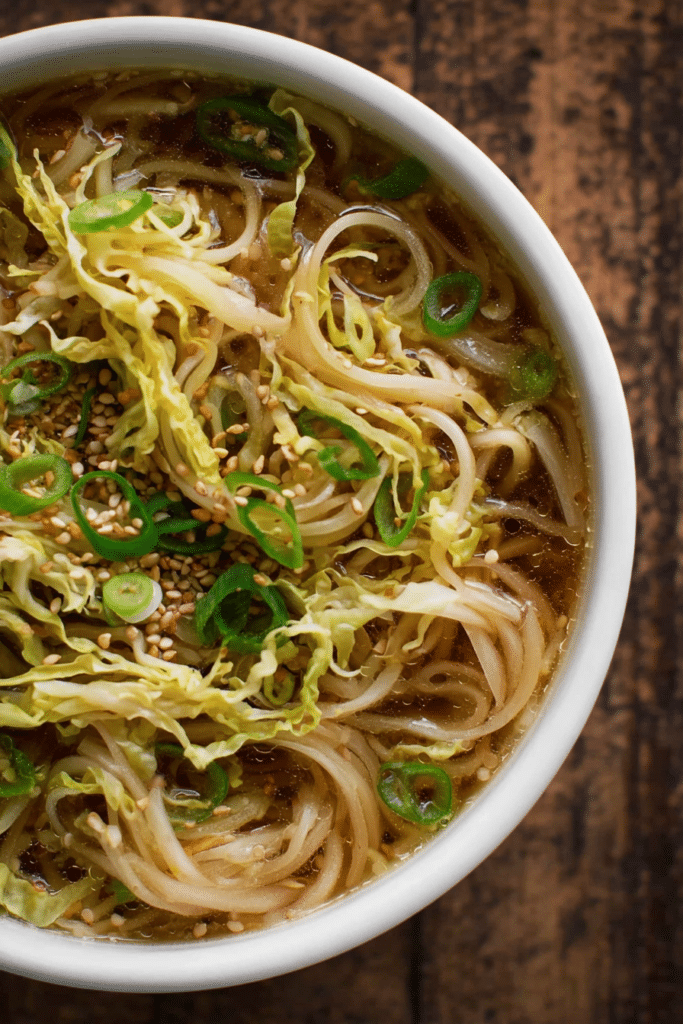
I started making these cabbage ginger noodles on nights when I wanted something warm and simple but not heavy. In my kitchen this is the dinner I reach for when I’m short on time: it heats a pot, shreds some cabbage, grates ginger, and a complete bowl is ready before anyone asks what’s for dinner. I like that it feels thoughtful without demanding a lot of hands-on work.
Over the years I learned a couple of small adjustments that make the difference between a so-so soup and one I’ll happily eat for lunch the next day. A little miso for umami, finishing sesame oil for aroma, and timing the cabbage so it keeps a snap are the changes I use every time. Those three things take this from plain to pleasantly memorable in minutes.
Because this recipe is forgiving, I often adapt it to what’s in the fridge. If you’re juggling a busy evening, this is the kind of meal you can riff on confidently: swap noodles, add a protein, or toss in another quick vegetable and you still get the same comforting, ginger-forward broth I’ve come to rely on.
Why Cabbage Ginger Noodles Are Perfect for Busy Weeknights
This dish hits the sweet spot for weeknights: it cooks quickly, uses pantry-friendly flavor builders, and leaves you with leftovers that pack well. It takes about 20 minutes from start to finish, and most of the prep is quick — trimming scallions, mincing garlic, grating ginger, and shredding the cabbage.
Ingredients are commonly available and require minimal prep: fresh ginger keeps for weeks in the fridge, cabbage stores well, and instant or fresh noodles pull together faster than boiling a pot for many other meals. The recipe is also forgiving — if you run out of noodles or want to make it gluten-free, you can swap to other noodle types without breaking the balance of flavors.
Sensory quick note: picture steam rising from a bowl, the bright zing of ginger on your nose, and thin ribbons of cabbage still offering a little crunch — that contrast is what makes it satisfying on a hectic night.
Everything You Need for Cabbage Ginger Noodles
Below are the main ingredients and a few utensils so you can dash to the store and be ready quickly. I recommend choosing low-sodium broths or sauces where possible so you control the salt level of the bowl.
- Olive oil – For softening aromatics and adding a light mouthfeel; neutral oils work too.
- Scallions – Use the white and pale green when cooking; save the dark green tops for garnish.
- Garlic – Adds savory depth and pairs with ginger to build the base flavor.
- Fresh ginger – The backbone of the dish; fresher ginger means brighter flavor.
- Soy sauce – Provides salt and umami; use tamari or a gluten-free soy substitute if needed.
- Brown miso – Brings rich umami and body to the broth; you can swap white miso for a lighter taste.
- Vegetable broth – Keeps the dish vegetarian and adds a savory base; low-sodium is best.
- Noodles – Ramen, udon, soba, or other quick-cooking noodles; see the Variations section for swaps.
- Napa cabbage – Mild and tender when cooked briefly; other cabbage varieties or quick-cook greens can work too.
- Sesame oil and sesame seeds – For finishing aroma and a nutty garnish.
If you want a simple side that pairs well with these noodles, try a quick fried cabbage and sausage — it complements the bowl nicely and is a fast stove-top option.
The Secret to a Bright, Savory Broth
A few small technique choices make the broth sing: build flavor at the start with aromatics, layer umami with miso and soy, and finish with a splash of sesame oil for aroma. This combination gives a rounded broth that feels both bright and deeply savory.
Technical flavor tips:
- Begin by sweating scallions, garlic, and ginger gently to release their aromatics without browning — this preserves brightness.
- Whisk miso into a small amount of warm broth before adding it back to the pot to avoid clumps and to gently bloom its umami.
- Balance tastes: if the broth tastes flat, add a little more miso or soy for depth; if it’s too salty, lengthen with extra water or unsalted broth and add a small acid like a squeeze of lime if you want brightness.
- Finish with sesame oil off the heat so its aroma stays intact; a toasted sesame note makes the whole bowl feel polished.
How Ginger and Cabbage Boost Flavor and Nutrition
Ginger and cabbage aren’t just flavor players — they bring nutritional benefits too. Fresh ginger adds a pungent warmth and is known for anti-inflammatory and digestive-supporting properties, which is a helpful perk after a long day. Cabbage is low in calories, high in fiber, and provides vitamins C and K, giving bulk and nutrition without weighing the dish down.
Seasonal tip: swap Napa for local, in-season greens when cabbage isn’t at its peak — baby bok choy or thinly sliced Brussels sprouts add variety and extra nutrients.
Pro Tip for Cabbage Ginger Noodles: Add Cabbage at the Last Minute for Crunch
- I add the cabbage toward the end of cooking so it keeps a bright color and pleasant crunch; overcooked cabbage loses that fresh texture.
- I use the darker scallion tops at the end for freshness and a pop of color — they brighten both flavor and appearance.
- I always finish the bowl with a quick drizzle of sesame oil and a scattering of sesame seeds for aroma and texture.
- If you want extra crunch, add raw bean sprouts or thinly sliced snap peas just before serving.
How to Make Cabbage Ginger Noodles (Step-by-Step)
Prep first: have your aromatics minced, cabbage shredded, and noodles separated so cooking moves quickly. Follow these steps and keep an eye on timing to preserve texture.
- Heat oil in a pot over medium-low heat; add scallion whites, garlic, and grated ginger and cook until fragrant, taking care not to brown the garlic.
- Stir in soy sauce and miso, loosening any bits stuck to the pan to integrate flavor.
- Add the broth and water and bring to a gentle boil.
- Drop in the noodles and cook according to their quick-cook time; when they’re nearly done, add the shredded cabbage so it softens slightly but retains a bit of crunch.
- Turn off the heat, stir in sesame oil, and divide into bowls. Top with sesame seeds, chili flakes or paste if you like heat, and chopped dark scallion tops.
Troubleshooting
- I find the broth can taste dull if the aromatics weren’t cooked long enough — if that happens, briefly simmer a little longer to coax flavor out of the ginger and garlic.
- If the noodles absorb too much broth and the bowl seems dry, add a splash of hot broth or water and reheat gently; this revives the texture.
- I sometimes get a bitter edge from overcooked cabbage — to avoid this, add it later and avoid prolonged high heat once it’s in the pot.
- If the final bowl tastes too salty, I balance it with a small squeeze of citrus or a handful of fresh herbs like cilantro.
How to Store, Reheat, and Pack for Lunch
Store leftovers in airtight containers in the refrigerator for up to three days. To maintain noodle texture, keep the broth and noodles stored together if you’ll reheat quickly; if you expect longer storage, consider storing broth separately and assembling before reheating.
- Reheat gently on the stove over low heat, adding a splash of broth or water if the noodles have absorbed liquid.
- Microwave reheating works fine for single portions — cover loosely and stir halfway through to heat evenly.
- For a creative lunch idea, if you have leftover noodles, consider adding them to a comforting chicken noodle soup for a quick lunch option.
Easy Variations: Noodle Types, Proteins, and Veg Swaps
Below are quick, scannable swaps to make the bowl your own. These are presented as bullet points so you can pick and choose quickly.
- Noodle substitutions – Swap ramen for udon, soba, rice noodles, or spiralized vegetables for gluten-free or lower-carb options.
- Protein ideas – Add cooked shredded chicken, pan-seared tofu, shrimp, or chickpeas for plant-based protein.
- Veg swaps – Stir in baby bok choy, thinly sliced carrots, snap peas, or mushrooms based on seasonality.
- Flavor boosts – Stir in chili paste, a squeeze of lime, or a spoonful of peanut butter for richness and variation; add spicy tomatillo salsa verde as a bold topping if you want a bright, herby kick.
Meal Prep Strategy: Batch Cooking These Noodles
Doubling this recipe is easy and makes for fast weeknight dinners or grab-and-go lunches. Here’s a simple plan to prep efficiently.
- Make a double batch of broth and aromatics, then cook noodles and cabbage just before serving to preserve texture for each meal.
- Store portions in airtight containers; if keeping for more than a day, separate broth from noodles to avoid soggy pasta.
- Complementary make-ahead sides include roasted vegetables or a simple salad so meals feel complete without extra evening cooking.
- Label containers with the date and plan to eat within three days for best quality.
These bowls are practical, nourishing, and adaptable — they’ve become one of my reliable weeknight solutions when I want something quick, warm, and satisfying.
Frequently Asked Questions
How long does it take to prepare Cabbage Ginger Noodles?
This recipe takes just 20 minutes from start to finish, making it perfect for busy weeknight dinners!
Can I substitute the ramen noodles with another type of noodle?
Absolutely! You can swap ramen noodles for udon, soba, or even whole wheat noodles according to your preference.
What can I add for extra protein in this dish?
You can add cooked chicken, tofu, or chickpeas to the dish for a protein boost without compromising on flavor.
How should I store leftovers?
Store leftovers in an airtight container in the refrigerator for up to 3 days. Reheat on the stove or in the microwave!
Is this recipe suitable for vegetarians?
Yes! Cabbage Ginger Noodles are vegetarian-friendly as they use vegetable broth and no meat-based ingredients.
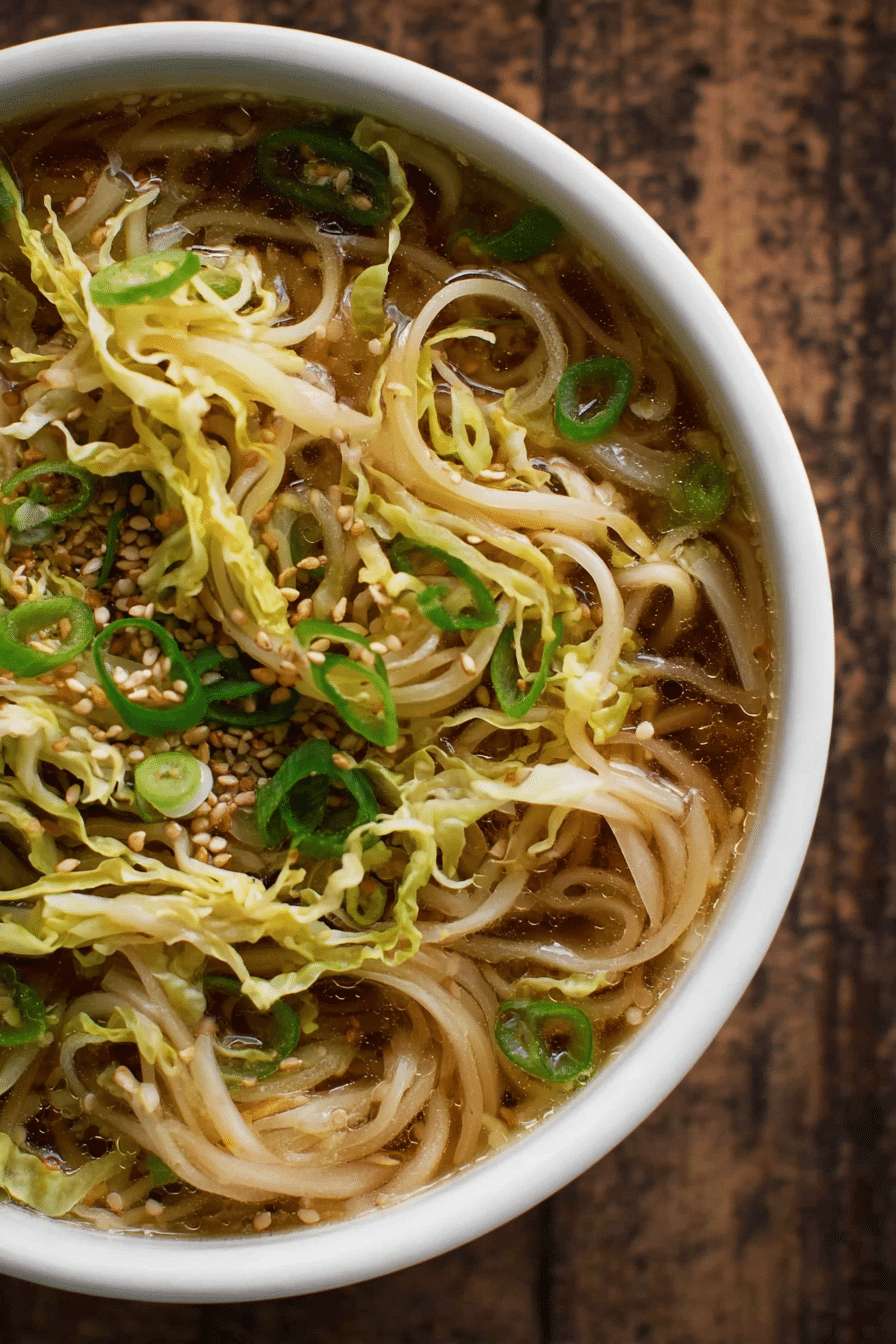
Cabbage Ginger Noodles
Ingredients
Method
- In a stock pot, heat olive oil over medium-low heat. Trim the ends off the scallions and chop through the light green stem. Save the dark green tops for topping. Add the scallions to the pot with the garlic and ginger. Cook, stirring occasionally for 2 to 3 minutes until the garlic and ginger are fragrant. Add in the soy sauce and miso, stirring up any pieces of scallion stuck to the bottom.
- Measure in the vegetable broth and water. Bring to a boil, reduce to a simmer, and add in the ramen noodles. Cook for 4 minutes then add in the cabbage. Cook for another 4 to 5 minutes until the ramen and cabbage is tender. Stir in the sesame oil, remove from heat, and divide into 2 bowls. Serve with a sprinkle of sesame seeds, chili flakes (if desired), and scallions.