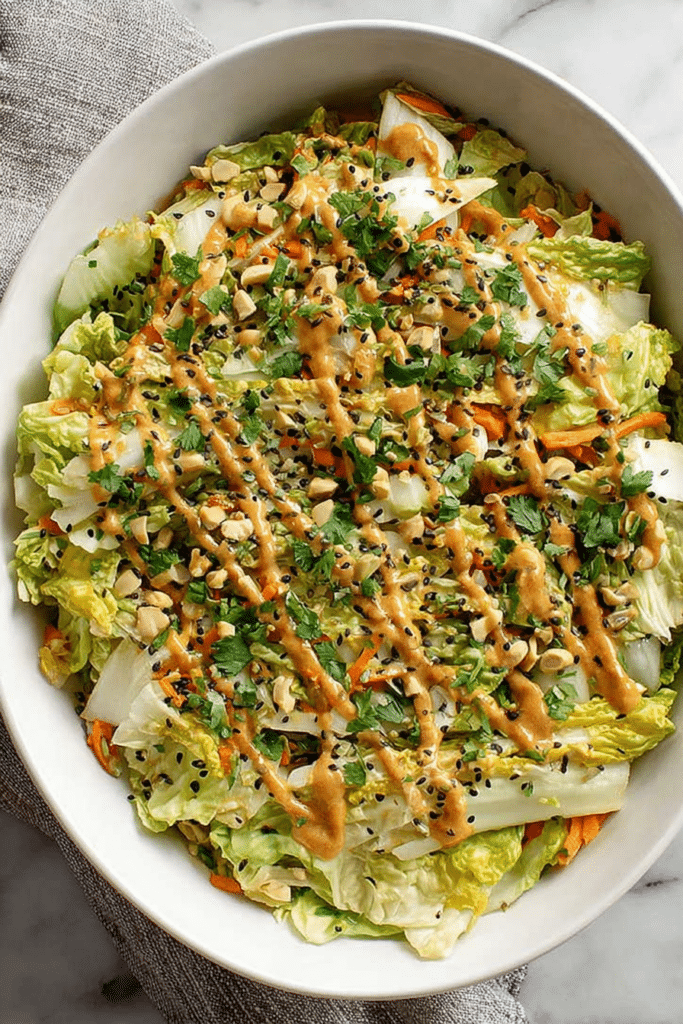
I make this napa cabbage salad when the week looks long and I want something fresh, filling, and low‑fuss. In my kitchen it’s the kind of dish that comes together faster than deciding what to order; the raw vegetables keep their bright color and the dressing is the kind I can whisk while the kettle boils. Over the years I’ve tweaked the dressing and the slicing technique so the slaw keeps its crispness even when I pack it for lunch.
What I like most is how simple swaps transform it: a different nut butter for allergies, extra protein to turn it into a meal, or a tiny splash more lime when I want it zippier. Because the produce is raw, you get more vitamins and a satisfying textural contrast — the cabbage stays crisp and the peanuts add a toasted chew that makes each forkful feel substantial.
I tested this salad across seasons, with Napa heads of all sizes, and one lesson stuck: how you slice and dry the cabbage matters more than the brand of peanut butter you use. I’ll show you the techniques I use to keep that crunch (I call it the salad’s backbone), how the peanut‑ginger dressing plays with lime and soy, plus a handful of easy variations so the bowl always fits the occasion.
Below you’ll find everything you need, clear prep notes, bulleted step‑by‑step instructions, and sensible storage tips so the salad travels well to work or potlucks.
Why this napa cabbage salad is perfect for busy, health-minded cooks
This salad is ideal for busy weeknights and for anyone who wants high‑impact flavor with minimal time investment. The headliner ingredient — napa cabbage — is low in calories and dense in vitamins, and because everything is raw, those nutrients stay intact. The mix of textures and colors reads as a composed dish on the table without a lot of chopping or cooking time.
Sensory snapshot: imagine a bowl of pale green ribbons with bright orange flecks of carrot, the herbal lift of cilantro, and the toasty notes from chopped roasted peanuts and sesame seeds. The dressing is creamy and aromatic — ginger and garlic push through the peanut butter base while lime keeps it lively.
If you want a heartier pairing, serve this alongside a light soup — it goes well with a lemony chicken soup for a nourishing weeknight combo. Try a Greek lemon chicken soup on the side for a satisfying meal that still keeps things lean and fresh.
Everything You Need for Napa Cabbage Salad
Use the best produce you can find; freshness makes the salad sing. If you like power bowls, toss in a cooked grain or extra beans to boost calories and keep you full longer. If you enjoy healthy salads with grains, you might also like a kale quinoa salad for another make‑ahead option. Check it out here.
- Napa cabbage – The crunchy base; choose a firm head with pale, unblemished leaves for best texture.
- Carrots – Add sweetness and color; shredded or julienned for even distribution.
- Scallions – Provide a mild onion note that lifts the whole bowl.
- Cilantro – Bright herbal contrast; swap for parsley if you prefer a milder herb.
- Roasted peanuts – Give toasted flavor and a little protein; use unsalted if watching sodium.
- Sesame seeds – Tiny toasty accents that add a subtle nutty aroma.
- Peanut butter – The dressing’s fat source and body; substitute sunflower seed butter for nut allergies.
- Fresh ginger & garlic – Aromatics that make the dressing zingy and savory.
- Lime – Acid to balance the fat; lemon works in a pinch but lime feels truer to the profile.
- Soy sauce – Adds savory depth; use tamari or a gluten‑free soy sauce for a gluten‑free version.
- Neutral oil – Helps emulsify the dressing and carry flavor; substitute sesame oil for a nuttier finish.
The Secret to Its Crunch: Prep Napa Cabbage Like a Pro
- Trim the core and slice the cabbage into thin, uniform ribbons. Thin strips mingle with the dressing rather than sit under it, preserving texture.
- Wash thoroughly and dry completely — a salad spinner is my fastest route. Excess moisture dilutes the dressing and softens the leaves.
- If you need longer‑lasting crispness, briefly salt the strips and let them sit in a colander for a few minutes; then rinse and dry. That step firms the cabbage without making it limp when dressed.
- Handle the cabbage gently while tossing; overworking can bruise the leaves and release water, which reduces the snap.
Why the Peanut‑Ginger Dressing Works (and how to tweak it)
The dressing balances three elements: fat, acid, and umami. The peanut butter supplies a mellow, creamy fat that coats the cabbage so each bite has body. Lime juice cuts that richness with bright acid, and soy sauce brings a savory depth that keeps the dressing from tasting one‑dimensional. Fresh ginger and garlic inject aromatic heat that lingers on the palate.
Customization ideas:
- Allergies: Swap peanut butter for sunflower or tahini to keep the creamy texture without peanuts.
- Salt control: Reduce soy sauce and replace with a splash more lime if you want less sodium; use low‑sodium soy or tamari for a safer baseline.
- Spice level: Add a touch of chili oil or a pinch of red pepper flakes if you prefer a warmer finish.
- Consistency: Thin with a bit more oil or a little warm water if the dressing feels too stiff; whisk vigorously to emulsify.
How to Make Napa Cabbage Salad (Step-by-Step)
- Prepare the cabbage: trim and slice into thin ribbons, then wash and dry thoroughly.
- Prep add‑ins: shred carrots, thinly slice scallions, chop cilantro and peanuts; toast the sesame seeds lightly if you like a deeper aroma.
- Make the dressing: whisk peanut butter with minced ginger and garlic, season with lime juice and soy sauce, then slowly whisk in oil until smooth.
- Combine: put cabbage and vegetables in a large bowl, drizzle most of the dressing over them, and toss gently to coat evenly.
- Taste and adjust: add more lime, soy, or a pinch of salt and pepper to suit your preference before serving.
- Finish: sprinkle chopped peanuts and sesame seeds over the top for texture contrast and visual appeal.
Pro Tip for napa cabbage salad: Keep it crisp longer
- Store components separately—keep the dressing in its own jar and the vegetables in an airtight container until serving.
- Layer paper towels on top of the salad to absorb excess moisture and replace them if they get damp.
- Pack dressings in small leakproof containers for potlucks; dress the salad just before serving to maintain snap.
- I present tips, troubleshooting, and variations as bulleted lists to keep them easy to scan when you’re prepping in a hurry.
Variations, Add‑Ins & Diet Swaps (gluten‑free, keto, vegan)
- Add protein: toss in shredded rotisserie chicken, grilled tofu, or cooked shrimp to make it a full meal.
- Grains & legumes: stir in cooked quinoa or chickpeas if you want more fiber and calories.
- Keto swap: omit sweet carrots and increase toasted nuts; use coconut aminos instead of soy for lower carbs.
- Vegan option: the base is already plant‑forward; ensure the peanut butter and soy sauce are vegan‑friendly.
- Seasonal veg: thinly sliced radish, shredded fennel, or matchstick apples can add new textures and flavor notes.
- For a crunchy alternative that still showcases cabbage, try a classic coleslaw variation. See a great coleslaw recipe.
How to Store, Make‑Ahead & Serve for Potlucks or Meal Prep
- Make‑ahead: keep the dressing chilled separately and assemble no more than a few hours before serving for best texture.
- Containers: use airtight containers and ice packs for travel—this keeps the salad and dressing safely cool on the way to gatherings.
- Presentation: transfer to a shallow bowl and top with peanuts and sesame seeds just before serving so the garnish stays crisp and visible.
- Pairings: this napa cabbage salad pairs nicely with creamy potato salads at buffets—try it with a dill potato salad for contrasting textures. Pair with a creamy dill potato salad.
Serving suggestion: offer extra lime wedges and a small jar of extra dressing so guests can tailor each plate. When I bring this to gatherings I set out a bowl of chopped cilantro and crushed peanuts so people can finish their own portions.
Frequently Asked Questions
How long does it take to make the napa cabbage salad?
This napa cabbage salad is quick to prepare, taking only about 10 minutes from start to finish!
Can I make the salad ahead of time?
Yes, you can make the salad ahead of time! Just store it in an airtight container in the fridge and it will stay fresh for a day or two.
What are some good add-ins for this salad?
You can customize your salad with add-ins like grilled chicken, tofu, or extra veggies like bell peppers and cucumbers for added nutrition and flavor.
Is this salad gluten-free?
To make this salad gluten-free, simply use gluten-free soy sauce or tamari in the dressing.
How should I store any leftovers?
Store leftovers in an airtight container in the refrigerator. The salad is best enjoyed fresh, but it can last for up to 2 days.
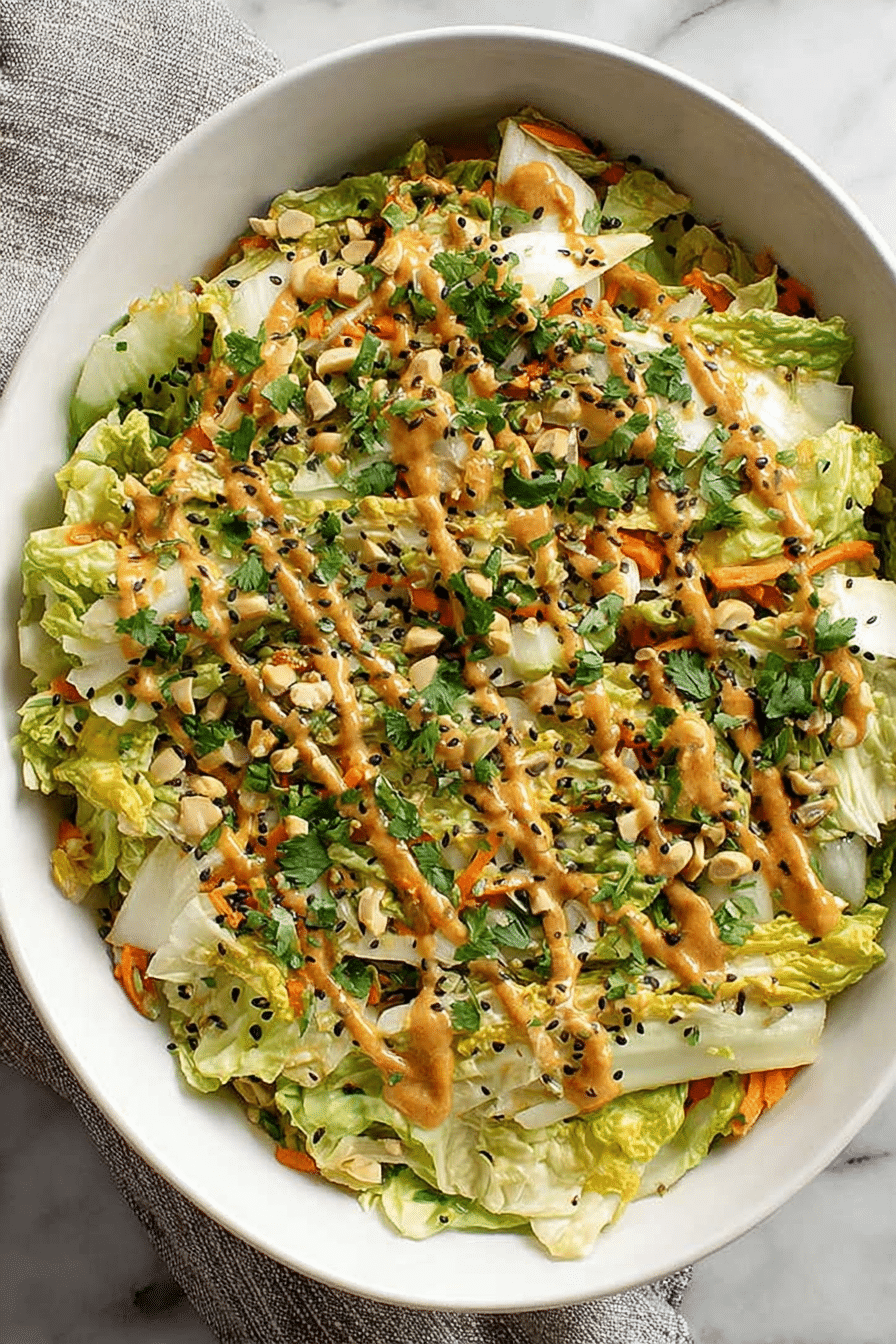
Napa Cabbage Salad
Ingredients
Method
- Combine the cabbage, carrots, scallions, cilantro, peanuts and sesame seeds in a large bowl.
- For the dressing, whisk together the peanut butter, ginger, garlic, salt, pepper, lime juice, soy sauce and oil in a small bowl.
- Drizzle the dressing into the salad tossing to coat.