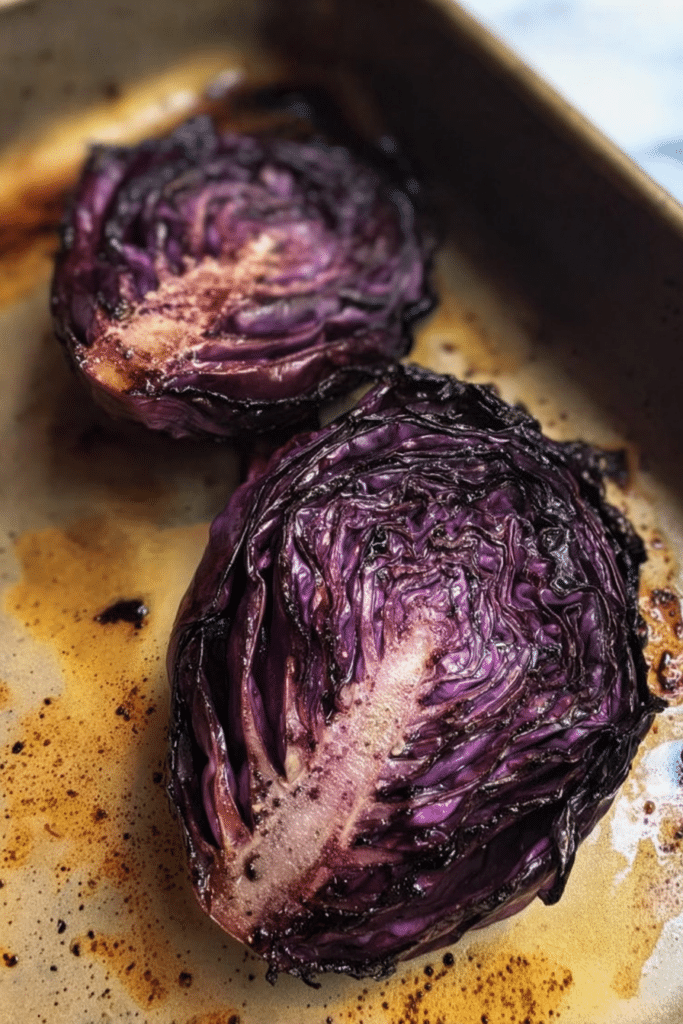
I remember the first time I roasted a whole red cabbage in my kitchen: the house filled with a warm, sweet perfume and the wedge on my cutting board turned into glossy, jewel-toned layers in the oven. I was after something easy that still felt special at the table, and this method — oil, salt, a splash of balsamic, and slow oven time — delivered that every single time.
Over the years I’ve refined the small choices that make the difference: how much oil to rub on the cut face, when to add the balsamic so it sinks into the layers instead of burning, and the little finish of high heat to get those dark, sticky edges. The result is an unpretentious side that reads fancy but hardly asks for any babysitting.
I use this dish when I want color, texture, and flavor without fuss. It pairs happily with roasted meats, grain bowls, or a weekday fish, and it also stands alone as the vegetable star on a family meal. For a classic pairing you can try it alongside slow-cooked favorites like crockpot corned beef and cabbage on a cozy dinner night.
The technique below is forgiving, and once you understand why the cabbage behaves the way it does in the oven, you can tweak it to your taste and pantry. I’ll walk you through what I use, why it works, and how to keep leftovers tasting fresh and bright.
Why this roasted red cabbage in balsamic vinegar transforms weeknight sides
Roasting compresses time in the best possible way: a little prep creates a lot of flavor. The method concentrates the cabbage’s natural sugars, softens the texture into tender, almost melt-in-your-mouth layers, and creates crispy, caramelized edges that add contrast. Because prep is minimal and hands-on time is short, it’s easy to make this on a busy evening and still serve something that feels deliberate and seasonal.
Visually, the deep purple and red hues turn richer and slightly smoky as the cabbage roasts, making a bright, attractive plate next to pale roasted potatoes or a golden roast chicken. The aroma is sweet and savory — you’ll notice it from the moment you open the oven. I revised the meta information for this piece to keep search clarity focused on roasted red cabbage in balsamic vinegar so home cooks can find it quickly.
Everything You Need for Roasted Red Cabbage in Balsamic Vinegar
Below I explain the essential ingredients and tools — what to prioritize, where to save time, and reasonable substitutions. I mention quality choices for oil and vinegar because they’re the main flavor carriers here.
- Red cabbage – The star. Choose a firm, dense head with crisp outer leaves; smaller heads roast faster and evenly.
- Olive oil – Coats and protects the cut surfaces while promoting browning. Extra virgin gives grassy flavor; milder oil keeps the cabbage taste forward.
- Balsamic vinegar – Adds sweet-tart depth and glossy finish. See the balsamic section below for how different types change the result.
- Kosher salt – Enhances sweetness and helps draw moisture from the inner layers so heat can concentrate sugars.
- Roasting pan or rimmed baking sheet – Use something wide enough for half heads to sit cut-side down initially; a sturdy pan gives even heat.
- A sharp chef’s knife and a sturdy cutting board – For clean halves and safe handling; a sawing motion helps more than brute force.
- Optional tools – A silicone brush or your hands to rub oil, tongs or a spatula for flipping, and aluminum foil for resting if desired.
The Science of Sweetness: How Roasting Caramelizes Cabbage
Roasting transforms the cabbage through gentle concentration of sugars and amino acids that brown and deepen in flavor. While cabbage contains less free sugar than a fruit, it has enough natural carbohydrates that, under dry, hot conditions, will caramelize and develop savory-sweet notes.
Moisture management matters: too much trapped steam slows browning and yields a steamed texture rather than roasted. That’s why I start with the cut side down to protect interior moisture for tenderness, then flip to expose surfaces for browning. As the sugars break down and Maillard-style reactions occur on the exposed layers, you’ll smell warm, sweet notes and see glossy, browned edges form.
Texturally, roasted red cabbage becomes tender through slow heat but keeps pleasant chew if you stop before total collapse. The visual cue is deepened color with dark, sticky edges; the scent is toasty and slightly sweet.
Balsamic Choices: Which Vinegar Gives the Best Flavor
Not all balsamic vinegars are interchangeable. Traditional, aged balsamics are syrupy, complex, and beautifully suited to finishing roasted cabbage because they add rounded sweetness without harsh acidity. Aged or “condiment” balsamics will glaze the layers and add depth. Lighter commercial balsamics are sharper and can work if you want a brighter finish, but they won’t give the same lacquered gloss.
If you enjoy balsamic flavor in other roasted vegetables, try pairing similar pantry staples—this balsamic-savory profile also shines in other oven-roasted mixes like the balsamic glazed roasted vegetables recipe I often return to for easy entertaining.
Flavored balsamics (fig, cherry, or raspberry) can be used sparingly to introduce fruit notes; use them as a finishing drizzle rather than in early high-heat stages so the delicate flavors aren’t lost. The fragrant tang of a well-chosen balsamic will perfume your kitchen as you spoon it into the cabbage layers.
Nutrition Spotlight: Antioxidants, Fiber, and Health Benefits of Red Cabbage
Red cabbage is as nutritious as it is beautiful. Its deep purple color comes from anthocyanins, antioxidants linked to reduced inflammation and cellular protection. It also provides fiber that supports digestion and keeps you satisfied, plus notable amounts of vitamin C and vitamin K.
To put it in perspective, a typical serving of raw red cabbage delivers a meaningful dose of vitamin C and several grams of fiber, while remaining low in calories—so roasted cabbage becomes a nutrient-dense side that complements protein-forward mains. If you like vegetable-forward plates, consider pairing this with other seasonal sides like roasted asparagus for a balanced dinner.
How to Make Roasted Red Cabbage in Balsamic Vinegar (Step-by-Step)
The steps below highlight critical temperatures, timing, and knife techniques. Follow them closely for even cooking and the best caramelization.
- Preheat your oven to a moderate temperature that allows long, slow roasting; this extracts and concentrates flavors without burning the balsamic.
- Slice the cabbage in half lengthwise with a sharp knife so you preserve the layered structure. A steady, even cut gives the most attractive presentation.
- Rub the cut surfaces with olive oil and a bit of kosher salt; use your hands to work the oil between layers so seasoning penetrates.
- Place the halves cut-side down in a greased roasting pan to protect the interior moisture and start the tenderizing process.
- Roast for a short initial period so the core softens without over-browning the outer layers.
- Remove, flip the halves so the cut side faces up, and drizzle balsamic into the layers so it pulls deep into the cabbage instead of merely coating the surface.
- Return to the oven for a longer roast until the knife inserts easily to the center and outer layers develop dark, caramelized edges.
- Finish with a short burst of higher heat if you want sticky, deeply browned edges; watch carefully so the balsamic doesn’t burn.
- Rest the cabbage loosely covered for a few minutes so juices redistribute before slicing and serving.
Troubleshooting
- I’ve had the balsamic burn on the surface when added too soon — if your oven runs hot, delay adding the vinegar until after the initial roast so it doesn’t scorch.
- If the cabbage is steaming instead of browning, check that your pan isn’t overcrowded; give the halves space and a well-heated pan for proper caramelization.
- If slices fall apart, you likely over-roasted; reduce final time slightly and rely on the resting period to finish tenderizing.
Variations
- Add thinly sliced apples or pears between the layers before the final roast for fruit-sweet complexity.
- Stir in a spoonful of whole-grain mustard or a scattering of toasted walnuts after roasting for texture contrast.
- Use flavored or aged balsamic as a finishing drizzle for a sweeter, more aromatic result.
Pro Tip for roasted red cabbage in balsamic vinegar: Finish with high heat for deep caramelization
Finishing at a higher temperature briefly is my go-to trick when I want those almost-charred, sticky edges that taste sweet and smoky. The short blast of heat intensifies the sugars on the surface and creates additional texture contrast between tender interior layers and crisped edges.
- Time it carefully — a few minutes is often enough to deepen color without burning the vinegar.
- Broiler-safe pans speed caramelization but watch closely because sugars and balsamic can go from perfect to bitter fast.
- If you prefer a milder finish, extend the roasting time at moderate heat instead of using a high-heat blast.
How to Store, Reuse, and Turn Leftovers Into New Meals
Store roasted red cabbage in an airtight container in the refrigerator for up to five days; it keeps well and the flavors mellow pleasingly. For longer storage, freeze in a shallow container, though texture softens after freezing and thawing.
- Reheat gently in a skillet to restore some of the roasted texture rather than microwaving to avoid sogginess.
- Use leftovers cold in salads or grain bowls to add a tangy-sweet component and vivid color.
- Transform leftovers into a quick skillet side—pair with sausage and onions for a hearty fried cabbage-style dish when you want something warming and substantial.
If you enjoy repurposed cabbage, try it in a sandwich or wrap with creamy cheese and pickles, or fold it into warm grains for a fast lunch. For another hearty way to reuse roasted cabbage, consider making a fried cabbage with sausage for a comforting meal idea.
Frequently Asked Questions
Can I cook red cabbage in balsamic vinegar?
Absolutely! The deep, complex sweetness and tangy acidity of balsamic vinegar perfectly balances the earthy richness of red cabbage, enhancing the overall flavor.
What is the best way to roast red cabbage?
The best way to roast red cabbage is to cut it in half, drizzle with olive oil and balsamic vinegar, sprinkle with salt, and roast until tender. This method caramelizes the cabbage beautifully!
How long does it take to roast red cabbage?
Roasting red cabbage typically takes about 2 hours, allowing it to become very tender and flavorful. Just remember to flip it halfway through!
What can I serve with roasted red cabbage?
Roasted red cabbage pairs well with a variety of dishes, including roasted meats, grain salads, or even as a topping for sandwiches. Enjoy it as a versatile side!
How should I store leftovers of roasted red cabbage?
Store leftovers in an airtight container in the refrigerator for up to 5 days. You can also repurpose it in salads, grain bowls, or as a filling for wraps!
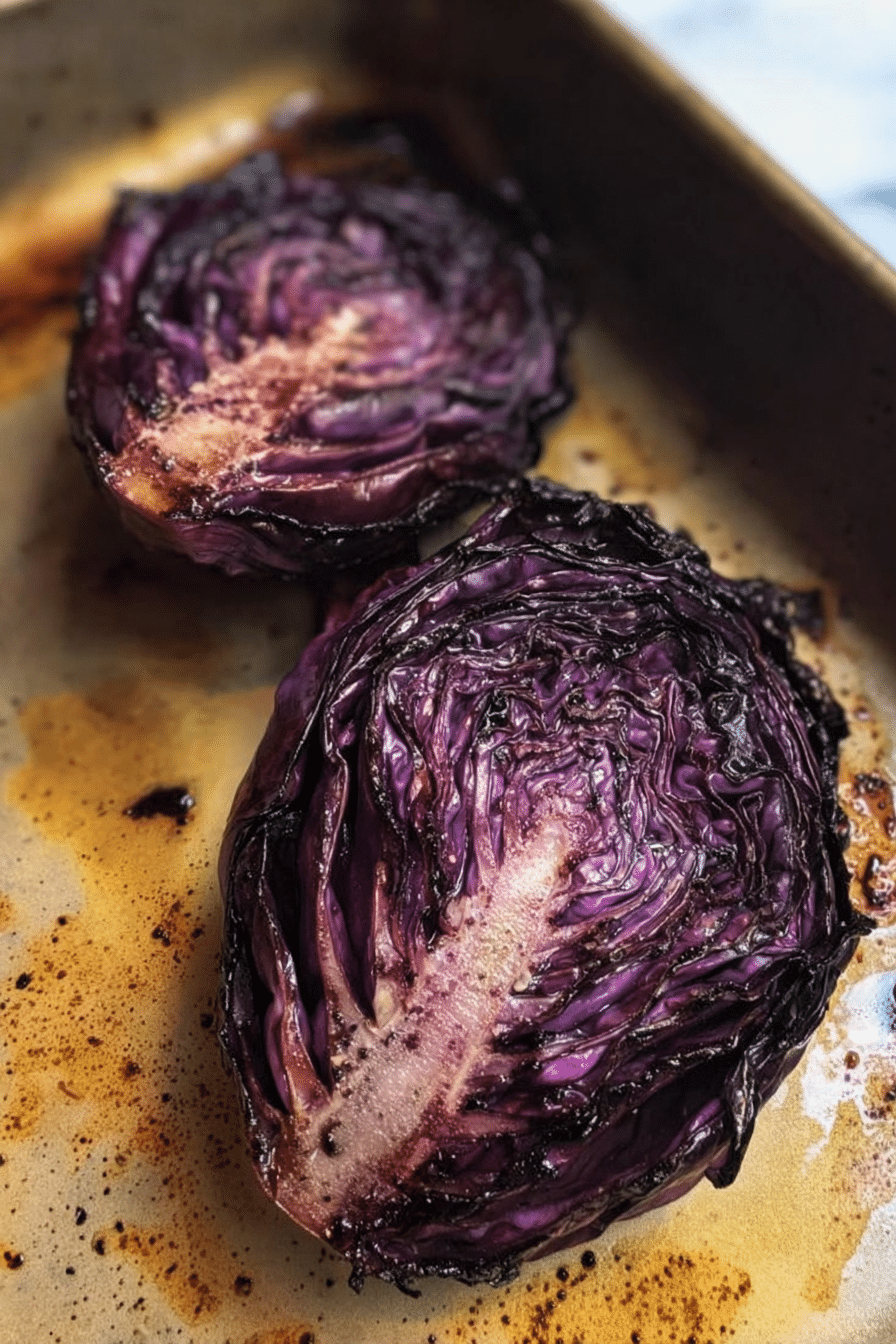
Roasted Red Cabbage in Balsamic Vinegar
Ingredients
Method
- Preheat oven to 350 degrees. Grease a roasting pan.
- Cut cabbage in half lengthwise, drizzle ½ tablespoon olive oil on each cut side, spread it out, sprinkle with salt, and place cut side down on the roasting pan. Drizzle ½ tablespoon oil on each round side, spread it out, and sprinkle with salt.
- Roast cabbage for 30 minutes.
- Flip the cabbage so the cut side is up, drizzle 1 tablespoon oil and 1-2 tablespoons balsamic vinegar into the layers of the cut side, sprinkle with salt, and return to the oven for another 1½ hours until very tender.
- Let cabbage stand for 10 minutes, covered lightly with aluminum foil, and serve.