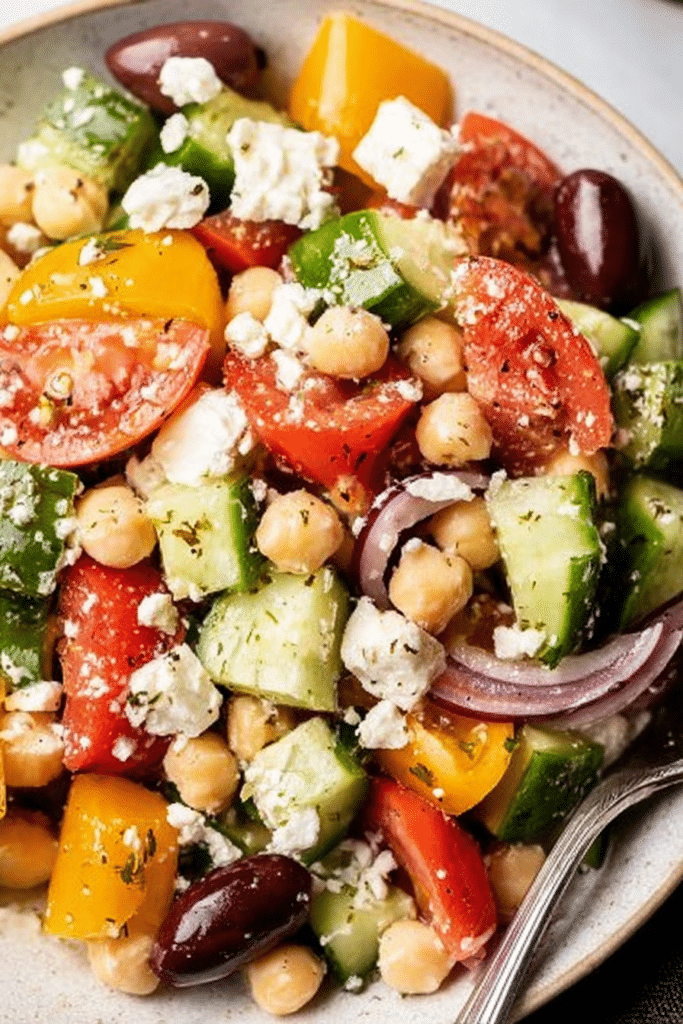
I make this chickpea Greek salad almost every week when life gets busy. It comes together in about 15 minutes, looks bright on the plate, and keeps well enough for a few lunches — which means fewer takeout runs and a lot more fresh veggies in my week. I love how the chickpeas add body so the salad actually fills you up.
In my kitchen I often chop while I chat on a call or finish one more thing in the oven. The quick prep and minimal cleanup make this one of my go-to dinners when I want something fresh but fast. When I toss everything with the lemony dressing, the garlic and oregano smell bright and fresh — and that alone makes the salad feel like more than the sum of its parts.
I also like to change the herbs or swap the cheese to suit what I have on hand. Little swaps like fresh parsley or dill, or a simple tofu feta, keep the salad interesting without adding time. If you have a few extra minutes, let it sit in the fridge so the flavors mellow and blend together.
Why this Chickpea Greek Salad is ideal for busy weeknights
This salad is fast, forgiving, and stores well — which is what you want on a weeknight. Here’s why it works for busy people:
- Prep time is only about 15 minutes, so it’s perfect for a last-minute lunch or a quick dinner fix.
- Most ingredients can be prepped ahead or kept on hand for easy assembly, making meal prep simple.
- Chickpeas give you protein and fiber, so the salad feels satisfying and keeps you full longer than greens alone.
The visual appeal is a big bonus: bright peppers, ruby tomatoes, dark olives, and creamy feta make the bowl pop. The first sniff of lemon and garlic as you toss the dressing is always a nice moment when time is short.
Everything You Need for Chickpea Greek Salad
Below I talk through each ingredient and its role so you know what to keep on hand and what you can swap without losing the salad’s character.
- Chickpeas – The base of the salad; they add protein, firmness, and a pleasant bite. Canned or cooked-from-dry both work.
- Bell peppers – Add crunch and color; use a mix of red, yellow, and green for visual contrast.
- Red onion – Provides a sharp, bright note that balances creamy feta and oil.
- Grape or cherry tomatoes – Bursts of sweetness and acidity that keep the salad lively.
- Kalamata olives – Bring briny depth and a classic Mediterranean flavor.
- Cucumber – Adds cool crunch and refreshes the palate.
- Feta – Creamy and tangy; swap for marinated tofu or cashew cheese to make it vegan.
- Olive oil & lemon – The backbone of the dressing; olive oil carries flavor and lemon brightens everything.
- Garlic & dried oregano – Garlic gives aroma and oomph; oregano ties the dressing to classic Greek flavors.
- Fresh herbs (optional) – Parsley or dill add freshness; try them if you want more herbal lift.
If you’re a fan of chickpeas, check out our Mediterranean Chickpea Salad for another delicious recipe!
How to Make Chickpea Greek Salad (Step-by-Step)
- Drain and rinse the chickpeas so they’re clean and ready to absorb dressing.
- Chop the peppers, onion, tomatoes, and cucumber to a uniform size so each bite has balance.
- Place all salad ingredients into a large bowl and give them a gentle toss to combine textures.
- Whisk the olive oil, lemon juice, minced garlic, and oregano until the mixture comes together and looks slightly glossy — this helps the dressing cling to the vegetables.
- Pour the dressing over the salad and toss again so every piece is coated; taste and add salt and pepper as needed.
- Serve immediately, or refrigerate for at least 30–60 minutes to let the flavors marry; the salad will taste more integrated after a short chill.
- Optional: if you want extra crunch and a nuttier flavor, toast the chickpeas briefly in a skillet before adding them to the salad.
The aroma of garlic and lemon is the first thing you’ll notice; tossing by hand gives you a good feel for how well the dressing coats the salad.
Quick Chopping Tips for Speed without Losing Crunch
- Keep your knife sharp — it’s faster and safer, and it makes clean cuts that preserve texture.
- Dry vegetables before chopping; wet pieces make the salad soggy faster.
- Work in batches: trim peppers, then cut all at once rather than switching tools often.
- Use a simple dicing technique: slice, stack, and cut across for uniform pieces.
- For quick prep, halve small tomatoes and slice cucumbers thinly so they still crunch without bulky pieces.
The Dressing Trick That Brightens Every Bite
A bright, simple dressing is what ties this salad together. Use fresh lemon juice rather than bottled for a cleaner, livelier acidity. Good olive oil carries the flavors, so choose a decent everyday extra-virgin if you have it.
- Always use freshly squeezed lemon juice when you can — it has more brightness and a fresher aroma than bottled juice.
- Whisk the olive oil and lemon together well so they emulsify slightly; this helps the dressing cling to chickpeas and veggies.
- Freshly minced garlic gives a punchy aroma; if you prefer milder garlic, let it sit in the dressing a few minutes before tossing the salad.
- Finish with a pinch of dried oregano for that classic Greek note; fresh oregano is great too if you have it.
Enhance your salad with a drizzle of Easy Homemade Tzatziki Sauce for an extra layer of flavor.
How Chickpeas Keep You Full: Nutrition & Benefits
Chickpeas are the reason this salad satisfies. They’re rich in fiber and plant protein, which slow digestion and keep hunger at bay.
- Chickpeas: Provide a mix of protein and fiber that supports fullness and steady energy.
- Olive oil: Supplies heart-healthy monounsaturated fats and helps your body absorb fat-soluble vitamins.
- Bell peppers and tomatoes: Pack vitamin C and other antioxidants that support immune health and brighten flavor.
- Feta (or its vegan alternatives): Adds calcium and a salty tang that can reduce the need for extra salt.
For another nutrient-packed option, try our Chickpea Feta and Avocado Salad.
Pro Tip for chickpea greek salad: Marinate for maximum flavor
- I recommend letting the salad sit in the refrigerator for at least 30 minutes; an hour is even better for the flavors to meld.
- If you have more time, marinate up to a few hours — the acidity softens the vegetables slightly and brings depth to the dressing.
- If you prefer crisper veggies, add cucumbers and tomatoes right before serving and marinate the chickpeas, peppers, onions, olives, and dressing instead.
How to Store, Meal-Prep, and Serve Chickpea Greek Salad
- Store leftovers in an airtight container in the refrigerator; the salad is best within 2–3 days.
- If you want longer storage, freeze cooked chickpeas separately and add fresh to the salad when ready to serve.
- Pack dressing separately if you’re meal-prepping to keep vegetables as crisp as possible; toss just before eating.
- Serve chilled, or let it sit at room temperature for 10–15 minutes to soften the chill and release aromatics.
Serving Suggestions or Pairing Ideas
- Serve alongside grilled chicken or fish for a complete protein-balanced plate.
- Pair with quinoa or brown rice to turn it into a heartier grain bowl.
- Use it as a filling for wraps or stuffed into warm pita pockets for an easy lunch.
- For an easy appetizer combo, place it next to Classic Italian Bruschetta and let guests mix and match.
Vegan Variations using Non-Dairy Substitutes for Feta
- Cashew cheese: Provides creaminess and a mild tang; use a store-bought version or blend soaked cashews with lemon and salt.
- Tofu feta: Crumbled firm tofu marinated in lemon, olive oil, salt, and a touch of apple cider or white wine vinegar gives a tangy, firm substitute.
- Tahini dressing: Swap out feta and drizzle with tahini mixed with lemon and garlic for a rich, nutty twist.
- Nutritional yeast: Sprinkle a bit for an umami, slightly cheesy flavor if you want to keep textures light.
Cultural Significance of Ingredients
This salad borrows from Mediterranean pantry staples that have long been central to the region’s food. The Mediterranean diet emphasizes vegetables, legumes, olive oil, and modest amounts of cheese and olives — all of which are present here. Chickpeas have been cultivated and eaten around the Mediterranean for millennia, valued for their versatility and sustaining nutrition. Olives and feta (or brined cheeses) have deep roots in Greek cooking and are staples in markets and family tables.
Using these ingredients connects a simple weeknight dish to a broader tradition of fresh, ingredient-forward cooking that focuses on whole foods and balanced meals.
Troubleshooting
- If the salad tastes flat, I often add a touch more lemon or a pinch more salt to brighten the flavors.
- If the veggies turn soggy, cut them larger or add them right before serving; keep dressing separate when meal-prepping.
- If it’s too salty from olives or feta, add more chickpeas or a few more tomatoes to balance the saltiness.
- If the dressing separates, whisk it again or shake in a jar before tossing; a quick whisk brings it back together.
Note: Please present the Pro-Tips, Troubleshooting, and Variations sections as bulleted lists for easy scanning.
Frequently Asked Questions
How long does it take to prepare the Chickpea Greek Salad?
It takes less than 20 minutes to prepare this Chickpea Greek Salad. Perfect for busy weeknights!
Can I make this salad ahead of time?
Yes! It’s actually better if you let it marinate in the refrigerator for at least an hour before serving.
What if I don’t have feta cheese?
No worries! You can omit the feta for a vegan version or use a non-dairy substitute instead.
How do I store leftover Chickpea Greek Salad?
Store any leftovers in an airtight container in the refrigerator for up to 2-3 days.
What are some good pairings for this salad?
This salad pairs well with grilled chicken, quinoa, or can be enjoyed as a light lunch on its own!
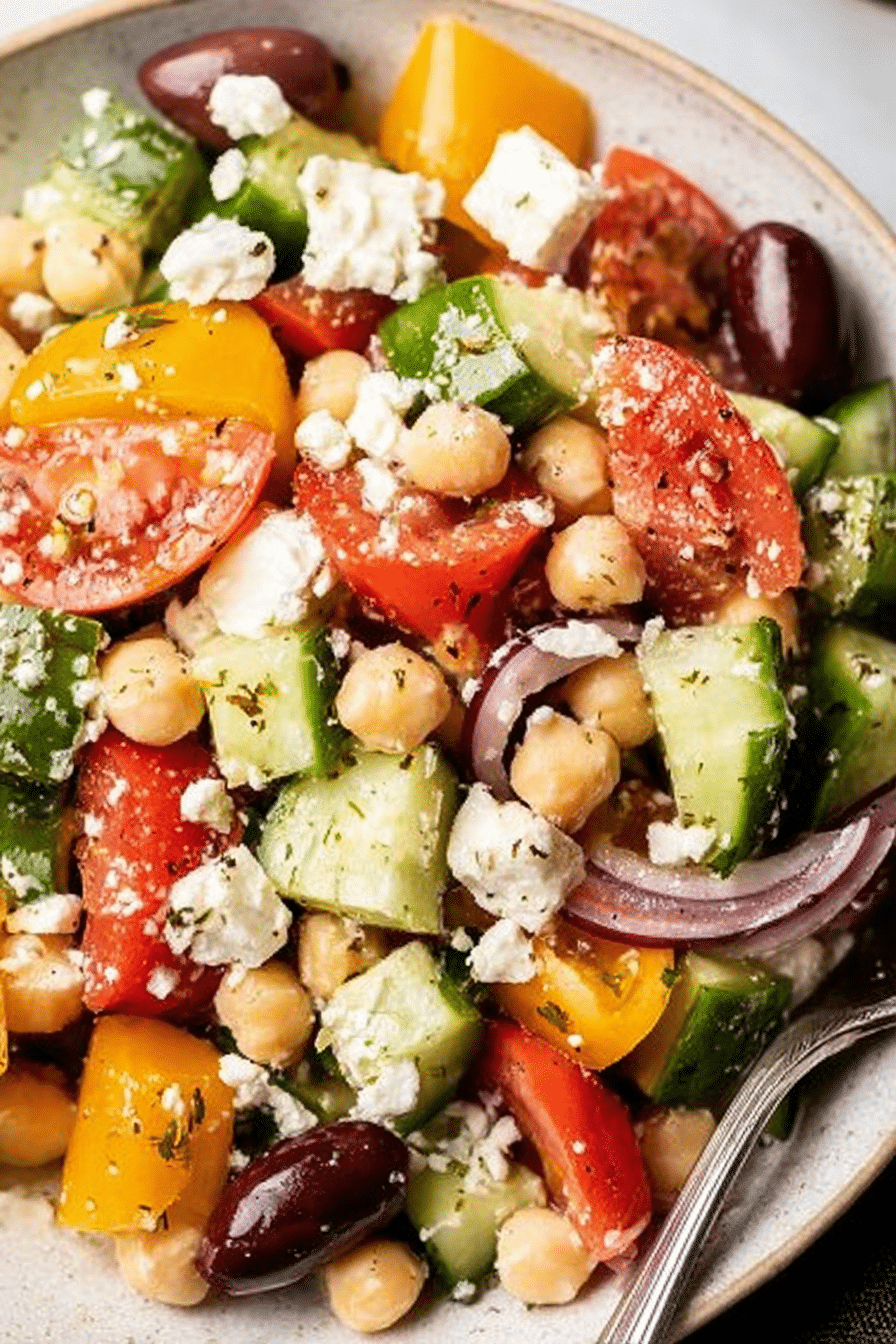
Chickpea Greek Salad
Ingredients
Method
- Place all salad ingredients into a large bowl and toss to combine.
- In a small bowl, whisk together olive oil, lemon juice, garlic and oregano. Pour onto salad and toss again to well combine. Taste and add salt and pepper as you'd like.
- Place in refrigerator for 1 hour to marinate, or serve immediately. Salad is best enjoyed within 2-3 days after making.