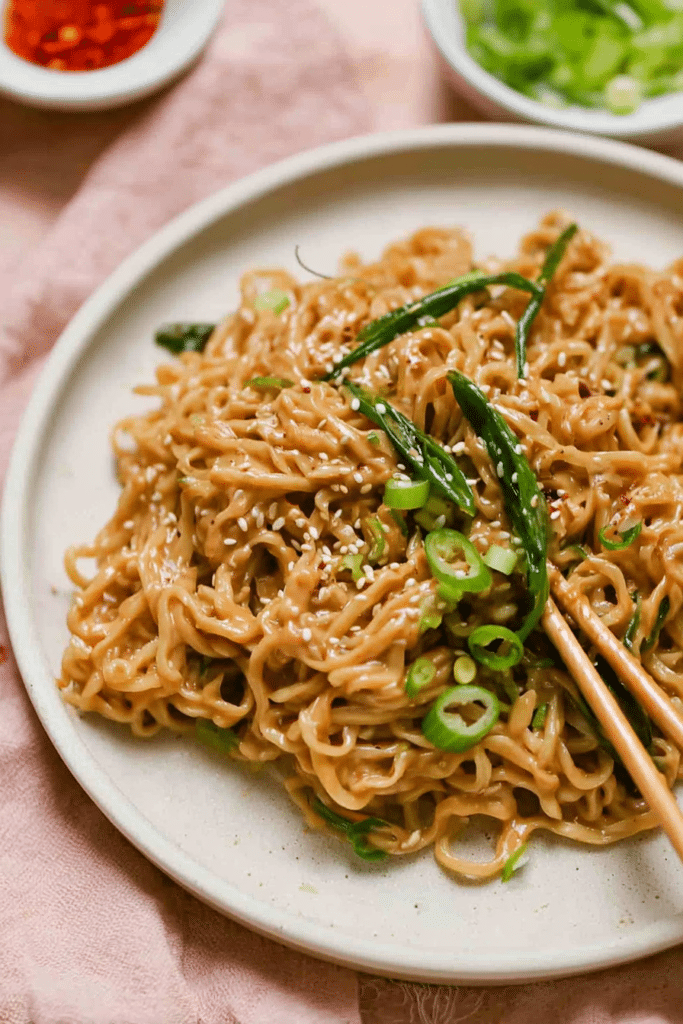
I make this cold spicy peanut sesame noodles recipe on repeat during the warm months because it does the job I need: fast hands-on time, big flavor, and something my whole family will eat cold straight from the fridge. I remember my mom packing versions of this into school lunches, and over the years I’ve simplified the method so it fits into a hectic week without skimping on the taste.
What I love most is that most of the work is done while you wash up — the sauce comes together in a blender and the noodles just need a quick cook. Then it spends quiet time in the fridge, where the sauce thickens and the flavors mellow. I usually make a double batch and pull out portions for lunches and a quick dinner later in the week.
In my kitchen this is as much about texture as it is about flavor: cool, springy noodles coated in a silky peanut-sesame sauce, with the bright snap of scallions and toasted sesame seeds on top. If you like a little heat, the chili garlic sauce gives it a punch; if not, you can tone it down easily. It’s flexible, family-friendly, and honestly one of the easiest meals to rely on when time is short.
Below I walk through what you need, the small sauce tricks that make this sing, and a few practical swaps so you can make it gluten-free, vegan, or protein-packed depending on your week.
Why this recipe is perfect for busy nights (fast, chillable, and family-friendly)
This recipe fits busy schedules because the active cooking time is minimal and the rest is hands-off chilling. The total time includes a long chill window, but you only spend a short time at the stove and blender. I often cook the noodles while prepping a quick salad or roasting a sheet pan of vegetables to go with it.
It’s also extremely make-ahead friendly: you can make the sauce a few days ahead and store it in the fridge. I’ll often double the sauce and keep extra for rice bowls, grilled chicken, or a last-minute dip for veggies. The dish travels well — it makes an excellent packed lunch that’s refreshing and satisfying.
Visually, chilled noodles look great on a platter: glossy, light-colored sauce, green scallions, and specks of sesame seeds. The aroma of toasted sesame and peanuts is present but not overpowering, so it’s appealing for kids and adults alike.
Everything You Need for Cold Spicy Peanut Sesame Noodles
- Dried spaghetti or Asian rice noodles – The noodle provides the base texture; choose rice noodles for gluten-free or spaghetti for a chewier bite.
- Smooth peanut butter – The backbone of the sauce; a higher-quality peanut butter gives a creamier mouthfeel without gritty bits.
- Soy sauce (or tamari) – Adds savory depth; use tamari for a gluten-free option.
- Seasoned rice vinegar – Balances the richness with a bright, tangy note.
- Brown sugar or another sweetener – Rounds the edges and balances the heat; honey or maple work too.
- Roasted peanut oil and toasted sesame oil – Peanut oil keeps the sauce silky; a touch of sesame oil adds that toasty aroma.
- Toasted sesame seeds – Ground into the sauce and reserved for topping to reinforce nutty flavor and texture.
- Chili garlic sauce – Your control point for spice; find it in the Asian aisle or specialty stores.
- Fresh ginger and garlic – Bright aromatics that lift the sauce; grate or blend them smooth.
- Fresh scallions and extra sesame seeds – For garnish and a crisp, fresh counterpoint to the rich sauce.
The Secret to the Perfect Peanut-Sesame Sauce
The sauce is simple but there are a couple of small moves that make a big difference. First, blend everything until completely smooth — pockets of peanut or sesame will change the texture when chilled. Second, trust the chilling: the sauce will seem thin right after blending, but it thickens as it rests and the flavors integrate. I always make it a bit thinner than I think I need because the chill does the rest.
Balance is key: the sauce should sit comfortably between salty, sweet, and spicy. Taste as you go and remember that the noodles will mute intensity slightly, so aim for a slightly bolder flavor than you want on first taste.
Some folks like a chunkier sauce — if that’s you, hold back some chopped peanuts or sesame seeds and fold them in after chilling so you keep the creamy base but gain crunch.
Enhance your noodle dish by trying The Best Homemade Peanut Sauce recipe for a richer flavor experience.
Troubleshooting
- If the sauce splits or looks oily, blend in a little warm water a teaspoon at a time until it comes back together, then chill.
- If it’s too thin after chilling, give it a few stirs and let it sit a bit longer; you can also fold in a small spoonful of extra peanut butter to thicken.
- If it’s too salty, a squeeze of fresh lime or a touch more sugar will balance it out.
Rice Noodles vs. Spaghetti: Which Noodle Works Best and Why
Both rice noodles and spaghetti work well here — your choice comes down to texture and dietary needs. Rice noodles are softer and silkier when chilled and are naturally gluten-free; they pair beautifully with Asian flavors and are lighter in the mouth. Spaghetti (or other wheat noodles) keeps a firmer, chewier bite that some people prefer, especially if you want more tooth against the creamy sauce.
Cooking times differ: rice noodles usually need a brief soak or a quick boil, while spaghetti follows package times — just be careful not to overcook either. After cooking, rinse the noodles in cold water to stop cooking and to keep them springy and separate.
If you’re curious about different noodle preparations, check out our 30-Minute Vegan Stir-Fry Sesame Noodles for another delicious twist.
How Temperature Affects Texture — why these are served cold
Chilling changes both texture and flavor. Cold noodles feel firmer and more refreshing, and the chilled sauce clings to them better because it thickens as it cools. Aromatic notes like sesame and ginger are present but less sharp when chilled, which often makes the dish feel more balanced for lunch or hot days.
Toppings like scallions and toasted sesame seeds keep their crunch against the cool noodles, giving a pleasant contrast. If you add vegetables like cucumbers or radishes, they retain a crisp snap that warms up a cold bowl visually and texturally.
How to Make Cold Spicy Peanut Sesame Noodles (Step-by-Step)
- Bring a large pot of water to a boil and cook your chosen noodles until just al dente according to the package directions. Drain and rinse under cold water until the noodles are cool and not sticky.
- While the noodles cook, combine water, smooth peanut butter, soy (or tamari), rice vinegar, brown sugar, peanut oil, sesame seeds, chili garlic sauce, sesame oil, peeled ginger, and garlic in a blender or food processor. Process until completely smooth.
- Toss the cooled noodles in a large bowl, pour the peanut-sesame sauce over them, and toss to coat evenly. The sauce will seem thin at this stage—trust the chill.
- Cover and refrigerate for at least one hour; I usually chill mine for a few hours so the sauce thickens and the flavors meld.
- Before serving, toss the noodles again to redistribute the sauce. Top with chopped scallions and extra toasted sesame seeds. Add fresh vegetables or protein as desired.
For a complete meal, consider pairing this noodle dish with Easy Sheet Pan Sesame Chicken for a delicious and protein-packed dinner.
Pro Tip for cold spicy peanut sesame noodles: Thicken the Sauce with Chilling and Adjust Heat per Serving
- Chill the sauced noodles for at least an hour; the sauce will thicken naturally as it cools and the flavors will round out.
- Adjust heat per serving by offering extra chili garlic sauce on the table so each person can add more if they want it spicy.
- Reserve a small amount of plain sauce undiluted to serve as a dip for raw veggies if you like some crunch on the side.
- Use leftover sauce as a dressing for grain bowls, roasted veggies, or as a marinade for tofu—store it separately from cooked noodles if you plan to reuse it.
How to Store, Make-Ahead, and Reheat Cold Spicy Peanut Sesame Noodles
Store leftovers in airtight containers in the fridge; the noodles keep well for about 3–4 days. Because the sauce thickens in the fridge, stir or add a splash of warm water or a little extra oil if it becomes too stiff when you go to serve it.
If you prefer to eat the noodles warm, warm them gently in a skillet with a little oil and add a splash of warm water to loosen the sauce — cook only until heated through to prevent the noodles from getting mushy. I recommend eating them cold or at room temperature for the best texture.
For make-ahead meal prep: cook the noodles and store them in one container, keep the sauce in a separate jar, and combine on the day of serving. This prevents the noodles from absorbing too much sauce and getting heavy in the fridge.
Easy Variations and Protein Pairings (vegan, gluten-free swaps, and serving ideas)
- Vegan protein – Pan-fried or baked tofu cubes, tempeh, or a handful of roasted chickpeas add satisfying protein.
- Seafood option – Grilled shrimp or seared scallops pair nicely for a lighter, seafood-forward bowl.
- Gluten-free swap – Use rice noodles and tamari instead of soy to keep the dish gluten-free without losing flavor.
- Extra veg – Shredded carrot, thin cucumber ribbons, or edamame add color and texture.
- Crunch – Stir in chopped roasted peanuts or crispy shallots for extra texture.
- Serving ideas – Pair with a simple green salad or grilled vegetables for a complete weeknight meal. For a different take on cold noodles, try our Easy Vegan Cold Noodle Salad that can give you more serving ideas.
Frequently Asked Questions
Can I use any type of noodles for this recipe?
Absolutely! While the recipe calls for dried spaghetti noodles, you can use Asian rice noodles or any other type of noodle you prefer.
How spicy is the cold spicy peanut sesame noodles?
The spice level largely depends on the amount of chili garlic sauce you add. Start with the recommended amount, and you can always adjust to your taste!
Can I make the peanut sesame sauce ahead of time?
Yes! You can prepare the peanut sesame sauce in advance and store it in the refrigerator for up to a week. Just give it a good stir before mixing with the noodles.
What are some good toppings or additions?
Fresh scallions and sesame seeds are great toppings! You can also add sliced cucumbers, radishes, or even grilled chicken or tofu for extra protein.
How do I store leftovers?
Store any leftovers in an airtight container in the refrigerator. The noodles should keep for about 3-4 days, and the flavors will continue to develop!
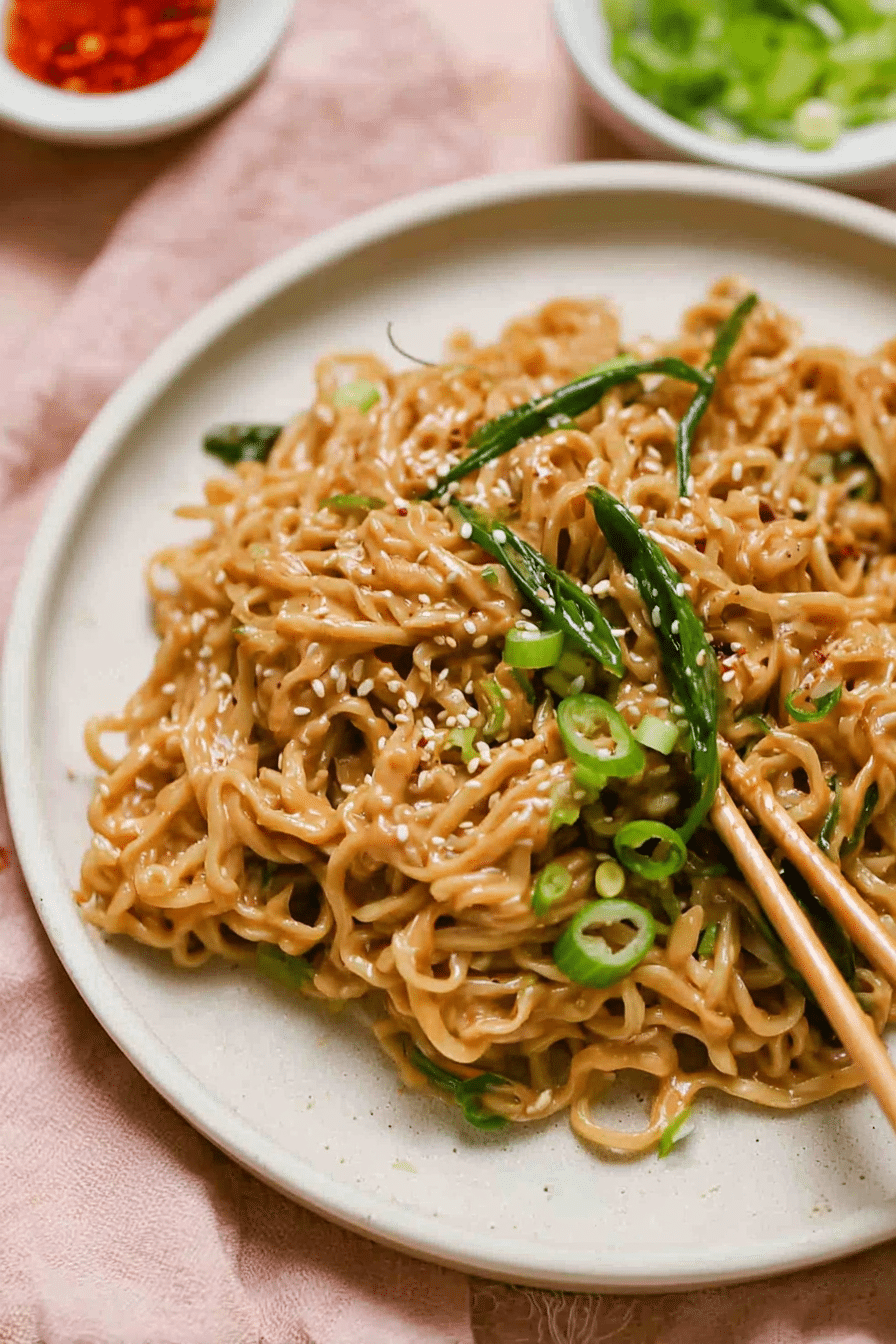
Cold Spicy Peanut Sesame Noodles
Ingredients
Method
- In a large stockpot, bring water to boil then add spaghetti noodles and cook according to box. Drain well when done.
- In a jar of a blender, combine water, peanut butter, soy sauce, rice vinegar, brown sugar, peanut oil, sesame seeds, chili garlic sauce, sesame oil, ginger, and garlic. Process until smooth.
- After pasta is done cooking and drained, add to a large glass bowl. Pour the peanut sesame sauce over the noodles and toss to coat. The mixture/sauce will be very runny and it will look like you made way too much. Trust me, once you pop it in the fridge, the sauce sets up and it's perfect 🙂
- Cover and refrigerate for at least one hour - the longer, the better. I had mine in there for at least three. I love when it's super cold and the sauce is nice and thick.
- Toss noodles again prior to serving. Top with fresh scallions and sesame seeds.