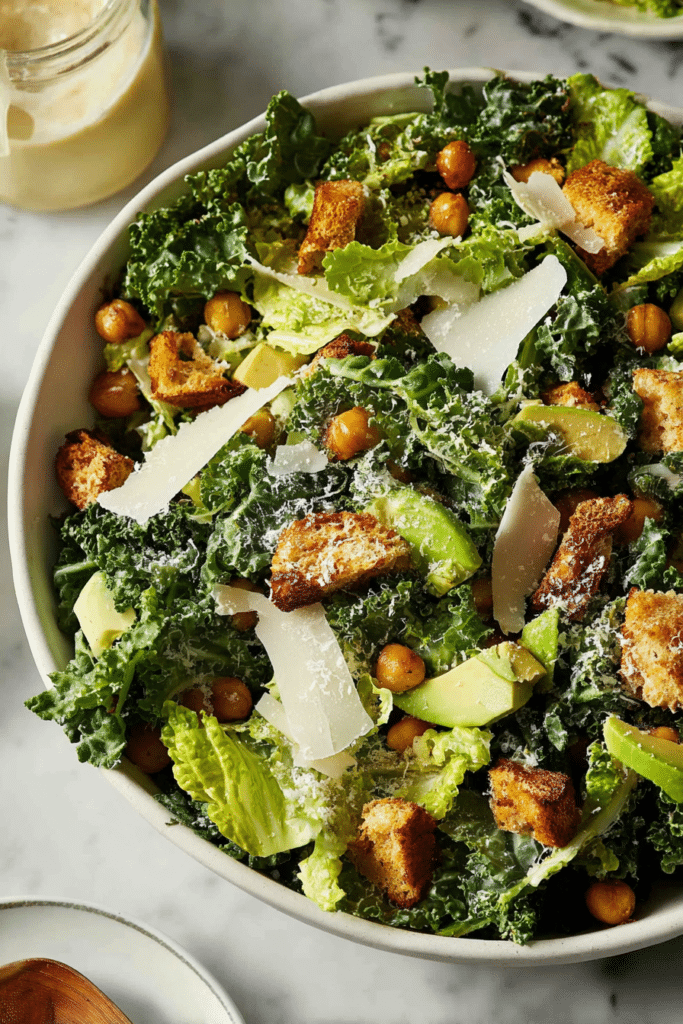
I make a Kale Caesar salad at least once a week in my kitchen because it keeps me full, feels fresh, and travels well. I like that it’s more than a side — a bowl can be a satisfying lunch when I add a few protein-packed extras. Over the years I’ve learned the small tweaks that turn coarse, stubborn leaves into a silky, tender base that still has bite.
When I first swapped kale for romaine, the texture intimidated me. The trick was simple: massage the leaves and treat the greens like a dough that needs coaxing. The result is leafy, vibrant greens that carry the dressing without going limp. I often prepare the dressing ahead and assemble components so I can toss a bowl together in minutes.
I aim for balance: crunchy croutons or roasted chickpeas for texture, a creamy dressing for tang and richness, and optional avocado or beans for extra satiety. This version has two dressing options — a cashew-based vegan blend and a Greek-yogurt variation — so you can tailor it to your diet without losing that classic Caesar punch.
Below I walk through what to buy, how to prep different kale types for the best texture, step-by-step assembly tips, and simple variations for gluten-free diets or added protein. The guidance is practical and meal-prep friendly so you can enjoy healthy lunches all week.
Why this Kale Caesar Salad is perfect for nutritious lunches and hearty sides
Kale brings structure and nutrients that make this Caesar-style salad more than a pretty plate. It holds up to a creamy dressing, so the salad keeps its texture during short-term storage — ideal for packed lunches. Visually, the deep green of the kale paired with shaved cheese or ripe avocado makes the bowl feel like a complete, satisfying meal.
Sensory cues are important here: look for glossy, firm leaves and feel them before massaging — they should be slightly coarse. The creamy dressing and crunchy croutons create contrast, so each forkful feels balanced. For portioning, treat a generous handful of leafy greens plus a protein and a dressing spoonful as a balanced meal for most people.
Everything You Need for Kale Caesar Salad
Below are the core ingredients and sensible substitutions to keep the salad healthy, adaptable, and flavorful.
- Kale – The foundation; choose a hearty leaf so it stands up to dressing. If you prefer milder flavor, mix with other greens.
- Romaine – Optional for lightness and extra crunch; blends well with kale for a softer bite.
- Extra-virgin olive oil – Adds body and helps with massaging; use a good-quality oil for aroma.
- Cashews (for vegan dressing) – Create a creamy, dairy-free base that’s rich and slightly sweet when blended.
- Greek yogurt (for non-vegan dressing) – Provides tang, protein, and a thick texture without heavy mayo.
- Garlic – A small amount boosts classic Caesar flavor; roast or mince depending on intensity.
- Anchovy or salt alternative – Traditional Caesar has anchovy for umami; vegans can use miso or caper brine for that savory hit.
- Croutons – For crunch; easily made gluten-free with sturdy gluten-free bread.
- Parmesan or vegan Parmesan – Adds savory, nutty notes; shave for visual appeal.
- Roasted chickpeas or nuts – Great gluten-free crunchy alternatives and a protein boost.
- Avocado – Optional for creaminess and extra healthy fats.
For a classic twist, try our best homemade Caesar salad recipe as a comparison.
Why kale beats romaine: nutrition, texture, and satiety
Kale outperforms many lettuces in key nutrients: it’s denser in vitamins A, C, and K, and it provides more calcium and iron per leaf. That nutrient density supports long-lasting fullness, which is why I prefer it when I want a lunch that sustains me through a busy afternoon. The fibrous structure also slows digestion, helping you feel satisfied without overeating.
Texture-wise, kale’s tougher leaves hold the dressing rather than collapsing under it. That keeps the salad lively rather than soggy. Massaging transforms the leaves by breaking down fibrous strands and releasing a mellow sweetness — you’ll notice the leaves change from coarse and matte to softer and glossy under your hands.
Two dressings explained: Vegan cashew vs. Greek-yogurt Caesar
Both dressings aim for the same profile — creamy, tangy, with a savory backbone — but they arrive there differently.
- Vegan cashew dressing – Blends soaked cashews into a luxuriously smooth base. It’s naturally rich and provides plant-based fat and some protein. Cashew dressings pair beautifully with lemon, a splash of vinegar, garlic, and a bit of miso or caper brine to mimic anchovy umami. The aroma is slightly nutty and the texture very silky when blended.
- Greek-yogurt dressing – Stirred together by hand, this version is tang-forward and higher in protein. It’s quicker if you don’t want to soak nuts and still gives a thick, clingy dressing that coats kale well. You can adjust the tang with more lemon or mellow it with a touch of olive oil.
For either dressing: taste as you go and adjust salt, acid, and savory elements. If you like herbous notes, a touch of fresh parsley or chives brightens the mix without overwhelming the Caesar profile.
How to choose and prep different types of kale for best texture
Not all kale is the same. Choose the type that matches your texture preference and plan your prep accordingly.
- Curly kale – Bright, peppery, and resilient; needs a good massage to soften. Great for holding chunky croutons and dotted ingredients.
- Lacinato (Tuscan) kale – Darker, flatter leaves with a slightly sweeter, earthier flavor; it’s often easier to chew and needs less intensive massaging.
- Red kale – Attractive color and slightly milder flavor; works well when you want a pretty presentation.
- Selection tips – Look for firm, glossy leaves without yellowing. Smaller leaves can be more tender; larger leaves may need extra massaging.
- Prep basics – Remove thick stems by slicing down the center or holding the stem and stripping leaves with your fingers. Tear into bite-sized pieces so the dressing clings evenly.
Store unwashed, wrapped in a towel inside a sealed container to preserve crunch until you’re ready to use it.
How to Make Kale Caesar Salad (Step-by-Step)
- Strip the kale from its stems and tear into bite-size pieces so you get a mix of tender and chewy textures.
- Drizzle the leaves with a little olive oil and a pinch of salt, then use your hands to massage the kale until it softens and becomes glossy — this usually takes a minute or two.
- Add chopped romaine if you’re using it to lighten the texture, and toss to combine so the two greens mingle.
- Dress the salad lightly with half the dressing first; toss and taste, then add more dressing as needed so the leaves are coated but not saturated.
- Transfer to a serving bowl and scatter homemade or gluten-free croutons on top, then shave or sprinkle Parmesan (or vegan alternative).
- Add optional toppings like roasted chickpeas or diced avocado right before serving to preserve crunch and texture.
Troubleshooting
- If the kale tastes bitter, try massaging longer with a touch more oil and a squeeze of lemon to balance flavors.
- If the dressing is too thick, thin it with a splash of water, lemon juice, or extra oil, a little at a time.
- If the salad goes soggy during storage, keep the dressing separate and add crunchy toppings just before eating.
- If croutons are soft, re-toast them briefly in a pan or oven to refresh their crunch.
Pro Tip for kale caesar salad: Massage, pack, and dress just before serving
I always massage my kale and pack components separately when I’m prepping ahead. Massaging brings out a silkier texture, and keeping dressing and crunchy toppings apart prevents limpness. When I travel with this salad, I pack dressing in a small jar and croutons in a separate bag so everything stays crisp until lunchtime.
- Massage the kale until it changes color and softens — this is the single most transformative step.
- Pack dressing, greens, and crunchy toppings separately for best make-ahead results.
- When serving, toss with a little dressing first, taste, and then add more as needed so the salad never feels overdressed.
- For a special meal pairing, I sometimes serve this salad with richer mains — it balances those flavors well (for inspiration, try pairing with creamy garlic butter lobster tails).
How to Store and Make-Ahead Kale Caesar Salad
Make components ahead to save time: chop greens, prepare dressing, and bake croutons or roast chickpeas. Store each in airtight containers and assemble within a few days for best texture and flavor.
- Keep the dressing in a sealed jar in the fridge; it will last several days depending on ingredients.
- Store massaged but undressed kale in an airtight container lined with a paper towel to absorb excess moisture.
- Keep croutons and roasted chickpeas in a separate, dry container to maintain crunch; re-crisp them briefly in a warm oven if they soften.
- To freshen up a make-ahead salad, add a bright squeeze of lemon or a splash of vinegar and toss just before serving.
If you love flavors of garlic and cheese, consider pairing this with our garlic Parmesan chicken pasta for a delicious meal prep.
Easy variations: gluten-free croutons, roasted chickpeas, and mix-ins
Use these variations to suit dietary needs or to keep the salad interesting through the week.
- Gluten-free croutons – Cube sturdy gluten-free bread, toss with oil and garlic, then toast until golden for crisp, hearty bites.
- Roasted chickpeas – Season and roast until crunchy for a plant-based protein and satisfying texture.
- Seed and nut mix-ins – Toasted pumpkin seeds or sliced almonds add a nutty crunch and healthy fats.
- Fruit additions – Thinly sliced apple or pear brings a subtle sweetness that contrasts nicely with savory dressing.
- Cheese alternatives – Try shaved pecorino or a crumbly vegan cheese to vary the salty, savory notes.
- Flavor-forward croutons – Make garlic-herb or lemon-pepper croutons to switch the salad’s profile without changing the core ingredients.
Explore another healthy option like our Kale Quinoa Salad for a nutritious meal.
Frequently Asked Questions
Is kale a good choice for a Caesar salad?
Absolutely! Kale adds a hearty texture and is packed with nutrients, making it a great base for a delicious Caesar salad.
Can I make this salad gluten-free?
Yes! You can easily make gluten-free croutons or opt for other crunchy toppings like roasted chickpeas.
What dressing options are available for this kale Caesar salad?
You can choose between a creamy vegan cashew dressing or a traditional Greek yogurt-based dressing, both of which are delicious!
How do I store leftovers of the kale Caesar salad?
To maintain freshness, store the dressing separately from the salad in the fridge. Only dress the salad just before serving.
Can I prepare this salad ahead of time?
Yes! You can chop the ingredients and make the dressing in advance. Just assemble the salad right before serving for the best texture.
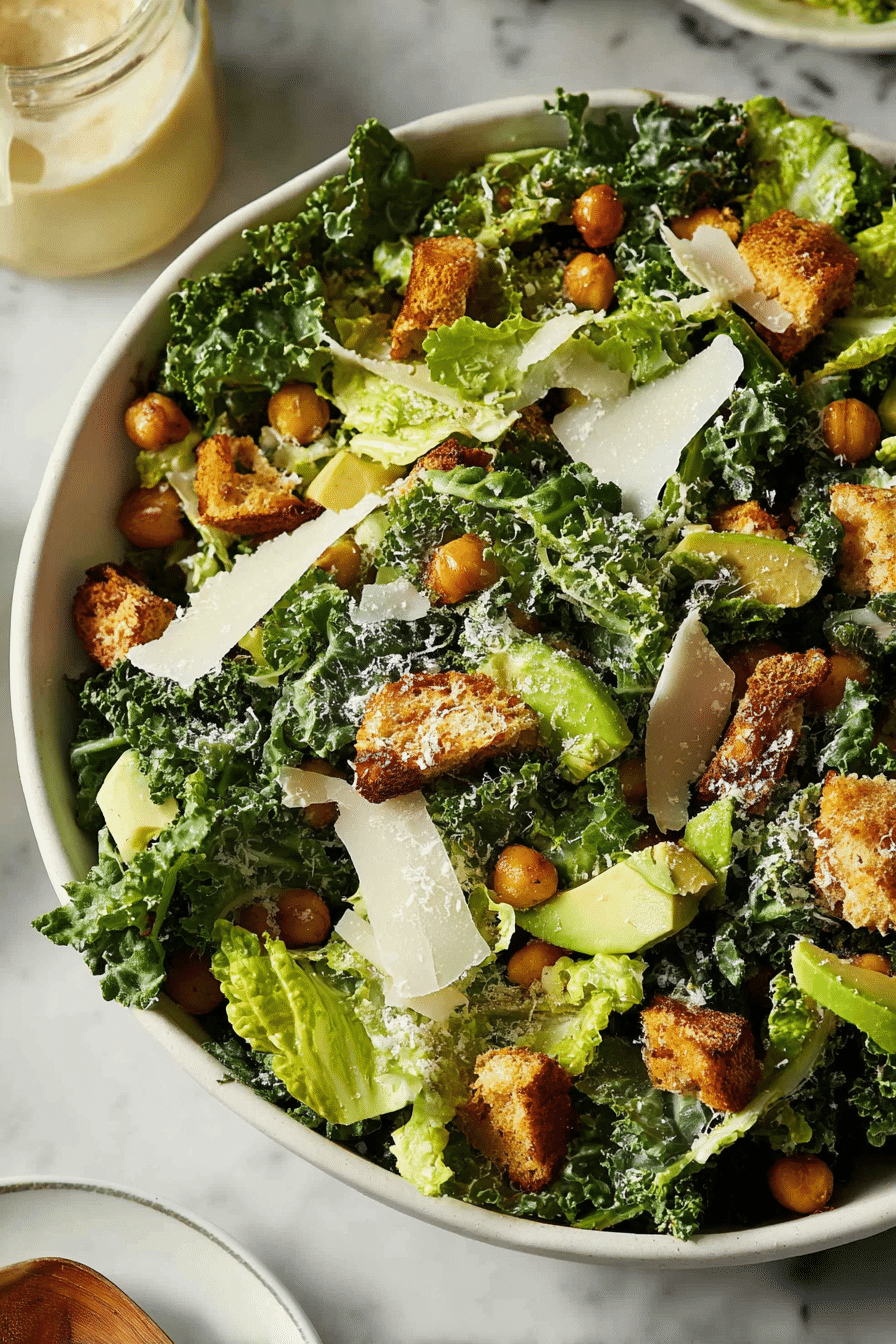
Kale Caesar Salad
Ingredients
Method
- Tear the kale into bite-size pieces and place in a large bowl. Drizzle with the olive oil and sprinkle with a pinch of salt. Use your hands to massage the leaves until they wilt.
- Add the romaine and toss. Drizzle with half the dressing and toss again.
- Transfer to a serving bowl and top with the croutons and Parmesan. Add more dressing, roasted chickpeas, and avocado, if desired, and serve.