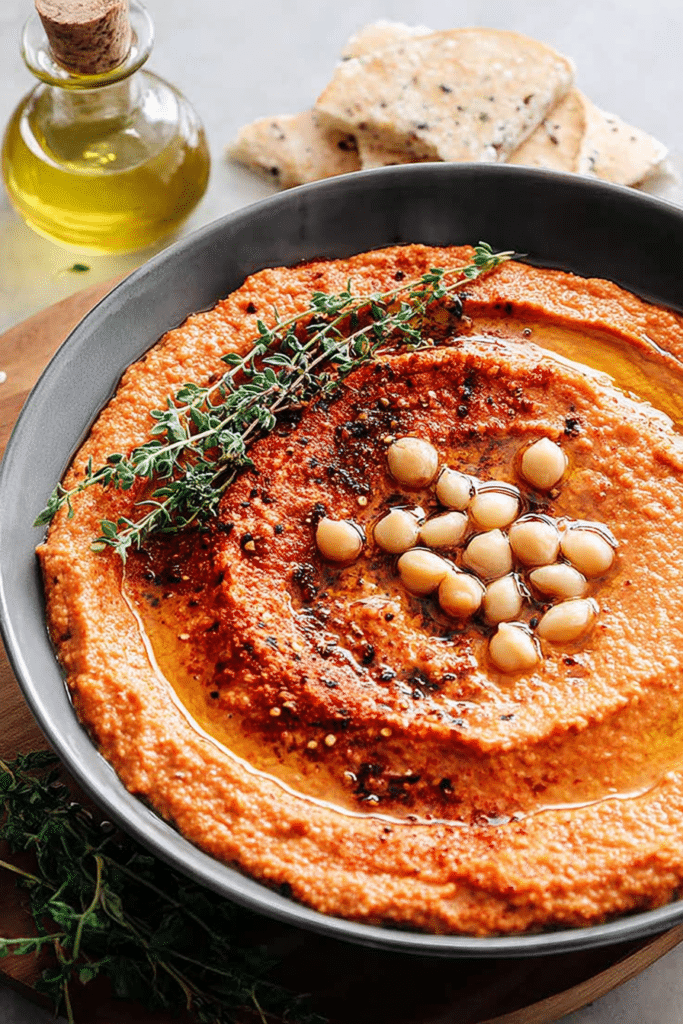
I make this roasted red pepper hummus on the nights when the clock is tight and the family is hovering by the kitchen. With a jar of roasted peppers and a can of chickpeas, I can pull a bowl together in about ten minutes — bright color, a hint of smoke, and just enough garlic to make the house smell like dinner is already happening. It’s the recipe I turn to when I want something that feels special without the fuss.
I’ve learned a few small tricks over the years that change the hummus from “good” to “silky and memorable.” A short steam after charring the peppers makes peeling effortless; a quick whirl in the food processor with a splash of cold water smooths everything out; and tasting as you go turns a bland spread into a lively dip. Those tiny choices make this a reliable weeknight win.
Most evenings I’m juggling homework, work emails, and dinner — so practicality matters. This recipe is forgiving: you can use canned roasted peppers to shave off time, or roast a few fresh ones when you have the extra minutes. Either way, you’ll end up with a bright, smoky hummus that stores well and adapts to whatever you’re serving it with.
Read on and I’ll walk you through what I keep on hand, how I coax the creamiest texture, quick roasting options, and a short list of variations that keep the flavor interesting. There’s also a small set of troubleshooting tips I use when a batch needs rescuing.
Why This Roasted Red Pepper Hummus Is Ideal for Busy Weeknights
This hummus fits tight schedules because the hands-on time is minimal and the payoff is large. You get a vibrant red dip, smoky aroma, and creamy mouthfeel with very little effort. It works as a quick snack, a sandwich spread, or a party starter, so you don’t need separate dishes when time is short.
- Time-efficient: use canned roasted peppers to make the whole recipe in about ten minutes.
- Versatile: serve as a dip, spread, or sandwich filler — one recipe covers many needs.
- Nutritious: chickpeas provide protein and fiber while olive oil and tahini add healthy fats.
Everything You Need for Roasted Red Pepper Hummus
Keep these ingredients and tools within reach for the fastest prep. Quality makes a difference, especially with tahini and olive oil; they are the backbone of texture and flavor.
- Chickpeas – The creamy base; canned chickpeas save time and work well when rinsed.
- Roasted red peppers – For smoky sweetness; canned roasted peppers are a great shortcut.
- Tahini – Adds depth and a silky mouthfeel; a smooth, well-stirred jar gives best results.
- Olive oil – Contributes richness and sheen; use good extra virgin for flavor, but add more later if you want extra silkiness.
- Garlic – For aroma and bite; adjust to taste.
- Lemon juice – Brightens the dip and balances richness.
- Spices (cumin, smoked paprika, cayenne) – Provide warmth and smokiness; tweak to match your palate.
- Salt & pepper – Essential for bringing flavors forward.
- Tools – A food processor or high-speed blender is necessary for a smooth result; a spoon and bowl for serving finish the job.
If you want a complementary cold dip, consider making our Easy Homemade Tzatziki Sauce to pair with this hummus.
The Secret to a Silky, Creamy Texture
Getting a velvety hummus is about emulsification and temperature more than extra oil. Start by blending the tahini and lemon together to create a loose emulsion, then add chickpeas and peppers gradually while the machine runs. A few icy tablespoons of water at the end smooths and thins without diluting flavor.
- Emulsify tahini and lemon first — this builds a stable base so the hummus becomes glossy instead of greasy.
- Add ingredients in stages while the processor runs to allow full incorporation and air to be whipped in for lightness.
- Adjust consistency with small amounts of cold water or extra olive oil; water preserves the hummus’s vegetal brightness, oil increases richness.
How to Roast Red Peppers Fast (No Broiler? No Problem)
Roasting peppers is about blistering the skin and trapping smoky aromatics inside; steam afterwards makes peeling painless. Below are fast methods that work on different kitchen setups, with clear indicators for doneness and handling tips for beginners.
- Stovetop (gas flame): Place a whole pepper directly over the flame and turn with tongs until all sides blister and blacken — the skin will collapse and smell smoky.
- Broiler: Arrange peppers on a baking sheet under a hot broiler, turning every few minutes until the skin is fully blistered and blackened.
- Oven roast: Roast at high heat on a baking sheet, turning once, until skin is blistered; a bit slower but hands-off.
- Grill pan or outdoor grill: Use high heat and turn peppers until evenly charred for a pronounced smoky flavor.
- After roasting: Transfer hot peppers to a covered bowl or a sealed plastic bag to steam for a few minutes — this loosens the skin so you can peel it off with minimal effort.
Flavor Boosters: Spices, Garnishes, and Easy Swaps
A few smart additions change the character of the hummus. Smoked paprika echoes the peppers’ smoke, fresh herbs add brightness, and toasted nuts introduce texture. If you want a variation that plays off the pepper’s profile, try pairing with a tangy, creamy cheese dip for contrast:
For an even more flavorful appetizer, try pairing this hummus with our Spicy Roasted Red Pepper Feta Dip for a delightful contrast.
- Use smoked paprika for a deeper smoky note; garnish with a sprinkle for color and aroma.
- Fresh parsley or cilantro adds a bright, herbaceous finish when sprinkled on top.
- Toasted pine nuts or chopped pistachios give crunch and a nutty backnote.
- Substitutions: sunflower seed butter or a mild nut butter can replace tahini for a sesame-free option, though flavor will shift slightly.
- Spice it up with extra cayenne or a bit of chopped jalapeño if you like heat.
How to Make Roasted Red Pepper Hummus (Step-by-Step)
Follow these steps and taste as you go. Use the bulleted format for clarity and quick scanning — they’re short, practical actions you can complete in sequence.
- Roast and peel peppers following one of the fast methods above, or drain canned roasted peppers if using the shortcut.
- In your food processor, blend tahini with lemon juice until loose and slightly pale — this is the emulsification step.
- Add garlic, roasted peppers, and spices; pulse to combine and release aromas.
- Add chickpeas and start the processor; scrape down the sides as needed to ensure even blending.
- If the mixture seems thick, add one or two tablespoons of cold water (or a little olive oil) while processing until you reach a silky texture.
- Season with salt and pepper, taste, and adjust acidity or spice as needed.
- Transfer to a serving bowl, smooth the top, drizzle with olive oil, and finish with smoked paprika and fresh herbs if you like.
Pro Tip for roasted red pepper hummus: Add Ice-Cold Water for the Silkiest Texture
- Adding ice-cold water at the end helps the oils and tahini bind into a glossy emulsion — the cold also tightens the proteins in chickpeas briefly, which makes the texture smoother.
- Start with tiny amounts of cold water and stop when the hummus reaches a satin consistency; you can always add more, but you can’t take it out.
- Use this test: scoop some hummus on a spoon — it should flow slowly without breaking into droplets; that’s the right balance between body and silk.
Pro-Tips, Troubleshooting, and Variations
These short lists are designed for quick scanning when you’re mid-prep. I include first-person notes in troubleshooting because those are the fixes I reach for when a batch needs saving.
- Pro-Tips – Use room-temperature tahini, drain chickpeas well, and always taste for salt and lemon before finishing.
- Troubleshooting – If the hummus is grainy, I add a splash of cold water and blend longer; if it’s bland, I add more lemon and a pinch of salt; if it’s too thin, I blend in a few more chickpeas or a spoon of tahini.
- Variations – Add roasted eggplant for a smoky Baba Ganoush twist, fold in crumbled feta for tang, or blend in roasted beets for a vibrant color change.
How to Store and Make-Ahead Roasted Red Pepper Hummus
Hummus keeps well and transports easily, which makes it perfect for meal prep. Store it in an airtight container and keep the surface smooth with a little olive oil on top to preserve color and freshness. If you’re planning for a special occasion, our Creamy Garlic Butter Lobster Tails pair excellently with hummus served as a starter.
- Refrigeration: keep in an airtight container for up to one week; stir before serving to reincorporate any separated oil.
- Freezing: hummus freezes well for up to three months — thaw in the fridge overnight and stir in a splash of water or olive oil to restore creaminess.
- Make-ahead: prepare up to three days in advance for the flavors to meld; store garnishes separately to keep them fresh.
Cultural Significance and History of Hummus
Hummus has deep roots across the Mediterranean and Middle East, where it’s traditionally served as part of a shared spread. Each region has its own take — some add yogurt, others emphasize different spices — but the core is always communal: simple pantry staples turned into a satisfying centerpiece.
Modern adaptations have pushed hummus into global popularity, and creative versions appear at casual lunches and elegant starters alike. Try exploring different takes, like a bright radish variation if you’re curious about regional spins: Fresh Radish Hummus.
Frequently Asked Questions
Can I use canned roasted red peppers instead of fresh? Absolutely! Canned roasted red peppers are a convenient alternative and can save you time. Just make sure to drain them well before using.
How long does roasted red pepper hummus last in the fridge? Homemade roasted red pepper hummus can be stored in an airtight container in the fridge for up to one week. Just give it a good stir before serving!
What can I serve with roasted red pepper hummus? This hummus pairs wonderfully with warm pita, fresh veggies, or crunchy crackers. It also makes a delicious spread for sandwiches or wraps!
Can I make roasted red pepper hummus spicier? Yes! You can add more cayenne pepper or even some fresh chopped jalapeños to the mixture for an extra kick of heat.
What is a good substitute for tahini? If you don’t have tahini on hand, you can use nut butter like almond or cashew butter as a substitute, although it may change the flavor slightly.
Roasted Red Pepper Hummus
Ingredients
Method
- If using fresh peppers, place them directly over an open flame or under a broiler, turning occasionally until skins are blackened and blistered (about 10-15 minutes). Transfer to a bowl, cover, and let steam for 5 minutes. Once cool, peel off skins, remove seeds, and chop the peppers.
- In a food processor, combine chickpeas, roasted red peppers, garlic, tahini, olive oil, lemon juice, cumin, smoked paprika, and cayenne pepper. Blend until smooth.
- If too thick, add 1-2 tablespoons of cold water or more olive oil until desired consistency is reached.
- Add salt and black pepper, blend again. Adjust seasoning as needed.
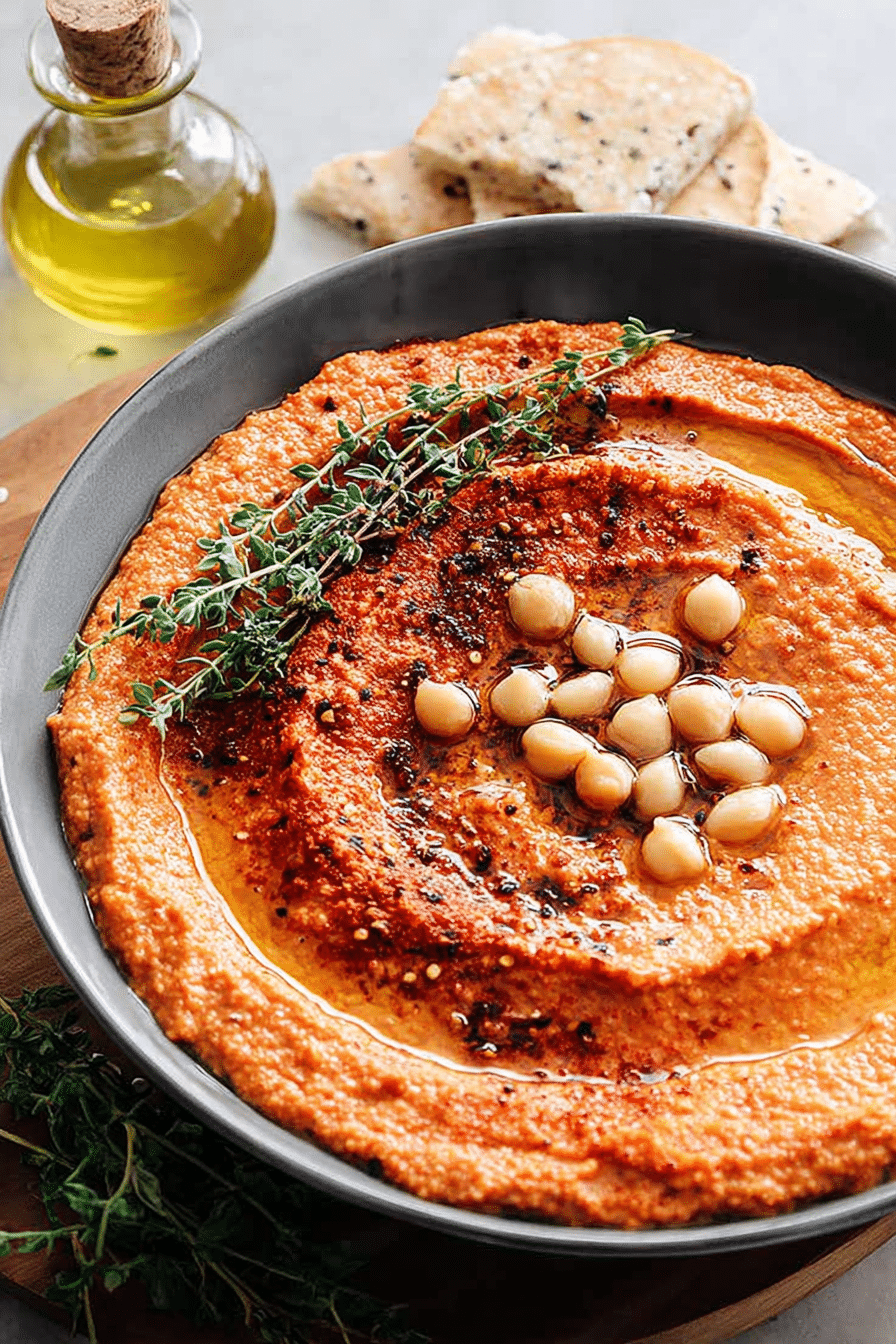
- Transfer to a serving bowl, drizzle with olive oil, sprinkle with smoked paprika, and add optional garnishes.
- Serve with warm pita, fresh veggies, or crunchy crackers.