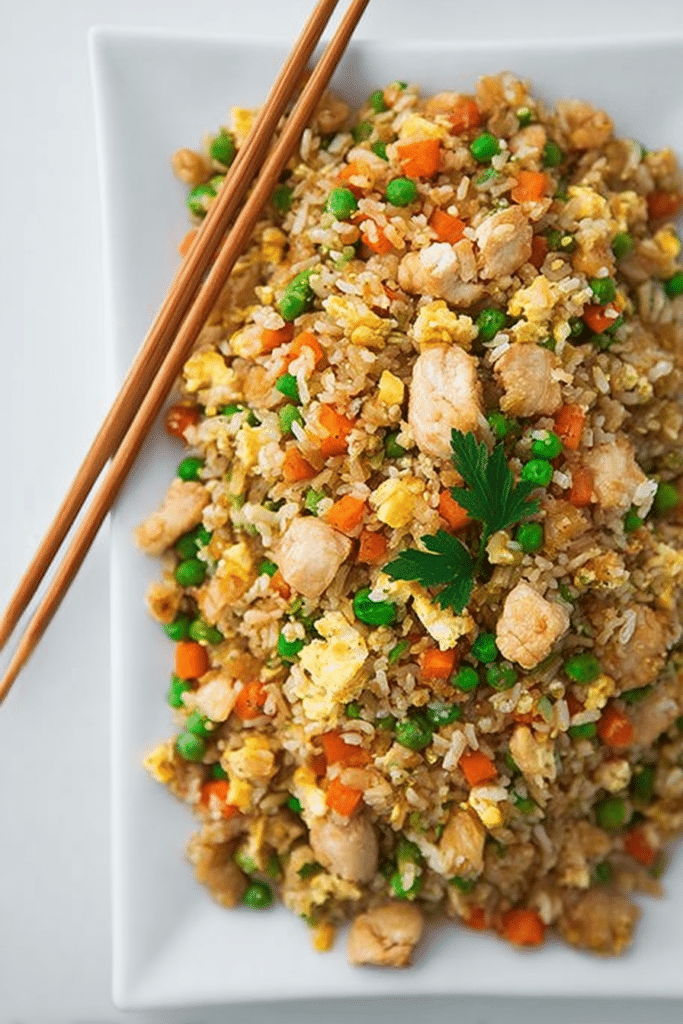
I cook this chicken fried rice on nights when the clock is against me and everyone at the table wants something warm, filling, and honest. I keep a stash of leftover brown rice in my fridge so this meal really comes together in about 25 minutes from start to finish. The smell of garlic hitting hot oil and the sizzle of rice in the pan is my cue that dinner is almost done.
I like the balance here: lean diced chicken for protein, bright little pops of peas and carrots, and the savory lift of soy sauce and sesame oil. Over the years I’ve learned small shortcuts that make a big difference — using day-old rice to avoid mush, cooking on high heat for that slightly toasted bite, and scrambling the eggs separately so they stay tender.
This dish is flexible enough to change with what you have on hand. I often double the batch when I know leftovers will be lunches, and it reheats beautifully. When my kids were younger they loved picking their own mix-ins, which made dinner faster and less fussy for me.
Pro-Tips, Troubleshooting, and Variations below are formatted as bulleted lists for quick scanning so you can get right to the detail you need.
Why This Chicken Fried Rice Is Perfect for Busy Weeknights
This recipe is built for speed and adaptability without compromising flavor. The total active time is short, and most of the heavy lifting can be done ahead. It scales easily if you need to feed more people — just increase the rice and protein and keep the ratios similar. Picture a wide pan sizzling with browned chicken and colorful vegetables, releasing a warm, appetizing aroma as you stir everything together — that quick, satisfying dinner feeling.
Everything You Need for Chicken Fried Rice
- Long-grain brown rice (pre-cooked, chilled) – Using pre-cooked, cold rice prevents clumping and gives you separate, chewy grains.
- Boneless skinless chicken breast (diced) – Lean protein that cooks quickly; can be swapped for tofu or shrimp.
- Frozen peas and carrots blend – Convenient, colorful, and ready to toss straight into the pan.
- Green onions – Adds a fresh, oniony brightness at the end.
- Garlic – For aromatic richness; don’t burn it or it turns bitter.
- Eggs – Provide silky pockets of flavor when scrambled and mixed through the rice.
- Soy sauce (low-sodium option) – The main seasoning; swap for gluten-free tamari if needed.
- Oils (toasted sesame and a neutral oil) – Sesame oil gives flavor, neutral oil raises smoke point for high-heat cooking.
- Kitchen tools – A large wok or wide skillet for even, quick frying, and a sturdy spatula for stirring and tossing.
- Pre-cooked components – Having your rice cooked and cooled ahead of time is the single best time-saver.
The Secret to Restaurant-Style Texture
- High heat is crucial: it gives the rice a slight toast and keeps vegetables crisp. I heat the pan until it’s very hot before adding oil so ingredients sear instead of steam.
- Use cold, day-old rice so the grains separate and won’t clump together when they hit the pan.
- Cook ingredients in stages: sear the chicken until lightly browned, set it aside, then cook vegetables and eggs — finally combine so nothing overcooks.
- Finish with a short, hot toss after the soy sauce goes in; this gives the rice a glossy coating without making it soggy.
Best Rice for Fried Rice: Brown vs. White (and Why It Matters)
Brown rice and white rice behave differently when fried. Brown rice has a nuttier flavor and chewier texture because of the bran layer — it holds up well, which I like for a heartier bite. White rice, especially jasmine, is softer and tends to meld into a silkier fried rice with a fragrant aroma. Both work; choose brown for extra nutrition and texture or jasmine/long-grain white if you prefer a lighter mouthfeel.
The key is dryness: chilled, day-old rice is the winner regardless of variety. You’ll notice the individual grains more clearly with brown rice, while white rice can absorb sauces slightly faster and feel saucier if you add more soy sauce.
Quick Swaps & Substitutions: Gluten-Free, Low-Carb, and Kid-Friendly Options
- Gluten-free: Use tamari or a certified gluten-free soy sauce to keep the flavor without gluten.
- Low-carb: Replace rice with riced cauliflower and cook briefly so it doesn’t go mushy; you’ll get a lighter texture and fewer carbs.
- Vegetarian: Swap chicken for firm tofu or tempeh; press the tofu first and pan-sear until golden.
- Kid-friendly veggie swaps: Use sweet corn, finely diced red bell peppers, or peas if your kids prefer sweeter, familiar veggies.
- Spice level: Hold the Sriracha (or serve it on the side) to make a milder, kid-approved version.
How to Make Chicken Fried Rice (Step-by-Step)
- Heat a wide skillet or wok over high heat until very hot; add a neutral oil and a small amount of toasted sesame oil for flavor.
- Add diced chicken, season lightly, and sear until cooked through and lightly browned; remove chicken to a plate to rest.
- Return the pan to high heat, add more oil if needed, then toss in the frozen peas and carrots and the white parts of the green onions; sauté briefly until bright and warmed through.
- Push vegetables to the edge of the pan, add beaten eggs to the center, and scramble just until set; combine with the vegetables.
- Add the cold rice and reserved chicken back to the pan; break up any clumps and stir to combine so rice heats evenly.
- Pour soy sauce over the rice, stir and toss quickly to coat; season with salt and pepper to taste and finish with the green onion greens.
- Serve immediately, with Sriracha on the side for anyone who wants a kick.
Pro Tip for chicken fried rice: Use Cold, Day-Old Rice and High Heat
- I always start with rice that’s been refrigerated; it dries slightly and separates much better under high heat.
- Don’t overcrowd the pan — too many ingredients will steam instead of fry. Work in batches if needed.
- Use a mix of oils: a neutral oil for high-heat searing and a touch of toasted sesame oil for finishing flavor.
- Scramble the eggs briefly over high heat so they remain tender and fold them into the rice at the end for pockets of silkiness.
- Garnish with extra sliced green onions or a sprinkle of sesame seeds for texture and freshness.
Troubleshooting
- Rice is mushy: You likely used fresh, hot rice. Next time chill the rice or spread it on a tray to cool before frying.
- Ingredients steamed instead of seared: Increase the heat and add less at once — the pan should be hot with space to move ingredients quickly.
- Garlic tastes bitter: It was cooked too long or at too high heat; add garlic later and watch it closely for just a quick sizzle.
- Chicken is dry: Cut the pieces a bit larger next time and avoid overcooking; remove chicken as soon as it’s done and finish in the rice briefly.
How to Store, Reheat, and Make-Ahead Chicken Fried Rice
- Cooling and storing: Cool rice quickly and store in an airtight container in the refrigerator for up to 3–4 days.
- Reheating on stovetop: Heat a skillet with a little oil over medium-high heat and stir-fry leftovers until hot; this restores some texture better than the microwave.
- Reheating in microwave: Add a splash of water and cover loosely to create steam and prevent drying out; heat in short bursts, stirring between intervals.
- Make-ahead tips: Dice chicken and chop vegetables ahead of time, and cook rice the day before to speed assembly on dinner night.
Kid-Friendly Variations and Cooking Tips
- Let kids choose mix-ins like corn, peas, or tiny carrot cubes — they’re more likely to eat what they helped pick.
- Use bite-sized chicken pieces and mild seasonings to keep flavors approachable for young palates.
- For a hands-on task, have kids whisk the eggs or sprinkle the green onions (away from the hot stove).
- Swap in familiar veggies like sweet corn or finely diced bell pepper to make the dish more appealing to picky eaters.
I keep this recipe in rotation because it reliably delivers a warm, colorful, and balanced meal with minimal fuss. It’s one of those go-to dinners that adapts to what’s in my fridge and satisfies everyone at the table. Try making a double batch next time so lunches are already sorted — it reheats well and saves an evening.
Frequently Asked Questions
Can I use leftover rice for this chicken fried rice recipe?
Yes! In fact, using leftover rice is recommended as it helps achieve a better texture and prevents the dish from being too mushy.
What can I substitute for chicken if I want a vegetarian option?
You can replace the chicken with tofu or tempeh for a delicious vegetarian alternative to this fried rice.
How do I store leftovers of chicken fried rice?
Store leftovers in an airtight container in the refrigerator for up to 3-4 days. You can reheat it in the microwave or on the stovetop before serving.
Can I use brown rice instead of white rice?
Absolutely! Brown rice adds more flavor and nutrition to the dish, making it a healthier choice.
What toppings can I add to chicken fried rice?
You can enhance your fried rice with toppings like chopped cilantro, sesame seeds, or sliced red chili for a bit of heat!
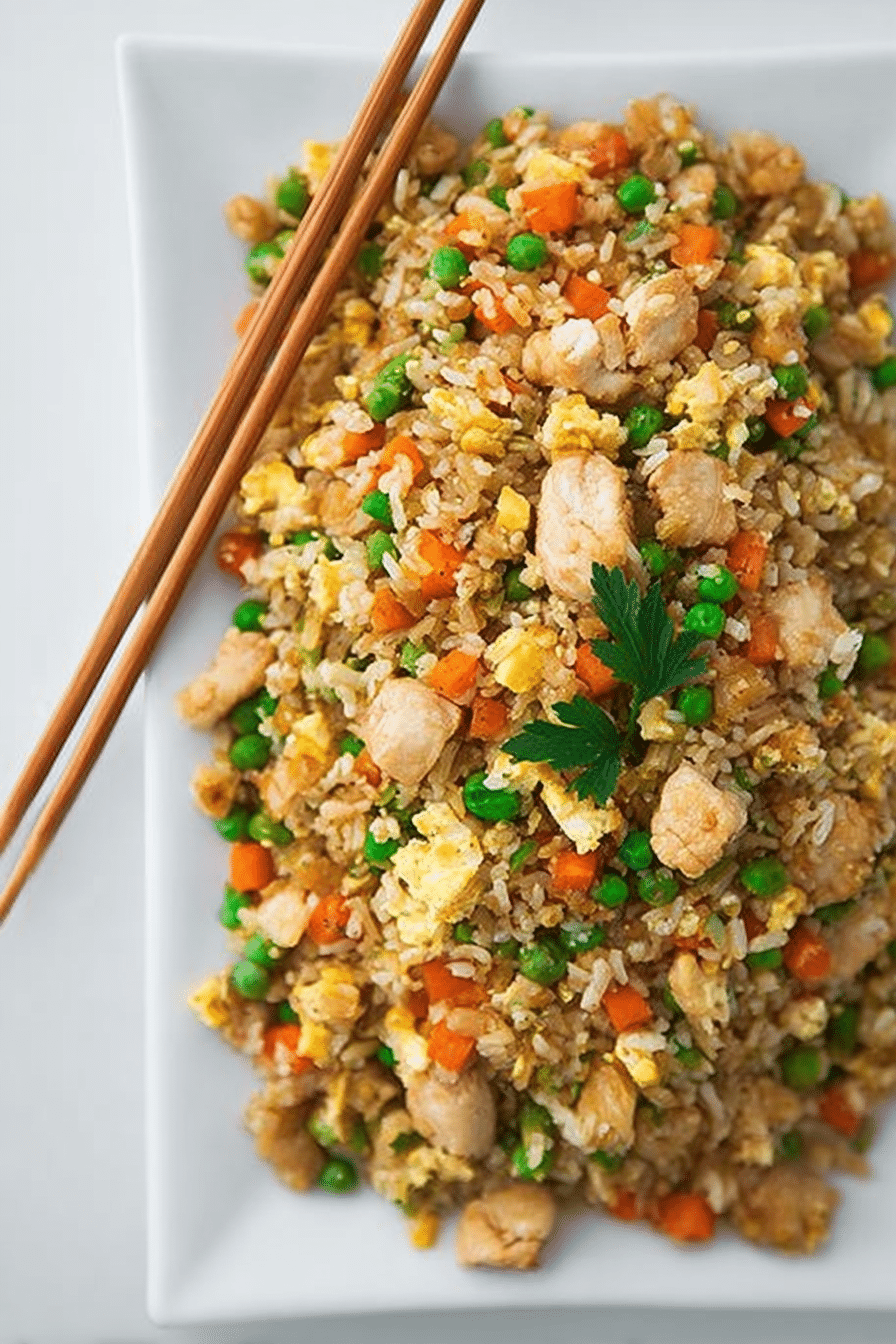
Chicken Fried Rice
Ingredients
Equipment
Method
- Heat 1 1/2 tsp sesame oil and 1 1/2 tsp canola oil in a large non-stick wok or skillet over medium-high heat. Add chicken pieces, season lightly with salt and pepper and sauté until cooked through, about 5 - 6 minutes. Transfer chicken to a plate and set aside.
- Return skillet to medium-high heat, add remaining sesame and canola oil. Add peas and carrots blend and green onions, sauté for 1 minute, then add garlic and sauté for 1 minute longer. Push veggies to edges of pan, add eggs in center and cook and scramble until done.
- Return chicken to skillet along with rice. Add soy sauce, season with salt and pepper to taste, and serve warm with Sriracha if desired.