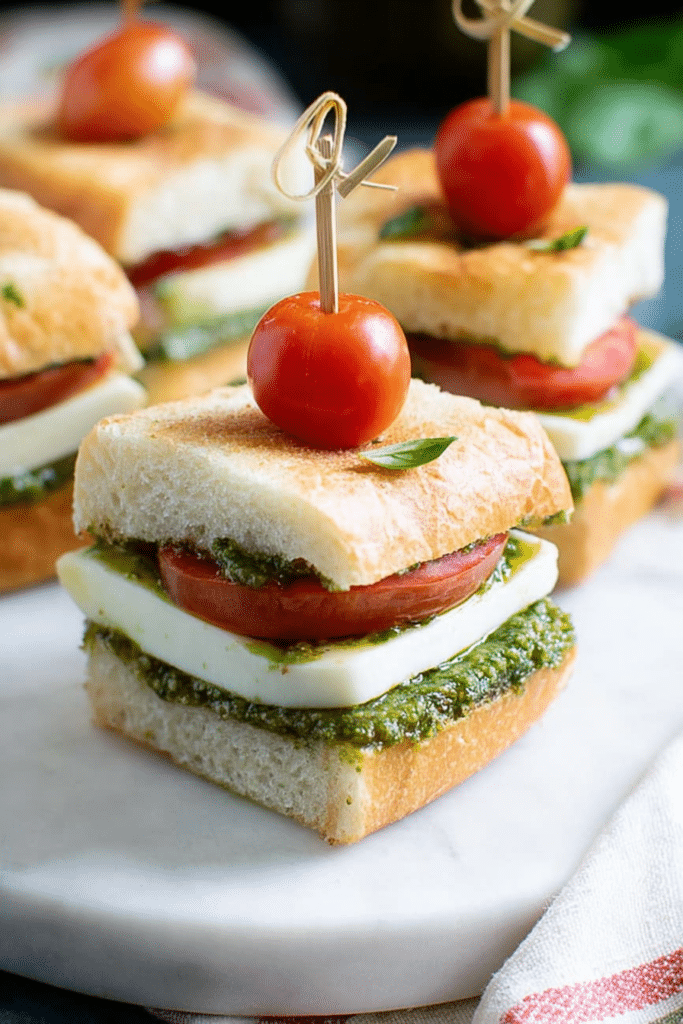
I make this pesto Caprese sandwich whenever friends drop by with little notice or when I’m packing for a day outside. I like how the bright basil and the cooling mozzarella cut through a warm afternoon, and how the whole thing travels without needing a fork. In my kitchen this is the kind of recipe you repeat because it reliably tastes like summer even when the calendar says otherwise.
Over the years I’ve learned a few small habits that turn an ordinary Caprese into a picnic-ready favorite: keep wet ingredients dry until the last minute, choose a bread with a sturdy crust, and use pesto that shows its personality without overwhelming the other ingredients. Those little choices make the sandwich feel freshly made even hours after assembly.
I’ll walk you through the exact ingredients I reach for, how I layer for the best texture, and several pesto swaps so everyone at the table can enjoy it—whether they need a vegan or nut-free option. I test these tweaks regularly in my kitchen, so these are practical fixes, not just ideas on paper.
Read on for everything you need, clear assembly steps, and sensible make-ahead and storage tips so your sandwiches arrive at the picnic looking and tasting like you made them five minutes ago.
Why this Pesto Caprese Sandwich is perfect for picnics and quick parties
This sandwich brings three things that matter at a gathering: bright, familiar flavors; minimal fuss; and broad appeal. The basil pesto gives aromatic lift, the tomatoes add juiciness and color, and fresh mozzarella lends a creamy, cooling counterpoint. Vegetarians and omnivores alike tend to reach for a second piece.
It assembles in short order and scales well—slice more bread, set out bowls of components, and let guests build their own. That makes serving efficient and keeps the bread from getting soggy before people eat.
Because it travels well when packed thoughtfully, this sandwich is ideal for an outdoor spread. I always imagine the basil scent when I pack mine: it’s the small thing that signals freshness and invites people to dig in.
Everything You Need for Pesto Caprese Sandwich
Below is a conversational ingredient rundown so you know why each component matters and what you can swap if needed. I do not list precise measurements here—this is about purpose and substitution so you can scale for two sandwiches or a crowd.
- Basil leaves – The backbone of the pesto; choose fresh, vibrant leaves for the best aroma and color.
- Garlic – Adds bite and fragrance; adjust to taste so it doesn’t overpower the basil.
- Walnuts (or other nuts/seeds) – Give the pesto body and a toasty note; substitute toasted sunflower or pumpkin seeds for a nut-free version.
- Parmesan or vegetarian hard cheese – Brings savory, salty depth to pesto; use nutritional yeast for a vegan twist.
- Extra virgin olive oil – Smooths and binds the pesto; reserve a little to drizzle over the tomatoes.
- Fresh tomatoes – Look for ripe but firm fruit so slices hold their shape; they deliver sweetness and juiciness.
- Fresh mozzarella – Keeps the sandwich cool and creamy; swap for a plant-based mozzarella if you need dairy-free.
- Greens (spinach/arugula) – Add freshness and a little bite; arugula gives peppery contrast, spinach keeps it mild.
- Bread (ciabatta, sourdough, panini) – Choose a sturdy loaf with a good crust to resist moisture; see the bread section for specifics.
- Seasonings – Salt, pepper, and a light balsamic reduction or drizzle amplify the Caprese profile without stealing the show.
- Kitchen tools – Have a food processor (or blender), a sharp knife, a cutting board, and a small spatula for spreading.
The Secret to a Non-Soggy Caprese: Bread and Temperature
Two simple principles keep these sandwiches from going limp: pick the right bread and manage the temperature of your components. I use crusty loaves that hold up to tomato juice and a smear of pesto.
Why crusty breads work:
- Ciabatta – Open crumb with a crisp crust; it soaks up a little flavor without collapsing.
- Sourdough – Tangy crumb and sturdy structure; a light toast makes it pleasantly crunchy.
- Focaccia (cut thick) – If you prefer softer bread, choose thicker slices and toast briefly so it stays substantial.
Temperature matters: room-temperature mozzarella and tomatoes sit better between toasted bread than fridge-cold cheese, which can cause condensation. Toast the bread lightly if you want an extra barrier between juicy tomato and soft crumb.
Learn how to keep your sandwich perfect with our tips on non-soggy caprese bread tips.
Layering Tips for Maximum Flavor and Texture
Layering changes everything. I place a thin smear of pesto on each bread slice first so the herb oil bonds to the crumb and delivers flavor to every bite. From there, think in terms of texture contrast and even distribution.
- Start with pesto against the bread to flavor the base and reduce slippage.
- Add a layer of greens next to create a buffer between bread and tomato; this helps with moisture control and adds a fresh chew.
- Place tomato slices evenly so each bite gets some sweet acidity; pat them dry first to avoid excess liquid.
- Top tomatoes with slices of mozzarella, finished with a light drizzle of olive oil and a few cracks of pepper.
- Be creative: roasted peppers, thinly sliced avocado, or a sprinkle of fresh herbs can personalize the sandwich without overpowering the classic profile.
Spacing matters—don’t crowd ingredients in the center only. Spread them across the bread so the sandwich bites stay balanced and pretty when you cut it in pieces.
Simple Pesto Variations — Vegan, Nut-Free, and Quick Jar Options
If you want more options for dietary needs or speed, here are reliable swaps I use. For those looking to customize their pesto, explore our pesto variations to suit your taste.
- Classic basil pesto – Basil, garlic, nuts, hard cheese, and olive oil; the template for bright, aromatic spread.
- Vegan pesto – Replace cheese with nutritional yeast and use extra toasted seeds for body; it’s still herb-forward and savory.
- Nut-free pesto – Swap nuts for toasted sunflower or pumpkin seeds; they provide similar texture and toasty flavor.
- Quick jar option – Use a high-quality store-bought pesto when time is tight; brighten it with extra lemon zest or a splash of olive oil before spreading.
- Herb blends – Try basil-thyme or basil-parsley mixes for seasonal variation; summer herbs yield a fresher, greener pesto, while winter herbs add depth.
- Bright add-ins – A squeeze of lemon, red pepper flakes, or a touch of roasted garlic can adjust the pesto personality without reworking the whole recipe.
How to Make Pesto Caprese Sandwich (Step-by-Step)
Follow these steps for a sandwich that looks composed and tastes balanced. I include troubleshooting notes inside the steps so you can avoid common missteps.
- Make the pesto: pulse garlic and nuts in a food processor until chopped; add basil and cheese (or vegan swaps) and pulse while streaming in olive oil until you reach a spreadable texture. Tip: stop before it goes too smooth—some texture gives the pesto character.
- Reserve a little olive oil from the pesto to drizzle over sliced tomatoes—this keeps their flavor bright and reduces direct juice on the bread.
- Slice tomatoes and mozzarella thinly and evenly. Pat tomato slices dry with a paper towel if they look wet; excess moisture is the main cause of sogginess.
- Lightly toast the bread if you prefer crunch. Spread pesto on both halves; this double layer helps flavor every bite and creates a moisture barrier.
- Layer greens, then tomatoes, then mozzarella. Season the tomato layer with a pinch of salt and pepper and a few drops of balsamic reduction if you like a touch of sweetness.
- Press gently, slice, and if serving later, secure pieces with toothpicks. If packing for travel, wrap sandwiches snugly in parchment and then foil, keeping any extra pesto or dressing separate.
- Troubleshooting quick notes: If your pesto splits, pulse in a little more oil at low speed. If the bread is soggy, pat tomatoes drier or toast the bread a touch more next time. If the sandwich tastes flat, add a sprinkle of flaky salt or a squeeze of lemon.
If you enjoy the flavors of pesto, you might want to try our pesto grilled cheese sandwich for a delightful twist!
Pro Tip for Pesto Caprese Sandwich: Best Bread Choices & Make-Ahead Notes
Here are the quick, scannable pro-tips I actually use when I pack these sandwiches. Generate the Pro-Tips, Troubleshooting, and Variations sections as bulleted lists for easy reference.
- Bread picks: Ciabatta for rustic chew, sourdough for tang and structure, and a pressed panini loaf for easy grilling.
- Toast lightly: A short toast seals the crumb and adds crunch without browning the edges excessively.
- Pack smart: Keep pesto and balsamic separate from the assembled sandwich if you expect more than an hour of travel.
- Portioning: Cut into halves or quarters for easy serving at parties; smaller pieces encourage guests to sample more.
- Timing: Assemble fully if serving within an hour; otherwise assemble at the picnic site after transporting components in separate containers.
How to Store and Make-Ahead Pesto Caprese Sandwiches (Reheating Tips)
When you need these sandwiches to stay fresh ahead of time, the strategy is separation and layering. I rarely fully assemble more than an hour ahead; instead I prepare components and bring them together just before eating.
- Short-term make-ahead: Store pesto in a small airtight jar. Keep mozzarella and tomatoes in separate containers with paper towels to absorb moisture. Pack bread wrapped in a clean cloth.
- Packing for travel: Assemble at the picnic spot if possible. If not, build sandwiches with greens as a barrier, wrap tightly in parchment, and store in a cooler away from direct heat.
- Reheating grilled versions: Reheat in a skillet over low heat or a sandwich press just until warmed through; avoid microwaving which can make the mozzarella rubbery and the bread soggy.
- Avoid freezing: Fresh tomatoes and mozzarella do not freeze well; freezing degrades texture and water-holding capacity.
- Best-by guidance: Consume fully assembled sandwiches within a few hours if unrefrigerated; refrigerated components can keep for a couple of days but assemble right before eating.
Frequently Asked Questions
What is in a pesto caprese sandwich?
A pesto caprese sandwich typically includes layers of fresh tomatoes, mozzarella cheese, basil pesto, and greens like spinach or arugula, all sandwiched between slices of crusty bread.
Can I use different types of bread for this sandwich?
Absolutely! While crusty Italian or French baguettes are great choices, you can also use ciabatta, sourdough, or any bread you prefer.
How can I make the pesto caprese sandwich vegan?
To make a vegan version, substitute the mozzarella with a plant-based cheese or leave it out altogether, and use nutritional yeast to add a cheesy flavor.
How do I prevent the sandwich from getting soggy?
To avoid sogginess, use toasted or crusty bread, and consider adding the pesto last, just before serving. Keeping the tomatoes and greens dry helps as well!
Can I prepare pesto caprese sandwiches in advance?
Yes, you can prepare the ingredients ahead of time. Keep the components separate until you’re ready to serve to ensure freshness and optimal texture.
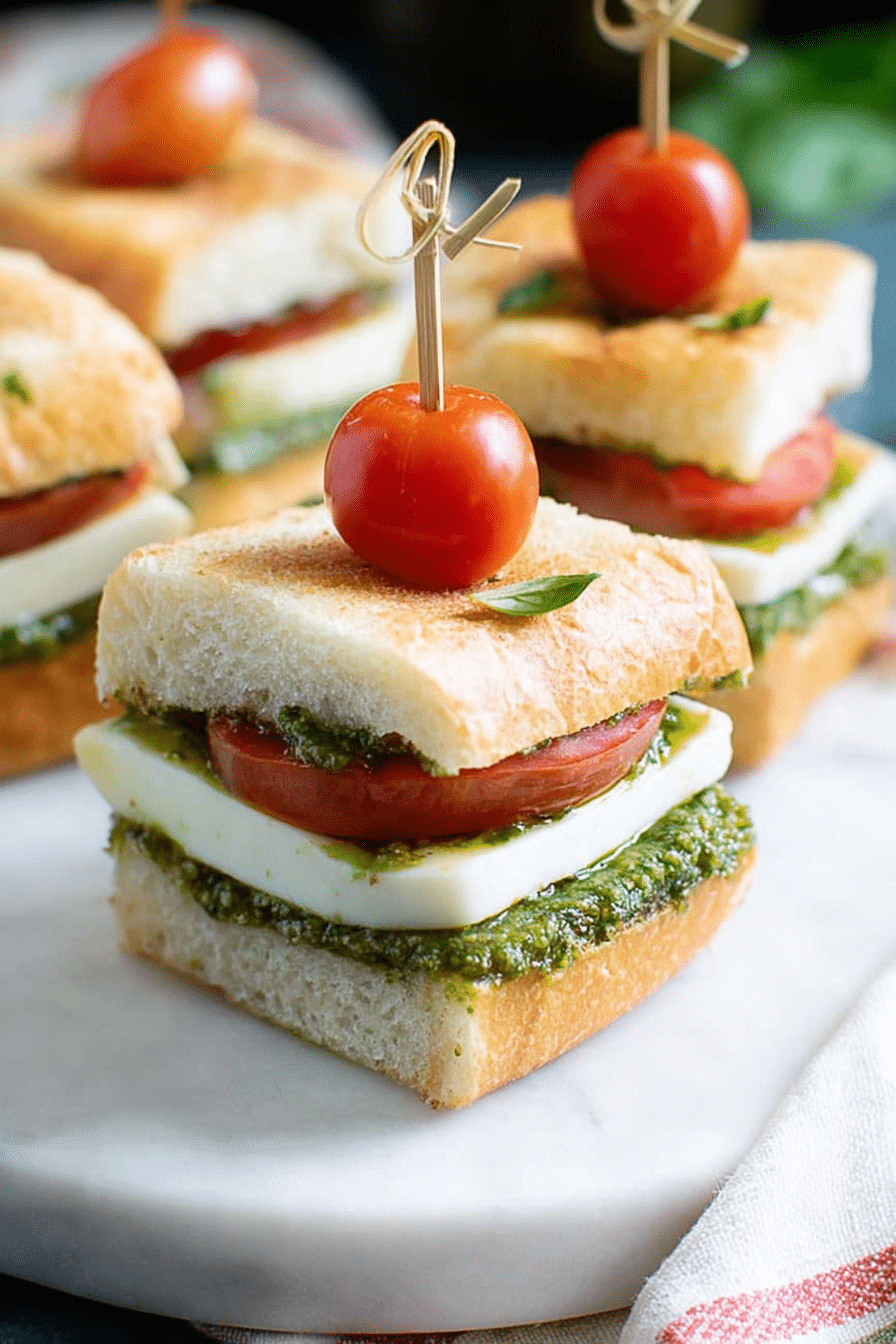
Pesto Caprese Sandwich
Ingredients
Method
- Pulse garlic in your food processor.
- Add walnuts and pulse again.
- Now throw in the basil, cheese, salt, and pepper. Pulse with pouring oil from the chute to aid blending. Reserve some oil to top the pesto as needed.
- Thinly slice the tomatoes and fresh mozzarella.
- Place spinach, tomatoes, and cheese on a plate. Drizzle it with some olive oil, balsamic reduction, a pinch of salt, pepper, garlic powder, and dried Italian herbs.
- Slightly warm up the bread if desired.
- Spread pesto on slices of bread. Add in tomatoes followed by spinach and mozzarella cheese layer. Add another slice of bread on top and gently press the sandwich.
- With a sharp knife cut it into four equal pieces. If desired, secure each piece with a toothpick or cocktail pick.